Connect with us

Fashion

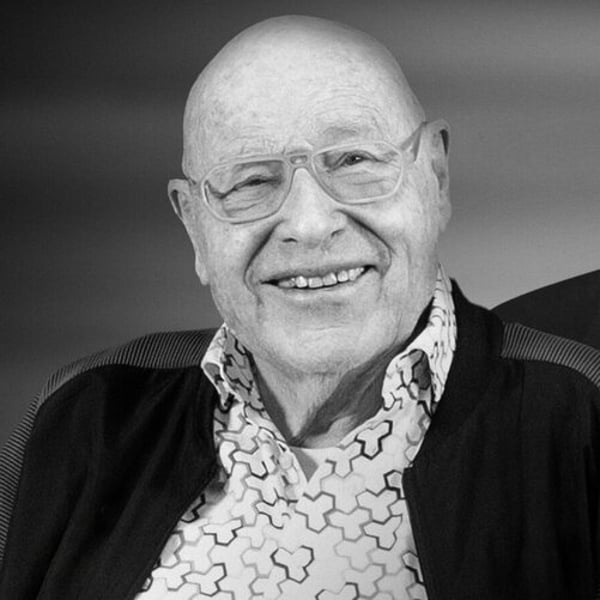
German shirt-making pioneer Eberhard Bezner turns 90

Published

on


Published


December 30, 2025

Eberhard Bezner turns 90. The long-standing managing director and current co-owner of Olymp Bezner KG, and co-founder of the eponymous foundation in Bietigheim-Bissingen, Baden-Württemberg (Ludwigsburg district), will celebrate his milestone birthday on December 31. As a German fashion entrepreneur, Bezner brought numerous innovations in modern shirt-making to fruition, laying the foundations for the company’s outstanding market position today.

Shirt specialist, patron of the arts and philanthropist: Eberhard Bezner celebrates his 90th birthday at the turn of the year. – OLYMP

Eberhard Bezner was born on December 31, 1935 in Stuttgart, Württemberg, the only child of company founder Eugen Bezner and his wife, Wilma (née Klaus).

Bezner grew up in Bietigheim and Ingersheim in the district of Ludwigsburg. After completing his schooling in Bietigheim in 1950, he began a structured apprenticeship as a textiles and retail merchant with a textile wholesaler in Ludwigsburg.

Bezner then joined his parents’ company in September 1953, initially as a junior employee. Following the sudden death of his father, Eugen, in January 1960, he had to take responsibility for the fast-growing, medium-sized shirt manufacturer overnight, at just 24 years of age.

As managing partner, he devoted himself to this role for many decades, until the complete handover to his son and successor, Mark Bezner, who now successfully runs the internationally active family business in its third generation.

One of Eberhard Bezner’s key entrepreneurial achievements was recognising, as early as the late 1960s, the growing difficulties facing domestic textile production in Germany.

The demand for qualified production workers could scarcely be met at that time. In the face of near-full employment, the local textile and clothing industry, particularly in the Middle Neckar region, continuously lost workers to traditionally strong sectors such as mechanical engineering and the automotive industry.

As a result, alternatives for shirt production had to be found abroad- this was the only way to preserve the medium-sized company and safeguard jobs in Germany.

In addition to his many years as an entrepreneur, Eberhard Bezner also took on political responsibility at municipal level in his hometown of Bietigheim for decades. From 1968 to 2004, he was at times the longest-serving councillor in the CDU group on the Bietigheim-Bissingen city council and also served, on an honorary basis, as deputy to the then Lord Mayor, Manfred List (CDU).

For his numerous services to the community as a citizen, patron, sponsor, and elected official, he received the Badge of Honour of the state of Baden-Württemberg and also holds the Cross of Merit on ribbon of the Order of Merit of the Federal Republic of Germany. In October 2013, Eberhard Bezner was additionally honoured by the Baden-Baden Economic Forum for his life’s work as the doyen of the German shirt industry and as a shareholder of OLYMP.

Guided by the humanist maxim “It is far more blessed to give than to receive,” the committed philanthropist Eberhard Bezner has long been active in charitable humanitarian projects. Together with his son, Mark Bezner, and his daughter, Birgit Bezner-Fischer, he founded the Olymp Bezner Foundation in 2008 with a private endowment of one million euros, which has since worked worldwide to support the education, health, and welfare of children and young people.

In 2010, Eberhard Bezner opened the “EBERHARDS” hotel and restaurant, now run by his grandson Bastian Fischer, as a stylish address in Bietigheim-Bissingen. In a prime city-centre location- right on the River Enz, beside the Bietigheim railway viaduct, the town’s landmark, and opposite the municipal indoor swimming pool- EBERHARDS combines high-quality accommodation for business travellers and holidaymakers with culinary experiences for connoisseurs and lovers of regional cuisine.

Eberhard Bezner is also an avid music lover and the initiator of the “Jazz im OLYMP” festival, which has been held annually on the company premises since 2001 and has established itself as a cultural highlight in the Stuttgart region with its numerous international music groups, performers and bands. As a sports fan and sponsor, Bezner has also been a major supporter of local sports clubs in Bietigheim-Bissingen for decades.

This article is an automatic translation.
Click here to read the original article.

Copyright © 2025 FashionNetwork.com All rights reserved.


Source link

Continue Reading

Fashion

Lululemon debuts ‘Train’ with global ambassadors Lewis Hamilton, Kayla Jeter, and Amotti

Published

on


Published


December 30, 2025

Athletic apparel, footwear, and accessories brand Lululemon has debuted its new winter training collection ‘Train’ with global ambassadors Lewis Hamilton, Kayla Jeter, and Amotti, designed to contribute to training breakthroughs and to empower the wearer to unleash their full potential.

Lewis Hamilton in Lululemon – Lululemon

 
This winter, Lululemon has brought together its global brand ambassadors seven times Formula One world champion Lewis Hamilton, strength and performance athlete and run coach Kayla Jeter, and fitness athlete Amotti to launch a new line of training apparel, the Canadian brand announced in a press release. In the campaign, Lululemon’s athletes showcase each stage of their training process, from stretch and recovery to intensity and cool down.
 
“In License to Train shorts, you can do all types of exercises,” said Lewis Hamilton. “You don’t feel restricted when you’re working out and having that flexibility and durability is important.”

Kayla Jeter training in Lululemon apparel
Kayla Jeter training in Lululemon apparel – Lululemon

 
Now available across Lululemon’s flagship stores and on its e-commerce site, the collection’s colour palette features hues of burgundy, rose pink, and black for women and stone-esque tones for men. While the women’s cropped tank and men’s pace breaker short nod to classic training attire, other garments such as the women’s cashmere hoodie and men’s ‘New Venture’ blazer would not look out of place at brunch.

“Having no seam in front just makes me feel more confident,” said Kayla Jeter about the collection’s garments. “When you’re wearing Wunder Train No Line™, you know the fabric is going to support you and the moisture-wicking is absolutely huge.”

Copyright © 2025 FashionNetwork.com All rights reserved.


Source link

Continue Reading

Fashion

Fast fashion, delivery apps tap India’s next billion consumers

Published

on


By

Bloomberg

Published


December 30, 2025

Inside the Zudio outlet on Ballapur Road in Dehradun, a stream of young shoppers drifted into the store on a recent Thursday morning, the glass storefront looming above the chai stalls and biryani counters just opening for business. Racks and hangers across three floors offered ribbed sweaters and light-wash jeans for $10, sneakers for $11- all made in Bangladesh. Alongside its apparel, the chain sells beauty and personal-care items, much like Zara, but starting at about $1 for a hand cream.

Inside a Zudio store in Delhi – Pacific D21 Mall- Facebook

“The same products as H&M and Zara you’ll find in Zudio,” Aditya Singh, who grew up in the small city tucked into the Himalayan foothills, said as he lingered over a puffer jacket. Zudio’s formula- fast fashion priced for India’s small cities- has helped the chain expand to more than 800 stores in under a decade. Zara’s footprint by contrast has remained confined to major metropolitan areas, with just 22 stores.

For all its promise of a billion-people market, the discretionary spending boom in the world’s most populous nation has been powered by “India 1,” only about 150 million affluent, English-speaking Indians in a handful of major cities. Now, with India’s economy headed toward becoming the world’s fourth largest, a new race is on to court the next billion: a vast, price-conscious yet aspirational consumer in smaller towns, eager for the conveniences and brands once reserved for the urban elite. Companies are now retooling everything from products and pricing, to logistics and content, to reach them.

As hundreds of millions of these consumers inch upward, even small discretionary purchases- a new shirt, a delivery snack, a streaming subscription- become the battleground for the country’s next phase of growth.

This consumer group  was long viewed as all but unmonetisable- too frugal, too distant, too hard to convert into steady consumers. But rising incomes, cheap smartphones and data, and improved roads have begun knitting smaller cities and industrial hubs into the national economy. Companies are finding that the problem is not aspiration, but a need to market and design for this audience on its own terms.

Sameer Narula, whose bicycle shop spills out into one of the main thoroughfares of Dehradun, has watched a trickle of cars swell into a honking, traffic-jammed roar. Porsches, BMWs, and Toyota Motor Corp.’s Fortuner SUVs now jostle with Maruti Suzuki’s compact hatchbacks and Hero MotoCorp’s budget-friendly motorbikes. A steady flow of professionals from Delhi and Mumbai has snapped up second homes here- fleeing pollution and crowds- pushing up property prices and turning this once-sleepy hill station into a small metropolis.

The boom has brought other changes. Ten-minute delivery apps like Blinkit, Zepto, and Swiggy Ltd. zip across the city, ferrying food and cosmetics from international brands as they push into smaller towns, chasing their next wave of growth. Big-name brands are muscling in alongside longstanding mom-and-pop outlets. Chain hotels and pubs have sprouted across town.

Companies are extending services in smaller cities, experimenting with cheaper aspirational products, regional languages, and locally tailored offerings to tap into this broader, more complex market. Faux-premiumisation is taking hold as brands chase aspirational demand by offering the look and feel of global labels at local prices. Aimed at “India 2” consumers, chains such as Burger Singh- which has locations across Dehradun- riff on Burger King’s look and menu. In other parts of India, fast-food outlets like American Fried Chicken, often branded simply as AFC, mirror Kentucky Fried Chicken, or KFC, along with its red-and-white branding and store interiors to project a premium feel. 

It’s a bet that the future of India’s consumption story will be written not in Mumbai’s high-rises but in the mountain lanes of Dehradun and other emerging cities outside India’s urban cores.

“Companies clearly understand that the penetration levels in the top cities is largely over,” said Aditya Sharma, investment analyst at Shikhara Investment Management, which forecasts India’s economy will double to $8.5 trillion by 2032 on the strength of new consumers outside the metro cities. That shift, he said, is forcing brands to rethink their playbooks. “Companies have to onboard new customers,” he said. “And they have to convert the light customers to heavy customers and have to go down deeper” to smaller markets.

Around Dehradun, the city’s roots remain visible: elephant-crossing signs along forested stretches; hills rising behind famed board­ing schools, military academies and engineering colleges; migrant workers arriving from nearby Uttar Pradesh. With roughly 1 million residents, a far cry from the 20-million plus who sprawl across Delhi some 150 miles to its south, it’s no megacity- but it’s urban enough to spark fresh habits. A Starbucks opened here in 2022.

E-commerce retailer Meesho Ltd. surged nearly 60% in a blockbuster listing this month, pushing its valuation to $8.5 billion and making it India’s best-performing major IPO of 2025. The SoftBank-backed company sells everything from footwear to kitchen staples, and nearly 90% of its buyers live outside India’s top cities. Its ascent points to a deeper change: small-city India is coming online at scale. 

The last few years have pulled Dehradun squarely into India’s quick-commerce revolution. Blinkit, InstaMart, Zomato, and Swiggy now cover much of the city. Lower costs also make smaller cities more appealing for the dark stores that power instant deliveries.

“Platforms like Blinkit and Zepto are setting up dark stores in Tier 2 and Tier 3 cities, driven not just by consumer demand, but also because of lower real estate prices,” said Pintu Babu, leader in the practice development group at Nishith Desai Associates.  A dark store in a Tier 2 city needs only about 800 orders a day to break even, according to financial services firm Emkay Global, compared with 1,300 in a Tier 1.

The boom has drawn workers too. For Ankit Kumar, a 30-year-old InstaMart delivery driver earning about 25,000 rupees a month, the job is a step up from the years he spent selling vegetables in his smaller hometown of Saharanpur. He could have gone to Delhi, but Dehradun offered better prospects- and a quick trip home thanks to new roads. “The boys in my village do this because it’s convenient,” he said. “I can reach home in one hour.”

Despite concerns about a quick-commerce bubble, Ravi Kapoor of PwC India said the sector still has significant runway, noting that it currently serves only a small fraction of India’s roughly 19,000 ZIP codes. While companies are cutting prices and localising assortments to expand into those markets, lower costs and lighter competition help cushion the hit. “The pressure to deliver in 10 minutes is not so dire,” he said. “Anything short of 30 minutes is below the noticeable level for Tier 2 or Tier 3 markets.”

But speed alone won’t determine how far the model can spread. India is one of the world’s most unequal societies: In fiscal 2023, the top 1% captured 22.6% of national income and held 40.1% of its wealth, according to the World Inequality Lab. Less than 10% of India- about 30 million households- account for the vast majority of discretionary spending, Blume Venture Advisors estimates.

That inequality is reflected across consumer patterns: Less than 10% of Indians- around 140 million people, or 30 million households- account for the vast majority of discretionary spending- twice as much as the rest of the country put together, according to Blume Venture Advisors in Mumbai. 

Yet this picture is shifting. That’s why companies are now pushing hardest into Tier 2 cities like Dehradun- places big enough to hum with aspiration, small enough to remain price-sensitive, and increasingly reachable thanks to expanding highways, new airports, and the logistics networks that trail them.

“The next billion aren’t unwilling to pay,” said Karthik Srinivasan, a Bengaluru-based marketing consultant. “Their willingness sits behind barriers: trust, access, habit, and perceived value.”

India is also defined by its geographic and linguistic divides. Its 22 national languages pose steep challenges for brands trying to expand beyond Hindi- and English-speaking metros. And despite the attention lavished on mega-cities like Mumbai, Delhi, and Bengaluru, India remains fundamentally rural: roughly 60% of its population still lives in villages.

The shift toward the local is playing out offline as well. As domestic travel expands and smaller cities draw more visitors, demand is rising for affordable, reliable stays. Long known for five-star luxury with the Taj group of hotels, Indian Hotels Co. is now pushing into the mid-scale market with Ginger Hotels, reflecting how even legacy premium brands are reworking their playbooks to reach a broader, more price-sensitive consumer base.

Yet for all the momentum, India’s consumer economy is littered with companies whose tried-and-true global playbooks collapsed on the subcontinent. Many stumbled over high import duties, misaligned partnerships, or a failure to adapt to local tastes, said Adrian Mutton, founder of London-based consultancy Sannam S4 Group, who has spent nearly two decades helping companies break into South Asia. When Ford Motor Co. launched premium vehicles in India two decades ago, some vehicles featured power windows only in the front- standard in the US, but a misread in India, where affluent buyers are driven by chauffeurs, and often sit in the back.

It’s a trap that foreign entrants to the country often fall into when they simply try and port existing products into the Indian market, said Nivruti Rai, CEO of Invest India, the country’s national investment promotion agency. “A chip is identical country-to-country,” she said. “But cars have features, and if you continue to keep one Ford design for the entire world, that does not work.”

India can be difficult for outsiders to read. The country rarely yields to imported playbooks. One global brand still searching for its footing is Harley-Davidson Inc., the Milwaukee-based motorcycle maker whose on-again-off-again history in India has long been a talking point for President Donald Trump

After a decade of rapid growth, India’s consumer market is no longer shaped from the top down but from the habits of people far from the megacities. In Dehradun, aspiration shows up not in big purchases but in small shifts, moving a little closer to the lifestyle once reserved for India. And that transformation is hardly unique to Dehradun. From Uttarakhand to Jharkhand, the same pattern is playing out.


Source link

Continue Reading

Fashion

French ready-to-wear ends 2025 caught between collapse and hope

Published

on


By

AFP

Published


December 29, 2025

Under pressure from fast fashion and the second-hand market, the French ready-to-wear sector is faltering, with bankruptcies, receiverships, and liquidations punctuating 2025. Even so, experts believe a rebound is possible, driven by a refocus on brand DNA, innovation, and an upmarket shift.

In mid-December, IKKS was taken over by the duo of Saint James and Santiago Cucci – IKKS

As the year draws to a close, the IKKS brand has just changed hands but will lose half its staff; JOTT (Just Over The Top) has been placed in receivership; and Anne Fontaine has had its safeguard plan approved. With Camaïeu, Kookaï, Jennyfer, André, San Marina, Minelli, Comptoir des Cotonniers, Princesse Tam Tam, and Kaporal, there are countless French companies in difficulty in this sector, or that have simply disappeared.

Brutal “impoverishment” and “downfall”

Nearly 1,500 clothing boutiques closed in France in 2024, according to a parliamentary report. The Union des Industries Textiles reports that the workforce has shrunk from 400,000 in the 1970s to 60,000 today. This figure does not, however, include in-store employees- 70,000 at the end of 2023, according to the Fédération nationale de l’habillement.

Having weathered the difficult shift to online sales, as well as Covid-19 and inflation, traditional players are now facing competition from second-hand and ultra-fast fashion- a “profound upheaval”, according to Gildas Minvielle, Director of the Economic Observatory at the French Fashion Institute (IFM). According to the IFM, these two channels now account for 13% of sales by value and nearly 30% of volumes purchased.

Historic players shaken up

Gildas Minvielle tells AFP: “The market share taken by these new entrants is very significant, and very damaging for the more established players. If the market had been buoyant, we could have hoped there would be room for everyone, but that’s not the case.” With an average price per item on Shein or Temu of €9- around one third of traditional mid-range prices- these Asian groups are causing a brutal “impoverishment,” “in a context where purchasing power is weak,” he says.

The battle between fast fashion and established players has reached parliamentary chambers
The battle between fast fashion and established players has reached parliamentary chambers – Assemblée nationale

To get to the root of the “downfall,” we need to travel back to the 1990s with the “arrival of first-generation fast-fashion brands” such as Zara and H&M, offering “collections that change every week to force people to buy,” says Benoît Heilbrunn, a philosopher and marketing professor at ESCP Business School.

Clear positioning and an industrial model for survival

“French chains haven’t been able to keep up, because they didn’t have and still don’t have an industrial model,” points out the brand specialist, while 97% of textiles consumed in France are imported. The other problem is that “French textile brands have had nothing to say for years,” he laments. “No one talks about innovation, no one talks about product.”

Françoise Clément, a fashion and retail expert, agrees and points to brands that have remained in their “comfort zone,” seeking to “buy the consumer with promotions” but that ultimately “have not created value.” According to this consultant, a former textile director at Carrefour, brands must reconnect with their “core DNA” and offer “clear positioning” to survive.

A “death spiral” of prices at the low end

The ready-to-wear sector is like “an hourglass,” she says, using a metaphor: the top of the hourglass (luxury and “heritage” brands) remains solid thanks to prestige. At the lower end, it’s a race to the bottom on price, with a “death spiral” that nonetheless finds its audience. In between, the mid-range is the segment “most in difficulty.”

Mid-range brands must “diversify and premiumise” and above all avoid imitating fast fashion, says Françoise Clément. The future requires a balance between “quality, attractiveness, innovation, and desirability,” as seen at “Lacoste or Aigle,” or Le Slip Français, for made-in-France production, or at Decathlon, which combines “accessibility and innovation.” The clothing crisis is “not inevitable,” she insists. Far from the prevailing “gloom,” “opportunities” exist for “brands that get moving.”

The annual State of Fashion BoF-McKinsey report lists several strategic areas for development: the “necessary” use of artificial intelligence, diversification of production sites in the face of the “turbulence” of international tariffs, moving upmarket, and the integration of a second-hand offer. A vast programme.

This article is an automatic translation.
Click here to read the original article.
Copyright © 2025 AFP. All rights reserved. All information displayed in this section (dispatches, photographs, logos) are protected by intellectual property rights owned by Agence France-Presse. As a consequence you may not copy, reproduce, modify, transmit, publish, display or in any way commercially exploit any of the contents of this section without the prior written consent of Agence France-Presses.


Source link

Continue Reading

Trending

Copyright © Miami Select.