Connect with us

Business

Malcolm Gladwell says ‘don’t go to Harvard.’ Be a big fish in a smaller pond, instead

Published

on


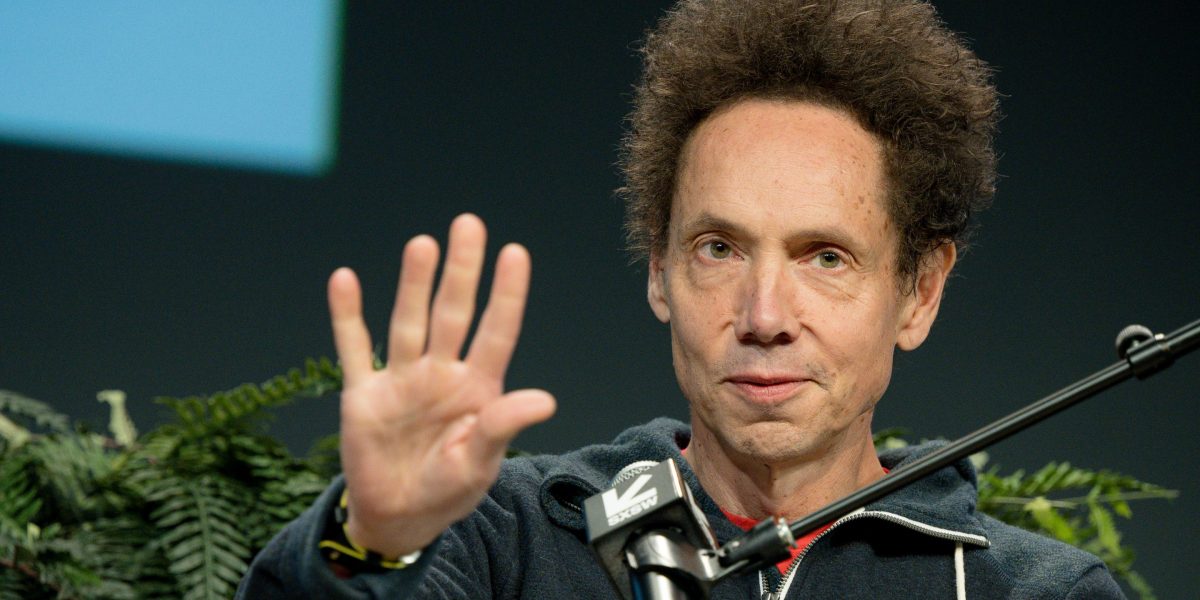
If you have sky-scraping dreams of attending an Ivy League university, maybe reconsider, according to author Malcolm Gladwell.

“If you want to get a science and math degree, don’t go to Harvard,” Gladwell said in a Google Zeitgeist talk in 2019.

Gladwell clarified in a recent episode of the Hasan Minhaj Doesn’t Know podcast the risk of applying for Harvard University to pursue a STEM degree is fine if you’re able to compete with the top students in your major. But for many students, matriculating at an elite institution means flailing, increasing the risk of dropping out and finding a dream job.

“If you’re interested in succeeding in an educational institution, you never want to be in the bottom half of your class. It’s too hard,” Gladwell told podcast host Minhaj. “So you should go to Harvard if you think you can be in the top quarter of your class at Harvard. That’s fine. But don’t go there if you’re going to be at the bottom of class. Doing STEM? You’re just gonna drop out.”

Gladwell instead encourages prospective college students to pick their second or third choice school, somewhere they have a shot at being at the top of their class.

For all of Gen Z’s interest in pursuing trades as they navigate fears of AI displacing entry-level workers, STEM degrees remain a key ticket to secure white-collar employment. According to a Federal Reserve Bank of New York analysis released in July about job market conditions for recent college graduates, degrees in animal and plant sciences, and earth sciences, as well as civil and aerospace engineering, are among the undergraduate majors with the lowest unemployment rates. To be sure, information systems and management, and computer science degrees, ranked among majors with the highest unemployment rates. 

Ivy League colleges continue to be among the top-ranked universities based on graduation rates, peer assessment, and other factors, according to U.S. News & World Report data.

Big fish, little pond

Gladwell’s opposition to most students attending an elite university is based on the relative deprivation theory, or the idea humans base our self-assessments relative to those around us, not based on our position relative to the rest of the world. In his 2013 book David and Goliath, Gladwell also called this the big fish in a little pond phenomenon.

He cites data about two universities: Harvard and Hartwick College, a small liberal arts school in upstate New York. He saw at both schools, despite their differences in size and rigor, both have similar distribution in STEM degrees based on high-scoring and low-scoring SAT results, with lower-scoring students dropping out from STEM programs at a higher rate than higher-scoring students. He concluded one’s success is based not on their raw skills, but rather on how they stack up compared to their peers.

“Persistence in science and math is not simply a function of your cognitive ability,” Gladwell said in 2019. “It’s a function of your relative standing in your class. It’s a function of your class rank.”

Gladwell notes getting a degree—moreso than the institution where the degree is from—is key to building confidence, motivation, and self-efficacy in young graduates.

It’s not just on the students to succeed, however. According to Gladwell, the benefits a student gets from being at the top of their class warrants a change of paradigm in how workplaces select new hires. He said workplaces should even go so far as to implement a practice of not even asking from which college prospective hires graduated from, but rather where they ranked among their classmates.

“When you hear some institution, some fabulous Wall Street investment bank, some universities, say, ‘we only hire from the top schools,’ you should say: ‘You moron, hire from the top students from any school under the sun.’”


Source link

Continue Reading

Business

Winter storm cancels more than 1,000 flights in the Northeast and Great Lakes regions as state of emergency declared in N.Y., N.J.

Published

on


More than a thousand flights were canceled or delayed across the Northeast and Great Lakes regions due to snow as thousands took to U.S. roads and airports during the busy travel period between Christmas and New Year’s.

As of Saturday morning, New York City had received just under three inches of snow — roughly half of what some forecasts had predicted. At least 1,500 flights were canceled from Friday night into Saturday, according to flight-tracking service FlightAware.

Newark Liberty International Airport, John F. Kennedy International Airport and LaGuardia Airport posted snow warnings on the social media platform X on Friday, cautioning that weather conditions could cause flight disruptions.

The National Weather Service warned of hazardous travel conditions from the Great Lakes through the northern mid-Atlantic and southern New England, with the potential for tree damage and power outages. Forecasters said the storm was expected to weaken by Saturday morning.

Ahead of the storm, New York Gov. Kathy Hochul declared a state of emergency for more than half of the state. Acting New Jersey Gov. Tahesha Way declared a state of emergency for all of New Jersey, “due to a severe winter storm causing dangerous weather conditions, including heavy snow, sleet, and freezing rain.”

“This storm will cause dangerous road conditions and impact holiday travel,” Way said in a statement. “We are urging travelers to avoid travel during the storm and allow crews to tend to the roads. Drivers should plan their travel accordingly, monitor conditions and road closures, and follow all safety protocols.”

This story was originally featured on Fortune.com


Source link

Continue Reading

Business

California drops lawsuit to reinstate federal bullet train funding as high-speed rail authority seeks private investors
Published

on


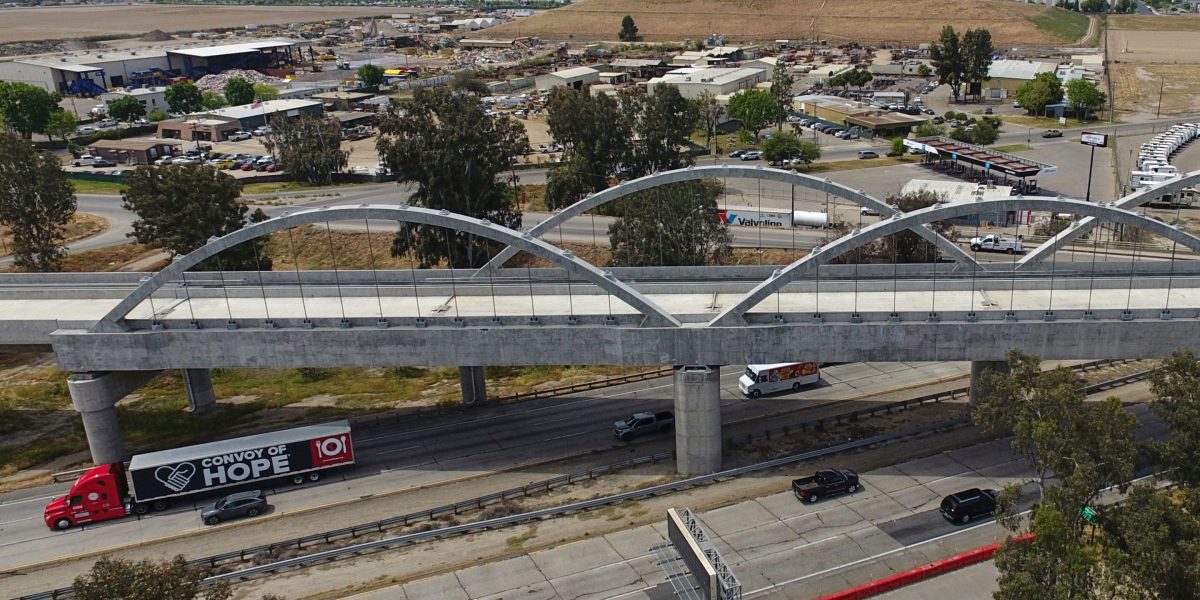
California this week dropped a lawsuit officials filed against the Trump administration over the federal government’s withdrawing of $4 billion for the state’s long-delayed high-speed rail project.

The U.S. Transportation Department slashed funds for the bullet train aimed at connecting San Francisco to Los Angeles in July. The Trump administration has said the California High-Speed Rail Authority had “ no viable plan ” to complete a large segment of the project in the farm-rich Central Valley.

The authority quickly filed a lawsuit, with Democratic Gov. Gavin Newsom calling the federal government’s decision “a political stunt to punish California.”

The authority said this week that it would focus on other funding sources to complete the project, which is estimated to cost more than $100 billion.

“This action reflects the State’s assessment that the federal government is not a reliable, constructive, or trustworthy partner in advancing high-speed rail in California,” an authority spokesperson said in a statement.

The Transportation Department did not respond to a request for comment. President Donald Trump and Transportation Secretary Sean Duffy have both previously criticized the project as a “train to nowhere.”

“The Railroad we were promised still does not exist, and never will,” Trump said on his social media platform Truth Social in July. “This project was Severely Overpriced, Overregulated, and NEVER DELIVERED.”

The authority’s decision to drop the lawsuit comes as the group seeks private investors to support the bullet train. The project recently secured $1 billion in annual funding from the state’s cap-and-trade program through 2045.

The program sets a declining limit on total planet-warming emissions in the state from major polluters. Companies must reduce their emissions, buy allowances from the state or other businesses, or fund projects aimed at offsetting their emissions. Money the state receives from the sales funds climate-change mitigation, affordable housing and transportation projects, as well as utility bill credits for Californians.

The rail authority said its shift in focus away from federal funding offers “a new opportunity.”

“Moving forward without the Trump administration’s involvement allows the Authority to pursue proven global best practices used successfully by modern high-speed rail systems around the world,” a spokesperson said in a statement.

This story was originally featured on Fortune.com


Source link

Continue Reading

Business

Kennedy Center seeks $1 million in damages from musician who canceled show after Trump name added

Published

on


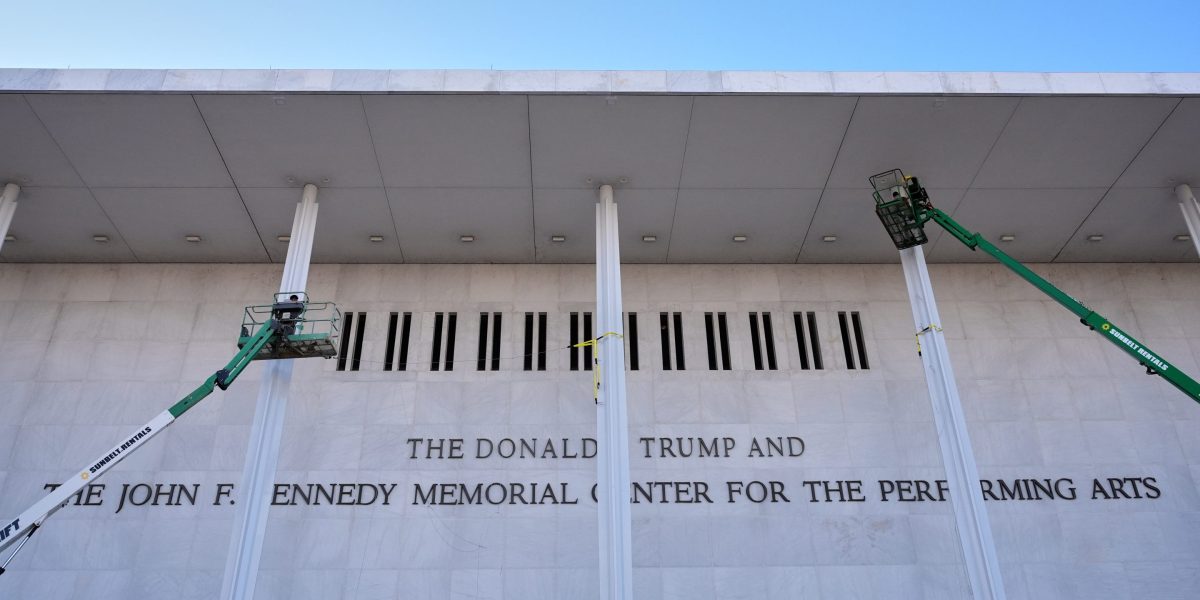
The president of the Kennedy Center on Friday fiercely criticized a musician’s sudden decision to cancel a Christmas Eve performance at the venue days after the White House announced that President Donald Trump’s name would be added to the facility.

“Your decision to withdraw at the last moment — explicitly in response to the Center’s recent renaming, which honors President Trump’s extraordinary efforts to save this national treasure — is classic intolerance and very costly to a non-profit Arts institution,” the venue’s president, Richard Grenell, wrote in a letter to musician Chuck Redd that was shared with The Associated Press.

In the letter, Grenell said he would seek $1 million in damages “for this political stunt.”

Redd did not immediately respond to a request for comment.

A drummer and vibraphone player, Redd has presided over holiday “Jazz Jams” at the Kennedy Center since 2006, succeeding bassist William “Keter” Betts. In an email Wednesday to The Associated Press, Redd said he pulled out of the concert in the wake of the renaming.

“When I saw the name change on the Kennedy Center website and then hours later on the building, I chose to cancel our concert,” Redd said. He added Wednesday that the event has been a “very popular holiday tradition” and that he often featured at least one student musician.

“One of the many reasons that it was very sad to have had to cancel,” he told the AP.

President John F. Kennedy was assassinated in 1963, and Congress passed a law the following year naming the center as a living memorial to him.

Grenell is a Trump ally whom the president chose to head the Kennedy Center after he forced out the previous leadership. According to the White House, Trump’s handpicked board approved the renaming, which scholars have said violates the law. Kennedy niece Kerry Kennedy has vowed to remove Trump’s name from the building once he leaves office, and former House historian Ray Smock is among those who say any changes would have to be approved by Congress.

The law explicitly prohibits the board of trustees from making the center into a memorial to anyone else, and from putting another person’s name on the building’s exterior.


Source link

Continue Reading

Trending

Copyright © Miami Select.