
Business
Down Arrow Button Icon

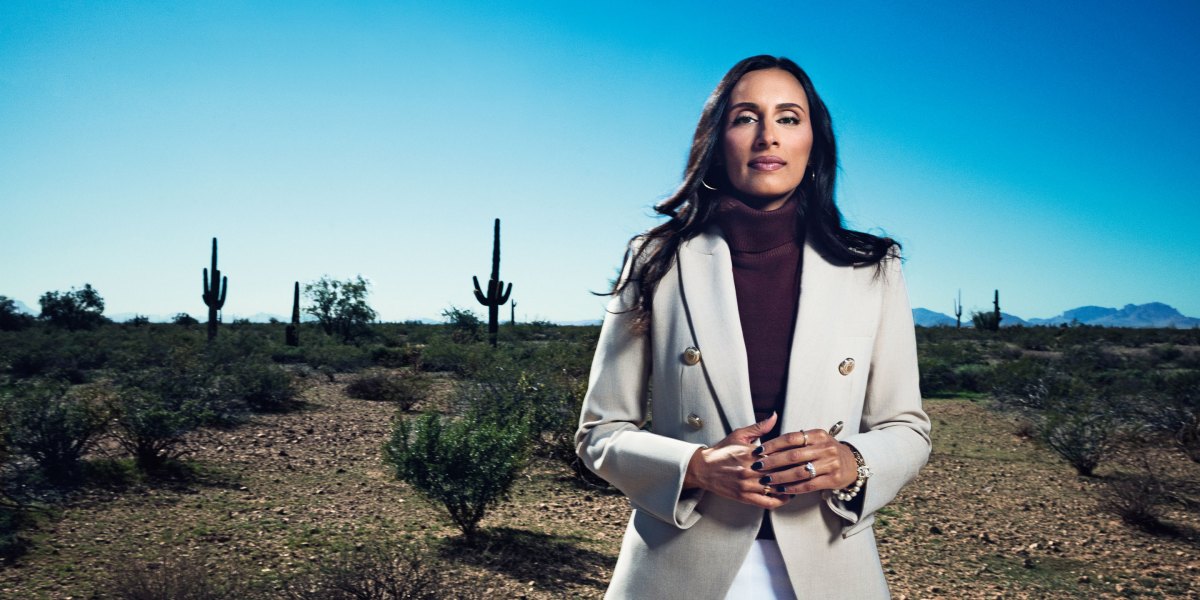
The land around Hassayampa Ranch, 50 miles west of Phoenix, is dotted with saguaro cacti and home to coyotes, jackrabbits, and rattlesnakes. Its few hundred human residents were largely drawn by the tranquility and clear skies for stargazing.
But several of the biggest names in Silicon Valley are suddenly very interested in what happens on this serene stretch of desert. The region once dominated by ranches and farmland is becoming a new kind of tech hub—one that’s largely unpeopled, made up of row upon row of humming, energy-hungry GPU racks in gigantic AI data centers.
At a weekday morning hearing earlier this month, nearly an hour and a half away in downtown Phoenix, the Maricopa County Board of Supervisors approved an amendment that would allow for the industrial rezoning of a 2,000-acre property at Hassayampa Ranch. The developer, Anita Verma-Lallian, bought this vast tract of desert in May 2025 in a $51 million deal backed by heavyweight tech investors including the billionaire venture capitalist, podcast cohost, and Trump mega-donor Chamath Palihapitiya. The plan? A massive AI data center project that will likely draw a major cloud provider or Big Tech “hyperscaler” such as Meta, Google, or OpenAI.
“We have probably six to eight large hyperscalers that are interested in looking at it,” Verma-Lallian told Fortune. In a crisp gray jacket and narrow black slacks, with a chartreuse clutch in hand, Verma-Lallian emerged victorious from the supervisors’ auditorium into the midmorning desert light. She and her team—including her lawyer, real estate agent, PR rep, personal assistant, and sister—grinned in a group photo to mark the moment.
For this 43-year-old daughter of Indian immigrants raised in Scottsdale, the vote represented yet another milestone in her family’s American success story. Her father, Kuldip Verma, founded Vermaland—now one of Arizona’s major land and real estate companies—back in the mid-1990s, and Verma-Lallian has built a profile in her own right as a land developer with decades in the business. The Hassayampa Ranch deal, along with another 2,069-acre land parcel in nearby Buckeye that she sold in August for $136 million, has positioned her as a rising force in Arizona’s AI infrastructure race.
The crucial and unanimous Dec. 10 decision on Hassayampa Ranch means that Verma-Lallian can now submit a detailed zoning application and site plans. The giant data center will feature outsize buildings filled with aisles of GPU server racks, round-the-clock cooling systems, and 1.5 gigawatts of power—equivalent to the power needs of over a million homes. It will cost as much as $25 billion to build, Verma-Lallian and Palihapitiya have said.
Sharon Goldman
It’s a familiar story across the country: These mega-scale data center projects, providing the computing power underpinning the AI boom and the U.S. race against China to dominate the sector, are changing landscapes, straining energy grids and water tables, and reshaping the economy.
And those hyperscalers—including Alphabet, Amazon, and Meta, as well as fast-growing AI companies such as OpenAI and Anthropic—are spending hundreds of billions a year to build out the physical footprint of their AI businesses. Data center equipment and infrastructure spending is on track to rise to a trillion dollars a year by 2030.
Data center projects are touching off tense fights among developers, environmentalists, and rural residents—many of which end up in places like the Maricopa County supervisors’ auditorium, where locals take turns at the microphone with Silicon Valley–backed developers, and local officials accustomed to approving local ordinances and budgeting for municipal departments debate the merits of multibillion-dollar projects.
A nationwide AI data center boom
For much of the past two decades, data centers were among the least visible pieces of the tech economy—plain, boxy buildings that quietly powered websites, email, and cloud computing, drawing little public notice. The rise of generative AI has changed that. Its enormous appetite for computing power has transformed once-modest server farms into sprawling mega-complexes spanning millions of square feet and consuming electricity on the scale of a midsize city, along with vast quantities of water.
The Trump administration has made winning the AI race with China a central priority, pushing an AI Action Plan designed to accelerate data center approvals and expand the nation’s power grid—even as it has stalled renewable energy development.
In an era when AI infrastructure investment accounts for a growing share of U.S. economic growth, both Republicans and Democrats are vying to prove they can get projects built quickly—a priority that aligns with those of deep-pocketed tech and infrastructure investors who have built and consolidated their political influence as demand for computing power has surged. For example, Palihapitiya’s All-In podcast cohost, venture capitalist David Sacks, is now Trump’s “AI and crypto czar,” helping steer federal strategy on AI competitiveness and infrastructure.
In 2025, AI data centers emerged as a political flash point, fueling heated debates and grassroots campaigns over power, water, land, and jobs. Critics, many from the left but also including populist Republicans such as Sen. Josh Hawley of Missouri and Florida Gov. Ron DeSantis, warn they are driving up electricity costs and straining scarce water supplies. Meanwhile supporters (again, from both sides of the aisle) argue they can deliver economic growth and long-sought tax revenue to struggling communities.
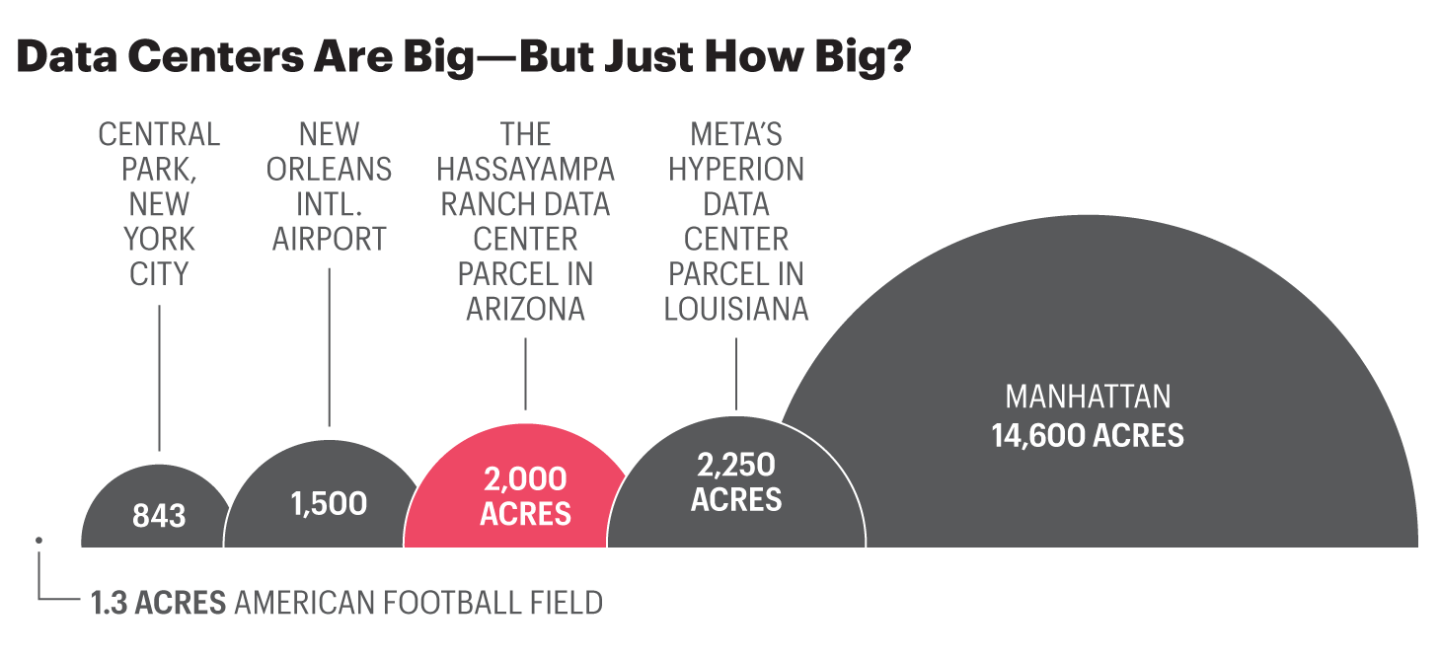
Graphic by Nicolas Rapp
There is Meta’s $10 billion, 2,250-acre Hyperion facility underway in northeast Louisiana, where residents have complained about increased traffic and safety risks near schools and homes. There is Dunn County, Wisconsin, where a planned data center near the small city of Menomonie has drawn statewide pushback from those opposed to building on prime farmland and concerned about a lack of transparency. And there is Coweta County, a fast-developing exurb southwest of Atlanta where residents are fighting back against planned data center proposals that could cause utility strain, noise, and light pollution.
Verma-Lallian’s plan is no exception: Her project has already stirred alarm among community members adjacent to the land who fear the impact on the wells that offer their only access to water, as well as how their rural desert lifestyle and property values will be affected by noise, construction, and rising energy costs. It is a microcosm of the quiet but explosive conflict unfolding at the edges of America’s AI build-out.
Water, electricity, noise, and disruption
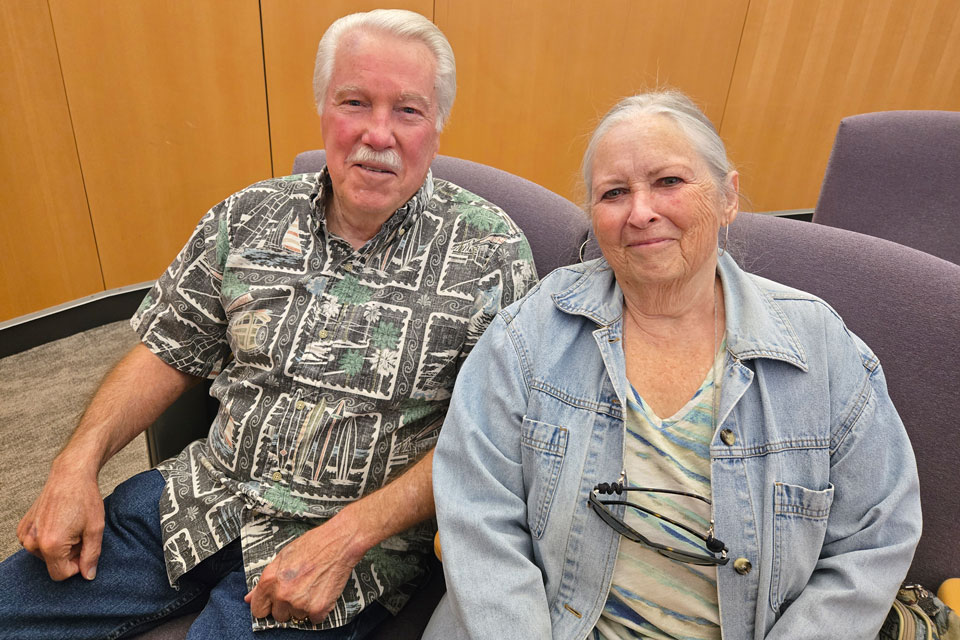
As Verma-Lallian celebrated with her team outside the Maricopa County Board of Supervisors’ auditorium, Kathy and Ron Fletcher, ages 76 and 78 respectively, stood to the side, alone. The retirees and grandparents, clad in jeans, moved from California to Arizona in 2020 to live on a one-acre residential plot next to the Hassayampa Ranch site, drawn by the beautiful desert views and sunsets.
They were not surprised by the ruling, but they were frustrated. In their unincorporated rural community of Tonopah, Kathy Fletcher said, residents have little money, time, or political leverage to mount an effective opposition. (District 3 Supervisor Debbie Lesko, a former member of Congress whose district includes Tonopah, declined Fortune’s requests for comment.)
“All we can do is plead with the people here,” said Kathy Fletcher, noting that she and Ron were the only residents to drive more than an hour to the Maricopa County meeting on a weekday morning. “We’re kind of treated like the redheaded stepchild, and they just think they can throw anything they want out here,” she said. “We’re having a difficult time fighting the battle to tell people, ‘You can make a difference.’”
Sharon Goldman
The Fletchers’ next-door neighbor, Cherisse Campbell, who owns a hatchery for heritage turkeys, gathered nearly 200 signatures on a Change.org petition that focused on the environmental impact of potential light and noise pollution; traffic and infrastructure strain; and the negative impact on property values.
Campbell, 38, was born and raised in Maricopa County, spending most of her childhood in Surprise, a northwest Phoenix suburb “back when there were only orange groves and desert and a big ostrich farm.” She spoke virtually at the meeting, where she said her free-range birds, which “exercise natural mating, nesting and young-rearing behaviors,” would face hazards with the arrival of big industry. “We don’t need or want paved roads or structures surrounded by concrete that will exacerbate the heat island effect of the summer,” she said. “Connecting a main road designed for high-volume traffic from the I-10 to this site will present a destructive nightmare for these rural residents (and my birds).”
And Tonya Pearsall, a 51-year-old mother of five who has lived in Tonopah since 1999 and runs a small dog-breeding business, Little Loves Maltipoos, said she had spent several weekends going door-to-door to get 100 residents to sign another petition against Verma-Lallian’s project. “My main concern is water; we are all on wells out here,” she said.
Michele Van Quathem, Verma-Lallian’s water attorney, said that once the zoning process for the data center is completed, the project would likely partner with Global Water Resources, the public service water provider for the area, or the tenant could supply its own water—which could include digging its own groundwater wells or building on-site water storage or recycling systems. Estimated water usage will be known with more certainty, she said, as site planning and user discussions progress, but she emphasized, “Water sources will need to comply with Arizona’s water laws, including strict groundwater management laws for the Phoenix Active Management Area where the project is located.”
Verma-Lallian said the development will observe setbacks from residences and preserve washes—natural desert channels that are typically dry but carry heavy flows during monsoon rains. She understands that area residents “prefer to see homes or nothing at all, so they’re not thrilled with what we’re trying to do out there.” But, she said, “I think we’ll plan it in a very thoughtful way” with a design that’s “aesthetically appealing.”
Verma-Lallian’s land-use attorney, Wendy Riddell, acknowledged that residents often feel a sense of attachment to open land they’ve long used for hiking, horseback riding, or off-roading—even when that land is privately owned. And she pointed out that Tonopah residents will have the chance to weigh in later in the process, during site-plan review.
At that stage, she said, developers typically work with neighbors on issues such as building setbacks, view corridors, landscaping, and building height. “Those are very typical things we work through on a zoning application with concerned citizens,” Riddell said.
A bottleneck for AI growth—and an opportunity
Verma-Lallian, who lives in Paradise Valley, Ariz., with her husband, son, and daughter, may have Silicon Valley ties, but she also brings a Hollywood sheen that has jarred some in the rural community. She made headlines last year for buying the Pacific Palisades home where the Friends actor Matthew Perry drowned. In 2023 she founded a film production company, Camelback Productions. And she plans to build a movie studio on another Arizona property, not far from the data center site.
During a drive to Hassayampa Ranch, Verma-Lallian and Scott Truitt, a real estate agent who has worked with both her and her father for decades, passed parcel after parcel of land she owns. Truitt gestured toward sites on either side of the road, noting properties Verma-Lallian had bought and sold over the years that are now residential developments, warehouses, retail stores, and gas stations.

Graphic by Nicolas Rapp
After the previous owners of the Hassayampa Ranch property had gotten residential zoning for a master planned community of thousands of homes, the market crashed in 2008 and the project stalled. But even as the market recovered, the project faced a new obstacle: Around three years ago, Arizona water regulators stopped issuing new certificates of assured water supply, a prerequisite for large-scale residential construction—making the original housing plan far harder to revive.
That regulatory constraint did not apply to industrial uses like data centers, which are not required to obtain a certificate of assured water supply as part of the zoning process, even though their water needs can rival or exceed those of residential developments. The distinction helped open the door for Verma-Lallian to acquire the land for a different use—one that did not require proving a long-term water supply upfront.
The site checked several critical boxes: It sits near the nuclear Palo Verde Generating Station. It has a natural gas pipeline close enough that a future data center could be paired with new gas-fired plants to generate power. And—most importantly—it offers scale. At roughly 2,000 acres, the property is large enough to support a massive data center campus, something Verma-Lallian said is increasingly rare in the West Valley. “There just aren’t many privately owned sites left of this size,” she said, noting that only about 17% of land in Arizona is privately held, with the rest controlled by the state, the federal government, or Native American tribes.
The changes happening in Arizona’s West Valley seem almost inevitable as development pushes relentlessly west from Phoenix. Hassayampa Ranch is close to the 25,000-acre site that Bill Gates purchased in 2017 with plans to build Belmont, a $100 million smart city with tens of thousands of homes, self-driving cars, and high-speed digital infrastructure (though the land remains as yet undeveloped). Buckeye, the closest city to Tonopah and the Hassayampa Ranch site, has grown from a population of 91,000 residents five years ago to 130,000—gaining thousands during the pandemic. A Costco has moved in and a Target is coming soon.
While Verma-Lallian’s site has seen some community pushback, in general Arizona is pro-growth, Truitt said: “Everybody wants to do a data center here.” In the West Valley, much of the land changing hands once belonged to farmers, he added. Rising land prices and other pressures have made agriculture increasingly untenable, and many aging farm owners have no next generation willing to take over. “They’re just sitting on the land,” he said. He pointed out dairy farms, with cows visible from the road: “They’ll be pushed out eventually by development. They’ve sold a lot of their property.”
The AI data center boom has drawn tech investors who see land and power as the next bottlenecks in the AI economy—and therefore the next big opportunity. Chamath Palihapitiya, the billionaire investor who has bragged about his easy access to the White House, said his stake in Hassayampa Ranch with Verma-Lallian is his first data center investment. The business partners met through a mutual friend, the fintech founder Ethan Agarwal, who is running as a “fiercely pro-capitalism” Democrat for governor of California. Verma-Lallian declined to comment on her own politics, but in the past she has donated to Democrats including Hillary Clinton.
“Other than owning my home, I don’t own any real estate,” Palihapitiya said. “I didn’t consider it part of my investing circle of competence until realizing the energy-plus-data-center aspect.”
He sees the massive AI infrastructure build as similar to the development of the internet and mobile, he explained, though in those earlier investment eras, energy was not a critical determinant of success. “In the AI generation, it is a fulcrum asset,” he said. “And the most obvious wrapper of energy is the data center. Hence my interest.”
The “greater good”—but for whom?
While Verma-Lallian appreciates the landscape surrounding Hassayampa Ranch, (“It’s so peaceful and beautiful,” she said) she frames her development as a practical choice.
She cited her own experience living in a condo building in Old Town Scottsdale, where a proposed high-rise would block residents’ view of Camelback Mountain. “Everyone was really upset about it, but the development moved forward,” she said. “It was a hotel that was good for the community, bringing tourism revenue to the city.”
Of Hassayampa Ranch, she said, “You have to look at the greater good of what it does to those communities. Keeping zoning frozen in time can limit a community’s ability to adapt, grow responsibly, and plan for future demand.” Still, Verma-Lallian acknowledged that residents of Tonopah “probably see me as more of a developer, just trying to make money.”
Her ambitions extend beyond data centers. With many Hollywood productions leaving California, Verma-Lallian said she plans to develop another nearby site—located just off Interstate 10 and not far from Hassayampa Ranch—into a movie studio complex that would also include an indoor amusement park and a smaller data center.
“It’s only about four and a half hours from Burbank,” she said, adding that she now spends roughly a quarter of her time on film production. She was a producer on the 2024 film Doin’ It, which premiered at SXSW, as well as Patel, a Shakespeare reimagining that wrapped production this summer and stars Kal Penn. She also recently finished a project featuring Wicked star Cynthia Erivo in London and has two other films in the works.
AI development has moved at such breakneck speed that despite the billions pouring into new facilities, a central unknown remains: whether the sheer volume of compute now under construction will be needed on the timelines companies are betting on. If demand slows, shifts, or becomes more concentrated, the data center boom could turn into a bust. But after decades in real estate, Verma-Lallian said she is unfazed by the possibility of a data center downturn. If demand shifts, she said, the sites she has developed could be repurposed for manufacturing, distribution, or other industrial uses. “The trends do keep changing,” she said. “But the way you build these facilities is very similar.”
Still, Verma-Lallian breathed a sigh of relief after the vote. She was aware of the petitions and emails opposing her project, and while she was confident she’d prevail, it was by no means a foregone conclusion. Another AI data center project in Chandler, a bustling suburb southeast of Phoenix, was voted down by city officials this month after massive pushback from residents, even though it was backed by former Arizona Sen. Kyrsten Sinema.
After her triumph at the Maricopa County Board of Supervisors hearing and a quick tour of Hassayampa Ranch, Verma-Lallian headed back to Los Angeles, where a meeting with Netflix and a call with an investor awaited.
Back in Tonopah, Kathy Fletcher said she bears Verma-Lallian no ill will—even as she continues to oppose the project. “I think she’s a very successful young lady,” Fletcher said. “I wish her a lot of success. I just don’t want a data center in my backyard.”
For others in the community, the sense of loss feels personal. “We used to be able to see the Milky Way—that’s why we moved out here,” said Tonya Pearsall. “I’m not anti-growth. I’m conservative. I get capitalism.”
But to allow industrial development on this otherworldly desert, with its vibrant ecosystem of washes and saguaro? “It’s painful,” she said. “I could break down and cry.”
Business
Why over 80% of America’s top CEOs think Trump would be wrong not to pick Chris Waller for Fed chair
Since the founding of the Federal Reserve in 1914, the United States has had 16 Fed chairs, yet rarely has the selection of the nation’s central-bank leader captured such sustained media and political attention as the spectacle which his playing out right now. Of course, this is by design; at least since the debut of The Apprentice in 2004, Donald Trump has reveled in transforming senior hiring decisions into a public spectacle—casting staffing choices as a form of modern gladiatorial entertainment. While this approach has drawn criticism, including my original 2004 critiques in the WSJ, it also has the paradoxical virtue of rendering candidates’ strengths, weaknesses, and temperaments unusually transparent.
Much of the media’s attention has centered on Kevin Hassett and Kevin Warsh as the presumptive front-runners to be next Fed Chair. Both are highly respected, with long track records of public service and honorable character. But whether fairly or not, their perceived weaknesses have been under a magnifying glass, creating an opening for an ascendant dark horse who is drawing growing backing from the top CEOs of the nation’s largest enterprises.
CEOs are gravitating towards that dark horse candidate, current Fed Governor Chris Waller, because while he may lack the White House network of other top contenders; he is quickly emerging as perhaps the only candidate who can cut interest rates with broad-based credibility and build broad consensus around those needed rate cuts, both at the Fed as well as across corporate America and within financial markets.
A great irony in President Trump’s jawboning of the Fed is that Trump is perhaps his own worst enemy in trying to force interest rates down. Ironically, the belief that interest rates need to come down is shared not only among economists across ideological anchoring, and not only among many top business leaders, but even many of Trump’s most vocal critics. We have previously written several publications calling for the Fed to lower interest rates, pointing out that entire sectors, such as homebuilders, are getting hammered unnecessarily from holding rates so high for so long.
CEOs care about interest rates coming down, but they care even more about Fed independence. History is clear: countries that politicize their central banks set themselves on a path towards monetary purgatory and collapse. That’s why Trump’s brazen interventions at the Fed have wreaked havoc in the markets, with bond investors in active revolt and with long-term bond yields rising by 20 basis points after some pointed commentary from Trump.
Chris Waller is perhaps the only choice for Fed Chair who can thread the needle. Unlike other top contenders, Waller’s calls for rates to come down reflect not convenient political posturing nor obsequious flattery, but genuine intellectual conviction. Waller has been incredibly consistent and correctly prescient across his entire career at the Fed; he correctly pointed to signs that the economy, and in particular employment, was softening, and has been calling for rates to come down for far longer than any of his peers at the Fed.
Yet, at the same time, Waller has emphasized and defended central bank independence time and time again, building off his own academic research which was focused on the importance of central bank independence. Indeed, prior to Waller’s public service at the Fed starting in 2009, he was a renowned academic with a long track record of groundbreaking economic research, including as professor and the Gilbert F. Schaefer Chair of Economics at the University of Notre Dame.
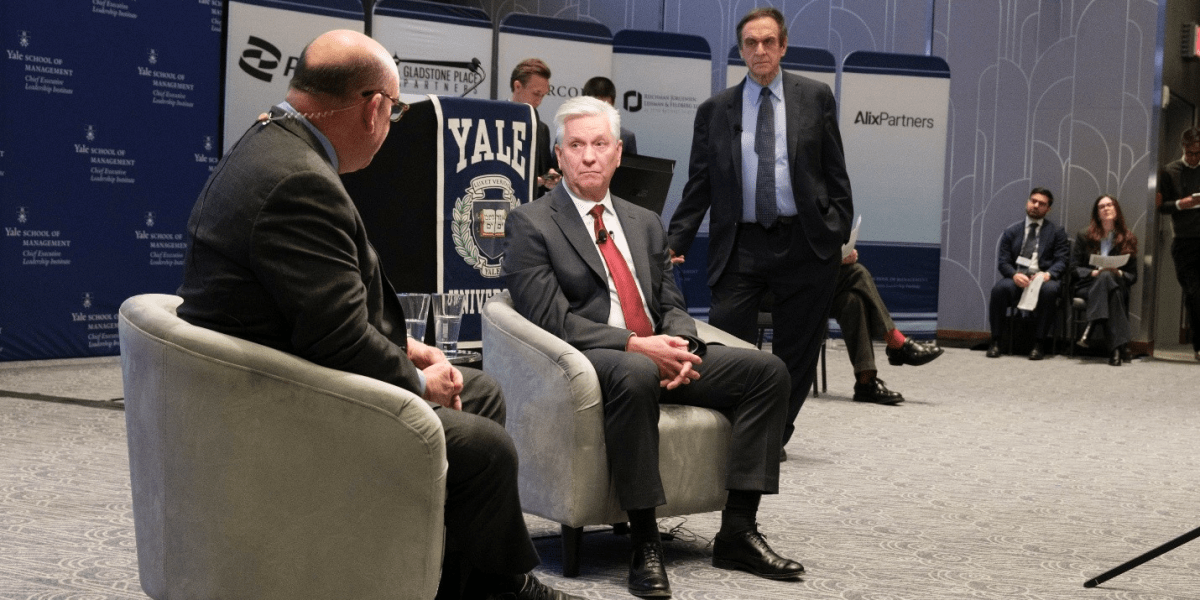
Financial markets have already offered a preview of how they would respond to a potential Waller nomination — decidedly positively. When CNBC broadcast live Waller’s hour-long plus Q&A with 200 top CEOs in attendance at our Yale CEO Summit last week after a moderated Q&A with CNBC’s Steve Liesman; stocks rallied and bond yields fell in real time as Waller called for rates to come down, pointing to softening employment numbers, while simultaneously pledging to defend central bank independence. No other contender for Fed Chair has sparked such a positive market reaction.
courtesy of the Yale Chief Executive Leadership Institute/Photographer Donovan Marks
Waller is a lifelong Republican who has a knack for getting along with very different constituencies, all of whom respect his genuine expertise, personal humility and willingness to listen. Even CEOs who disagreed with certain aspects of Waller’s arguments clearly appreciated his constructive engagement, as well as his intellectual honesty and independence. When we polled the room, as reported by Nick Timiraos of The Wall Street Journal, a whopping 81% of CEOs picked Waller as their top choice for Fed Chair, building on prior polls done by CNBC showing a majority of market participants prefer Waller, as well as prominent endorsements from publications such as The Economist.
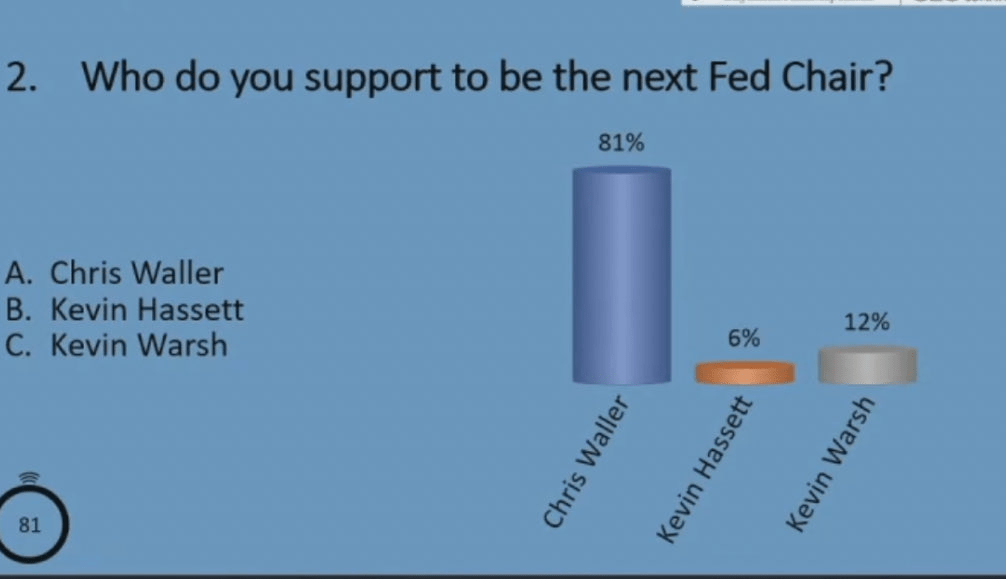
Many CEOs at our Yale CEO Summit expressed their appreciation for Waller’s long track record of partnering effectively with business leaders on challenges as well as opportunities. Take crypto innovation as one such example. As the Fed Governor who oversees the payment system, Waller was once again correctly prescient as an advocate of stablecoins dating back to before 2021, when few knew what stablecoins even were, and he convened the first ever Payments Innovation Conference earlier this year, bringing in top leaders from industry to help shape the future of stablecoin payments.
President Harry Truman lamented, “Give me a one-handed economist. All my economists say, ‘on ONE hand…’, then ‘but on the other.’” Business leaders appreciate Waller’s serious and decisive style, his systemic economic knowledge, his track record of constructive engagement, his clarity of message, and his credible presence, which transcend political or personal career agendas.
The opinions expressed in Fortune.com commentary pieces are solely the views of their authors and do not necessarily reflect the opinions and beliefs of Fortune.
Business
I pioneered machine teaching at Microsoft. Building AI agents is like building a basketball team, not drafting a player
Business
Ex-Palantir turned politician Alex Bores says AI deepfakes are a ‘solvable problem’ if we bring back a free, decades-old technique


Why over 80% of America’s top CEOs think Trump would be wrong not to pick Chris Waller for Fed chair

Brooklyn and Nicola Beckham Ditch David and Victoria on Christmas

Wyman Duggan seeks changes in Jacksonville Aviation Authority scope
-

 Politics8 years ago
Congress rolls out ‘Better Deal,’ new economic agenda
-
Entertainment8 years ago
New Season 8 Walking Dead trailer flashes forward in time
-
Politics8 years ago
Poll: Virginia governor’s race in dead heat
-
Entertainment8 years ago
The final 6 ‘Game of Thrones’ episodes might feel like a full season
-
Politics8 years ago
Illinois’ financial crisis could bring the state to a halt
-
Entertainment8 years ago
Meet Superman’s grandfather in new trailer for Krypton
-
Business8 years ago
6 Stunning new co-working spaces around the globe
-
Tech8 years ago
Hulu hires Google marketing veteran Kelly Campbell as CMO