The Lions will be home for the playoffs this season
You shouldn’t be surprised.
The only NFC team to never even get to a Super Bowl won’t be going again this year.
Minnesota’s Christmas Day win over Detroit eliminated the Lions from playoff contention and dropped the NFC North pretenders to 8-8 on the season.
“It sucks,’’ Detroit quarterback Jared Goff said. “We’ll look back at the season after next week. But yeah, it sucks.’’
How It Fell Apart
It started last offseason, just after the team that was the No. 1 seed in the NFC got bounced in their first playoff game by sixth-seeded Washington.
When the Lions offensive coordinator Ben Johnson left to become head coach of the Chicago Bears and defensive coordinator Aaron Glenn followed and became head coach of the New York Jets it left voids on both sides of the ball that could not be filled.
It also left head coach Dan Campbell as vulnerable as Goff looked on Christmas Day against the Vikings. Campbell, who has now watched his team go from a blown NFC Championship Game to a top seed being bounced early to a .500 team, is a great motivator, an emotional wizard, a former player who tries to get the most from his team.
What Campbell isn’t good at is the x’s and o’s, the game planning, the play calling, you know actual coaching.
Same Old Lions
The crazy part of this is the Lions started the season 4-1 and were 6-3 just past the midpoint (if there’s a midpoint of a 17-game season). Losses in four of their last five games when it mattered the most has them sitting out the playoffs just like they used to do. And, of course, not going to a Super Bowl.
“At the end of the day you’ve got to tip your hat off to them. They had a good game plan, and we weren’t ready,” Lions Pro Bowl right tackle Penei Sewell said. “Simple as that.”
3 Dog Night
The text came bright and early Friday morning from my man Chuck Miller, who bets home underdogs religiously. All three ‘dogs covered Christmas Day, as Washington stayed within a touchdown of Dallas; the Vikings won outright and Kansas City stayed within a touchdown of Denver.
Go back to Thanksgiving Day and it wasn’t home ‘dogs. But Green Bay won as underdog in Detroit; Dallas won as an underdog against Kansas City and Cincinnati did the same in Baltimore.
So on the two big holiday slates underdogs went 6-0 ATS and were 4-2 straight up.
Going for No. 1
One of the more interesting games this week has nothing at all to do with the playoffs. The 2-13 Raiders host the 2-13 Giants. The loser will have a great chance to get the first pick in the 2026 draft. The winner could fall as far as the sixth overall pick. It might be fun to watch.
Here’s how the top 10 picks in the draft look with two weeks to go:
Both teams are red hot. Houston has won seven straight. Los Angeles has won seven of eight. Both still have a shot at their division titles. The Texans need to win out and hope Jacksonville loses to either the oldest QB in the league, Indy’s Philip Rivers, or the youngest QB in the league, Tennessee’s Cam Ward. The Chargers need to beat Houston and then beat Denver next week.
Seattle at Carolina, Sunday, 1 p.m.
It’s never easy to travel cross country, and all the Seahawks have to do is ask the Rams or the Packers about the Panthers chance of pulling an upset. The ‘Hawks are trying to hold on to the NFC’s top seed. The Panthers are trying to hold on to first place in the NFC South.
Chicago at San Francisco, Sunday, 8:20
The Bears played last Saturday night. The 49ers played last Monday night. So Chicago gets the edge there. The game is in Santa Clara, though, so home field could be a factor. Three of the Bears four losses have come on the road this season.
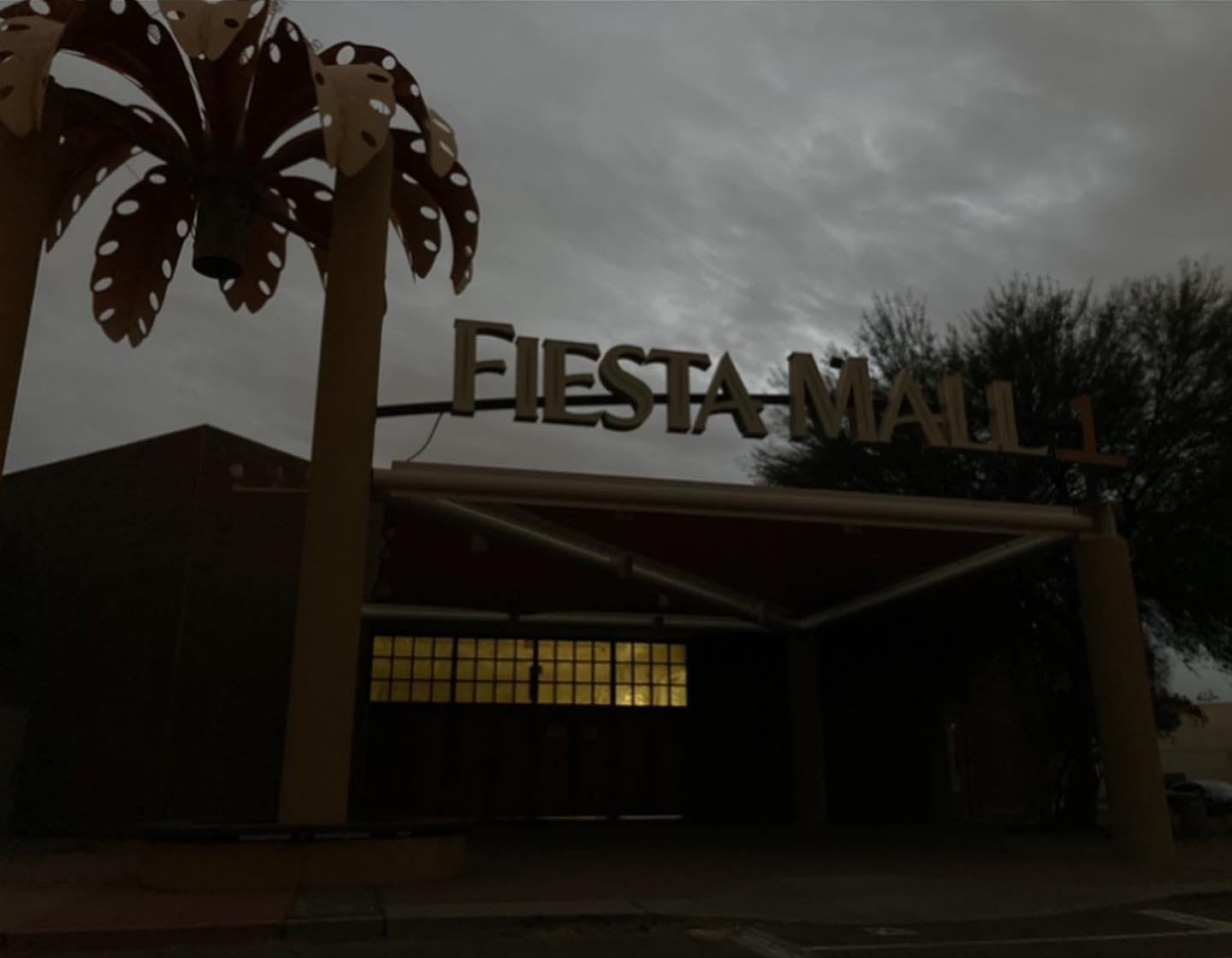
Mesa politicians want to be a stadium-village at the site of the old Fiesta Mall
Mesa Joins the Stadium-Village Trend
The calendar year 2026 is picking up right where 2025 ended. Another city is going to create an entertainment district with the hope of building a stadium-village. The goal is to attract a Major League Soccer franchise, a National Women’s Soccer League team, or both. The latest municipality is Mesa, Arizona, which is part of the Phoenix metropolitan area. Mesa is the spring training home of the Major League Baseball Chicago Cubs franchise and John Fisher’s Athletics franchise. Mesa also hosts an Arizona Fall League development team.
The Palo District Proposal
The Mesa City Council has approved the formation of the Palo District at a location where an abandoned mall is located. The district will feature restaurants, retail, lodging, offices, residences, and a “multi-use stadium that could include soccer.” The proposal promises to be an economic catalyst bringing jobs to the area. That is the standard line about these types of proposals.
“The Phoenix metropolitan area is a great place for it, and we’re able and willing to court them,” Mayor Mark Freeman said. “MLS, women’s soccer and there could be other sports venues as well.”
Quick Approval, Bigger Challenges
It took the Mesa city council about 12 minutes to approve the creation of the district. No Mesa residents attended the meeting. That was the easy part. Now comes the real work. Finding money to build the stadium-village, finding an owner, and then finding a league that wants to put a soccer team in Mesa.
There is no indication that Major League Soccer wants to expand in the near future. The league has been keeping an eye on developments in Indianapolis, where elected officials also want to build a stadium-village. The NWSL probably would have an interest in placing a team in the Phoenix area if a stadium becomes available.
Politicians Bet on Stadium-Villages
Politicians are falling in love with soccer-stadium villages. This is despite the fact there is no evidence they are an economic generator. The concept remains appealing as a way to bring sports, development, and jobs to cities. Mesa now joins the growing list of municipalities attempting to leverage this strategy for professional soccer.
Tampa Bay Rays pinch hiter Nick Fortes rounds the bases after hitting a solo home run against the Chicago Cubs during the ninth inning of a baseball game Saturday, Sept. 13, 2025, in Chicago. (AP Photo/Kamil Krzaczynski)
The Tampa Bay Rays’ new ownership group — led by Jeffrey Vinik, Dan Doyle Jr., and supported by MLB leadership under Commissioner Rob Manfred — has made it clear that the franchise’s future depends on securing 100 acres or more for a transformative stadium village. This isn’t just about building a new ballpark. It’s about creating a destination, a year‑round economic engine modeled after the wildly successful Battery Atlanta, home of the Atlanta Braves.
The Rays’ leadership has repeatedly emphasized that the franchise must evolve beyond the traditional stadium model. The team wants a multi‑use district that blends baseball with retail, restaurants, residential towers, hotels, office space, greenways, and entertainment venues. This is the formula that has redefined the Braves’ business model and reshaped expectations across professional sports.
Battery Atlanta didn’t just change how fans experience baseball — it changed how teams think about real estate. The Braves now generate revenue 365 days a year, not just during home games. Their district includes corporate headquarters, luxury apartments, boutique hotels, and a thriving restaurant scene. It is a self‑sustaining ecosystem, and the Rays want the same opportunity.
To replicate that success, the Rays need land — and lots of it. A downtown parcel simply cannot accommodate the scale of development required to build a modern sports village. The team’s vision requires space to grow, space to build, and space to create a district that can compete with the best in professional sports.
Why Modern Stadium Villages Require Massive Acreage
One of the biggest drivers behind the 100‑acre requirement is parking and transportation infrastructure. While many fans imagine stadiums as compact structures, the reality is that the surrounding infrastructure often consumes far more land than the stadium itself.
A standard parking ratio for major sports venues is one space per three to four attendees. For a 40,000‑seat stadium, that translates to at least 25,000 parking spaces. According to industry planning standards, that alone can require nearly 100 acres, depending on layout, access roads, and traffic‑flow design.
And that’s before considering:
Pedestrian plazas
Ride‑share zones
Transit hubs
Team operations facilities
Loading docks and service roads
Emergency access routes
When you add mixed‑use development — retail, restaurants, hotels, office towers, and residential units — the acreage requirement grows even larger. This is why teams across MLB and the NFL are moving away from tight downtown footprints and toward suburban or edge‑city developments where land is plentiful and development can be controlled.
Publications like USA Today, Sports Business Journal, and the Atlanta Journal‑Constitution have documented this shift extensively. Teams want control, flexibility, and long‑term revenue streams that downtown parcels rarely provide.
The National Trend: Stadium Villages Replace Downtown Ballparks
Across the country, professional sports franchises are embracing the stadium‑village model:
The Atlanta Braves built Battery Atlanta on more than 80 acres, transforming the franchise’s financial outlook.
The Texas Rangers developed a massive entertainment district around Globe Life Field.
The Chicago Bears are pursuing a 326‑acre redevelopment in Arlington Heights.
The Kansas City Chiefs have proposed a large‑scale entertainment district tied to their stadium plans.
The Tennessee Titans are building a new stadium surrounded by a multi‑use riverfront district.
This is the new playbook: teams want to be developers, not just tenants.
Downtown stadiums — once the gold standard — are increasingly seen as limiting. They lack parking, lack expansion room, and often lack the zoning flexibility needed for large‑scale mixed‑use development. Teams want to build mini‑cities, not just ballparks.
The Rays’ leadership understands this. They know that to compete in the modern sports landscape, they must create a district that attracts fans, residents, businesses, and tourists year‑round.
Why the Rays Can’t Settle for Less Than 100 Acres
The Rays’ current situation in St. Petersburg has long been criticized for its isolation and lack of surrounding development. The team’s new ownership wants to avoid repeating that mistake. They want a site that can support:
A state‑of‑the‑art ballpark
A walkable entertainment district
Residential towers
Corporate office space
Hotels and hospitality venues
Green space and public plazas
Transit and parking infrastructure
This is not possible on a cramped downtown parcel.
A 100‑acre site allows the Rays to build a destination, not just a stadium. It allows them to create a district that can host concerts, festivals, corporate events, and community gatherings. It allows them to generate revenue from real estate, not just baseball.
And most importantly, it allows them to build a franchise that can thrive for decades.
The Economics Behind the 100‑Acre Requirement
Sports economists and business analysts have noted that stadium villages are not just real estate projects — they are economic engines. They generate:
Sales tax revenue
Property tax revenue
Tourism spending
Job creation
Corporate relocation opportunities
Battery Atlanta alone has generated hundreds of millions in economic impact and has become a model studied by teams across the country.
The Rays want to replicate that success. They want to build a district that attracts businesses, residents, and visitors. They want to create a place where people live, work, and play — not just watch baseball.
To do that, they need land. And 100 acres is the minimum required to build a true stadium village.
Conclusion: The Future of the Rays Depends on Land
The Tampa Bay Rays are at a crossroads. Their new ownership understands that the future of the franchise depends on more than a new ballpark — it depends on building a 100‑acre stadium village that can transform the team’s economic future.
The national trend is clear: downtown stadiums are out, and mixed‑use sports districts are in. The Rays want to join the ranks of franchises that have embraced this model and reaped the rewards.
To do that, they need space. They need vision. And they need a site that can support the next generation of sports development.
The Rays aren’t just looking for land — they’re looking for a future.
African football found itself at the centre of intense debate a week ago after the Confederation of African Football (CAF) announced a major structural change to its flagship tournament, the Africa Cup of Nations (AFCON).
According to CAF President Patrice Motsepe, AFCON will now be staged on a four-year cycle, ending decades of the biennial format that has defined the competition’s identity.
The announcement has split opinions with supporters believing the decision could modernise the African football calendar, reduce player burnout, and elevate the tournament’s prestige. Critics, however, argue that CAF risks eroding AFCON’s uniqueness while aligning itself too closely with FIFA’s global football agenda.
So, is AFCON’s new four-year cycle a bold step forward or a strategic miscalculation? Sports Talk Florida takes a deep dive into the pros and cons of the new AFCON change.
Why CAF Is Rethinking AFCON’s Traditional Two-Year Cycle
|Since inception in 1957, AFCON’s two-year cycle has been both a strength and a unique feature of the tournament which offered African nations regular opportunities for continental glory and visibility.
However, it has recently placed enormous strain on players, clubs, and national team coaches especially those competing in Europe’s top leagues. African players already operate in one of the most congested football calendars in the world, from domestic leagues, continental club competitions, FIFA international windows, World Cup qualifiers, and to AFCON qualifiers which leave little room for recovery.
Additionally, hosting AFCON every two years, mostly in the middle of European seasons has long been a source of tension between African federations and European clubs. The most recent friction between the two parties being the release of players for the ongoing AFCON in Morocco, with FIFA announcing the mandatory release of players just five days before opening ceremony.
From CAF’s perspective, the move to a four-year cycle is a response to these realities. It promises better scheduling, longer preparation periods, and a reduction in calendar chaos that has historically disadvantaged African teams at global tournaments.
Where Does the African Nations League Fit In?
On paper, the idea makes sense as an African Nations League could replace low-quality friendlies with meaningful games, improve rankings, and create a steady revenue stream.
However, the introduction raises critical questions on how smaller football nations can handle financial and logistical demands.
Many African countries already lack FIFA-standard stadiums to host home games with South Africa and Morocco saving a number of countries during the World Cup qualifiers.
The African Nations League also leaves the African Nations Championship (CHAN), a tournament created to promote home-based players and domestic leagues across Africa with an uncertain future.
CHAN risks being overshadowed or rendered irrelevant, but if CAF is serious about football development, it must clearly define how CHAN fits into this new ecosystem.
Finally, AFCON’s frequent occurrence keeps African football constantly in the spotlight and this high-risk strategic gamble by CAF needs to be executed with clarity, transparency and genuine investment in African football structures.