Connect with us

Business

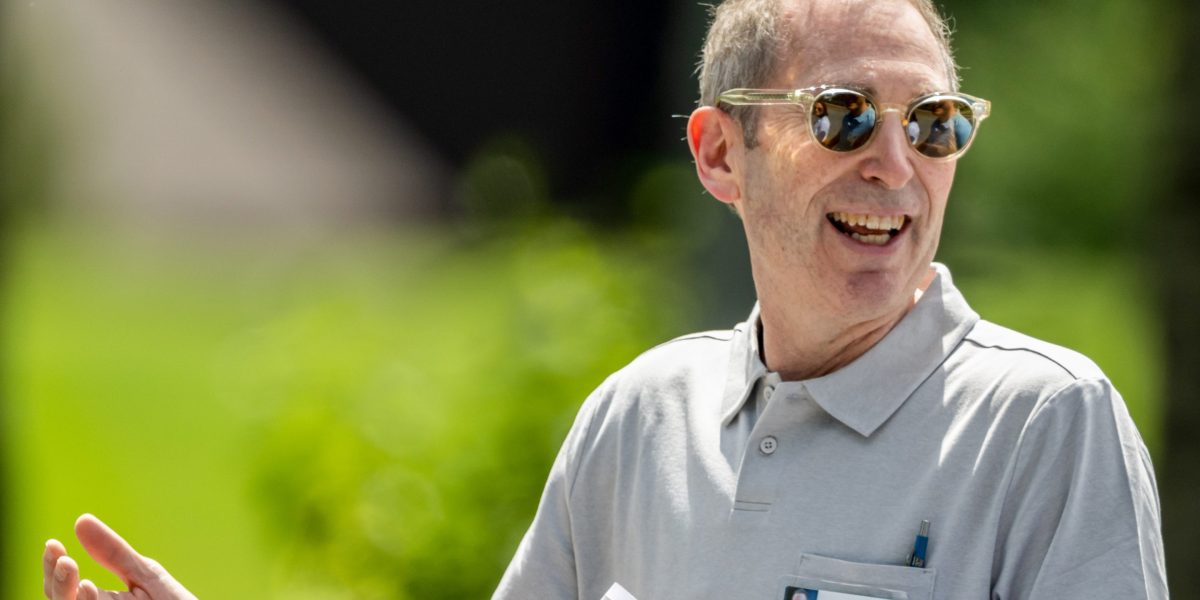
Greg Hart: Coursera CEO on the lessons he learned from Amazon’s Jeff Bezos and Andy Jassy

Published

on


In 1997, the day before Greg Hart joined Amazon, he was summoned to a meeting—on a Sunday—with its founder, Jeff Bezos.

At the time, Bezos had interviewed virtually every one of Amazon’s circa 200 employees; Hart was one of the few the tech entrepreneur hadn’t personally appointed. Over the next 23 years at the online giant, Hart reported directly to Bezos as technical advisor to the CEO, and to Amazon’s current CEO, Andy Jassy.

The lessons Hart learned at one of the world’s most famous businesses have stayed with him to this day, where he leads $1.35 billion online learning giant, Coursera. Hart tasked himself with shepherding the company through a transformation—conveniently, in time for demand to explode, as job seekers and employees alike rushed to add an all-important AI qualification to their CVs.

Many of the changes Hart brought to Coursera—and its more than 1,000 employees—will be familiar to Amazon alumni. Hart said that Bezos’ practice of interviewing every employee in the early days set the tone as Amazon grew, explaining, “He wanted to make sure that the passion, customer focus, the high standards, and the move fast traits that the early set of employees had stayed true as the company grew in scale.”

So it made “perfect sense” when Bezos penned his now-famous letter to shareholders outlining the leadership principles and priorities of the business, because they “reflected” the day-to-day conversations in the office.

Hart wanted to embed a similar mindset at Coursera, he said: “I wanted to really transform the company and make it move at a faster rate and do a better job of serving our learners. I felt that one of the most critical things in doing that was ensuring there was really good cultural alignment, and so we introduced a set of leadership mindsets. We looked at some of the most successful companies in the world, we looked at either their values or their principles … and we created our own that we felt were very specific to both our business and our history as a company.”

That speed became critical as the AI boom transformed the skillset businesses wanted, with employees and job seekers racing to keep up. The platform is now home to more than 12,000 courses, 1,100 of which are based on generative AI—a 44% increase year-over-year. GenAI is significantly the most popular topic on the platform, both from individual learners and from employees with a subscription paid for by their employer.

The CEO was also keen to do away with unfocused company all-hands, and instead dusted off the Amazon playbook of focusing each of the meetings on a single leadership principle: “One of the things that I’ve just recognized over my time leading different businesses in different industries is no matter how clear something is in your mind, or your leadership team’s mind, you cannot repeat it frequently enough to the rest of the organization. They might not be paying attention, they may not understand it, they might have been in a customer meeting at that time, whatever, they might have missed it.

“Every month, one of my direct reports sends out an email with a video that talks about just one of our leadership mindsets. Every all-hands, we do the same thing. We’ll pick one, and have examples that speak to it, because it helps make it real for people and helps people have better context around it.”

How Hart uses AI at work

A key focus for every CEO at present is how they can leverage AI at work, either within their business or in their own personal use. KPMG’s 2025 U.S. CEO Outlook found 74% of leaders said investing in AI was a top priority despite economic uncertainty, with 79% saying they were confident they were ahead of the curve on adoption and utilization.

Previously, CEOs have told Fortune they’re using AI for everything from recruitment to management, to meeting prep and document summaries.

Hart, an English major, is well-versed in the efficiencies AI can offer but said one thing he never uses the technology for is writing. “For me, writing is the way I think, and so trying to outsource that would be effectively giving up thinking,” Hart said. “So that would not be appealing or effective for me personally.”

Staff across Coursera are encouraged to experiment with AI as they see fit, currently without any goalposts in place for what they should be trying to achieve. The most useful outcome of this approach, Hart adds, is that colleagues are sharing their use-cases and best practices in an internal forum called ‘AI Sparks.’

“AI Sparks is a monthly meeting where people from across the company, at any level, are coming to share how they’re using AI in their job. Those are by far the most well-attended and popular meetings that we do at the company,” Hart said.

A final lesson from Amazon prepared Hart for the era of AI: If you get too caught up on outcomes in the early stages of a new technology, you miss the bigger picture.

“My perspective is we just want to get a workforce that is using it as much as possible, in as many ways as possible. Over time, we’ll start to be much more focused on quantifying the impact on all of that,” Hart said. “If we focus myopically on that right now, I think we would miss the opportunity to have a far greater impact down the line.”


Source link

Continue Reading

Business

The books, TV series, and podcasts CEOs are tuning into this holiday season to unwind and elevate their careers in 2026

Published

on


CEOs have a reputation for always being “on”; even when they’re off the clock, they’ll tune into business podcasts and leaf through biographies of the greats in search of wisdom. 

But when the holiday season rolls around, it’s the perfect time to play catch-up on their must-read roster and guilty pleasure TV shows. This year, chief executives are still finding time for play while staying current on their favorite career-related entertainment. 

Fortune got a sneak peek into what CEOs will be reading, watching, and listening to this holiday season:

Books

Elon Musk by Walter Isaacson
“I’ve been reading Elon Musk’s biography. It influenced how I think about being hands-on and staying close to the ground truth,” says Jonathan Siddharth, the CEO and founder of Turing.

All About Love: New Visions by Bell Hooks

All About Love is resonating right now because it mirrors the season I’m in—prioritizing grounded relationships, honest self-reflection, and exploring what love looks like in all its forms: romantic, familial, and the love we give ourselves. A friend passed it along at the perfect moment, as I’m getting clearer about what I truly want for my future, and it’s hitting in a way I didn’t expect,” says Rachel Liverman, the CEO and founder of Glowbar.

Pachinko by Min Jin Lee

“I was drawn to Pachinko for a few reasons, starting with pure curiosity. I’ve been eager to continue expanding my understanding of Asian heritage and traditions through literature, and I’ve always appreciated how books like Pachinko offer a personal glimpse into experiences that shape cultural identity. I recently read Peony in Love and poured over every page, so I’m excited to immerse myself in another richly told narrative. 

Pachinko is also a New York Times bestseller and a National Book Award finalist, which is a testament to its cultural resonance. I’ve always believed that understanding diverse perspectives is vital for effective leadership, and stories like these remind me of the importance of listening, learning, and connecting with others,” says Sarah Chavarria, the CEO and president of Delta Dental.

Italian American Forever: Classic Recipes for Everything You Want to Eat by Alex Guarnaschelli

“I can’t wait to read it. We’re partnering to feature her signature dishes in our Hilton Garden Inn restaurants, which has been a lot of fun. As a fellow Italian American, I love to cook for my large family—I’m one of six siblings and my wife and I have six daughters—so I’m always on the hunt for new recipes that feed a crowd,” says Chris Nassetta, the CEO and president of Hilton.

Movies/TV shows

Her

“I recently brought up Her when discussing a future where people have agentic AI systems that can take action on their behalf and operate continuously in the background. I described a world where you might have a kind of digital surrogate; an agent that talks to other agents, helps with discovery, and does things for you beyond the limits of your own time and attention,” Siddharth says.

Landman

“Well, Landman is back, so I’m very happy with that. I love it. Great show, amazing characters and Texas-based. What else can you ask for?” says Alvaro Luque, the CEO and president of Avocados from Mexico.

Yellowstone

“I’m intentional about balancing motivation with mental downtime. I know we’re late to the party, but my husband and I are obsessed with catching up on Yellowstone now, and very into Landman and Chad Powers, as a way to fully unplug. 

We also recently watched Home Alone for the first time with our girls and loved seeing them laugh so hard!” says Loren Brill Castle, the CEO and founder of Sweet Loren’s.

Wicked: For Good

“I just saw the new Wicked movie with my family and we loved it,” says Seth Berkowitz, the CEO and founder of Insomnia Cookies.

Love Actually

“When it comes to entertainment, I love the classics, Love Actually is my must-watch. I watch it every year, put it on while I cook at home and really feel the holiday magic (though I always wish Emma Thompson’s character had a different experience),” Chavarria says.

Podcasts/YouTube series 

Earn Your Leisure hosted by Rashad Bilal and Troy Millings

“Earn Your Leisure has created an unmatched community where entrepreneurs at every stage can connect, learn, and grow together, ultimately providing free financial literacy to people of color worldwide while actively bridging the wealth gap for the African diaspora.

As a CEO who believes that ‘iron sharpens iron,’ I’m constantly inspired by the rising entrepreneurs on their platform and the powerful spaces they’ve built, from virtual forums to events like Invest Fest, where we can all collaborate and elevate each other,” says Derrick Hayes, the CEO and founder of Big Dave’s Cheesesteaks.

Smart Girl Dumb Questions hosted by Nayeema Raza

“She asks simple, honest questions to big (unpredictable) thinkers, and it always leaves me with a fresh/human perspective,” says Julia Hartz, the CEO and cofounder of Eventbrite.

The Diary of a CEO hosted by Steven Bartlett

“I, like so many people, am totally infatuated with [The] Diary of a CEO podcast. Steven Bartlett’s voice is like ASMR to me and I love the depth in which he goes with each guest. There’s no surface-level conversation,” Liverman says.

Behind the Money hosted by the Financial Times

“Since it’s based in London, it has a bit of distance from the U.S. news cycle, and I find the perspective super refreshing. They go deep on big, complex topics but still make them feel understandable, even if you’re not a finance person. It’s become my go-to lately,” says Ryan Lupberger, the CEO and founder of Clean Cult.

The Mel Robbins Podcast hosted by Mel Robbins

“I gravitate towards podcasts that help keep my mindset grounded and energized. The Mel Robbins Podcast and The Skinny Confidential offer practical perspectives and advice on confidence, personal growth and wellness that I apply both in leadership and everyday life,” Castle says.


Source link

Continue Reading

Business

Trump just declared December 26th a national holiday. What’s open and closed?

Published

on


President Donald Trump’s recent executive order has turned the post-Christmas slump into an official extension of the holiday season, designating Friday, Dec. 26, as a federal holiday. While his directive has effectively shuttered federal offices for a rare five-day weekend, the rest of the economy is operating in a state of partial suspension, leading to a confusing situation about who, exactly, is back to business today.

Trump’s executive order, signed last week, closed executive departments and agencies on both Christmas Eve and today, Dec. 26. However, unlike statutory holidays established by Congress (like Christmas Day itself), this presidential decree applies strictly to the executive branch of the federal government. It does not legally bind the private sector, states, or even independent federal entities like the Postal Service.

“All executive departments and agencies of the Federal Government shall be closed and their employees excused from duty on Wednesday, December 24, 2025, and Friday, December 26, 2025, the day before and the day following Christmas Day, respectively,” the order says.

So, what does this mean for you? Assuming you’re trying to run errands, manage your finances, or even just visit a local business today, here’s an overview of what’s open and closed.

Government offices

The most direct impact is on federal services. Non-essential federal offices are closed. This includes Social Security Administration field offices, passport agencies, and most administrative government buildings. If you have business with the IRS or need to visit a federal building, you will need to wait until Monday.

Mail and delivery services

Despite the federal closure, the U.S. Postal Service is fully operational today. Since the USPS is an independent establishment largely funded by postage sales rather than tax appropriations, it is not bound by the closures in the same way as other federal agencies. Mail delivery has resumed its normal schedule, and post office counters are open.

Private carriers are also back on the road:

  • FedEx is running normal operations, with standard pickup and delivery services active.
  • UPS has resumed pickup and delivery services after taking Christmas Day off.

Financial markets

Wall Street is open for business. The New York Stock Exchange and Nasdaq have returned to a full trading schedule today after a shortened session on Christmas Eve and a full closure for Christmas Day. Traders are back at their desks expecting a full day of activity.

Banks

The Federal Reserve is open and processing transactions, meaning the backbone of the banking system is active. Consequently, most commercial banks—including major chains like Chase, Bank of America, and Wells Fargo—are open today.

While some smaller community banks or credit unions might have opted to follow the President’s lead and close, the vast majority of financial institutions are operating normal business hours.

Retail and grocery

For the private sector, Dec. 26 remains one of the busiest shopping days of the year, often referred to as “Boxing Day” in other Commonwealth nations. Major retailers like WalmartTarget, and Best Buy are not only open but are likely crowded with customers making returns and hunting for post-holiday clearance deals. Supermarkets and pharmacies are also operating on standard schedules.

In short: If your paycheck comes from a federal executive agency, enjoy your day off. For everyone else—from postal workers to stockbrokers—it is almost certainly back to work.


Source link

Continue Reading

Business

As millions of Gen Zers face unemployment, CEOs of Amazon, Walmart, and McDonald’s say opportunity is still there—if you have the right mindset

Published

on


Some CEOs, including Anthropic’s Dario Amodei and Ford’s Jim Farley, have even used their platforms to warn that AI and automation pose existential threats to many entry-level roles. 

But while there are signs that 2026 could bring further turbulence, not every executive message has been a bleak one. As AMD CEO Lisa Su put it: “Run towards the hardest problems—not walk, run—and that’s where you find the biggest opportunities, where you learn the most, where you set yourself apart, and most importantly, where you grow.”

For the millions of Gen Z NEETs and job huggers looking to land a new job—or promotion—in the New Year, the takeaway is clear: embrace challenges, stay curious, take ownership of your career, and remain adaptable—and you’ll be positioned to thrive even in an unpredictable job market.

Accenture CEO Julie Sweet: Curiosity is a leadership advantage

Julie Sweet never expected to become CEO of Accenture. She didn’t fit the traditional mold of the firm’s past leaders, many of whom came from conventional business backgrounds, spent their entire careers at the company, and were men.

Instead, Sweet told Fortune this year that embracing uncertainty, and saying yes when opportunities arise, helped propel her into the role—a lesson that Gen Z can learn from.

Even at the top, she said, leadership doesn’t mean having all the answers. Being curious and seeking help remains one of her self-described “superpowers.”

“I think the idea of being a deep learner at the top is really critical, and that is not usual in a lot of companies,” Sweet said.

That mindset began during her early years in the legal department, when she admits she wasn’t particularly tech savvy—and had to ask for guidance. But it’s a skill that ultimately helped her stick out from the pack and traverse up the corporate ladder.

“Transparency builds trust,” she added. “Because the more value you can contribute [to] your company, the more likely you’re going to get that best next job.”

Amazon CEO Andy Jassy: You don’t need to have it all figured out

In an era defined by constant change, trying to map out an entire career at a young age can feel overwhelming. But Amazon CEO Andy Jassy says that pressure is often self-inflicted—and unnecessary. 

“I have a 21-year-old son and a 24-year-old daughter, and one of the things I see with them and their peers is they all feel like they have to know what they want to do for their life at that age,” Jassy said on the podcast, How Leaders Lead with David Novak. “And I really don’t believe that’s true.”

Jassy’s own career is proof. Long before becoming CEO of one of the world’s most powerful companies, he experimented—trying his hand at sportscasting, product management, and entrepreneurship. He also worked at a retail golf store, coached high school soccer, and tried investment banking.

That exploration, he said, was essential.

“I tried a lot of things, and I think that early on, it’s just as important to learn what you don’t want to do as what you want to do, because it actually helps you figure out what you want to do.”

AMD CEO Lisa Su: Run toward the toughest challenges

For AMD CEO Lisa Su, uncertainty isn’t something to fear—it’s where growth happens.

Speaking to graduates at Rensselaer Polytechnic Institute, Su shared the best career advice she has ever received—and it’s something that may be more relevant than ever: don’t avoid challenges—tackle them head-on.

“Run towards the hardest problems—not walk, run—and that’s where you find the biggest opportunities, where you learn the most, where you set yourself apart, and most importantly, where you grow,” Su said.

Embracing difficulty, she added, only accelerates learning and impact: “When you choose the hardest challenges, you choose the fastest path to growth and the greatest chance to make a difference.”

Citi CEO Jane Fraser: Dream big and build resiliency

For Jane Fraser, the challenges facing young people are personal. Her two sons are only just beginning to build their careers in finance and tech—and she’s been candid with them about how unstable the future of work may be.

In an interview with T. Rowe Price, Fraser said she’s had to acknowledge that many of today’s jobs may not exist in their current form in just a few years. Thus, figuring out how to build resiliency and develop skillsets that will allow you to reinvent yourself several points in your career will be critical, she added.

And in an AI-driven world, she admitted knowing every answer matters less than developing sound judgement and human intuition.

“You don’t need to know the answer. You’re going to need judgment. You’re going to need a whole range of other things,” she said.

Her overarching advice for young people is simple: “Dream.”

“Don’t feel you’ve got to be pigeonholed into things because there’s so many pressures on the kids coming out of college.”

McDonald’s CEO Chris Kempczinski: Stand up for your own career

Chris Kempczinski may be responsible for Happy Meals and Ronald McDonald—but he recognizes that not all is fun and games when it comes to building a career. And in a recent Instagram post, the McDonald’s CEO shared the tough love advice some young people need to hear: the ball is in your corner—and the onus is on you to reach your career goals.

“Remember, nobody cares about your career as much as you do,” Kempczinski said. “You’ve got to own it, you’ve got to make things happen for yourself.”

At a time when many young workers are grasping at their networks for a leg up, the risks of falling behind are real: millions of young people are now classified as NEET—not in employment, education, or training. But Kempczinski leveled that there will always be career ups and downs, but no matter what, it’ll always be beneficial to be someone who keeps an open mind.

“ To be a yes person is way better than to be a no person,” he added to LinkedIn CEO’s Ryan Roslansky. “So as those career twists and turns happen, the more that you’re seen as someone who’s willing to say yes and to go do something, it just means you’re gonna get that next call.”

Nvidia CEO Jensen Huang: Explore the skilled trades

Jensen Huang has been one of the most closely watched executives of the year, largely because he leads the world’s most valuable company—and one at the center of the AI boom.

But the Nvidia CEO’s advice to young people isn’t that they need multiple degrees or to be a tech whiz. Instead, he’s been urging Gen Z to take a serious look at skilled trades—jobs that are both more AI-resistant and increasingly essential to tech’s growth.

“If you’re an electrician, you’re a plumber, a carpenter—we’re going to need hundreds of thousands of them to build all of these factories,” Huang told Channel 4 News in the U.K.

“The skilled craft segment of every economy is going to see a boom,” he added. “You’ve going to have to be doubling and doubling and doubling every single year.”

Walmart CEO Doug McMillon: Raise your hand

Doug McMillon announced his retirement this year as the head of the world’s largest retailer—and the top company on the Fortune 500 list.

And throughout his decades-long career at Walmart, he’s learned a thing or two about climbing the corporate ladder; after all, he entered the C-suite after a career that began with unloading trucks at a warehouse making just $6.50 an hour. But he couldn’t have gotten to the top without the help of others.

“Nothing happens through the work of just an individual,” McMillon told Stanford’s Graduate School of Business in May. “We all do this together.”

Another secret for his success, he has said, is his willingness to volunteer for tasks that others may snub their nose at.

“One of the reasons that I got the opportunities that I got was that I would raise my hand when my boss was out of town and he or she was visiting stores or something,” McMillon told Stratechery last year.

This also enabled him to get face time with more senior management, and show them he was ready for the next rung up the ladder—a lesson that Gen Zers of today can use to stand out in the competitive job market.

“I then put myself in an environment where I became a low-risk promotion because people had already seen me do the job,” McMillon said.



Source link

Continue Reading

Trending

Copyright © Miami Select.