Connect with us

Business

The Fed may have reassured Powell it’s safe to leave the board early when a new chair takes over

Published

on


After enduring a string of attacks on the Federal Reserve, Jerome Powell may now feel confident that the central bank is in good enough hands to step away completely when a new chair takes over.

Earlier this month, the Fed reappointed its regional bank presidents a bit earlier than usual, surprising Wall Street and easing concerns about its independence in the face of President Donald Trump’s continued demands for steeper rate cuts.

It came after recent suggestions from the Trump administration that new conditions ought to be placed on the Fed presidents, raising fears it was eyeing a purge. That fit a pattern of extreme pressure on policymakers. Trump has relentlessly insulted Powell for not easing more, considered firing him, threatened to sue over cost overruns on the Fed’s headquarters renovation, and is still attempting to oust Governor Lisa Cook.

Given Powell’s commitment to Fed independence, there were doubts that he would leave the board of governors when his replacement as chair comes in, bucking tradition, in order to retain a vote on the rate-setting Federal Open Market Committee and help ensure policy stays apolitical. His term as chair expires on May 15, 2026, but his term as a governor extends to January 2028. 

But with the regional presidents re-upped, that adds some stability to the FOMC, which is comprised of governors and presidents, potentially letting him ride off into the sunset.

“I don’t think Powell wants to stay. I think he’s done with this job, and I don’t blame him,” Christopher Hodge, chief U.S. economist at Natixis CIB Americas, told Fortune

He put a high probability on Powell leaving the board, but a few uncertainties remain. One is Trump’s pick to be the new Fed chair. The current names under consideration—Kevin Hassett, Kevin Warsh, and Chis Waller—would be palatable, but an unserious candidate from left field would give Powell pause, according to Hodge, who previously served as principal economist at the New York Fed.

Another unknown is how the Supreme Court will rule in Trump’s effort to fire Cook over mortgage fraud claims, which she had denied. If the justices determine the White House can easily dismiss governors, then Powell might stay on.

“But ultimately, I think this reappointment of these regional Fed presidents is a barrier that he wanted to get over, and I think that certainly helped clear the way for him stepping down after the meeting in May,” Hodge said.

He added, “as long as Powell is fairly certain that the guardrails are staying in place, and that the Fed is in a long-run position to stay credible, then I think he’s going to step down” from the board of governors. 

Robert Kaplan, vice chairman at Goldman Sachs and former president of the Dallas Fed, said the reappointment of the Fed presidents was big news that didn’t get much attention.

He told CNBC last week there was some concern that a reshuffling on the board of governors would lead to changes in the Fed presidents, who must be approved by the governors.

“I think it’s possible that that won’t happen. And that means the next Fed chair will have to get seven votes through persuasion and debate and getting a consensus. You won’t come in with seven votes wired,” Kaplan added, referring to the votes need for a majority on the 12-member FOMC.

He also urged Powell to not remain on the board when his term as chairman expires. If Powell hangs on, he might be seen as a thorn in the side of the new chair, Kaplan explained.

“In the same way a CEO would leave and leave it to their successor, I think that’s the gracious thing to do,” he said. “I think Jay is a gracious person, and I think it’s the right thing for him to do.”



Source link

Continue Reading

Business

PayPal senior VP: We’re now in the ‘intelligence era’ and companies should be focused on tokens

Published

on


In the middle of the 20th century, the world entered the age of information, the shift of industry to information technology. The era began with the miniaturization of computers and culminated with the invention of the World Wide Web, which put the ability to access information at nearly everyone’s fingertips. Now, with the rise of AI, that age is over, according to some tech leaders, and a new age of technology has begun.

“We have transitioned from [an] information era to intelligence era,” Prakhar Mehrotra, PayPal senior vice president and global head of AI, said at the Fortune Brainstorm AI conference earlier this month.

This “intelligence era” is marked by industries transitioning away from the model of storing and retrieving data, Mehrotra told Fortune reporter Sharon Goldman. Instead, because of the capabilities of AI, data can be more spontaneously generated, with the ultimate goal of achieving autonomy in some parts of the workplace.

Companies are racing to apply AI—with its promises of increased productivity and output—to their respective workplaces, but their successes have been mixed. An August MIT study found 95% of enterprise AI workplace initiatives failed to reach rapid revenue acceleration.

“It’s going to be a journey…You have to go through this crawl, walk, and run,” Mehrotra said. “I think that adage has been true 10 years back, is also true in this era.”

The future of AI factories

Marc Hamilton, Nvidia’s vice president of solutions architecture and engineering who was interviewed alongside Mehrotra at the conference, said the future of building out AI in the workplace will be investing in AI factories, on a business’s premises or in the cloud. That’s because data needed to run companies will no longer be primarily retrieved by humans or computers, but rather generated by AI.

“When you go and say, ‘Generate a PowerPoint slide that says this,’ or ‘I’m working on this coding function, can you go in and generate code?’ It’s not retrieving it from the database, it’s taking a model and generating that data,” Hamilton said. 

Mehrotra noted in order for companies to effectively build out the computational power needed to create this data, there needs to be a new atomic unit prized by firms: tokens, or the fundamental component of text AI needs to understand and process a language. Tokens are both the snippet of information used to train data, as well as what is generated by AI after a model receives a prompt.

“Every company has to think about their data in terms of tokens, because then [they] can derive that intelligence from it,” Mehrotra said.

A measure of input and output, token generation has become a key metric for tech companies in particular. In May, Nvidia boasted that Microsoft, which uses Nvidia’s chips, generated more than 100 trillion tokens in the first quarter of this year, a five-fold year-over-year increase. These indications of output can help these AI companies sell themselves to investors and boost valuations, though data shows tokens’ correlation with demand and profits are weaker than tech companies would suggest. 

Mehrotra and Hamilton agreed that many companies today see the value of tokens in boosting AI capabilities, but are weighing how to best fit them into their needs, such as which tokens should be acquired or bought, what should be generated in-house, and for what purpose? Every company then has their own AI factory of sorts, both taking in tokens and outputting tokens that have value.

“I see it as just building that muscle,” Mehrotra said. “Like if all the employees start thinking in terms of tokens, in terms of generating process, then, yeah, it’s a different company.”


Source link

Continue Reading

Business

The global empathy crisis that confronts us this Christmas

Published

on


“One-armed beggars selling pencils, but we cannot spare a dime,” goes Bobby Goldboro’s song, “Does anyone know it’s Christmas?” “Save it for the parking meter or we’ll have to pay a fine.” That classic came to mind as I scanned the current global landscape and observed an alarming shortage of empathy.

I know a little about charity and compassion. I’ve had the privilege over the last 15 years of leading a nonprofit private sector organization that specializes in helping communities and businesses cope with natural disasters and crises caused by humans. 

The global humanitarian system and virtually every nongovernmental organization and United Nations entity are facing hard times and funding shortages. The shutdown of the United States Agency for International Development has closed hundreds of aid groups and slashed funding for programs that fed the hungry and provided help during disasters. According to OXFAM, healthcare services will be unavailable for up to 95 million people and some 23 million children will lose access to education. 

A quarter of a billion people need aid, reports Tom Fletcher, head of the Office for the Coordination of Humanitarian Affairs at the United Nations. But funding has dropped to $12 billion, the lowest in a decade. Only 20% of UN appeals for contributions are supported, he says. Our own organization, the Philippine Disaster Resilience Foundation, lost $1.5 million this year in programs aimed at beefing up preparedness in the Philippines’ Office of Civil Defense and various local governments. As a result, staffing and funding at various UN agencies working in disaster response and economic development were cut by 20 to 50 percent. Other agencies, focused on health and human rights, suffered 100 percent cuts. 

Only one in every three Americans feels compassion toward marginalized groups, with 61% of those surveyed saying empathy has decreased over the last four years. So found the 2025 Compassion Report from the Muhammad Ali Center. Empathy levels diminished 14% across the United States after the pandemic, with the steepest drop among millennials, according to a 2022 survey of 1,000-plus Americans by United Way of the National Capital Area. 

Nor does this phenomenon of empathy burnout appear to be entirely new. A 2010 meta-analysis led by a University of Michigan researcher reported that over a 30-year period, empathy levels among American university students had plummeted 48%. The study attributed the generational decrease in empathy to a rise in narcissism, xenophobia, racism and misogyny. 

The current occupant of the White House embodies this disturbing trend. His influence over other world leaders compounds the problem, with crackdowns on undocumented “aliens” now a contagion across Europe and elsewhere. 

Still, a counter trend is happening in, of all places, the private sector. Social investors and even social investment funds have increased in both number and size. These groups are prepared to make less in profit if their money is used for “good” causes – providing clean water, housing disaster victims. For example, the Connecting Business Initiative, launched at the World Humanitarian Summit in Istanbul in 2016 to focus on helping out in disasters, has grown into a network of 22 business groups.  The latest figures report that it has lent a hand in 213 crises, helped more than 6 million people and generated $144 million in aid. 

When I was growing up in Manila, one of my boyhood heroes was Bobby Kennedy. His words inspired in me an idealism and an ambition to help people that persist to this day. It is his voice I often hear now. 

“Poverty is indecent, Illiteracy is indecent,” he once said. “We cannot afford to forget that the real constructive force in this world comes not from tanks or bombs but from the imaginative ideas, the warm sympathies and the generous spirit of a people.” 

“What we need in the United States,” he said soon after Martin Luther King Jr. was assassinated, was neither division nor hatred nor violence nor lawlessness, but, rather, “love and wisdom and compassion toward one another and a feeling of justice towards those who still suffer.”  

How do we cultivate compassion? Political and religious leaders can inspire and appeal to our better instincts. Community engagement initiatives such as Beyond Us & Them can foster social connection and build resilient communities. Schools can heighten awareness of the problem and integrate empathy in the curriculum. The Jesuits have an immersion program where high school students spend days living with poor people. Canada has a Roots of Empathy initiative that brings infants into the classroom where students can engage with them. Values are learned when we are young. Parents and even the movies and sports play a role in developing who we are as people. 

By using these channels and strategies, we can work together to fight against a decline in empathy and carve out a future characterized by understanding and compassion. 

Empathy gives meaning to our lives. It’s part of what makes us human. We can’t afford to let it die. 

The opinions expressed in Fortune.com commentary pieces are solely the views of their authors and do not necessarily reflect the opinions and beliefs of Fortune.


Source link

Continue Reading

Business

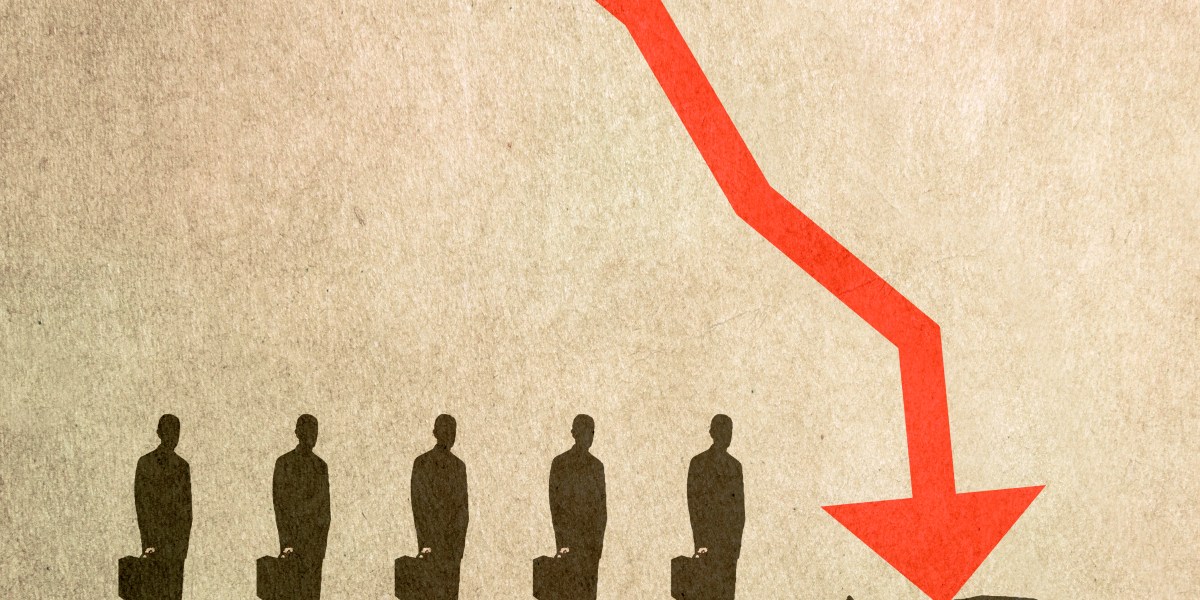
New Goldman Sachs research shows investors are punishing the stocks of companies that do layoffs

Published

on


There used to be two types of layoffs: Those that investors cheered, and those that they panned. The first category—which involved the announcement of some sort of strategic restructuring—have long been associated with a pop in the stock. Meanwhile if the layoffs were due to declining sales and rising costs, investors would sell. 

But recently Goldman Sachs’ analysts have picked up on a new twist. 

“Linking recent layoff announcements to public companies’ earnings reports and stock market data, we find that the recent increase in layoff announcements came mainly from companies that attributed their layoffs to benign factors, such as restructuring driven by automation and technological advancements.” But instead of going up, these stocks fell by an average of 2%. And companies that cited restructurings were punished even more harshly. As the analysts wrote, “This suggests that, despite the benign justifications offered, the equity market has perceived recent layoff announcements as a negative signal about these companies’ prospects.”

This will be a pattern to continue watching, as Goldman predicts a “potential rise” in layoffs given commentary they’ve been hearing during earnings season, which they say is “motivated in part by a desire to use AI to reduce labor costs.”

So why have investors changed their tune on restructuring-driven layoffs?

The most obvious reason, Goldman’s analysts assert, is that they simply don’t believe what companies are saying. The analysts found that companies that have announced layoffs recently have “experienced higher capex, debt, and interest expense growth and lower profit growth than comparable companies within the same industries this year.” Meaning those staff cuts “might have actually been driven by more concerning reasons like the need to reduce costs to offset rising interest expense and declining profitability.”

It’s an interesting development, particularly in light of the fact that bragging about layoffs and boasting about the percentage of work now done by AI has become something of a trend the past few months, a flex to show that that CEOs—particularly in tech—were 100% in on AI. 

As Geoff Colvin wrote in Fortune, Amazon’s Andy Jassy, Target COO Michael Fiddelke (becoming CEO in February) and JPMorgan Chase CFO Jeremy Barnum are just a few of the execs who have talked candidly about how AI-driven efficiency gains may limit the number of people they’ll need going forward. As Colvin wrote, the language more executives are using to communicate such messages “isn’t defensive or apologetic. Just the opposite—it’s direct and confident. Among Fortune 500 CEOs, having fewer employees is becoming a badge of honor.”

And while AI efficiency narratives certainly aren’t going out of style anytime soon, they can go too far, as Fortune’s Sharon Goldman recently reported. As she wrote, “In May, just months after touting AI’s ability to replace human workers, Klarna CEO Sebastian Siemiatkowski reversed an AI-driven hiring freeze and announced the company is adding more human staff. He told Bloomberg that Klarna is now hiring to ensure customers always have the option to speak with a real person. ‘From a brand perspective, a company perspective, I just think it’s so critical that you are clear to your customer that there will always be a human if you want,’ he said.”


Source link

Continue Reading

Trending

Copyright © Miami Select.