Connect with us

Business

How AI is redefining finance leadership: ‘There has never been a more exciting time to be a CFO’

Published

on


Good morning. This year has shown that AI isn’t just a buzzword anymore—it’s redefining finance. 

In covering AI, I’ve spoken with CFOs across industries who are focused on value creation and developing real-world use cases for AI to reshape everything from forecasting and financial planning to strategic decision-making. As data moves faster than ever, finance leaders are asking a new question: not what AI could do, but how it can truly transform the enterprise. I’ve also talked with industry experts and researchers about topics ranging from the ROI of AI to “prompt-a-thons” and debates over whether AI will turn CFOs into chief capital officers.

Finance chiefs are signaling the next big evolution—2026 will be the year of enterprise-scale AI. Pilot programs and proofs of concept are giving way to avenues for full-scale deployment as CFOs expect AI to deliver measurable value: faster decisions, leaner operations, and predictive insights that can provide a competitive edge. However, that level of transformation comes with new demands—governance, data integrity, and human oversight matter more than ever.

I recently asked finance chiefs from leading companies how they expect AI to redefine what it means to lead in finance. For instance, Zane Rowe, CFO at Workday, told me: “There has never been a more exciting time to be a CFO with AI unlocking new opportunities for value creation through unprecedented data and insights. Most of the focus has been on experimentation and discovering the art of the possible, but this year, leaders will shift from ‘What can AI do?’ to ‘How do we build the foundation for scale?’ They will manage a more nuanced AI portfolio that balances launching pilots with rolling out proven solutions, and they will prioritize the unglamorous but critical work of data governance, process redesign, and maintenance of new technologies. Success in 2026 will be defined by how we mature our AI strategy to ensure it is both agile, durable, and enterprise-grade.”

Shifting from the perspective of a major tech company to a beauty and cosmetics leader, Mandy Fields, CFO at e.l.f. Beauty offered this prediction: “From where a CFO sits, AI simultaneously helps broaden our view to get a better macro picture and can help put a sharper focus on very specific points of interest. e.l.f. Beauty is growing globally, and AI has visibility across it all. Going into next year, we’ll continue to explore how we best leverage AI in finance to lean into its strengths. It’s a pretty similar approach to our high-performance teamwork culture in which we encourage the team to pursue and thrive in the areas where they have expertise, learn continuously and move at e.l.f. speed.”

You can read more insights from over a dozen CFOs on how AI will shape finance in 2026 in my complete article here.

This is the final CFO Daily of 2025. The next issue will land in your inbox on Jan. 5. Thank you for your readership—and wishing you a wonderful holiday season. See you in 2026!

Sheryl Estrada
sheryl.estrada@fortune.com

This story was originally featured on Fortune.com


Source link

Continue Reading

Business

Down Arrow Button Icon

Published

on


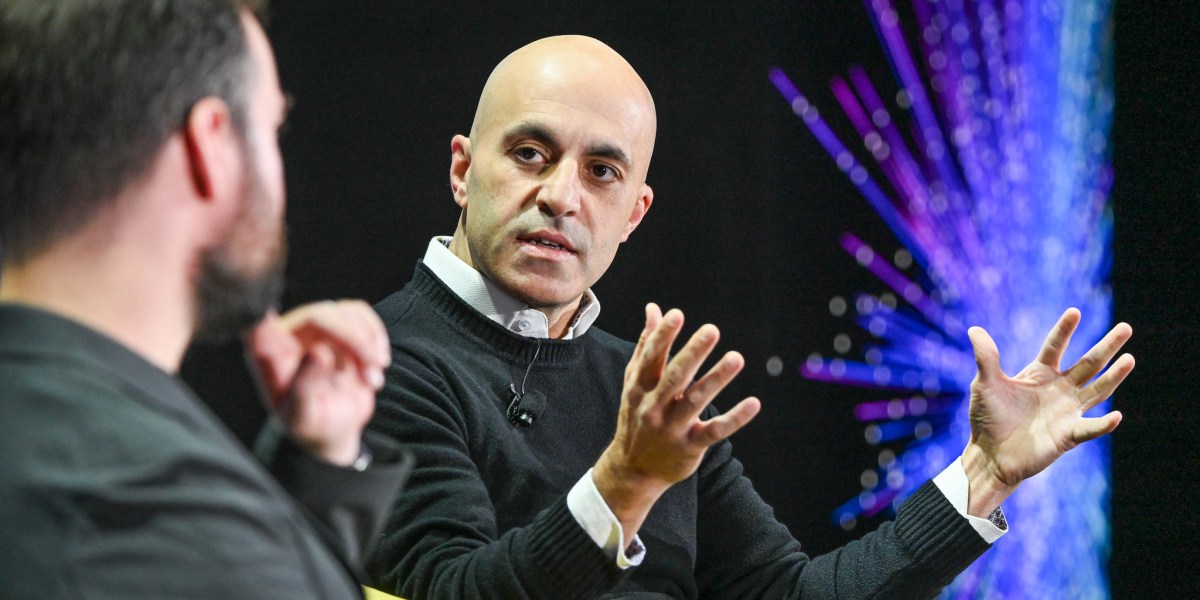
In a typically candid assessment of the current artificial intelligence landscape, the outspoken CEO of $134 billion software analytics firm Databricks, Ali Ghodsi, issued a stark warning regarding the ballooning valuations of AI startups that lack fundamental business metrics. Speaking at Fortune Brainstorm AI in San Francisco, Ghodsi blasted the trend of investors pouring capital into unproven companies, stating, “Companies that are worth, you know, billions of dollars with zero revenue, that’s clearly a bubble, right, and it’s, like, insane.” Ghodsi clarified that he sees a “huge bubble in many, many portions of the market.”

The vibes in the Valley are bad, in the opinion of Ghodsi, who holds a PhD in computer science. He said that even the investors fueling this frenzy are aware of the unsustainable nature of the market. In private conversations, he claimed, venture capitalists express exhaustion with the hype cycle, telling him, “Maybe I should just go on a break for, like, six months and come back and it’ll be, like, really financially good for me.”

Ghodsi said he agreed with the critique of circular financing among many players in the AI space, artificially inflating the market. Rather than viewing the bubble as near its popping point, Ghodsi predicts the “circular aspect” of the situation will deteriorate before it corrects. “I think like 12 months from now, it’ll be much, much, much worse.” Current market wobbles are actually a healthy signal for CEOs to “take a step back,” he added.

The IPO question and strategic patience

This skeptical view of the current market hype explains Databricks’ reluctance to rush toward an initial public offering (IPO), despite Ghodsi admitting to “flirting” with the idea. He highlighted that staying private at this point offers a strategic buffer against market volatility. He drew a sharp contrast between Databricks and competitors who rushed to go public during the 2021 boom, only to face severe corrections.

“In 2021, most of my peers, CEOs, they were like we got to IPO,” but by 2022, Ghodsi added, they were suddenly in cost-cutting mode, whereas Databricks was able to hired thousands of people. He emphasized that if a bubble does burst, remaining private would allow the company to continue investing in long-term AI utility rather than reacting to short-term stock fluctuations.

Real hurdles vs. market hype

While the venture market overheats, Ghodsi argued that the reality of enterprise AI adoption is being throttled by corporate inertia, rather than a lack of technology. He identified security concerns and data governance as the primary bottlenecks for large organizations.

Databricks, which per its name has many clients that hire it to sort through their data, has many customers 10 years old and older, and they’re all really held back on cyber concerns.

“The big thing holding you back” in that scenario, Ghodsi said, “is that you can’t actually do anything because you’re so worried about getting hacked.”

He said “AI lawyers,” or lawyers specializing in the emerging field of AI law, are now slowing down operations by scrutinizing regulations and model policies. Furthermore, he described the data architecture within most legacy organizations as “an absolute mess” resulting from 40 years of piling on software from different vendors, leaving data siloed and difficult to access—and a lot of work for Databricks to do.

Where the real value lies

Despite his warnings about the bubble, Ghodsi remained bullish on specific, high-utility AI applications, particularly “AI agents” and “vibe coding.” He revealed a surprising statistic: “For the first time we’re seeing over 80% of the databases that are being launched on Databricks are not being launched by humans but by AI agents.”

He argued that the foundation model layer—the technology provided by companies like OpenAI and Google—is becoming a commodity with low margins due to hyper-competitiveness. Instead, the real revenue potential lies in the application layer where agents perform specific work, such as drug discovery in healthcare or automated research in finance.

Ghodsi advised corporate leaders to cut through the internal politics stalling these advancements. Noting the “tussle” between executives fighting to be the “AI person,” he offered blunt advice: “Pick one person for your company” to lead the strategy, rather than creating a “three-headed monkey” of conflicting leadership.


Source link

Continue Reading

Business

Utility CEO on the data center crunch: America’s ‘check engine light’ is on and ‘no one’s going to pay attention until it breaks down’

Published

on


The rapid proliferation of artificial intelligence and data centers is pushing the U.S. electrical grid into uncharted territory, prompting one of the nation’s top utility executives to issue a stark warning to regulators: The system is flashing warning signs that can no longer be ignored.

Calvin Butler, CEO of Exelon, the nation’s largest utility company by customer count, compared the current state of the U.S. energy grid to a vehicle being driven to the brink of failure, in conversation with Fortune‘s Executive Editorial Director Diane Brady at the Fortune Brainstorm AI conference in San Francisco.

“We are telling policy makers the warning lights are on,” Butler said. It’s like you’re driving your car, the check engine light is on, and you just don’t want to take it into the shop. “You’re like, I’m going to keep pushing this and no one’s going to pay attention until it breaks down,” Butler told Brady. From his perspective, he sees a malfunction as inevitable. “I’m telling you on that hottest day or that coldest day, you might have a supply crunch and people are going to suffer. I’m telling you, you have to fix it now.” 

Butler’s warning comes, of course, amidst a historic surge in electricity demand as AI usage gobbles up compute, which in turn gobbles up energy across the country. There’s a bit more to it than that, Butler said, with pressure coming from a “convergence” of factors, including the onshoring of manufacturing and the broader electrification of the economy.

“I’ve been in the utility industry for about 25 years … and probably the last four decades we have never had a moment of this amount of load growth,” Butler said.

The supply crunch

The crux of the problem, according to Butler, is a disconnect between rising demand and the incentives to build new power generation. Exelon, which spun off its generation business (Constellation Energy) three years ago, now operates as a regulated utility that delivers power but does not generate it.

Butler argued independent power producers currently lack the financial motivation to construct new power plants. “The independent power producers have no incentive to build anything new because they’re maximizing their assets,” he explained, allowing that this is a fair thing to do under current market conditions. But because producers are squeezing maximum revenue from existing infrastructure rather than expanding capacity, the risk of a shortfall is growing, on the one hand, and price hikes are also inevitable.

When asked for a prediction regarding electricity prices for the coming year, Butler offered no comforting ambiguities.

“I can tell you with certainty the prices are going to go up,” Butler said.

He pointed to market dynamics within the massive PJM Interconnection—a regional transmission organization serving 13 states and the District of Columbia—as a driver. State governors in the region previously implemented a price cap that saved customers roughly $3 billion, but as those caps face expiration or adjustment, the suppressed costs will likely resurface. (Pennsylvania Governor Josh Shapiro threatened in September that the state would go its “own way” if energy conditions don’t change.)

A conservative approach to tech

Despite the pressure to power the AI revolution, Butler emphasized that utility companies themselves should not be on the bleeding edge of technology adoption.

“You don’t want your utilities to be the leaders in technology … because when we lead and something goes wrong, bad things happen,” Butler said.

He added that Exelon prefers to be a “follower” rather than a laggard. (Butler didn’t mention the infamous name of Enron, the last major innovator in the energy space and also a famous blow-up 25 years ago.)

While Exelon uses AI for customer service and proactive grid maintenance, Butler said he remained cautious, particularly regarding cybersecurity. He highlighted the vulnerability of third-party suppliers, rating his comfort level with the supply chain’s security protocols as only a six or seven out of 10.

Building for resilience

To address the looming capacity issues, the industry plans to invest $1.1 trillion over the next five years. This includes massive infrastructure projects, such as a newly announced 765-kilovolt transmission line stretching 220 miles across Pennsylvania and West Virginia to improve reliability.

However, Butler reiterated that physical infrastructure alone won’t solve the problem if the policy framework ignores the “check engine” light. “We’re the backbone. We’re 5% of the economy, but we power the next 95%. And we have to get this right.”


Source link

Continue Reading

Business

Millennial designer spent months building ‘The Holiday’ cottage replica. It’s renting at $499/night
Published

on


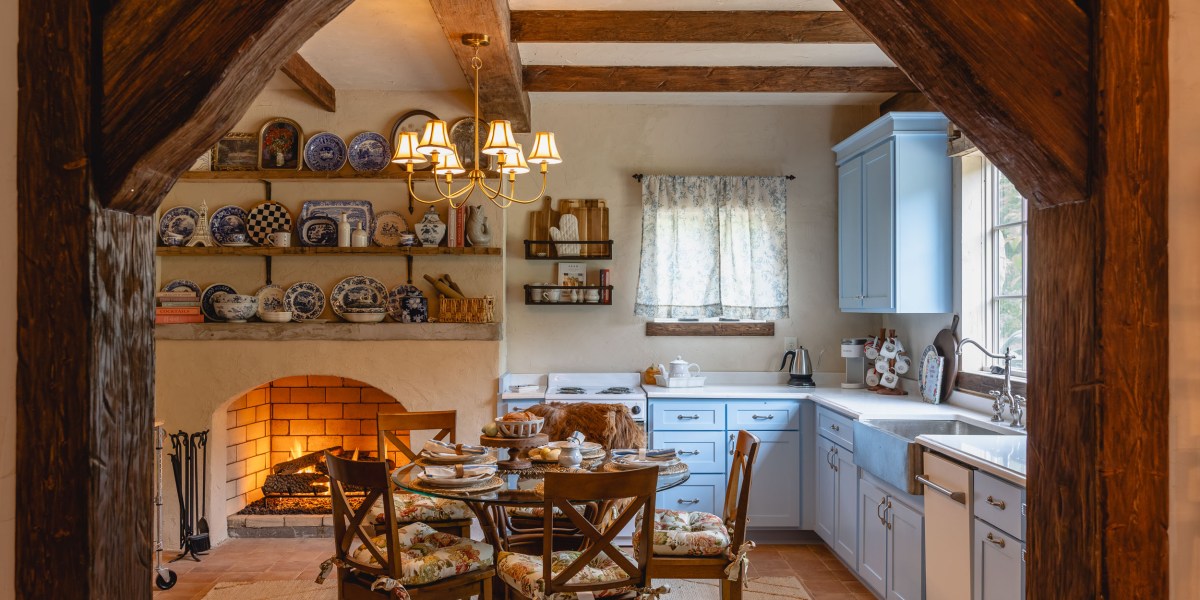
Everyone has must-watch holiday movies that they binge during the festive season, from Love Actually to Home Alone. But few actually get the chance to step inside the world of their favorite comfort flicks—that is, until now. Superfans of The Holiday can now rent out a replica of the quaint English cottage where fictional Hollywood bigwig Amanda Woods (played by Cameron Diaz) was charmed by heartthrob British book editor Graham (played by Jude Law). They’ll have to wait four months, and make the trek to Georgia instead of the Cotswolds. 

Home designer Lucy Small put The Holiday Cottage up for short-term rentals this October after a nine-month build—and a fan frenzy quickly ensued. The 37-year-old has spent the past six years designing homes in the Blue Ridge Mountains; she’s worked on three dozen houses, from bathroom and kitchen rebuilds to hardcore construction projects. But nothing could have prepared her for the rush of attention that came with her latest project: replicating the cozy Rosehill Cottage featured in The Holiday, from the ground up. After all, nearly two decades after the movie’s release, it continues to be a top-watched festive flick—in 2023, The Holiday was streamed 2.3 million times, according to an analysis from Samba TV.

As it turned out, the house featured in the 2006 film—owned by Kate Winslet’s character Iris, who home-swapped with Amanda’s L.A. mansion for the Christmas season—never actually existed in real life. It was a big undertaking, but Small saw a potential hit on her hands. 

“The Holiday Cottage was really a fun thing. I was like, ‘Hey, why don’t I do this? I have everything at my disposal to be able to do it, I know how to build, and I can find land,’” Small tells Fortune, adding she’s a fan of the iconic movie. “Honestly, it was just one of those situations where I had this wacky idea, and everyone got excited about it, and no one stopped me.”

David Cannon Photography/Courtesy of Lucy Small

Before the foundation of the two-bedroom, two-and-a-half bath home was even built, Small had attracted attention from thousands of customers. She first announced her plan to build the cottage in 2022, and fan fervor started pouring in. The entrepreneur says they only had digital renders of the cottage at the time, but people were already sending her handwritten letters about how they couldn’t wait to stay there. Around 4,000 people left their emails on a website Small threw together to update the public on its availability. Now, just two months after going live on the market, the short-term stay is fully booked out until March 2026. 

“People have really loved it, and every time I get one of those letters of, ‘This means so much to me, thank you so much for making it possible,’ that’s just way more worthwhile to me than anything else,” Small continues. “Anyone can build a house, have it be a good investment, and sell it to an investor. But this seems to really have meaning to people, and that makes it important.”

The nine-month process to bring The Holiday cottage to life

It’s no easy feat bringing a piece of cinema into the real world—especially when you’re up against a home that’s impossible to replicate. In truth, the Rosehill Cottage featured in The Holiday was just a bit of movie magic; the home’s weathered facade was built in an open field, while the interior was filmed on sets. Home-makers might hesitate at the idea of building an unbuildable home—but Small was actually excited by the premise. 

“I found out that the house never actually existed in real life, which, for me, is a big deal. Because if you can actually go visit the Brady Bunch house, or the Home Alone house, me building another one is less interesting,” she explains. “But if it never existed, if it’s a set that was torn down 20 years ago, that’s a lot more interesting, because there is literally nothing else in the world like it.”

Small put the project into motion several years ago, but quickly ran into some time-consuming roadblocks. Georgia, a popular tourist getaway and filming location, was slow to issue more short-term rental licenses as temporary stays flooded the market. Heavy taxes and fees also had to be factored into the price, as counties wanted in on the industry’s growing success. Finding the right land to build on was a struggle—but once they settled on a plot in North Georgia, it was off to the races. 

David Cannon Photography/Courtesy of Lucy Small

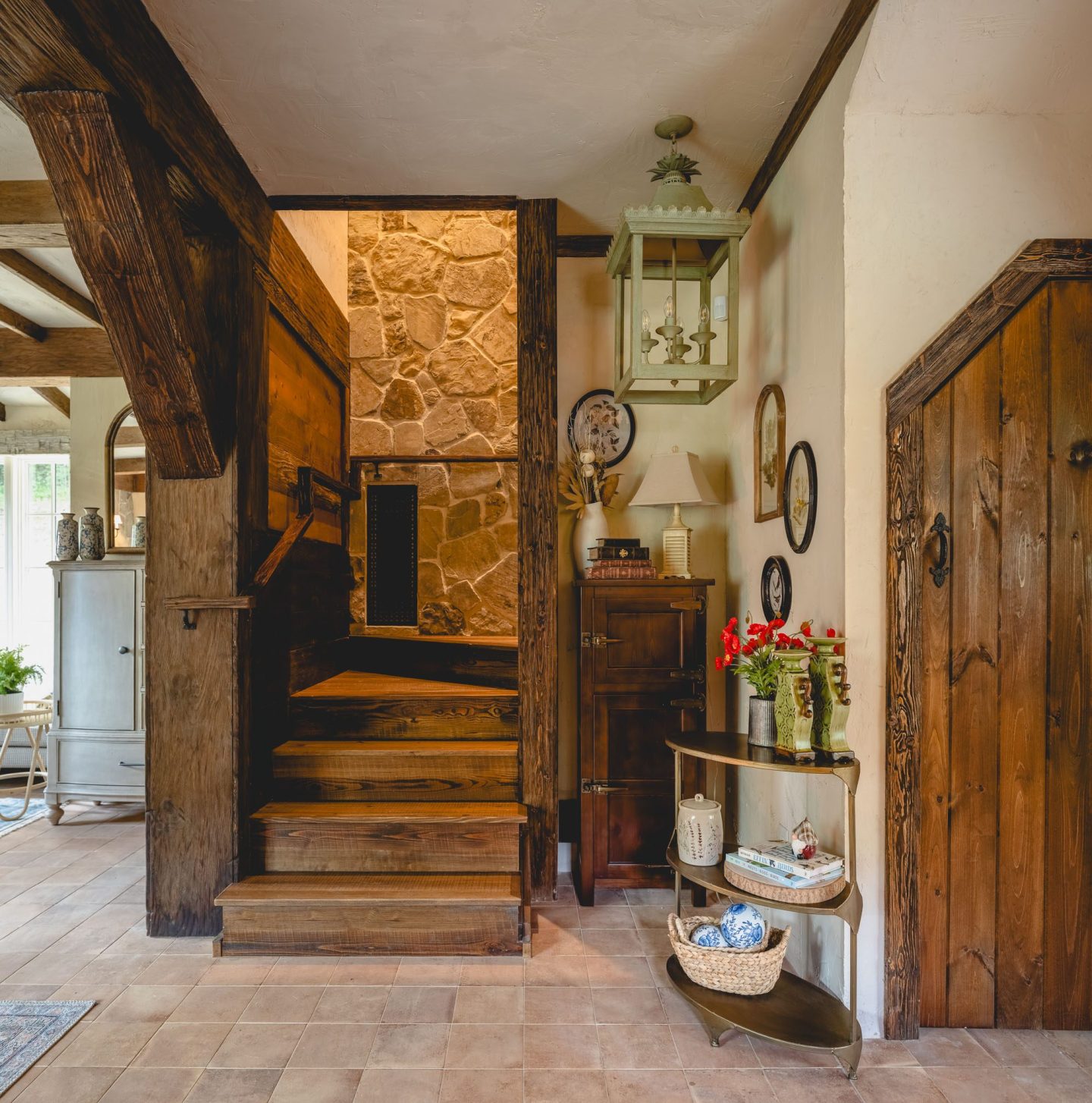
In total, it took nine months to build The Holiday Cottage, from breaking ground to putting in the final flourishes. Small worked with an architectural designer, watching the romcom together “1,000 times” to try and get it right. The first hurdle: They realized the house would never meet code. When trying to build at scale, they discovered the ceilings would be too low, standing at only seven feet tall, based on where the windows were positioned in the movie. The film version of the cottage had only two chimneys but featured three fireplaces; the bathroom floor was sloped; and, in reality, one window would cut halfway through the kitchen cabinet. Small and her team did everything to match the same aesthetic, even setting up fake walls and slopes.

Replicating the home’s furnishings proved to be a bit pricey, too. Despite the quaint movie cottage, seemingly adorned with humble, second-hand furniture, the kitsch decor was beyond Small’s budget. Using Google image reverse search, she tracked down antiques identical to the ones in the set, which ran upwards of $30,000 each. The bamboo umbrella tree shown in the cottage entryway, for example, was priced at over $15,000. Eventually, Small was able to parallel the same warm, charming atmosphere with similar decor. She declines to share how much the entire build set her back, or even when she’ll recoup on costs. Small says she rents out the home at a modest price—$399 per night during the low season, and $499 during high season—and is adamant The Holiday Cottage has been a worthwhile investment. 

“It’s not like we were totally surprised and totally blew the budget. We knew what it would be—we don’t charge a stupid amount,” Small says. “And so it’s still been a good investment, given that we did not like cheap out on the build at all.”

Having 4,000 eager fans lined up—and why Small is fine being a ‘one-hit-wonder’

With 4,000 eager renters already waiting for the pin to drop, The Holiday Cottage’s instant success wasn’t a huge surprise. However, Small wasn’t used to her projects getting so much attention. 

“As someone who, frankly, does not know how to use social media at all, who doesn’t have it, who’s pretty private, I’m usually unable to get eyeballs on any of my projects,” she continues. “For this one, [attention has] just been pouring in completely, even though I haven’t gone out to seek it, which has been a very new position for me as a designer.”

Once The Holiday Cottage booking site went live on Oct. 4, Small says dates started filling up “immediately.” And media attention only riled up more interest; the millennial home designer says she “can’t think of a magazine” that hasn’t covered her new build. And just in time for the holidays, it’s proved to be the perfect place to get into the festive spirit. Currently, there is only one open day in March, a few available slots in April, and just one in May. The Holiday Cottage isn’t available for a multi-day booking until June 2026—the house is nearly booked out for six straight months.
David Cannon Photography/Courtesy of Lucy Small

Small’s latest project has proved a huge success, and she says renters have so far been loving it. Travelers leave their stories in the home’s guest book; a trio of sisters brought their mother, a big fan of The Holiday, along for the ultimate dream stay; another visitor used to watch the movie with her mom every Christmas, and after her passing, rented the place with her dad. For the people who stay there, the short-term rental is more than a place to crash. It’s the chance to be immersed in romcom nostalgia and reconnect with loved ones. 

When asked if she is planning another movie-related build, Small says she’s perfectly happy being the homeowner of this one viral sensation. Right now, she has no other ideas—all she knows is she will only take projects like this, where people are excited about the result. Plus, Small believes there’s no other home built that can replicate the same magic as The Holiday Cottage. 

“Honestly, I’m fine being a one-hit-wonder,” Small says. “I don’t need it to be a big money-maker or big success, because a lot of the things that make this house—The Holiday Cottage—so special, I don’t think can be replicated.”

A version of this story originally published on Fortune.com on November 28, 2025.

Join us at the Fortune Workplace Innovation Summit May 19–20, 2026, in Atlanta. The next era of workplace innovation is here—and the old playbook is being rewritten. At this exclusive, high-energy event, the world’s most innovative leaders will convene to explore how AI, humanity, and strategy converge to redefine, again, the future of work. Register now.


Source link

Continue Reading

Trending

Copyright © Miami Select.