Connect with us

Business

Down Arrow Button Icon

Published

on


The U.S. Justice Department has released tens of thousands more documents related to Jeffrey Epstein, a tranche that included multiple mentions of President Donald Trump but added little new revelatory information to the long-anticipated public file on the late financier and convicted sex offender.

The release is the most voluminous so far and comes after a massive public campaign for transparency into the U.S. government’s Epstein investigations.

Many of the mentions of Trump in the file came from news clippings, though it includes an email from a prosecutor pointing out the flights that Trump took on Epstein’s private jet during the 1990s.

The two men were friends for years before a falling out. Trump has not been accused of wrongdoing in connection with Epstein. The Justice Department issued a statement that some documents contain “untrue and sensationalist claims” about Trump made shortly before the 2020 election.

Here are some takeaways:

Prosecutor flagged Trump’s travel on Epstein’s jet

Among the mentions of Trump in the latest batch of the Epstein files is a note from a federal prosecutor from January 2020 that said Trump had flown on the financier’s private plane more often than had been previously known.

An assistant U.S. attorney from the Southern District of New York said in an email that flight records the office received on Jan. 6, 2020, showed that Trump was on Epstein’s jet “many more times than previously has been reported (or that we were aware).”

The prosecutor who flagged the Trump mentions in the flight logs said they did so because lawyers “didn’t want any of this to be a surprise down the road.”

His travels on Epstein’s plane spanned the time that would likely be covered in any criminal charges against Epstein’s co-conspirator, Ghislaine Maxwell. Trump was listed as a passenger on at least eight flights between 1993 and 1996, and on at least four of those flights, Maxwell was also there, according to the email.

On one of those eight flights, in 1993, Trump and Epstein were the only two passengers listed in the flight logs. On another flight, the three passengers listed in records are Epstein, Trump, and a redacted individual, who was 20 years old at the time. Two other flights included two women — whose names were redacted in follow-up emails — identified as potential witnesses in a Maxwell case.

Several additional Trump trips on Epstein’s plane had been previously disclosed during Maxwell’s criminal proceedings.

Asked for comment about the email, the White House pointed to a Justice Department statement saying Monday’s release contained “unfounded and false” claims against the president submitted to the FBI shortly before the 2020 election, but they were nevertheless being released for full transparency.

The Justice Department specifically raised questions about the validity of a document mentioning Trump that was styled as a letter from Epstein to Larry Nassar, the sports doctor convicted of sexually abusing Olympic athletes. The department pointed out that it was processed three days after Epstein’s death.

Meanwhile, the latest release also shows that Mar-a-Lago, Trump’s southern Florida club, was served with a subpoena in 2021 for its employment records. The disclosure came as part of an email chain in which lawyers for the Southern District of New York and an attorney in touch with representatives for the Trump Organization discussed the employment status of someone whose name was redacted.

Trump calls the files a distraction

Trump complained that the files were a distraction from the work he and other Republicans are doing for the country.

Speaking during an unrelated event at his Mar-a-Lago home in Palm Beach, Florida, on Monday, the president blamed Democrats and some Republicans for the controversy.

“What this whole thing is with Epstein is a way of trying to deflect from the tremendous success that the Republican Party has,” Trump said.

He also expressed frustration about the famous people shown with Epstein in photos released by the Justice Department — people who he said may not have known him but ended up in the shot anyway.

“You probably have pictures being exposed of other people that innocently met Jeffrey Epstein years ago, many years ago. And they’re, you know, highly respected bankers and lawyers and others,” Trump said.

Other high-profile people are showing up in the files

Well-known people shown in the files include former President Bill Clinton, the late pop star Michael Jackson and singer Diana Ross. The mere inclusion of someone’s name or images in files from the investigation does not imply wrongdoing.

The latest release also includes files that put the U.K.’s former Prince Andrew back in the headlines.

Among those documents is correspondence between Maxwell and someone who signs off with the initial “A.”

The email exchange includes other references that suggest Maxwell’s correspondent may be Andrew. He did not immediately respond to a request for comment.

The August 2001 email from someone identified only as “The Invisible Man,” said he is “up here at Balmoral Summer Camp for the Royal Family,” an apparent reference to the Scottish estate where the royal family have traditionally taken their late summer holidays.

“A” writes: “How’s LA? Have you found me some new inappropriate friends?”

The writer says he has left “the RN” and refers to the challenges of looking after “the Girls.” Andrew retired from the Royal Navy in 2001 and has two daughters.

Andrew, one of King Charles III’s younger brothers, was stripped of the right to be called a prince and his other royal titles and honors in October, amid continued publicity about his links to Epstein and concerns about the potential damage to the rest of the royal family. He is now known as Andrew Mountbatten-Windsor.

Andrew has repeatedly denied committing any crimes, including having sex with Virginia Giuffre, who alleged that she was trafficked by Epstein and had sex with Andrew when she was 17.

Biggest information dump yet

Trump tried for months to keep the records sealed before relenting to political pressure, including from some fellow Republicans, though he eventually signed a bill mandating the release of most of the Justice Department’s files on Epstein.

Monday’s release was the biggest dump yet, including nearly 30,000 more pages. The data released by the law’s Friday deadline contained a fraction of that amount, mostly photographs taken during FBI searches of Epstein’s homes.

The new cache includes news clippings, emails and surveillance videos from the New York jail where Epstein was held before taking his own life in 2019, much of which was already in the public domain.

The law called for the files to be released within 30 days, but the Justice Department has instead released them in stages starting Friday. Officials have said they’re going slowly to protect victims, though some women assaulted by Epstein have spoken out publicly to call for greater transparency.

And the administration is facing fierce accusations that it is withholding too much information. Senate Minority Leader Chuck Schumer, D-N.Y., said the tens of thousands of files released still left “more questions than answers.” He pointed to a 2019 FBI email that mentions 10 people under investigation as possible co-conspirators but contains few additional details.


Associated Press writer Darlene Superville in Washington and Danica Kirka in London contributed to this report.


Source link

Continue Reading

Business

Down Arrow Button Icon

Published

on


Powerball’s $1.7 billion jackpot may create a new ultrarich winner, but financial planners say what happens after the drawing can matter more than the winning numbers. They describe a consistent set of mistakes that can quietly turn a once‑in‑a‑lifetime windfall into a long, public mess.

Rushing big decisions

Many experts warn that acting too quickly—quitting a job, claiming the prize immediately, or committing to big purchases—is one of the most damaging errors. Articles in outlets including CNBC, NerdWallet, and USA Today emphasize slowing down, taking time to process the shock, and making no irreversible decisions until a plan is in place.

A related misstep is choosing between the lump sum and annuity on instinct instead of analysis, even though that decision locks in tax timing, investment options, and how long the money is likely to last. Financial writers note that many winners default to the lump sum without modeling scenarios with professionals and understanding that, after taxes, the headline $1.7 billion quickly shrinks.

Going public and losing privacy

Coverage in CNBC highlights that bragging about your win on social media or talking openly about it can invite lawsuits, scams, and constant money requests. Advisors repeatedly stress “keep it quiet” and, where allowed, explore ways to claim through a trust or remain anonymous to avoid becoming a target.​​

Experts also point out that winners often underestimate the emotional toll of overnight fame, which can strain marriages, friendships, and even personal safety if boundaries are not set early.

Skipping a professional team

A recurring theme across NerdWallet, Business Insider, and other outlets is that trying to DIY a nine‑ or 10‑figure fortune is a costly mistake. Financial planners urge winners to assemble a small, vetted team—typically an attorney, a tax professional, and a fiduciary advisor with experience in sudden wealth—before claiming the prize.

Winners also get into trouble when they rely on friends or relatives who “know about money” instead of credentialed experts, a pattern cited in guidance from Northwestern Mutual and others on working with lottery clients.

Overspending and assuming the money is infinite

Business Insider’s reporting on advisors who work with lottery winners notes that many clients behave as if the balance can’t be depleted, only to burn through wealth with multiple mansions, jets, and speculative investments. Experts describe unchecked lifestyle inflation and “spend, spend, spend” behavior as one of the most common paths to regret, especially for lump‑sum recipients.

Financial outlets also emphasize that winners often fail to set a sustainable withdrawal rate or diversify, ignoring the reality that the money is finite and that even ultra‑large fortunes can erode through taxes, market volatility, and ongoing costs like property taxes and maintenance.

Poor boundaries with family, friends, and causes

Advisors interviewed by Northwestern Mutual and others say another frequent mistake is giving without a plan: ad hoc loans, endless gifts, and open‑ended promises that create resentment when the answer finally becomes “no.” They suggest that winners instead define a clear gifting and philanthropy framework upfront—including who gets what and how much is reserved for charity—to avoid both over‑giving and relationship damage.

Experts further warn that feeling obligated to become a one‑person safety net or charity can derail long‑term goals and quickly consume capital, especially when requests are amplified by public attention.

Neglecting long‑term planning and purpose

Guides from major financial firms emphasize that many winners focus on immediate fantasies—houses, cars, travel—and neglect estate planning, debt strategy, and long‑term investing. Advisors recommend tackling basics like wills, trusts, and tax‑efficient structures early, so the windfall will benefit multiple generations, if desired.

Several profiles of past winners also point to a subtler mistake: not thinking about life after the headlines, which can leave people isolated, directionless, or vulnerable to bad ideas when the novelty fades. For the future holder of the $1.7 billion ticket, experts suggest that pairing technical planning with a clear sense of purpose could be the difference between a brief lucky streak and durable, generational wealth.

For this story, Fortune journalists used generative AI as a research tool. An editor verified the accuracy of the information before publishing. 


Source link

Continue Reading

Business

Advocacy group slams Trump’s plan to garnish wages of student loan borrowers in default

Published

on


The Trump administration said on Tuesday that it will begin garnishing the wages of student loan borrowers who are in default early next year.

The department said it will send notices to approximately 1,000 borrowers the week of January 7, with more notices to come at an increasing scale each month.

Millions of borrowers are considered in default, meaning they are 270 days past due on their payments. The department must give borrowers 30 days notice before their wages can be garnished.

The department said it will begin collection activities, “only after student and parent borrowers have been provided sufficient notice and opportunity to repay their loans.”

In May, the Trump administration ended the pandemic-era pause on student loan payments, beginning to collect on defaulted debt through withholding tax refunds and other federal payments to borrowers.

The move ended a period of leniency for student loan borrowers. Payments restarted in October of 2023, but the Biden administration extended a grace period of one year. Since March 2020, no federal student loans had been referred for collection, including those in default, until the Trump administration’s changes earlier this year.

The Biden administration tried multiple times to give broad forgiveness to student loans, but those efforts were eventually stopped by courts.

Persis Yu, deputy executive director for the Student Borrower Protection Center, criticized the decision to begin garnishing wages, and said the department had failed to sufficiently help borrowers find affordable payment options.

“At a time when families across the country are struggling with stagnant wages and an affordability crisis, this administration’s decision to garnish wages from defaulted student loan borrowers is cruel, unnecessary, and irresponsible,” Yu said in a statement. “As millions of borrowers sit on the precipice of default, this Administration is using its self-inflicted limited resources to seize borrowers’ wages instead of defending borrowers’ right to affordable payments.”


The Associated Press’ education coverage receives financial support from multiple private foundations. AP is solely responsible for all content. Find AP’s standards for working with philanthropies, a list of supporters and funded coverage areas at AP.org.


Source link

Continue Reading

Business

Hoping AI will give you more work-life balance in 2026? Fortune 500 CEOs warn otherwise

Published

on


Workers may be hoping that AI can finally take over their drudge work in the new year—ease their loads and shorten the workweek, or at least make more space for life outside the office. 

And it’s something young people in particular are eager to have: 74% of Gen Z rank work-life balance as a top consideration when choosing a job in 2025—the highest of any generation—according to Randstad. And in the more than 20 years of producing its Workmonitor report, it’s the first time work-life balance outranked pay as the top factor for all workers.

But as AI has reshaped corporate structures and enhanced productivity levels, many executive leaders are working harder than ever—and expecting everyone else to follow.

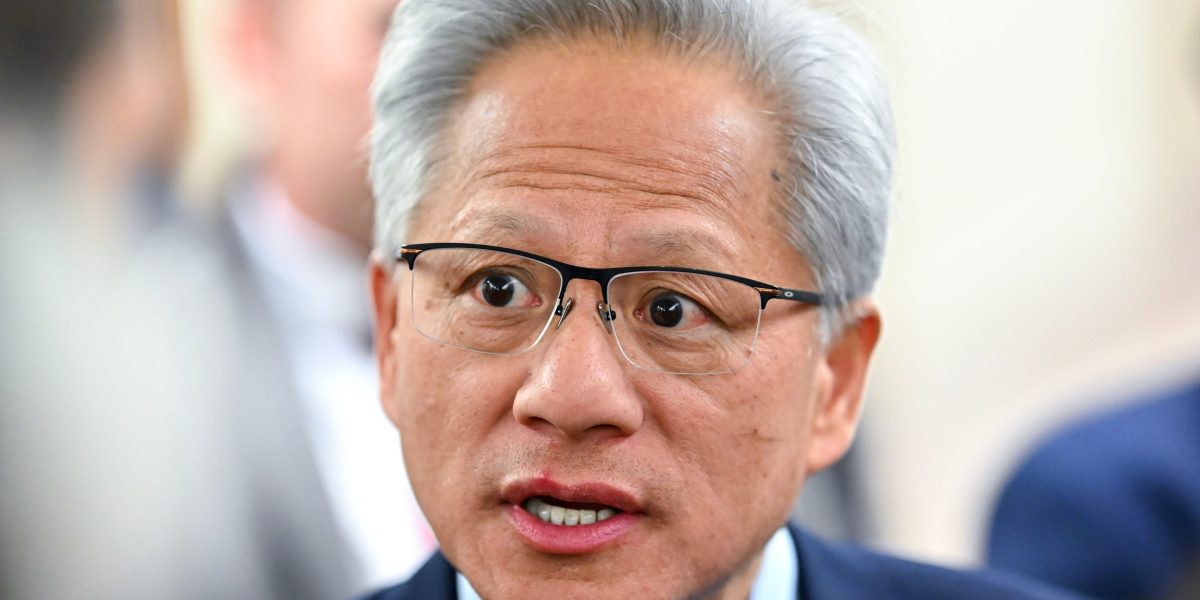
From pushing return to office mandates to praising around-the-clock availability, CEOs are modeling a culture where the lines between work and life blur. Nvidia’s CEO Jensen Huang, for example, said he worked seven days a week this year—including holidays. Zoom’s CEO Eric Yuan conceded simply: “work is life.” 

And looking toward 2026, it’s unclear whether dreams of work-life balance will come true.

Nvidia CEO Jensen Huang

As the leader of the world’s most valuable company, Nvidia CEO Jensen Huang has a lot on his mind. Relaxation, however, does not appear to be part of the plan.

His work schedule is nothing short of rigorous—beginginng from from the moment he wakes up until he’s back on the pillow—seven days a week, including holidays. It’s a grind fueled not only by the intensity of the AI race, but by a lingering fear of what happens if he ever lets up.

“You know the phrase ’30 days from going out of business,’ I’ve used for 33 years,” Huang said on an episode of The Joe Rogan Experience released in December. “But the feeling doesn’t change. The sense of vulnerability, the sense of uncertainty, the sense of insecurity—it doesn’t leave you.”

That mindset extends beyond Huang himself. His two children, who both work at Nvidia, follow in his footsteps and work every day for the semiconductor giant. For the Huang family, work isn’t just a job—it’s a way of life.

Zoom CEO Eric Yuan

Video communications giant Zoom has had one of the biggest indirect impacts on the work-life balance debate, thanks to making it possible for workers to log on from the comfort of a bed, beach, or anywhere in between. 

However, the journey to scaling the company to over $25 billion in market capital has revealed to Zoom CEO Eric Yuan that work-life balance is a farce.

“I tell our team, ‘Guys, you know, there’s no way to balance. Work is life, life is work,’” Yuan said in an interview with the Grit podcast over the summer.

Yuan even admitted that he doesn’t have hobbies, with everything he does dedicated to “family and Zoom.” However, when there’s a clash and he has to choose between the two, the 55-year-old gives life some slack: “Whenever there’s a conflict, guess what? Family first. That’s it.”

TIAA CEO Thasunda Brown Duckett

Thasunda Brown Duckett, the CEO of financial services company TIAA, has long not been a fan of the term “work-life balance”—often calling it an outright “lie”—and this year was no exception.

On a Mother’s Day social media post this past spring, Duckett doubled down on the assessment once more.

“Let’s drop the work-life balance charade,” she wrote. “The truth? Balance suggests perfect—and that’s a trap.”

“Instead, think of your life like a diversified portfolio. You only have 100% to give, and many places to allocate. So give with intention. If motherhood gives 30% today, make it a powerful, present 30%,” she added.

For Duckett, having a constant evaluation of how much time to dedicate to everything needing attention in her life is what true a healthy relationship between work and life looks like.

“Some days you won’t feel like the best mom, leader, partner, or friend. But over time, when you lead with purpose—you’re more than enough.”

Palantir CEO Alex Karp

This year has been a breakout year for Palantir, with its stock price up some 140%. 

For young people looking to get their careers off the ground, CEO Alex Karp sent a word of warning this year: skip out on some of life’s superfluous things if you want a shot at success.

“I’ve never met someone really successful who had a great social life at 20,” Karp said at the Economic Club of Chicago in May.

“If that’s what you want, that’s what you want, that’s great, but you’re not going to be successful and don’t blame anyone else.”

While Karp’s comments might sting for Gen Z—especially since they are the generation who place the most value on work-life balance, Karp believes that if you put in the time when you’re young, it’ll all be worth it when you’re older and have a more cushy job.

“Most people have something they’re talented at and enjoy. Focus on that. Organize your whole life around that,” Karp added. “Don’t worry so much about the money—that sounds like hypocrisy now, but I never really did—and stay off the meth and you’ll do very well.”

Former Amazon CEO Jeff Bezos

Jeff Bezos may no longer run Amazon day to day, but he remains deeply involved as board chair—while also growing Blue Origin and backing new AI ventures.

Like several of his peers, Bezos has long taken issue with the idea of balance itself.

“I don’t love the word ‘balance’ because it implies a tradeoff,” Bezos said at Italian Tech Week in October. “I’ve often had people ask me, ‘How do you deal with work-life balance?’ And I’ll say ‘I like work-life harmony because if you’re happy at home, you’ll be better at work. If you’re better at work, you’ll be better at home.’ These things go together. It’s not a strict tradeoff.”

It’s not the first time Bezos has expressed his grievances with the concept of work-life balance. In 2018, Bezos called it a “debilitating phrase” because it implied that one has to give, in order for the other to thrive. Instead, he likes to use the word “harmony” and likened the concept to a “circle.”

Jamie Dimon has been one of Wall Street’s most outspoken champions of full-time, in-office work. Early this year, he called most of JPMorgan’s 300,000 employees back in-person and capped the push by opening the bank’s new $3 billion Manhattan headquarters.

Yet even as Dimon has taken a hard line on where work gets done, he has long argued that maintaining balance is ultimately an individual responsibility—not a corporate one.

“It is your job to take care of your mind, your body, your spirit, your soul, your friends, your family, your health. Your job, it’s not our job,” he said in a clip originally from 2024 that resurfaced this year.





Source link

Continue Reading

Trending

Copyright © Miami Select.
