Connect with us

Business

Larry Ellison’s $40 billion pledge to son’s Paramount deal shows a shift in billionaire giving

Published

on


Larry Ellison, the 81-year-old Oracle co-founder and longtime mogul of tech and sport, recently sent ripples through the business and philanthropic worlds by revealing plans to devote $40 billion of his own fortune to the Paramount–Skydance merger — a deal that redefines not only Hollywood’s future but Ellison’s own legacy.

Ellison’s $40 billion promise to personally back his son’s Paramount deal is not a charitable donation in the classic sense. It is something more emblematic of this billionaire era: philanthropic capitalism, where vast personal fortunes are deployed through markets rather than around them, and “giving it away” increasingly means reshaping industries instead of writing checks to traditional charities.

It lands at the exact moment that the older model of billionaire philanthropy—epitomized by Warren Buffett and Bill Gates—is visibly winding down, creating a stark contrast between giving that flows through foundations and giving that rides on deal sheets.

Ellison’s move is as audacious as it is intimate. His son, David Ellison, runs Skydance, the upstart studio that has been circling Paramount and now aims to fuse old‑line Hollywood assets with a tech‑forward, streaming‑native strategy. Ellison’s commitment, structured as a personal guarantee of more than $40 billion in equity and debt support for Paramount’s bid, effectively turns a hostile takeover into a family‑backed capital project. It is a father’s show of confidence, but it is also a data‑era mogul’s attempt to wire his worldview into the next generation of media infrastructure.

This would be notable even if Ellison had never uttered a word about philanthropy. But the Oracle cofounder has publicly pledged to give away at least 95% of his fortune over time, joining the cohort of mega‑donors who say they do not intend to die with most of their wealth. In that context, the Paramount guarantee looks less like a side bet and more like a preview of how he intends to fulfill that promise: not primarily through anonymous grants to charities, but by moving enormous sums into entities he believes can “fix” big systems—medicine, software, and now entertainment.

Growing divide in billionaire giving

That philosophy distinguishes Ellison from someone like MacKenzie Scott, who has become the avatar of a more traditional, community‑centered model of billionaire giving. Scott has directed tens of billions of dollars in largely unrestricted donations to thousands of nonprofits, with a deliberate emphasis on organizations serving marginalized communities—ranging from housing and food security groups to HBCUs and grassroots racial‑justice networks. Her theory of change is straightforward: transfer resources quickly to on‑the‑ground organizations, trust local leaders to allocate them, and avoid the overhead and power concentration of a large foundation.

Ellison, by contrast, has long preferred to seed institutions that look more like extensions of his professional life. His largest publicized gifts have gone into cutting‑edge medical research and institutions that blend science and technology, such as cancer and AI‑driven medicine initiatives. The Paramount commitment extends that pattern into culture. Rather than funding media literacy programs or journalism nonprofits, Ellison is putting his thumb on the scale of who owns the pipes themselves: the studios, libraries, and platforms that produce and distribute stories worldwide.

He is not alone in this shift. Mark Zuckerberg and Priscilla Chan’s Chan Zuckerberg Initiative is following a similar arc. After an early phase that encompassed education reform and policy‑adjacent work, CZI has doubled down on scientific research, AI‑enabled biology, and large‑scale research infrastructure. Structurally, it operates less like a traditional foundation and more like a hybrid of investment fund and lab network, with a focus on building tools and platforms that other scientists and institutions will use. When these donors talk about “impact,” they are usually referring to rewiring how core systems operate, not simply amplifying the budgets of organizations operating within those systems.

Call it the billionaire bifurcation. On one side are philanthropists like Scott, whose giving resembles turbocharged versions of 20th‑century philanthropy: extensive checks to nonprofits, universities, and community groups, often with fewer strings attached and more attention to equity. On the other hand, are Ellison and Zuckerberg, who are pioneering a model in which philanthropy is almost indistinguishable from industrial strategy. The money may technically sit in philanthropic vehicles. Still, it flows into companies, labs, and platforms that donors help control, and that operate squarely inside the markets where their fortunes were made.

The limitations of traditional philanthropy

That raises uncomfortable questions about power and accountability. When $40 billion is pledged to underpin a media merger, framed in part as a long‑term contribution to cultural and technological progress, who gets to decide what counts as a public benefit? Shareholders will certainly have a say. Regulators may weigh in. But unlike a conventional grant to a food bank or a legal‑aid nonprofit, the social returns of a fortified Hollywood empire are diffuse, contested, and mediated through subscription prices, content strategies, and labor negotiations.

Yet philanthropic capitalism also speaks to a real anxiety among today’s richest founders: the sense that traditional philanthropy is too incremental for problems they perceive as structural and technological. For Ellison, building a stronger, AI‑savvy studio system may feel more consequential than funding a scattershot portfolio of media nonprofits. If you believe the future is written in code and distributed through a handful of global platforms, owning a bigger piece of that machinery can look like the most responsible way to spend a fortune you’ve vowed to surrender.

Ellison’s $40 billion bet on Paramount and his son’s vision may ultimately be judged as a savvy business maneuver, a risky act of paternal devotion, or a bold experiment in legacy‑building. But in the emerging playbook of billionaire giving, it already has a clear place. This is what it looks like when “giving it away” means never really letting it leave the ecosystem that created it—when philanthropy moves off the foundation ledger and onto the deal sheet, and capitalism itself becomes the main instrument of charity.

For this story, Fortune journalists used generative AI as a research tool. An editor verified the accuracy of the information before publishing. 


Source link

Continue Reading

Business

Advocacy group slams Trump’s plan to garnish wages of student loan borrowers in default

Published

on


The Trump administration said on Tuesday that it will begin garnishing the wages of student loan borrowers who are in default early next year.

The department said it will send notices to approximately 1,000 borrowers the week of January 7, with more notices to come at an increasing scale each month.

Millions of borrowers are considered in default, meaning they are 270 days past due on their payments. The department must give borrowers 30 days notice before their wages can be garnished.

The department said it will begin collection activities, “only after student and parent borrowers have been provided sufficient notice and opportunity to repay their loans.”

In May, the Trump administration ended the pandemic-era pause on student loan payments, beginning to collect on defaulted debt through withholding tax refunds and other federal payments to borrowers.

The move ended a period of leniency for student loan borrowers. Payments restarted in October of 2023, but the Biden administration extended a grace period of one year. Since March 2020, no federal student loans had been referred for collection, including those in default, until the Trump administration’s changes earlier this year.

The Biden administration tried multiple times to give broad forgiveness to student loans, but those efforts were eventually stopped by courts.

Persis Yu, deputy executive director for the Student Borrower Protection Center, criticized the decision to begin garnishing wages, and said the department had failed to sufficiently help borrowers find affordable payment options.

“At a time when families across the country are struggling with stagnant wages and an affordability crisis, this administration’s decision to garnish wages from defaulted student loan borrowers is cruel, unnecessary, and irresponsible,” Yu said in a statement. “As millions of borrowers sit on the precipice of default, this Administration is using its self-inflicted limited resources to seize borrowers’ wages instead of defending borrowers’ right to affordable payments.”


The Associated Press’ education coverage receives financial support from multiple private foundations. AP is solely responsible for all content. Find AP’s standards for working with philanthropies, a list of supporters and funded coverage areas at AP.org.


Source link

Continue Reading

Business

Hoping AI will give you more work-life balance in 2026? Fortune 500 CEOs warn otherwise

Published

on


Workers may be hoping that AI can finally take over their drudge work in the new year—ease their loads and shorten the workweek, or at least make more space for life outside the office. 

And it’s something young people in particular are eager to have: 74% of Gen Z rank work-life balance as a top consideration when choosing a job in 2025—the highest of any generation—according to Randstad. And in the more than 20 years of producing its Workmonitor report, it’s the first time work-life balance outranked pay as the top factor for all workers.

But as AI has reshaped corporate structures and enhanced productivity levels, many executive leaders are working harder than ever—and expecting everyone else to follow.

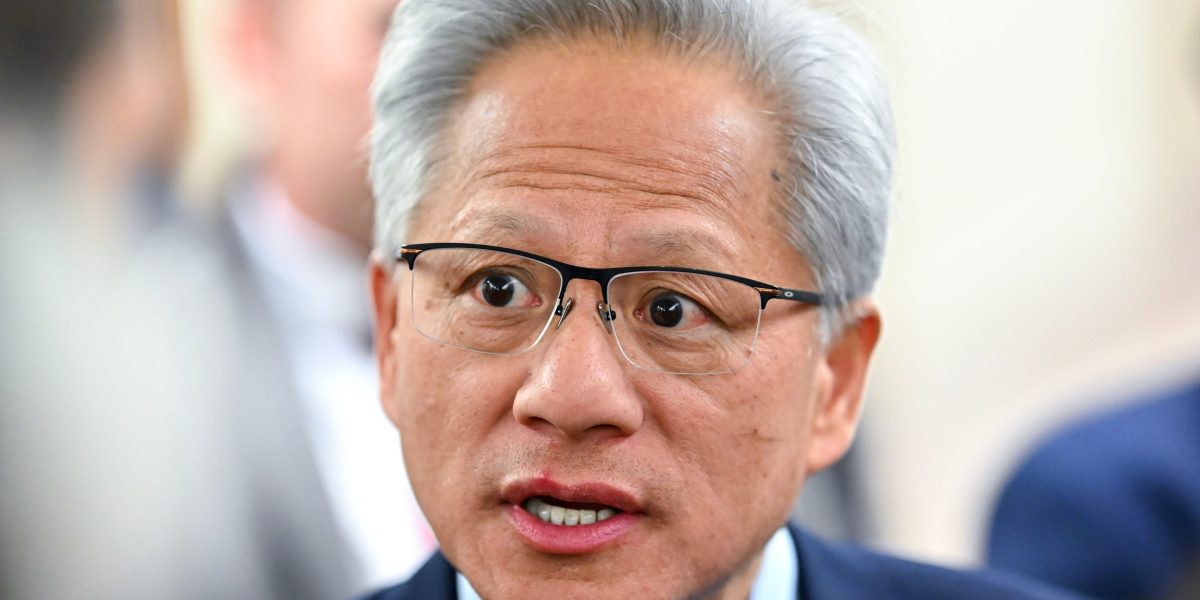
From pushing return to office mandates to praising around-the-clock availability, CEOs are modeling a culture where the lines between work and life blur. Nvidia’s CEO Jensen Huang, for example, said he worked seven days a week this year—including holidays. Zoom’s CEO Eric Yuan conceded simply: “work is life.” 

And looking toward 2026, it’s unclear whether dreams of work-life balance will come true.

Nvidia CEO Jensen Huang

As the leader of the world’s most valuable company, Nvidia CEO Jensen Huang has a lot on his mind. Relaxation, however, does not appear to be part of the plan.

His work schedule is nothing short of rigorous—beginginng from from the moment he wakes up until he’s back on the pillow—seven days a week, including holidays. It’s a grind fueled not only by the intensity of the AI race, but by a lingering fear of what happens if he ever lets up.

“You know the phrase ’30 days from going out of business,’ I’ve used for 33 years,” Huang said on an episode of The Joe Rogan Experience released in December. “But the feeling doesn’t change. The sense of vulnerability, the sense of uncertainty, the sense of insecurity—it doesn’t leave you.”

That mindset extends beyond Huang himself. His two children, who both work at Nvidia, follow in his footsteps and work every day for the semiconductor giant. For the Huang family, work isn’t just a job—it’s a way of life.

Zoom CEO Eric Yuan

Video communications giant Zoom has had one of the biggest indirect impacts on the work-life balance debate, thanks to making it possible for workers to log on from the comfort of a bed, beach, or anywhere in between. 

However, the journey to scaling the company to over $25 billion in market capital has revealed to Zoom CEO Eric Yuan that work-life balance is a farce.

“I tell our team, ‘Guys, you know, there’s no way to balance. Work is life, life is work,’” Yuan said in an interview with the Grit podcast over the summer.

Yuan even admitted that he doesn’t have hobbies, with everything he does dedicated to “family and Zoom.” However, when there’s a clash and he has to choose between the two, the 55-year-old gives life some slack: “Whenever there’s a conflict, guess what? Family first. That’s it.”

TIAA CEO Thasunda Brown Duckett

Thasunda Brown Duckett, the CEO of financial services company TIAA, has long not been a fan of the term “work-life balance”—often calling it an outright “lie”—and this year was no exception.

On a Mother’s Day social media post this past spring, Duckett doubled down on the assessment once more.

“Let’s drop the work-life balance charade,” she wrote. “The truth? Balance suggests perfect—and that’s a trap.”

“Instead, think of your life like a diversified portfolio. You only have 100% to give, and many places to allocate. So give with intention. If motherhood gives 30% today, make it a powerful, present 30%,” she added.

For Duckett, having a constant evaluation of how much time to dedicate to everything needing attention in her life is what true a healthy relationship between work and life looks like.

“Some days you won’t feel like the best mom, leader, partner, or friend. But over time, when you lead with purpose—you’re more than enough.”

Palantir CEO Alex Karp

This year has been a breakout year for Palantir, with its stock price up some 140%. 

For young people looking to get their careers off the ground, CEO Alex Karp sent a word of warning this year: skip out on some of life’s superfluous things if you want a shot at success.

“I’ve never met someone really successful who had a great social life at 20,” Karp said at the Economic Club of Chicago in May.

“If that’s what you want, that’s what you want, that’s great, but you’re not going to be successful and don’t blame anyone else.”

While Karp’s comments might sting for Gen Z—especially since they are the generation who place the most value on work-life balance, Karp believes that if you put in the time when you’re young, it’ll all be worth it when you’re older and have a more cushy job.

“Most people have something they’re talented at and enjoy. Focus on that. Organize your whole life around that,” Karp added. “Don’t worry so much about the money—that sounds like hypocrisy now, but I never really did—and stay off the meth and you’ll do very well.”

Former Amazon CEO Jeff Bezos

Jeff Bezos may no longer run Amazon day to day, but he remains deeply involved as board chair—while also growing Blue Origin and backing new AI ventures.

Like several of his peers, Bezos has long taken issue with the idea of balance itself.

“I don’t love the word ‘balance’ because it implies a tradeoff,” Bezos said at Italian Tech Week in October. “I’ve often had people ask me, ‘How do you deal with work-life balance?’ And I’ll say ‘I like work-life harmony because if you’re happy at home, you’ll be better at work. If you’re better at work, you’ll be better at home.’ These things go together. It’s not a strict tradeoff.”

It’s not the first time Bezos has expressed his grievances with the concept of work-life balance. In 2018, Bezos called it a “debilitating phrase” because it implied that one has to give, in order for the other to thrive. Instead, he likes to use the word “harmony” and likened the concept to a “circle.”

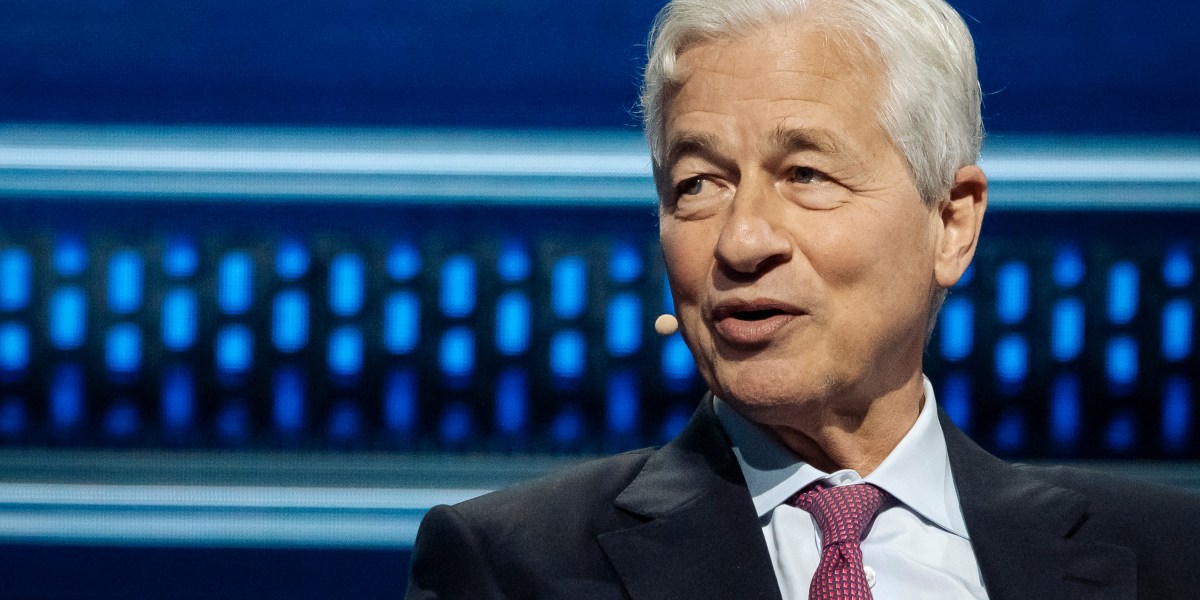
Jamie Dimon has been one of Wall Street’s most outspoken champions of full-time, in-office work. Early this year, he called most of JPMorgan’s 300,000 employees back in-person and capped the push by opening the bank’s new $3 billion Manhattan headquarters.

Yet even as Dimon has taken a hard line on where work gets done, he has long argued that maintaining balance is ultimately an individual responsibility—not a corporate one.

“It is your job to take care of your mind, your body, your spirit, your soul, your friends, your family, your health. Your job, it’s not our job,” he said in a clip originally from 2024 that resurfaced this year.




Source link

Continue Reading

Business

Down Arrow Button Icon

Published

on


JPMorgan is making another big bet on crypto. The Wall Street giant is considering letting institutional clients trade cryptocurrency, according to reporting on Monday from Bloomberg. These products and services may reportedly include spot and derivatives trading, and the efforts are still in their early stages. 

JPMorgan did not immediately respond to Fortune’s request for comment. 

The move comes amid the company’s broader embrace of digital assets. In October, the bank announced that it would allow institutional clients to use Bitcoin and Ether as collateral. And earlier in December, JPMorgan’s asset management arm launched its first tokenized money fund.  

The bank’s recent expansion of crypto is notable given how CEO Jamie Dimon has long expressed contempt for the sector. As recently as last year, Dimon compared Bitcoin to a “pet rock”, and said that its only uses were for money laundering and fraud, among other illegal activities. The remarks followed other insults Dimon has heaped on crypto over the years. 

JPMorgan’s pivot towards crypto follows President Donald Trump’s more favorable policies toward the sector. In July, Trump signed the Genius Act into law, creating a regulatory framework for stablecoins. The legislation was enacted as Trump’s family profited from the industry. 

Given the new regulatory landscape for crypto, other major financial companies have also been hopping on the bandwagon. BlackRock manages close to $100 billion in Bitcoin ETF assets and more than $11 billion in Ethereum ETFs. Meanwhile, fellow financial giant Fidelity is involved in crypto staking, while Goldman Sachs has a private blockchain that is testing tokenized fund redemptions. And UBS, Citi, and HSBC have participated in tokenized bond issuances, on-chain settlement pilots, and crypto custody services. 

Wall Street’s latest digital asset adoption has not, however, translated to big price wins for the major cryptocurrencies. Bitcoin is down about 30% to roughly $87,000 since its high of $126,000 in early October. Ethereum is also down roughly 30% in the last three months to $2,919, and Solana is down roughly 43% to $123.07 during that same time period. It appears that the big banks are taking a long-term view on crypto and are not being scared off by this recent dip.    

Join us at the Fortune Workplace Innovation Summit May 19–20, 2026, in Atlanta. The next era of workplace innovation is here—and the old playbook is being rewritten. At this exclusive, high-energy event, the world’s most innovative leaders will convene to explore how AI, humanity, and strategy converge to redefine, again, the future of work. Register now.


Source link

Continue Reading

Trending

Copyright © Miami Select.
