Aaron Rodgers helps Packers, has Steelers on verge of AFC North title
In his 18 years in Green Bay, 15 as the starting quarterback, Aaron Rodgers won 147 games for the Packers.
Sunday he made it 148.
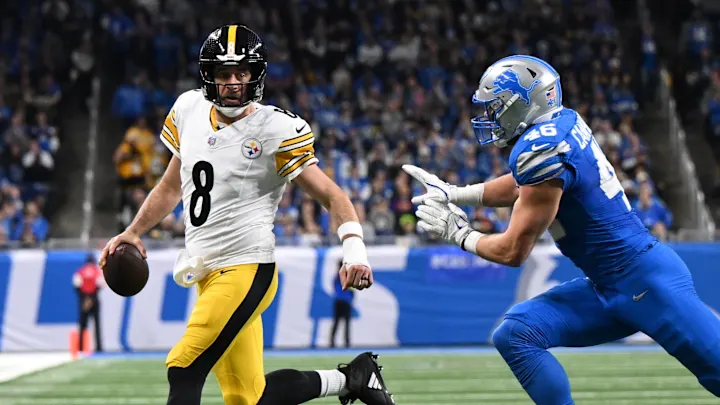
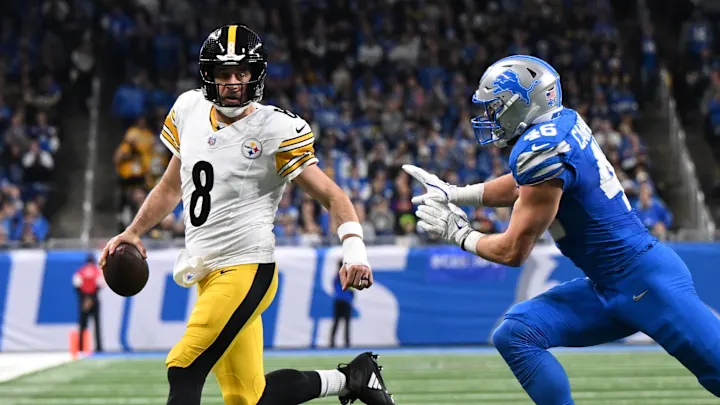
Three years removed from the Packers, Rodgers helped the team he spent most of his Hall of Fame career with when he led the Pittsburgh Steelers past the Detroit Lions in Detroit.
While the Steelers win made them 9-6 and gave them a two-game cushion over Baltimore (7-8) in the race for the AFC North title, the loss for the Lions (8-7) was a big help for the Packers (9-5-1).
Losers of two straight, including Saturday night’s last-minute collapse at Chicago, the Packers now need just one win in their last two games, or one Lions loss in their final two games to clinch a third straight playoff appearance since Rodgers left.
Green Bay could actually clinch before it plays Saturday night if the Lions lose at Minnesota, Christmas afternoon. The Lions finish the season at Chicago. The Packers end it in Minnesota.
The Packers can pay back Rodgers and the Steelers, Saturday night by beating Baltimore. That would not only clinch the playoff spot for Green Bay, but would give the Steelers the AFC North title.
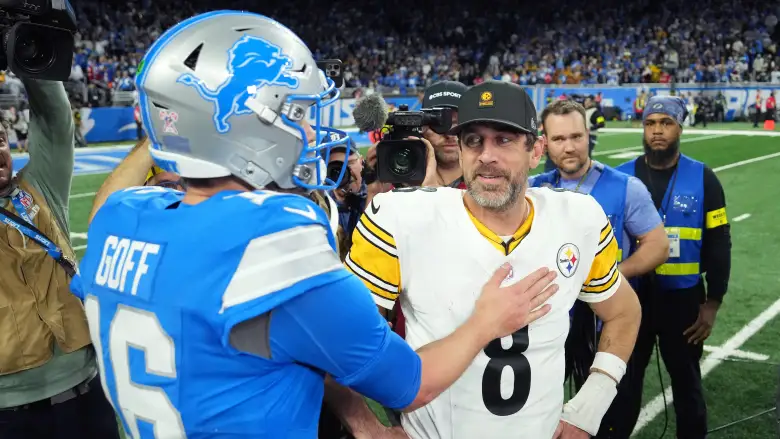
The Packers can pay back Rodgers and the Steelers, Saturday night by beating Baltimore.
Roll Tide
Two days after Alabama came from behind to knock out Oklahoma in the College Football Playoffs, former Tide quarterback Bryce Young outplayed former Sooner Baker Mayfield as Carolina knocked off Tampa Bay to take over first place in the NFC South.
Young engineered his sixth game-winning drive of the season and 12th of his career as the Panthers (8-7) moved into sole possession of first place over the Bucs (7-8) in a battle of two QBs who were the No. 1 overall picks of their respective drafts.
In the game Young completed 21 of 32 passes for 192 yards and two touchdowns for a QB rating of 102.5. Mayfield was 15 of 26 for 145 yards with a touchdown and an interception for a QB rating of 79.8.
What a Weekend
The craziness of this past weekend’s results cleared up the playoff situation for a lot of teams, especially in the NFC. Here’s how it looks:
NFC East
The Eagles won the division for the second straight year the first team to repeat in the East since they did in 2003-04. No other team is the division is alive for a playoff spot.
NFC North
Chicago moved a game-and-a-half ahead of Green Bay for first place, while the Packers remained a game-and-a-half ahead of Detroit for the final wild-card spot. Green Bay can win the division if it beats Baltimore at home and Minnesota on the road, while Chicago loses at San Francisco and at home to Detroit. As stated earlier, the Packers need one win or one Lions loss to clinch the wild-card spot.
NFC South
Tampa and Carolina will meet one more time, the final week of the season and that will likely determine the division winner. The only way it will not would be if Carolina upsets Seattle this week and Tampa gets upset by Miami.
The odds of that? Well, if you were to bet a money line parlay of Carolina and Miami, it would pay +1050.
NFC West
Three teams are headed to the playoffs — Seattle, San Francisco and Los Angeles — just not sure in what order. Seattle, which plays at Carolina and at San Francisco, controls its destiny. Win them both, you win the West and get the No. 1 seed. But so do the 49ers, who host the Bears and the Seahawks. The Rams (at Atlanta, Arizona) have the easiest schedule but need help.
AFC East
New England (12-3) holds a one-game lead and has the tie-breaker on Buffalo (11-4). The Pats would have to lose at the Jets and at home to the Dolphins for the Bills to catch them. The bigger question is can NE get past Denver (12-3) for the No. 1 seed. The Bills are battling the Chargers (11-4) and Texans (10-5) for wild-card rankings.
AFC North
Pittsburgh wins the division if it beats Cleveland or if Baltimore loses to Green Bay. If neither happens it comes down to a head-to-head game the final week in Pittsburgh.
AFC South
Jacksonville (11-4) holds a one-game lead over Houston (10-5), but the Texans currently hold the tie-breaker of better division record. The Jags finish at Indy and home with Tennessee. Houston has the Chargers and the Colts.
AFC West
Denver (12-3) has a game lead on the Chargers (11-4) and the two meet on the final day of the season. In between the Broncos play at Kansas City, while the Chargers host Houston. The Chargers already have a head-to-head win over the Broncos.
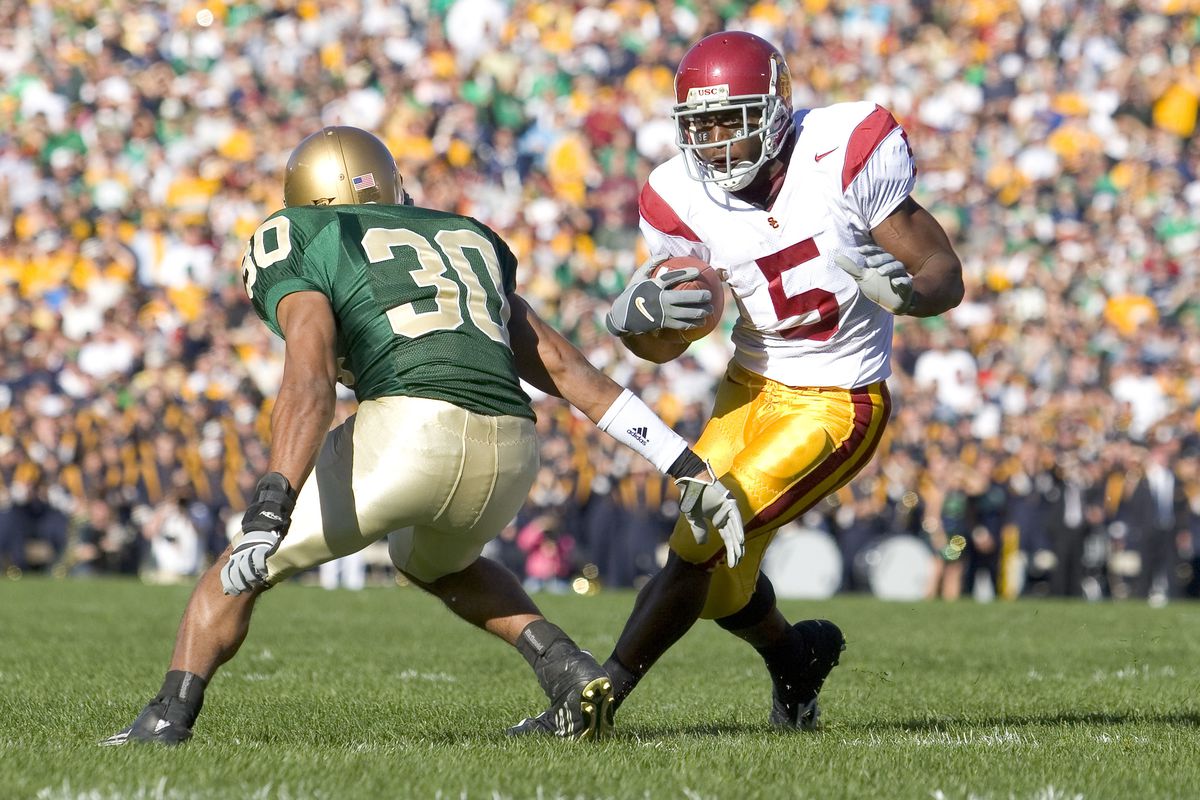
Saturday Night Lights: USC vs. Notre Dame Rekindles College Football’s Most Storied Rivalries
Few matchups in college football carry the weight, tradition, and national intrigue of the USC–Notre Dame rivalry. Since the two programs first met nearly a century ago, the Trojans and Fighting Irish have built a series defined by iconic moments, legendary coaches, and championship implications. The rivalry has long served as a bridge between two football cultures—Los Angeles glitz and Midwest grit—creating a uniquely American sports tradition that captivated fans across generations.
Over 93 meetings, the game has shaped Heisman campaigns, national title races, and unforgettable Saturdays. It has also stood out as one of the rare intersectional rivalries in the sport, with neither team sharing a conference yet maintaining a near‑annual clash since World War II. For many fans, USC–Notre Dame wasn’t just a game; it was a measuring stick for greatness and a celebration of college football’s pageantry and history.
Notre Dame’s CFP Agreement and Its Impact on USC’s Long‑Term Plans
According to reporting from the Los Angeles Times and On3, the rivalry was close to being extended into 2026 before a major development changed USC’s stance. Notre Dame reached a memorandum of understanding with the College Football Playoff guaranteeing the Irish a spot if they finish inside the top 12—an advantage USC reportedly did not know about during scheduling discussions.
Once USC learned of the agreement, administrators grew concerned that Notre Dame’s guaranteed path to the CFP could create what they viewed as a “material advantage”. The Trojans had been willing to compromise on scheduling, even agreeing to play the 2026 matchup in November. But after learning of the CFP deal, USC insisted the game be moved to Week Zero—something Notre Dame did not accept.
The result: the rivalry will not continue in 2026 or 2027, marking only the second interruption since the 1940s. Notre Dame has already filled the open dates with a home‑and‑home series against BYU.
A Sad Moment for College Football Fans
For fans across Los Angeles, South Bend, and the broader college football world, the pause in the USC–Notre Dame rivalry feels like the end of an era. Rivalries are the emotional backbone of the sport—annual traditions that connect generations, define seasons, and create memories that last a lifetime. Losing one of the sport’s most iconic matchups, even temporarily, leaves a void that no replacement game can truly fill.
Notre Dame replaced the USC game with a home and home series with BYU.
While business decisions, playoff structures, and competitive concerns shape modern college football, the disappearance of this rivalry is a reminder of what the sport risks losing. The hope among fans is that USC and Notre Dame will eventually find a path back to the field together. Until then, the absence of this historic clash will be felt every fall Saturday it’s missing.
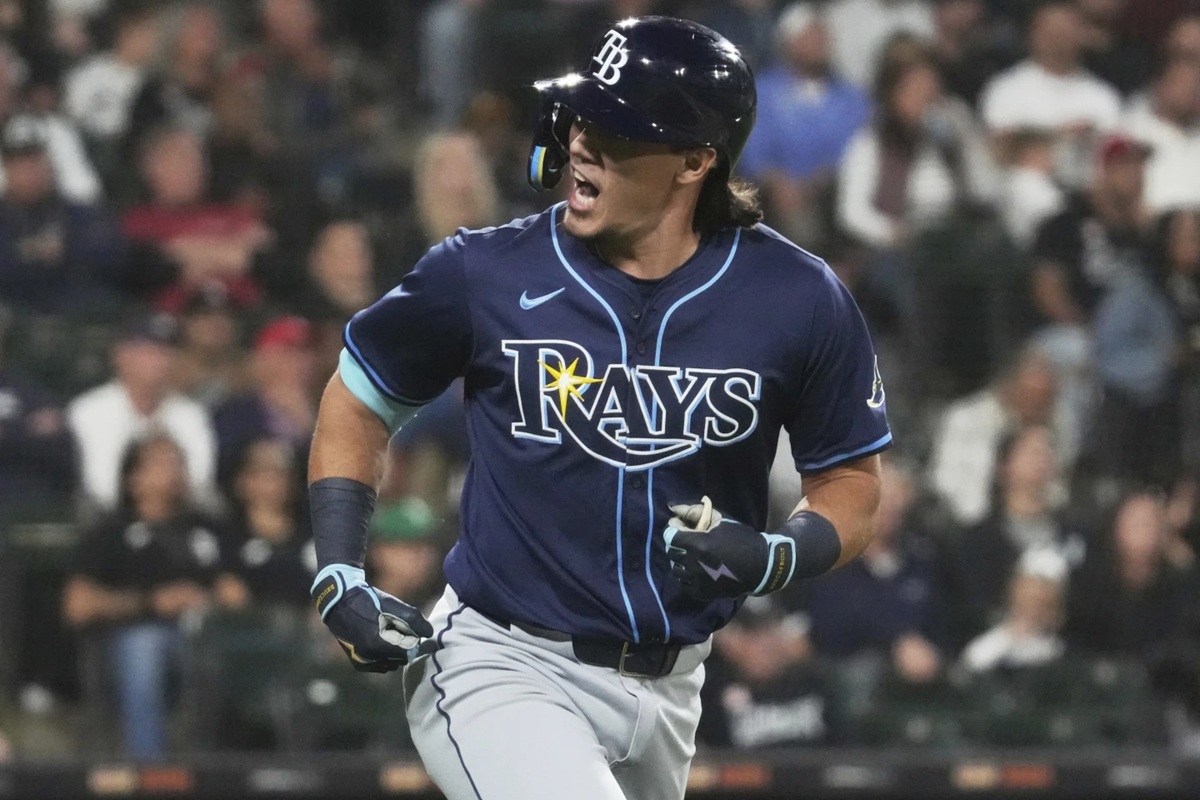
Tampa Bay Rays’ Tristan Gray reacts as he rounds the bases after hitting a solo home run during the seventh inning of a baseball game against the Chicago White Sox in Chicago, Tuesday, Sept. 9, 2025. (AP Photo/Nam Y. Huh)
Back in the late 1970s, long before the Tampa Bay Rays existed, I served as the executive producer of news and sports at WTOG‑TV. The station was led by broadcasting legend Jim Dowdle, who would later rise to run Tribune Broadcasting, including WGN. Under Dowdle’s leadership, WTOG secured an ambitious 80‑game package featuring regular‑season broadcasts of the Major League Baseball teams that trained in the region — the Reds, Cardinals, Mets, Phillies, Tigers, Pirates, White Sox, and Red Sox. I hosted a twice‑weekly pregame show tied to that package, and it quickly became one of the station’s highest‑rated programs.
My point is that if the Rays return to broadcast television in the Bay Area as the Lightning have, they will no doubt have a strong broadcast following. It is very possible that could happen sooner than later.
So, if as I reported yesterday if the DAZN deal to acquire Main Street Sports Group falls apart in January, the Tampa Bay Rays could suddenly regain full control of their local television rights. Main Street, which operates the FanDuel‑branded regional sports networks, is reportedly on the brink of collapse according to Sports Business Journal and other national outlets.
A shutdown of the RSN group would immediately revert broadcast rights back to the Rays, forcing the franchise to secure a new distribution partner for the 2026 season — and potentially as early as spring training.
The WilliamsRanking the Rays’ Most Likely Local Broadcast Partners
1. Scripps Sports (WXPX‑TV / ION Tampa Bay) — The Clear Front‑Runner
Scripps Sports remains the most aggressive and best‑positioned contender to take over Tampa Bay Rays broadcasts if the team regains its rights. The company already controls the Tampa Bay Lightning and Florida Panthers local packages, giving it a fully operational Florida sports infrastructure. WXPX‑TV (ION Tampa Bay) offers a powerful over‑the‑air signal, broad cable and satellite carriage, and a corporate sports division specifically built to replace the collapsing RSN model. Scripps has proven it can handle 70–80 game NHL schedules and would have no difficulty scaling to MLB’s 150‑game demands. Their hybrid model — free OTA broadcasts paired with team‑aligned streaming — is exactly what MLB wants in a post‑RSN world. For those reasons, Scripps remains the most turnkey and realistic partner.
2. Nexstar’s WFLA‑TV (NBC Tampa) — A Major‑Market Powerhouse With Sports Ambition
WFLA‑TV, owned by Nexstar, is one of the strongest broadcast signals in the Tampa Bay DMA and a station with deep production resources. Nexstar has been expanding its sports footprint nationally through The CW’s ACC football package, NASCAR, and other emerging sports properties. While Nexstar has not yet taken on a full MLB rights package, WFLA has the infrastructure, newsroom, and corporate backing to become a high‑profile broadcast home for the Rays. Nexstar could also leverage its CW affiliate in the market for overflow or simulcast opportunities. WFLA is a serious contender — especially if the Rays pursue a multi‑station distribution model.
3. Gray Television’s WWSB ABC 7 Sarasota — A Regional Force With a Hyper‑Local Strategy
Gray Television owns WWSB ABC 7 in Sarasota, a station that plays a major role in the southern half of the Rays’ territory. WWSB has become a standout in the region thanks to its “ABC 7+” strategy, which includes:
All‑local programming throughout the day
Expanded local news blocks
A dedicated ABC 7+ streaming app offering live newscasts, local shows, and special programming
A strong presence in Sarasota, Manatee, and Charlotte counties, all key Rays markets
Gray’s hyper‑local approach and its streaming‑first mindset make WWSB an ideal secondary or complementary partner for the Rays. While WWSB is unlikely to be the sole flagship, it could play a major role in a regional simulcast strategy, extending Rays coverage deeper into Southwest Florida.
4. Paramount’s WTOG‑TV (CW44 Tampa Bay) — A Viable but Less Aggressive Option
WTOG has a long history with sports and a flexible programming schedule that could easily accommodate a full MLB slate. The station’s reach is strong, and The CW’s growing national sports presence (ACC football, NASCAR) shows that the brand is becoming more sports‑friendly. However, Paramount has not aggressively pursued local pro‑team rights, and WTOG lacks the dedicated sports division that Scripps has built. WTOG remains a realistic option — especially in a shared‑rights model — but is not the leading candidate.
5. A Multi‑Station Shared‑Rights Model — Increasingly Likely
Given the ownership landscape, the Rays could adopt a hybrid distribution model similar to the Lightning and Panthers:
Scripps (WXPX) as the primary broadcast partner
Nexstar (WFLA) carrying select marquee games
Gray (WWSB ABC 7) extending reach into Sarasota and Southwest Florida
WTOG serving as an additional window or overflow outlet
This approach would maximize reach across Tampa Bay, Sarasota, and Central Florida while aligning with MLB’s push toward flexible, multi‑platform distribution.
Could the Lightning, Magic, and Rays Align on a Regional Strategy?
With the Lightning already partnered with Scripps and the Orlando Magic facing their own RSN uncertainty, there is growing speculation that Florida franchises could align around a shared broadcast strategy. A unified approach — built on free over‑the‑air distribution paired with team‑controlled streaming — would mirror the model the Lightning and Panthers have already adopted. Such collaboration could create a more stable, fan‑friendly ecosystem across the state.
MLB and Streaming Giants Could Also Enter the Picture
If the Rays regain their rights, MLB would likely step in immediately, as it did with the Padres and Diamondbacks, producing games in‑house and distributing them through MLB.TV and temporary broadcast partners. Streaming giants such as Amazon, Apple, and YouTube could also explore partial or full‑season packages, especially as leagues shift toward direct‑to‑consumer models. The Rays’ situation could become a test case for MLB’s long‑term vision of centralized streaming and flexible local distribution.
My investigative reporting, along with the fine work done by Tom Friend of Sports Business Journal and the team at Awful Announcing, indicates that if Main Street Sports Group doesn’t secure a financial lifeline within the next 60 days, its FanDuel‑branded regional sports networks could cease operations in 2026. Such a collapse would leave the Orlando Magic, Tampa Bay Rays, Miami Heat, Miami Marlins, and several other NBA, NHL, and MLB franchises scrambling for new broadcast partners.
DAZN’s attempt to acquire Main Street Sports Group — the parent company of the FanDuel‑branded regional sports networks — represents one of the most consequential media‑rights moves in years. According to reporting my reporting as well as the Sports Business Journal and Awful Announcing, the networks are “on their death bed” unless the DAZN deal closes by January. For DAZN, a global streaming platform, the acquisition would provide a ready‑made portfolio of NBA, NHL, and MLB rights across 29 franchises. The company’s long‑term vision reportedly includes integrating these RSNs into a unified streaming ecosystem, modernizing distribution, and reducing reliance on traditional cable carriage. For teams, the deal could offer stability after years of RSN turmoil.
What Happens If DAZN Can’t Close the Deal by January?
If DAZN walks away or negotiations stall past the January deadline, the consequences could be immediate and severe. Main Street Sports Group has already missed a December rights payment to the St. Louis Cardinals, raising alarms across MLB. SBJ reporting indicates that if the sale collapses, Main Street would “wind down and dissolve” the FanDuel Sports Networks at the end of the NBA and NHL regular seasons — or potentially mid‑season if cash flow deteriorates further. For MLB teams like the Tampa Bay Rays, this raises urgent questions. Would their contracts revert back to the clubs, as happened during the Diamond Sports bankruptcy? Would MLB step in again with MLB.TV and temporary over‑the‑air deals? The league has precedent — but the timing, just before the 2026 season, would be chaotic.
NBA and NHL Preparing for a Mid‑Season RSN Collapse
The NBA is already preparing for the possibility that Main Street could fold before the season ends. According to SBJ, the league is ready to shift broadcasts for the 13 affected teams onto NBA League Pass and quickly negotiate over‑the‑air partnerships to maintain linear distribution. The NHL faces similar exposure, with multiple teams relying on FanDuel RSNs for local coverage. Both leagues have been quietly modeling contingency plans since the Diamond Sports bankruptcy, and the Main Street situation has accelerated those efforts.
Leagues Taking Games In‑House — and New Partners Emerging
If Main Street collapses, leagues may again take control of local broadcasts. MLB already demonstrated this model in San Diego and Arizona, where it produced games in‑house and distributed them via MLB.TV and local broadcast partners.
How the Lightning and Panthers Dumped the RSN Model for a Hybrid Broadcast Future
The Tampa Bay Lightning and Florida Panthers have already moved beyond the collapsing RSN model, embracing a hybrid distribution strategy built around free over‑the‑air broadcasts and direct‑to‑consumer streaming. Beginning with the 2025–26 season, the Lightning shifted all non‑national games from the FanDuel Sports Network to Scripps Sports, airing locally on WXPX‑TV and simultaneously streaming through the team’s official app — a move designed to make games accessible “to all households in Tampa Bay” via antenna, cable, satellite, or digital platforms.
The Lightning’s new model also extends coverage across Florida markets such as Orlando, Gainesville, Tallahassee, and Pensacola, while offering a low‑cost subscription streaming option for fans inside the broadcast territory. The Panthers have followed a similar path, partnering with Scripps Sports to deliver games on free broadcast TV in South Florida while integrating league‑controlled streaming through NHL platforms — a structure that mirrors the Lightning’s approach and reflects the NHL’s broader shift toward flexible, multi‑platform distribution. Together, the two Florida franchises have become early adopters of a post‑RSN ecosystem, proving that teams can maintain — and even expand — reach without relying on the traditional cable‑bundle model.
The Magic, Heat, Rays and Marlins Could Be Looing For Partners
If Main Street Sports Group collapses before the end of the NBA and NHL seasons — or before MLB’s 2026 campaign begins — every franchise tied to the FanDuel‑branded RSNs would face a different level of disruption. For the Orlando Magic, the loss of their RSN partner would force the franchise to pivot quickly toward either a league‑run solution through NBA League Pass or a temporary over‑the‑air arrangement in the Orlando market. The Miami Heat would face similar challenges, with one of the league’s most valuable local TV products suddenly without a distribution home. Both teams rely heavily on RSN revenue to support operations, and a mid‑season blackout would create immediate pressure on the NBA to step in with a centralized production and streaming plan.
The Tampa Bay Rays, already operating in one of the league’s most complex media markets, could find themselves without a local TV partner just weeks before Opening Day. MLB has experience stepping in — as it did in San Diego and Arizona — but producing and distributing a full season of games on short notice would strain league resources. The Miami Marlins, who depend heavily on RSN revenue to stabilize their financial model, would face even greater uncertainty. A collapse of Main Street could force MLB to accelerate its long‑term vision of a centralized, league‑controlled streaming platform, but the transition would be messy, rushed, and potentially costly for teams and fans.
Across all three leagues, the common thread is vulnerability. Each franchise would be forced into emergency mode, relying on league offices to secure temporary broadcast homes while long‑term media strategies are rebuilt. The collapse of Main Street wouldn’t just disrupt programming — it would reshape the economics, distribution, and fan engagement strategies of every team caught in the fallout.
Will Amazon, Apple, YouTube, and Other Streamers Step In?
The collapse of another RSN group would create a rare opening for tech giants. Amazon already holds stakes in YES Network and streams multiple MLB and NFL packages. Apple has experimented with exclusive MLB and MLS rights. YouTube TV remains one of the largest virtual MVPDs and could pursue local sports to differentiate its offering. If DAZN falters, these companies could bid for individual team packages, partner with leagues on hybrid models, or even acquire RSN assets outright. The shift toward streaming‑first distribution is accelerating, and the Main Street crisis may force leagues to embrace it sooner than planned.
Is This the Beginning of the End for Regional Sports Networks?
The RSN model has been eroding for nearly a decade, but the potential collapse of Main Street — following Diamond Sports’ bankruptcy — may mark the true tipping point. Cord‑cutting has gutted subscriber bases, rights fees have outpaced revenue, and teams increasingly prefer direct‑to‑consumer control. If DAZN completes the acquisition, it could represent a new, streaming‑centric version of the RSN. If the deal fails, it may accelerate the demise of the traditional model entirely. Either way, the next 60 days will shape the future of local sports broadcasting for years to come.