Connect with us

Business

Google Cloud chief reveals the long game: a decade of silicon and the energy battle behind the AI boom

Published

on


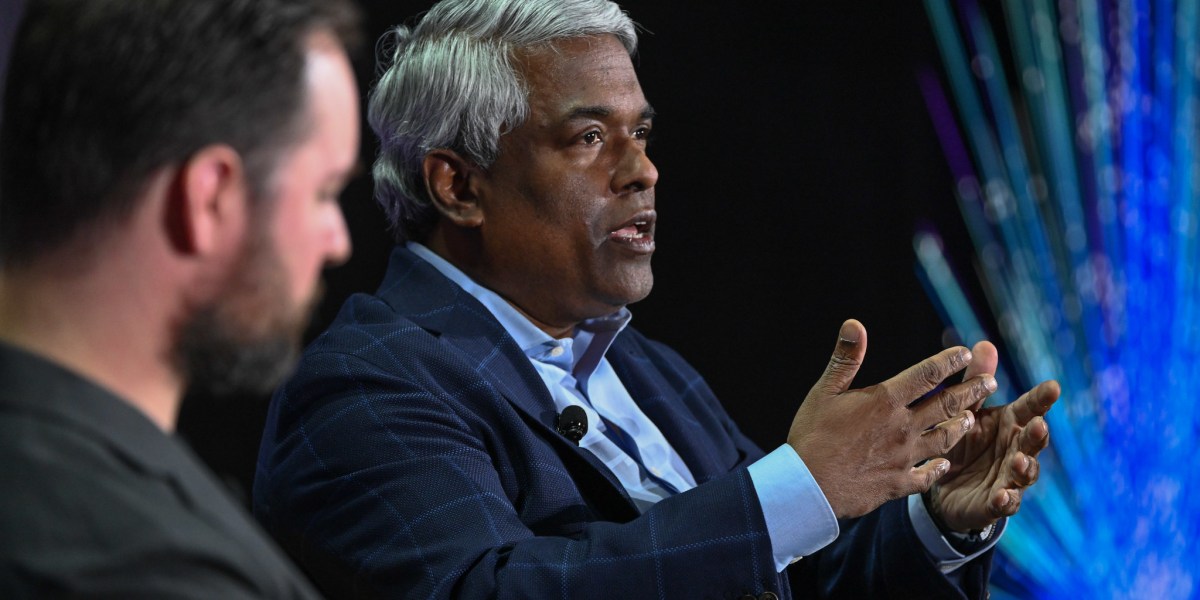
While the world scrambles to adapt to the explosive demand for generative AI, Google Cloud CEO Thomas Kurian says his company isn’t reacting to a trend, but rather executing a strategy set in motion 10 years ago. In a recent panel for Fortune Brainstorm AI, Kurian detailed how Google anticipated the two biggest bottlenecks facing the industry today: the need for specialized silicon, and the looming scarcity of power.

According to Kurian, Google’s preparation began well before the current hype cycle. “We’ve worked on TPUs since 2014 … a long time before AI was fashionable,” Kurian said, referring to Google’s custom Tensor Processing Units. The decision to invest early was driven by a fundamental belief that chip architecture could be radically redesigned to accelerate machine learning.

The energy premonition

Perhaps more critical than the silicon itself was Google’s foresight regarding the physical constraints of computing. While much of the industry focused on speed, Google was calculating the electrical cost of that speed.

“We also knew that the most problematic thing that was going to happen was going to be energy because energy and data centers were going to become a bottleneck alongside chips,” Kurian said.

This prediction influenced the design of their infrastructure. Kurian said Google designed its machines “to be super efficient in delivering the maximum number of flops per unit of energy.” This efficiency is now a critical competitive advantage as AI adoption surges, placing unprecedented strain on global power grids.

Kurian said the energy challenge is more complex than simply finding more power, noting that not all energy sources are compatible with the specific demands of AI training. “If you’re running a cluster for training … the spike that you have with that computation draws so much energy that you can’t handle that from some forms of energy production,” he said.

To combat this, Google is pursuing a three-pronged strategy: diversifying energy sources, utilizing AI to manage thermodynamic exchanges within data centers, and developing fundamental technologies to create new forms of energy. In a moment of recursive innovation, Kurian said “the control systems that monitor the thermodynamics in our data centers are all governed by our AI platform.”

The ‘zero sum’ fallacy

Despite Google’s decade-long investment in its own silicon, Kurian pushed back against the narrative that the rise of custom chips threatens industry giants like Nvidia. He argues that the press often frames the chip market as a “zero sum game,” a view he considers incorrect.

“For those of us who have been working on AI infrastructure, there’s many different kinds of chips and systems that are optimized for many different kinds of models,” Kurian said.

He characterized the relationship with Nvidia as a partnership rather than a rivalry, noting that Google optimizes its Gemini models for Nvidia GPUs and recently collaborated to allow Gemini to run on Nvidia clusters while protecting Google’s intellectual property. “As the market grows,” he said, “we’re creating opportunity for everybody.”

The full stack advantage

Kurian attributed Google Cloud’s status as the “fastest growing” major cloud provider to its ability to offer a complete “stack” of technology. In his view, doing AI well requires owning every layer: “energy, chips or systems infrastructure, models, tools, and applications,” noting that Google is the only player that offers all of the above.

However, he said this vertical integration does not equate to a “closed” system. He argued that enterprises demand choice, citing how 95% of large companies use cloud technology from multiple providers. Consequently, Google’s strategy allows customers to mix and match—using Google’s TPUs or Nvidia’s GPUs, and Google’s Gemini models alongside those from other providers.

Despite the advanced infrastructure, Kurian offered a reality check for businesses rushing into AI. He identified three primary reasons why enterprise AI projects fail to launch: poor architectural design, “dirty” data, and a lack of testing regarding security and model compromise. Furthermore, many organizations fail simply because “they didn’t think about how to measure the return on investment on it.”

For this story, Fortune journalists used generative AI as a research tool. An editor verified the accuracy of the information before publishing.


Source link

Continue Reading

Business

There are more self-made billionaires under 30 than ever before—11 of them have made the ultra-wealthy club in the last 3 months thanks to AI

Published

on


While many Gen Zers are struggling to land entry-level jobs thanks to AI, the same technology is also fueling a new wave of young billionaires. This year, the number of self-made billionaires under 30 hit an all-time high, as entrepreneurial young people have turned growing up with smartphones into billion-dollar startups. 

In 2025, there were more self-made billionaires in their 20s than ever before—about 13 people higher than from a previous record of 7—according to an analysis from Forbes. 

And most have experienced a wealth surge as of late; about 11 of the 13 newly initiated ultra-wealthy became billionaires within the last three months, including the likes of Polymarket CEO Shayne Coplan, the cofounder of vibe coding startup Loveable, Fabian Hedin, and AI entrepreneur Arvid Lunnemark. 

The majority of these young and ultra-wealthy founders made their wealth by jumping on the AI industry while it’s hot. For example, 25-year-old Sualeh Asif found success as the cofounder of company Anysphere—the team behind popular $29.3 billion AI editing tool Cursor.

Adarsh Hiremath and Surya Midha, both just 22, cofounded Mercor: an AI-powered recruiting startup helping connect talent with Silicon Valley’s biggest AI labs. 

Of the 11 young entrepreneurs who became billionaires within the last few months, eight saw their fortunes boom through their AI innovations. 

How the youngest female self-made billionaire under 30 earned her wealth

One of the 11 entrepreneurs under 30 who stepped into newfound wealth late this year was Luana Lopes Lara: the world’s youngest female self-made billionaire ever. 

Earlier this month, Lopes Lara saw her fortune skyrocket to $1.3 billion after her prediction market startup, Kalshi, hit an eye-watering $11 billion valuation. But before making her Wall Street debut, the young entrepreneur was on a different life path. 

The Brazilian-born entrepreneur was once training to be a professional ballerina in Rio. After working for nine months as a professional dancer in Austria, she gave up the grueling career, and pivoted to a different dream: becoming the next Steve Jobs. 

While studying engineering at MIT, Lopes Lara spent her summers working as an intern at Ray Dalio’s Bridgewater Associates and Ken Griffin’s Citadel Securities. But something clicked when the founder took up a gig at Five Rings Capital, alongside fellow MIT student Tarek Mansour. During this internship, the duo bonded over a shared vision for a prediction market company that would allow users to bet on the outcomes of popular sporting events, elections, and current events. 

The entrepreneurs went into business together, and after a successful Y Combinator pitch just a year later, their platform Kalshi was born. In 2020, after receiving Commodity Futures Trading Commission (CFTC) approval, it became the first federally regulated prediction market platform in business. Earlier this month, Kalshi raised $1 billion, achieving a $11 billion valuation and propelling Lopes Lara and Mansour—who each own around 12% of the company—into the exclusive billionaire club.

This story was originally featured on Fortune.com


Source link

Continue Reading

Business

Nvidia CEO Jensen Huang says humility is underrated: ‘You cannot show me a task that is beneath me’
Published

on


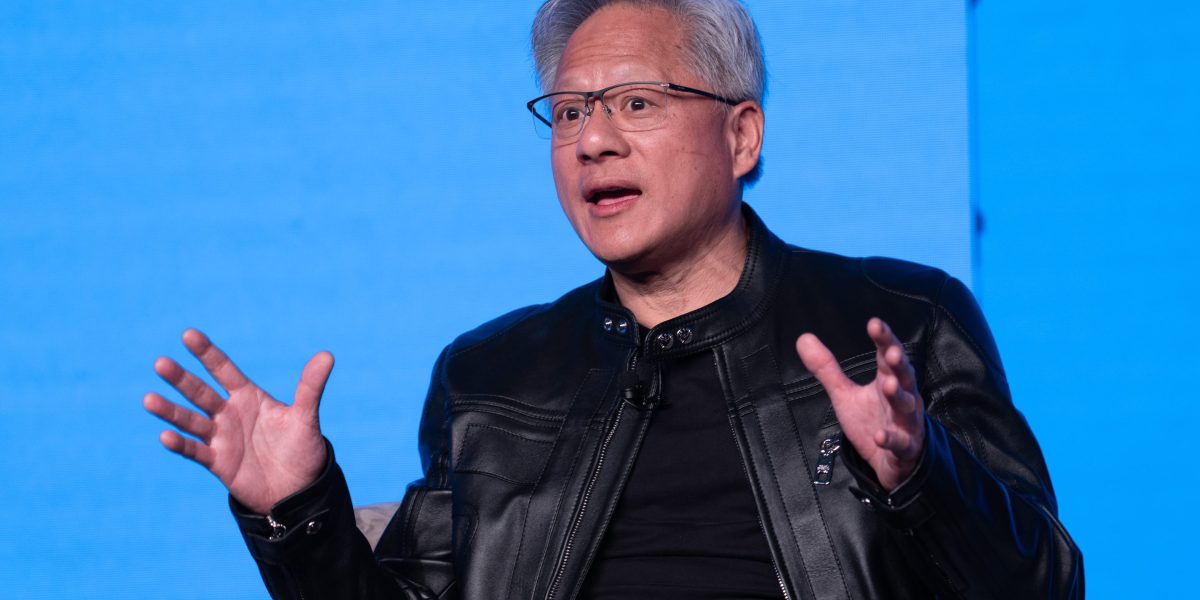
Nvidia’s CEO Jensen Huang has gone from the bottom to becoming a multi-billionaire, but that doesn’t mean he’s above doing the little tasks. 

The 62-year-old CEO of the world’s most valuable company said his humble roots as a dishwasher have, in fact, helped him learn to spurn no task. 

“You can’t show me a task that is beneath me,” he said in an interview with Stanford’s graduate school of business, which recently resurfaced on X.

Even in his most humble of jobs, the world’s ninth-richest man never shied away from the dirty work.

“I cleaned a lot of toilets. I’ve cleaned more toilets than all of you combined, and some of them you just can’t unsee,” he said.

If someone approaches Huang with a call for help, he said he tries to at least contribute. That way, at least, the person with the problem can see a new way of thinking about the problem, he added. 

“If you send me something and you want my input on it, and I can be of service to you, and in my review of it, share with you how I reason through it, I’ve made a contribution to you,” Huang said. “I’ve made it possible for you to see how I reason through something, and by reasoning, as you know, how someone reasons through something empowers you.”

These values have been fundamental to Huang’s leadership style and are partly why he is worth $161.8 billion, according to Forbes. Born in Taiwan, Huang moved to the U.S. at age 9 without his parents. As a teenager, he took a job as a dishwasher at Denny’s

It was actually at Denny’s where Nvidia, Huang’s future company, got its start, according to the Nvidia website

Years after he worked at the chain as a dishwasher, the Stanford graduate met with his future cofounders, Chris Malachowsky and Curtis Priem, to discuss the idea of a chip that would make 3D graphics possible on a PC. This idea sparked what would later become Nvidia, a chip empire that is now worth $4.5 trillion.

It wasn’t easy at first, according to Huang. When he presented the idea to his boss at LSI Logic, Wilfred Corrigan, he called it “one of the worst elevator pitches he’s ever heard.”

Still, Corrigan convinced Don Valentine, the founder of Sequoia Capital, to hear the pitch because of Huang’s strong work ethic.

Elon Musk, who actually played a role in Nvidia’s origin story, commented on the resurfaced Huang interview this week. 

“This is the way,” Musk wrote on X. When Nvidia introduced its first AI supercomputer, Musk was apparently the only one who reached out, saying he had a “a nonprofit AI lab” in need of such a product. Despite Huang’s skepticism that a nonprofit would buy a $300,000 computer, he personally delivered it to San Francisco to what he later realized was the OpenAI team behind ChatGPT. Musk left OpenAI in 2018.


Source link

Continue Reading

Business

The average worker would need to save for 52 years to claw their way of of the middle class

Published

on


The exact number of years of saving it’d take for the average worker to claw out of the middle class bracket has been revealed—and it’s nearly half a century.

Sobering new research from the think tank Resolution Foundation shows that for aspirational Brits looking to move up the wealth ladder, not even a lifetime of savings would be enough. 

In fact, the average worker would need to save their earnings for 52 years, to raise £1.3 million ($1.7 million), the amount needed to move from the middle and become as wealthy as the richest 10%.

And it gets worse: That’s with zero outgoings.

“Wealth gaps in Britain are now so large that a typical full-time employee saving all their earnings across their entire working life would still not be able to reach the top of the wealth ladder,” Molly Broome, senior economist at the Resolution Foundation and the lead author of the report, wrote.

And for those who happen to be born in the working class, the odds are increasingly stacked against them. 

“Wealth mobility in Britain is low—people that start life wealthy tend to stay wealthy, and vice versa,” Broome added.

As the saying goes, money makes money. The report revealed that the key driver of widening inequality is the so-called “passive” gains. Essentially, those who bought property and invested their money in pensions have seen their wealth balloon since 2010.

Workers in the U.S. would need to save for 70 years to unlock the American dream 

As inflation squeezes workers in a cost-of-living vise, paired with a job crisis that’s not been this bad since the financial crisis, and AI threatening to make it even worse, the salary it takes to be considered rich keeps climbing further out of reach. And the issue is transatlantic.

Even in the U.S., workers say they’d need at least $2.3 million to feel rich (up $100k from two years ago). Meanwhile, separate research highlights they’d need a staggering $4.4 million to achieve the American Dream—the house in the suburbs, two children, an annual vacation, and a new car in the drive.

In fact, Investopedia did the math and calculated that achieving those milestones would cost over $1 million more than most Americans will make in their lifetime.

With median weekly earnings of full-time workers averaging at $1,214, according to the Bureau of Labor Statistics, it would take 36 years of full-time work to feel rich with $2.3 million in the bank. That’s before a single bill is paid, and still $2.1 million short of affording the American Dream.

It would take the average American worker nearly 70 years without a single outgoing to reach that $4.4 million benchmark—far longer than most people will work in a lifetime, and that’s without even considering automation’s impact on the future of work, inflation, or any unexpected financial shocks.


Source link

Continue Reading

Trending

Copyright © Miami Select.
