Hong Kong has reclaimed its spot at the top of global IPO charts for total funds raised—a position it last held in 2019. (This figure reflects the capital injected by investors during an IPO, and represents the difference in a company’s valuation pre- and post-IPO.)
In 2025, global IPO markets raised $158.4 billion across 1,227 deals, reflecting an 18% rise in funds raised, according to an outlook report by consulting firm KPMG.
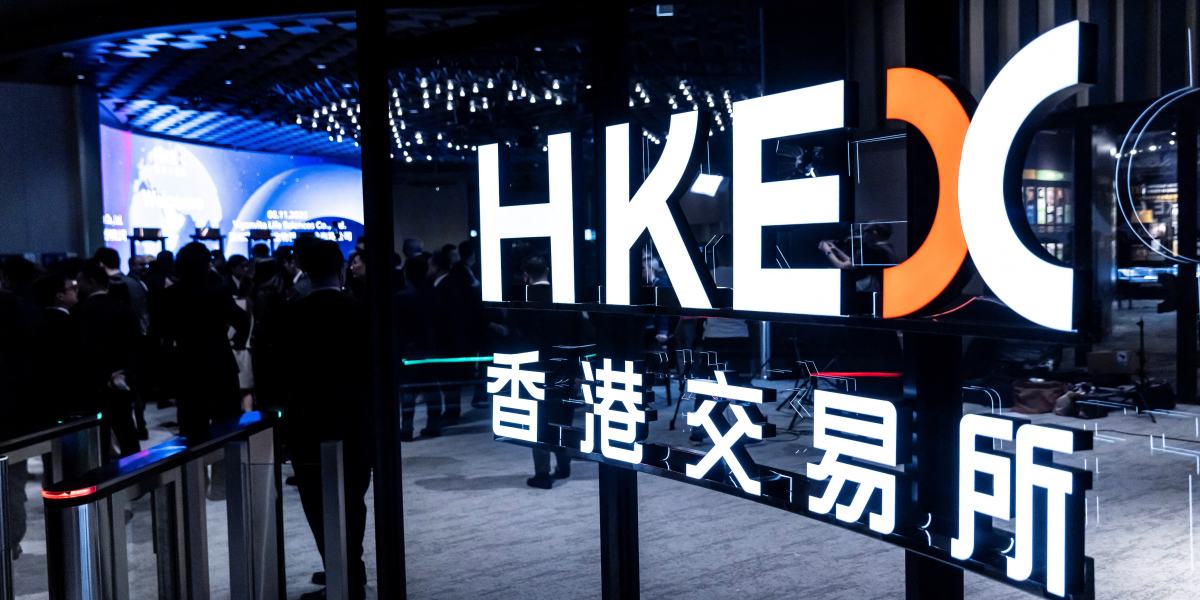
The Hong Kong stock exchange (HKEX) led the way, raising a total of HKD272.1 billion ($34.3 billion) in funds. This was a 210% increase from 2024, when it raised HKD88 billion ($11.3 billion).
The New York and NASDAQ stock exchanges ranked 2nd and 3rd, raising a total of $20.3 billion and $19.2 billion respectively, the KPMG report found.
According to the firm’s analysts, Hong Kong’s surge in IPO fundraising was driven by a record number of A+H listings—dual listings allowing companies to trade shares on both mainland Chinese stock exchanges (A-shares) and the HKEX (H-shares). They are especially popular among Chinese companies looking to Hong Kong’s market for the first leg of their global expansion.
As of Dec. 7, Hong Kong achieved an all-time high of more than 300 active IPO applications—including 92 active A+H listing applicants—and KPMG’s analysts believe that this upward trend will continue into 2026.
“Key global IPO markets have trended upwards in 2025 with Hong Kong’s threefold increase in funds raised, making it the largest single contributor to the global IPO market’s recovery, and reaffirming its status as a leading international financial center,” wrote Paul Lau, a partner and the head of capital markets and professional practice at KPMG China, in their outlook report.
Among Hong Kong’s active IPO applications, the lion’s share is from companies in the technology, media, and telecommunications sector—which made up 39% of applications.
The healthcare and life sciences sector came in second, constituting 21% of IPO applications. The industrial sector was a close third, with 18% of active applications.
A few blockbuster IPOs debuted on the HKEX this year, including China’s largest bubble-tea chain, Mixue, which raised $444 million, and AI firm Pony AI, which raised $860 million.
KPMG’s Lau adds that in the next year he expects the pace of AI-related listings in the HKEX to accelerate, as the technology matures and is adopted more widely across different industries.
High-performing IPO markets
After the Hong Kong and U.S. stock exchanges was the National stock exchange of India, which came in fourth place, after raising $18.5 billion in funds. This was a drop from the $20.3 billion it accrued in 2024, which previously earned it the first place spot.
The Shanghai stock exchange maintained its position as the fifth most lucrative IPO market globally, raising $13.2 billion in 2025—up from $10.6 billion in 2024.
Additionally, the A-share market—mainland China’s stock market—posted steady gains in 2025, KPMG’s market watchers added, with positive growth projected to continue in the coming year.
“The 15th five-year plan (China’s national roadmap) deepens the reform for China’s capital markets, with inclusiveness and coordinated investment and financing at the core of market reforms,” wrote Irene Chu, a partner at KPMG, who also oversees the new economy and life sciences sector for the Hong Kong market.
“As these strategic priorities take hold, we expect the authorities to prioritize and sustain their efforts to foster steady, high-quality growth in the A-share market for years to come,” she added.
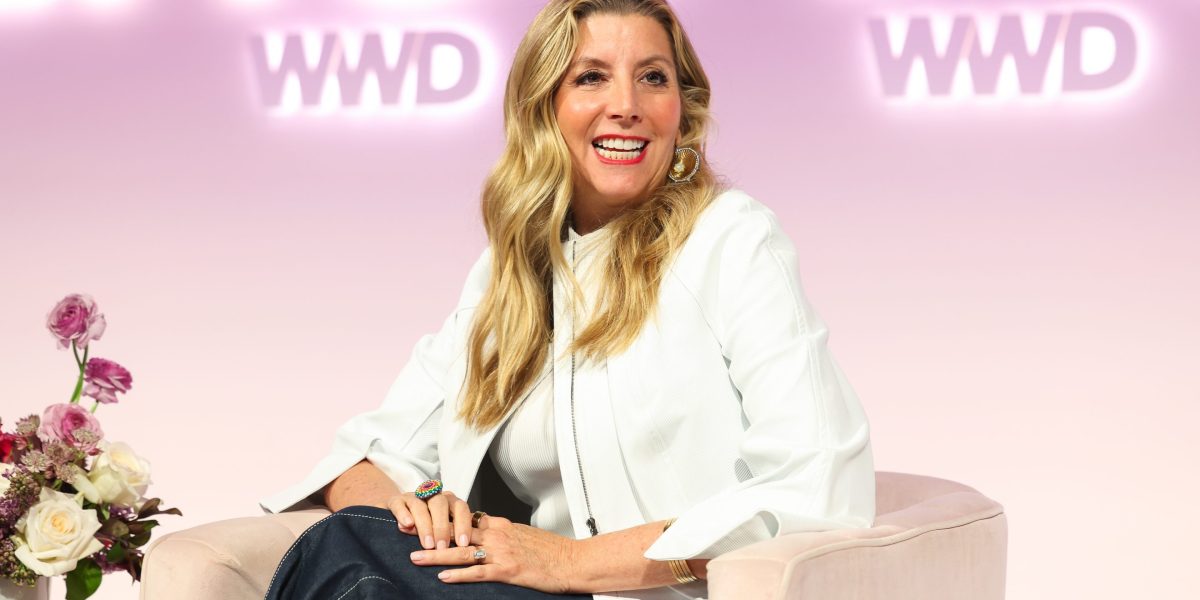
Sara Blakely ideated Spanx while she was a fax machine salesperson in the late 1990s. She was getting dressed for a party and wanted to wear her white pants that had hung in her closet for months—but she didn’t have the right undergarment to wear with them.
She wanted a “smooth look” without the bulk of a classic girdle, so she cut off the feet of her control-top pantyhose—and Spanx was born.
“I wanted my clothes to fit better, and so my own butt was the inspiration,” Blakely said during Fortune’s 2014 Most Powerful Women Summit. “I might be the only woman in the world grateful to my cellulite.”
That moment is eventually what would make her a billionaire, but her success story didn’t happen overnight.
In an Instagram post, Blakely shared six “unhinged” things she did while starting Spanx, where she served as CEO until 2021. Her company—which she launched with just $5,000 in savings—is worth $1.2 billion today. Blakely became a billionaire in 2012, and was named the youngest self-made female billionaire by Forbes that year. Forbes estimates her current net worth at $1.2 billion.
Spanx license plate
Blakely said she bought a Spanx license plate as a means of advertising, according to her Instagram post. She said women started following her home asking her for free Spanx, which can now cost up to $148 depending on the product.
Now, Spanx relies heavily on celebrity endorsements and influencer marketing. It wasn’t until 2024 that the brand launched its first global brand campaign, “We Live In Spanx,” which featured track star Allyson Felix, social-media star Nadia Caterina Munno, and women’s rights advocate and model Charli Howard.
Reality star
Against the advice of her parents, boyfriend, and lawyer, Blakely signed up for a reality TV show, The Rebel Billionaire: Branson’s Quest for the Best. From 2004-2005, Blakely starred on the show hosted by British entrepreneur and philanthropist Sir Richard Branson.
She finished second, but still won $750,000, and used that money to start her own philanthropic organization. The Sara Blakely Foundation has donated more than $5 million in scholarships and grants to aspiring female entrepreneurs.
“20 years ago, I started Spanx with $5,000 in savings and I see this as a time to pay it forward. Small business is the backbone of our culture,” Blakely wrote in a 2020 LinkedIn post. “I know what it’s like to be a small business owner, and I want to provide some relief to these entrepreneurs during this time.”
Writing to Oprah
Blakely says she mailed her Spanx prototype and a handwritten note to media mogul Oprah Winfrey, telling her how much Winfrey had inspired her and asked her to try her invention.
In 2006, Oprah praised Blakely’s invention, and even named it as her favorite product of the year.
“Spanx really changed the way I wore clothes,” Oprah said on her show in 2006. “When Sara first came on The Oprah Show to tell us about her idea for Spanx, I knew it was brilliant. We’d all been cutting off our pantyhose for years! So from the moment I wore my first pair, they became a staple in my wardrobe.”
Paying her friends
Blakely also admitted she paid all of her friends to go into Neiman Marcus department stores and buy her product so “it wouldn’t tank.” The product launched at Neiman Marcus in 2000. Blakely said she had just 10 minutes to first pitch Neiman Marcus and she had to buy her own flight from Atlanta to Dallas to visit the company’s buying office.
“The buying rep immediately said ‘Oh I get it. It’s brilliant—and I’m gonna put it in seven stores,” Blakley said during the Fortune MPW interview. “It was unbelievable.”
While Spanx was still in startup mode, Blakely said she shipped out orders in regular envelopes with “absolutely no tracking numbers.” Now, Spanx has its own sophisticated e-commerce site and is sold across many department stores in more than 50 countries.
Sneaking into stores
Blakely also admitted she would sneak into stores where Spanx were being sold and would move the products from the back corner to right by the cash registers.
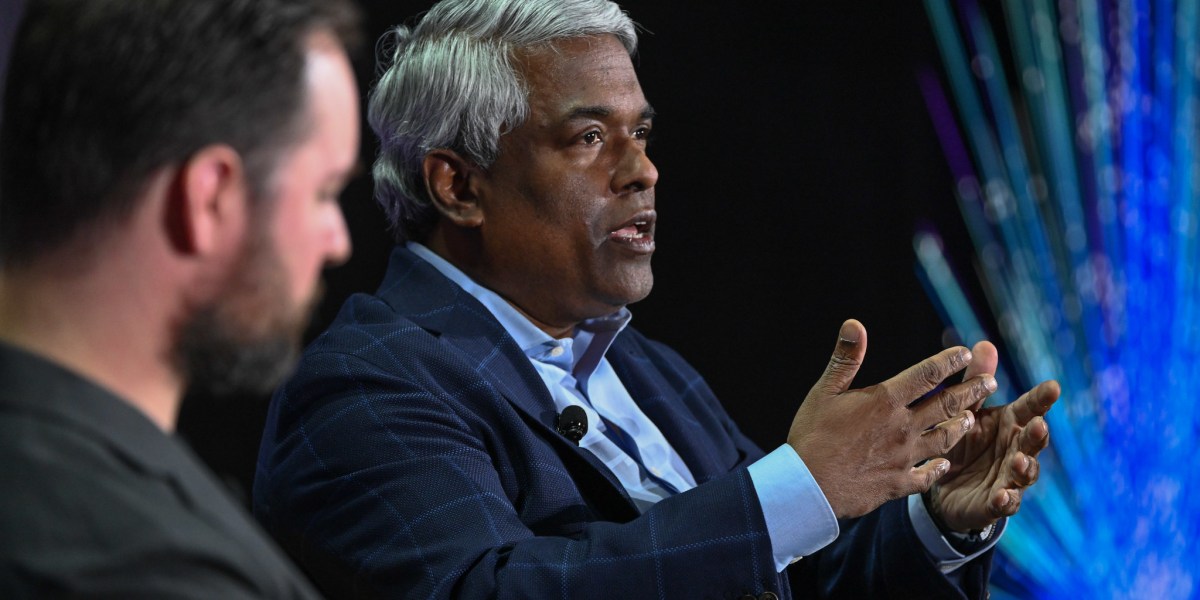
While the world scrambles to adapt to the explosive demand for generative AI, Google Cloud CEO Thomas Kurian says his company isn’t reacting to a trend, but rather executing a strategy set in motion 10 years ago. In a recent panel for Fortune Brainstorm AI, Kurian detailed how Google anticipated the two biggest bottlenecks facing the industry today: the need for specialized silicon, and the looming scarcity of power.
According to Kurian, Google’s preparation began well before the current hype cycle. “We’ve worked on TPUs since 2014 … a long time before AI was fashionable,” Kurian said, referring to Google’s custom Tensor Processing Units. The decision to invest early was driven by a fundamental belief that chip architecture could be radically redesigned to accelerate machine learning.
The energy premonition
Perhaps more critical than the silicon itself was Google’s foresight regarding the physical constraints of computing. While much of the industry focused on speed, Google was calculating the electrical cost of that speed.
“We also knew that the most problematic thing that was going to happen was going to be energy because energy and data centers were going to become a bottleneck alongside chips,” Kurian said.
This prediction influenced the design of their infrastructure. Kurian said Google designed its machines “to be super efficient in delivering the maximum number of flops per unit of energy.” This efficiency is now a critical competitive advantage as AI adoption surges, placing unprecedented strain on global power grids.
Kurian said the energy challenge is more complex than simply finding more power, noting that not all energy sources are compatible with the specific demands of AI training. “If you’re running a cluster for training … the spike that you have with that computation draws so much energy that you can’t handle that from some forms of energy production,” he said.
To combat this, Google is pursuing a three-pronged strategy: diversifying energy sources, utilizing AI to manage thermodynamic exchanges within data centers, and developing fundamental technologies to create new forms of energy. In a moment of recursive innovation, Kurian said “the control systems that monitor the thermodynamics in our data centers are all governed by our AI platform.”
The ‘zero sum’ fallacy
Despite Google’s decade-long investment in its own silicon, Kurian pushed back against the narrative that the rise of custom chips threatens industry giants like Nvidia. He argues that the press often frames the chip market as a “zero sum game,” a view he considers incorrect.
“For those of us who have been working on AI infrastructure, there’s many different kinds of chips and systems that are optimized for many different kinds of models,” Kurian said.
He characterized the relationship with Nvidia as a partnership rather than a rivalry, noting that Google optimizes its Gemini models for Nvidia GPUs and recently collaborated to allow Gemini to run on Nvidia clusters while protecting Google’s intellectual property. “As the market grows,” he said, “we’re creating opportunity for everybody.”
The full stack advantage
Kurian attributed Google Cloud’s status as the “fastest growing” major cloud provider to its ability to offer a complete “stack” of technology. In his view, doing AI well requires owning every layer: “energy, chips or systems infrastructure, models, tools, and applications,” noting that Google is the only player that offers all of the above.
However, he said this vertical integration does not equate to a “closed” system. He argued that enterprises demand choice, citing how 95% of large companies use cloud technology from multiple providers. Consequently, Google’s strategy allows customers to mix and match—using Google’s TPUs or Nvidia’s GPUs, and Google’s Gemini models alongside those from other providers.
Despite the advanced infrastructure, Kurian offered a reality check for businesses rushing into AI. He identified three primary reasons why enterprise AI projects fail to launch: poor architectural design, “dirty” data, and a lack of testing regarding security and model compromise. Furthermore, many organizations fail simply because “they didn’t think about how to measure the return on investment on it.”
For this story, Fortune journalists used generative AI as a research tool. An editor verified the accuracy of the information before publishing.
The history of the craftsmanship economy is littered with the ruins of fashion houses which lost their creative soul through founder absence, over-licensing, or managerial drift — as seen at once-iconic examples such as Halston, Pierre Cardin, Liz Claiborne, and Kate Spade — and internal turbulence (Gucci), as well as unsuccessful conglomeration efforts which proved incapable of preserving creative genius at scale.
In contrast to such unraveled tapestries, Bernard Arnault has not merely defied that history; he has fortified quality brands and built something entirely new and unprecedented.
Arnault did not merely preserve a single great house after a founder’s passing — a feat rare enough in creative industries. He has assembled, disciplined, and sustained an entire federation of once fragile maisons, each with its own lineage, mythology, tempo, and creative risk profile, transforming a constellation of independent brands into a pioneering global powerhouse, with LVMH the first European company to surpass a $500 billion valuation. Along the way, Arnault has become one of the rare titans whose vision has reshaped not just business, but culture and society more broadly.
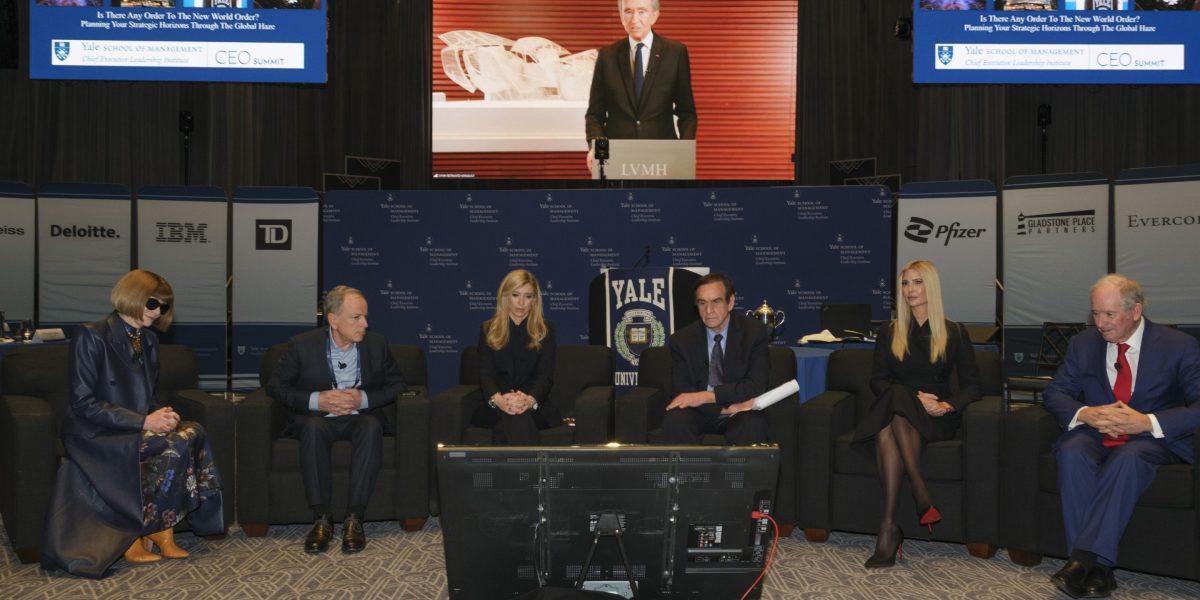
That we had the opportunity to pick Arnault’s brain at all was exceedingly rare and unique. As his friend Steve Schwarzman reminded us during the award ceremony, he is “a most unusual person.” In a world of grandiose consumer goods promoters, it is rare to see a greatest brand builder also be a man of rare humble character.
Anna Wintour captured this paradox even more eloquently: “As many of you will have noticed, Bernard is not an easy man to get to know. I have been meeting with him for some four decades, and yet I still find him as fascinatingly enigmatic as Gerhard Richter’s Forest paintings — which, of course, are in Bernard’s collection. All I seem to have is traces and gestures, flickering from a person who has worked across the canvas at great speed.”
Arnault’s lessons start with relentless focus. As he declared in his acceptance remarks, “My time as founder and CEO of LVMH since the late ‘80s has taught me that as the world evolves around us, we must evolve with it and embrace change while never losing sight of the core values and guiding principles upon which our businesses and institutions are built. Today, I suspect we can all agree that change is happening faster than ever, and that the way in which we live, communicate and transact is being constantly reshaped by the geopolitical environment, economic uncertainty, and seismic events of our time, and not least our fast-developing technologies. I also suspect we share that turbulence and uncertainty are not barriers to leadership.
“In fact, quite the opposite. In turbulent times, we must anchor ourselves to our enduring values and principles. For LVMH, that anchor is clear: our commitment to exceptional craftsmanship, cultural heritage, and the relentless pursuit of excellence. These commitments are what our clients seek, what our brands are built on, and what ultimately stands the test of time. Staying true to those values in a volatile world is long-term stewardship.”
Arnault’s focus is so relentless that, as Anna Wintour eloquently explained, “To say that Bernard is interested in his companies is like saying renowned pianist Glenn Gould was interested in Bach. He is an obsessive who feels the enterprise in every corner of his soul,” telling a humorous story of how, when the two of them had a spare afternoon in DC, Wintour suggested perhaps visiting a couple of museums along the National Mall, or seeing what was on at the Kennedy Center. “Bernard took on the unhappy expression of a man who had been asked to attend a three-hour lecture on soil erosion. His notion of a great day in the American capital, it turned out, was the same as his notion of a relaxing Saturday morning in Paris: visiting all the LVMH shops in town to see what they could be doing better.
A second lesson is the importance of loyalty, commitment, and family. As Ivanka Trump explained to us, “The quality I most admire in Bernard has nothing to do with business. It’s his devotion to family. Every Saturday, without exception, the entire Arnault family gathers together for lunch at the home of Bernard and his amazing wife Helene — all of his children and all of their children. In a world that moves quickly, Bernard chooses presence. In a life defined by innovation, he chooses ritual. That same consistency defines his relationship with his team. Bernard expects excellence, and he offers loyalty, mentorship, and trust in return. Many of LVMH’s senior leaders have spent decades under his guidance — a testament to a culture built on integrity, humility, and shared purpose”.
Indeed, as Ivanka alluded to, Arnault defines family not strictly in the genetic sense. “My company is very much a family group, not only with my children, but it’s a way of managing a business. It’s not what we call in French, a societe anonyme — it’s the opposite. It’s a family. So everybody entering LVMH enters not only a big company, but a big family. They are members of the family, and we take care of them like family. Obviously, we have more than 200,000 people, so the relationship is not as close as in the small family, but it’s a family nonetheless. As for my children, I tried since their birth to explain to them that they are very lucky to be in a family that has a chance to manage such a group, but for getting responsibility, they have to merit the responsibility and to prove they can do it.”
A third lesson is the importance of a quality that Anna Wintour described as “brave and radical conviction,” or as Ivanka captured, “the right-brain/left-brain fusion to take the boldest risk, and still see around corners with uncanny business sense and precision.”
It is that visionary prescience which defines how Arnault has always perceived trends years before anyone else. As Steve Schwarzman noted, Arnault’s start in the luxury business was when he chose to retain “a small, unprofitable company called Christian Dior. He said he thought it had real potential — which I guess is one of the great understatements”. Though the group was bleeding cash at the time, Arnault knew it had value, as Ivanka related: “One of my favorite stories to tell Bernard tell is of his first trip to New York in the 1970s, when he asked a taxi driver if he knew the name of the French president. The cab driver said, no, but I know Christian Dior.”
That same visionary conviction to take big, bold bets holds true today, as Arnault perceived the shift towards premium experiences years before anyone else did. As Arnault describes it: “To give you one example: today people are looking not only for products, which I just described, but also for experiences. Over the years, we invested in many domains, we have some of the best hotels in the world — through Cheval Blanc and through Belmond. After COVID, the demand for these beautiful places has increased. People want to find the best qualities — the most extraordinary things. AI is very useful for some tasks. But AI cannot go in the kitchen very easily. AI cannot cook beautiful dishes.”
Similarly, as Anna Wintour points out, “today we are in the midst of a new moment of thrilling upheaval in fashion, and Bernard is once more at its core,” lifting and promoting a new generation of visionary young creatives and designers who blend innovation with tradition.
That vision and conviction flow through directly from Arnault himself, unimpeded by bureaucracy. As Schwarzman described, “You would think with a company of this scale, that he has a large staff, and there’s constant deals put in front of him for approval. But as it works out, he doesn’t have a staff. He does everything himself. He works with just one person on every deal, and he’s done a huge number of deals in his life — almost all of which have a very interesting real-estate component, where he had his own success before this building of the luxury business. He’s a brilliant strategist as well as a tactician.”
***
Ultimately, Arnault’s success is a reflection of his singular qualities, but his leadership lessons are timeless and widely transferable. A generation prior, Charles Revson, the pioneering founder of Revlon, arrogantly declared “creative people are like a wet towel. You wring them out and pick up another one.” Perhaps that helps explain why Revlon has since declared bankruptcy as its luster faded, for such arrogance would be anathema to Arnault, whose personal humility masks a man who has had a singular impact on the world.
As his trusted longtime deputy of five decades, Michael Burke, Chairman and CEO of LVMH Americas, declared to us: “Ladies and gentlemen, in June of 1963, a young boy in Frankfurt — myself — watched on a flickering black-and-white television as President Kennedy stood before half a million Berliners and, with fire in his voice, declared: Ich bin ein Berliner. On that day, something profound stirred within me. I sensed that a new era of boldness, freedom, and limitless possibility was dawning for the world. Thirteen years later, destiny led me to Paris. There, a young entrepreneur named Bernard Arnault looked at a nervous intern — again, myself — and chose to take a chance. Little did I know then that I had just entered the orbit of a man who would profoundly change the world — not through speeches, but through an unparalleled vision, unwavering courage, and an almost superhuman instinct for greatness. Today, as I stand before you to accept this esteemed award on his behalf, I feel a compelling urge to draw a parallel between that momentous day in 1963 and this moment. And so I proclaim: Bernard… Du bist ein Mensch.”
The opinions expressed in Fortune.com commentary pieces are solely the views of their authors and do not necessarily reflect the opinions and beliefs of Fortune.





 Politics8 years ago