Brut Archives announces the opening of its second boutique worldwide, in New York, following its historic establishment in Paris. This launch marks a new milestone in the brand’s international development strategy.
Brut boutique in New York – DR
Founded in Paris by Paul Ben Chemhoun, Brut Archives launched in 2017 with the creation of a vintage showroom designed exclusively for fashion industry professionals. This first space brought together a tightly curated selection of textile archives, drawn mainly from workwear, Americana, and denim.
In March 2019, the brand took another step with the opening of its first Paris boutique at 3 rue Réaumur, in the 3rd arrondissement. For three years, the offer available to the public consisted exclusively of second-hand pieces and rare vintage archive pieces, while maintaining a B2B activity serving industry professionals. This address became a hybrid space at the crossroads of boutique, archive and the transmission of textile know-how.
In 2022, Brut Archives made a major strategic shift, bringing its vintage activity to a definitive close to focus fully on developing its own clothing line. All creative work, as well as the upcycling studio, was then centralised in Paris under the direction of managing director and creative director Paul Ben Chemhoun. The collections are founded on raw, durable materials, combining new fabrics with archive materials- an approach that has become the brand’s signature.
Originally conceived as a menswear brand, Brut Archives now appeals to an ever-growing female audience, thanks to timeless pieces and a cross-cutting vision of the wardrobe. The brand currently employs more than 40 people worldwide and remains 100% owned by its founder.
With the US now Brut Archives’ largest online market, and New York’s energy an integral part of its DNA, opening a shop in the city was an obvious move. The New York boutique, located at 37A Orchard Street, near Chinatown, offers a total floor area of around 144 square metres, with 74 square metres dedicated to retail space and 70 square metres to logistics. This is the brand’s second boutique worldwide. The brand deliberately distributes its collections exclusively via its official website and its two boutiques, with no wholesale network.
Brut Archives now operates two boutiques worldwide, in Paris and New York. The brand plans to reach turnover of €10 million by the end of 2025, a projection that accompanies the structuring and international expansion of the house.
This article is an automatic translation. Click here to read the original article.
Indian textile and apparel business Suditi Industries Limited plans to raise Rs 58.87 crore through a combination of equity shares and warrants to expand its children’s apparel and lifestyle brand Gini & Jony.
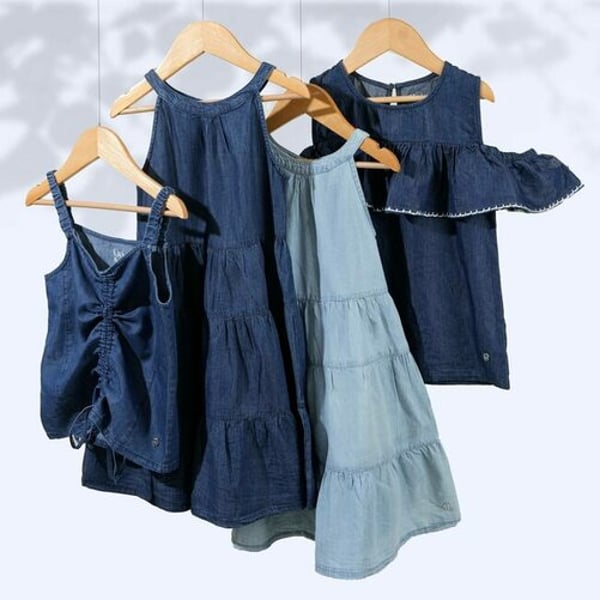
Denim by Gini & Jony – Gini & Jony- Facebook
“The Indian kid’s wear market presents a once-in-a-generation opportunity,” said Suditi Industries’ chairman and managing director Pawan Agarwal in a press release. “With Gini and Jony’s legacy, national footprint, and emotional connection with Indian parents, we are uniquely positioned to build a truly integrated ‘everything kids’ super brand. This fresh capital, combined with the experience and strategic depth of our incoming investors, enables us to accelerate growth while staying focused on our long-term vision- to be a trusted partner in every mother and child’s journey across the country.”
Keen to evolve into a vertically integrated kids’ retail business, the company will use the capital infusion to support its ambitious expansion plans for Gini & Jony. These include omni-channel retail expansion, deepening its product categories, and building a scalable backend infrastructure.
Participants in the funding round include Edelweiss co-founder Venkat Ramaswamy, former GlobalBees CEO Nitin Agarwal, Capwise Financial Services founder Naresh Biyani, and Rajesh Palviya among others. They join existing investors including Dream Sports’ chief marketing officer Vikrant Mudaliar and Third Wave Coffee co-founder Sushant Goel. The funding round was both led and advised by Capwise Financial Services Private Limited, which also took part as an investor.
“Building a modern consumer brand today demands excellence across technology, supply chain, data, marketing, and governance,” said Gini and Jony’s CEO Harsh Agarwal. “We are fortunate to have seasoned operators and founders as investors and advisors who have scaled businesses in exactly these areas. Their collective experience will help us compress learning cycles, sharpen execution at scale, and institutionalise governance frameworks befitting a market leader.”
Nestle views its stake in L’Oreal as a financial investment, and while it is regularly reviewed, there is nothing new to report on the matter, Nestle CEO Philipp Navratil was quoted as saying on Tuesday.
Nestle has a stake in L’Oréal – L’Oréal
“This stake is a financial investment for us,” Navratil told Swiss newspaper Finanz und Wirtschaft in an interview, when asked about the stake. “We review it time and again with the board of directors, but there’s nothing new to say.”
Navratil, who took the helm in September after a period of unusual turmoil at the company, said Nestle intended to reach its goal of 4% organic growth as fast as possible.
“I’m not asking myself what else we need to acquire. What we need are innovations to accelerate growth,” Navratil said. Nestle is sticking to plans to review its water business- for which it is looking for a strategic partner- and its mainstream vitamins and nutritional supplements division, Navratil added.
“We’re working to finalise these deals as quickly as possible, but also with the right details. Both are complex separations,” he said.
The CEO said the planned divestitures would help reduce Nestle’s debt levels, noting the firm is also reviewing its balance sheet to see what other measures are possible. Ideally, Nestle wants to bring cash flow back towards 10 billion Swiss francs, Navratil said.
Golden Goose SpA is an Italian maker of distressed-looking sneakers that can set you back $2,000 for a crystal-studded pair. The more than €2.5 billion ($2.9 billion) price its private equity owner just snagged for the business is more opulent than shabby, too.
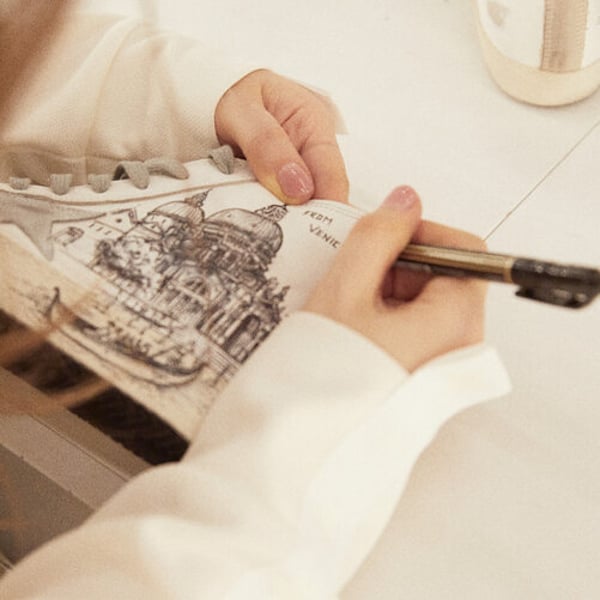
Customisation at Golden Goose – Golden Goose
Permira’s sale to HSG, known formerly as Sequoia Capital China, with Singapore’s Temasek as a minority investor, is one of the few landmark exits from a troubled vintage of buyout deals struck as the world was emerging from the pandemic, just before interest rates spiked. The transaction- twice the size of Prada SpA’s purchase of Versace earlier this year- also comes at a time of depressed demand for luxury goods. The valuation may be less extravagant than what was mooted in an abandoned initial public offering 18 months ago, but the PE firm has roughly doubled the company’s value in five years.
It acquired most of Golden Goose from Carlyle for €1.3 billion in 2020. Investors balked at a €3 billion enterprise value in that doomed Milan IPO effort last year, pointing to the troubles of Dr Martens, another footwear company previously owned by Permira. A slowing market for top-end goods didn’t help after three years of blockbuster growth.
And yet, the worst luxury downturn since the financial crisis (excluding the pandemic) has been good for Golden Goose. As comfortably off but not superrich consumers reined in their spending, megabrands such as Louis Vuitton and Gucci went upmarket to follow the money.
As they concentrated on the 1%, they abandoned entry level products such as designer sneakers, leaving that market to Golden Goose. They also raised prices on shoes, handbags, and other core goods. The average cost of a basket of iconic luxury items in Europe rose by 54% between 2019 and the end of 2024, according to analysts at HSBC Holdings Plc.
For comparison, Golden Goose has lifted prices by just 4% over the past five years. That makes its sneakers, hardly a snip at an average price of €550 including customisation, look better value for money. The company increased sales from €266 million in 2020 to €655 million in 2024. Growth has continued this year, with sales up 13% in the first nine months and earnings before interest, tax, depreciation, and amortisation up 7%. Assuming similar momentum for the full year and a stable Ebitda margin, Golden Goose could generate about €740 million of sales in 2025 and close to €250 million of Ebitda.
The price equates to about 10 times Ebitda, a discount to Moncler SpA’s 13 times and Birkenstock Holding Plc’s 11 times, but still at least a doubling of Permira’s equity value. The firm will stay as a minority investor.
HSG previously backed Labubu maker Pop Mart International Group Ltd., TikTok owner ByteDance Co Ltd. and Chinese social media platform Red Note, so expansion will likely be focused on Asia. Golden Goose makes only 12% of its sales in the region, with just 7% in China, far less than most luxury brands. About half its sales are in the Americas; the rest in Europe and the Middle East.
There is clearly more to go for in China. With Gucci handbags and Chanel pumps no longer so prized, there is appetite for quirky items that connect emotionally with young shoppers. Take Crocs Inc.’s clogs, which can be customised with charms. They have become a hit with the country’s Gen Z consumers. That bodes well for Golden Goose.
Sneakers account for 90% of the company’s sales, so there’s room to diversify. Bags and clothing, which can also be personalised, are other opportunities in the US as well as China. Temasek’s experience as an investor in Stone Island, Ermenegildo Zegna NV, and Moncler chairman Remo Ruffini’s holding company should help. Ex-Gucci boss Marco Bizzarri will become chairman.
But hitting Golden Goose’s long-term target of lifting yearly sales to €1 billion won’t be easy. Although there are hopes that China’s luxury market is past the worst, any recovery will take time. And consumers there are more focused on sneakers that help them run faster or tackle more challenging hikes. Nike Inc. said recently that it was seen more as a casual fashion shoe brand, rather than a performance one, holding back sales and forcing it to discount prices.
Meanwhile, big luxury has decided it wants its middle-class customers back. Sneakers and similar goods will be key, bringing more competition.
If Golden Goose can successfully expand in China and become a broader lifestyle brand like Ralph Lauren Corp., its future will be far from scruffy. But given the travails of PE owners over the past couple of years, it’s not a bad time to take some money off the table.






 Politics8 years ago