
Politics
Clay School Board member Robert Alvero under fire after saying most Black people are ‘nasty’ and ‘rude’
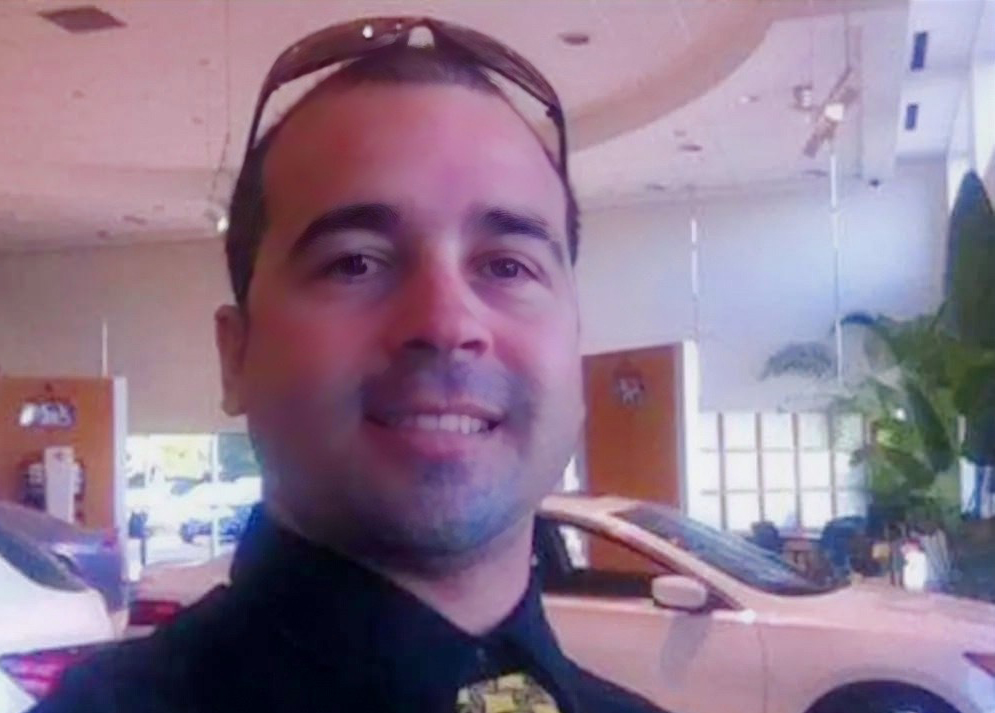
Clay County School Board member Robert Alvero is getting ripped for recent racially-charged comments disparaging Black people, and is going to have to answer for them next year in front of a statewide audience
“I am requiring him to appear before the State Board of Education at their meeting in January to explain this conduct. School Board Members have a responsibility to represent all students and families and uphold the professionalism due of an elected official,” wrote Commissioner of Education Anastasios Kamoutsas Monday.
Alvero, a first-generation Cuban immigrant who arrived in the U.S. in 2008, has worked as a firefighter in Jacksonville and a member of the Florida State Guard before being elected to the Clay County School Board last year.
In a recent video, Alvero insisted he has “had 80% more negative experience(s) with the African American community in this country than with White people.”
“Eighty percent, they’ve been nasty, they’ve been rude, they’ve been problematic — always trying to fight, disrespecting,” Alvero said, in comments first reported by Clay News and Views.
While Alvero says he now regrets the “wrong and offensive” comments, he’s under pressure to resign from Clay County Republicans, including School Board Chair Misty Skipper and state legislators.
“I listened to these comments by Clay County School Board member, Mr. Alvero, with the heaviest heart. They are beyond the pale and unfitting of his position of public trust with our children. As School Board Chair Skipper has stated, he should resign,” said Sen. Jennifer Bradley Monday.
House Speaker-designate Sam Garrison is also calling for Alvero to step down.
The Clay County Republican Executive Board issued a statement saying Alvero should step down “immediately due to extremely disappointing and hurtful remarks.”
As of Monday morning, Alvero is hoping this blows over.

“While I faced some negative interactions, including being called names and even physically assaulted, I also met many good, decent people, some of whom remain my friends today,” he said.
“I want to clarify that these experiences are personal and not meant to generalize. It was an attempt to say people’s character is not defined by their visual characteristics, life experiences, or socioeconomic standards. We as people are divisive, and through the best of my ability, I was trying to point out how people can judge each other while not seeing both sides and how stereotypes of a whole group are not accurate.”
The School Board next meets in January. If Alvero has not resigned by then, Skipper vows his comments will be addressed “appropriately.”
His resignation would not preclude his appearance before the State Board of Education though.