Connect with us

Politics

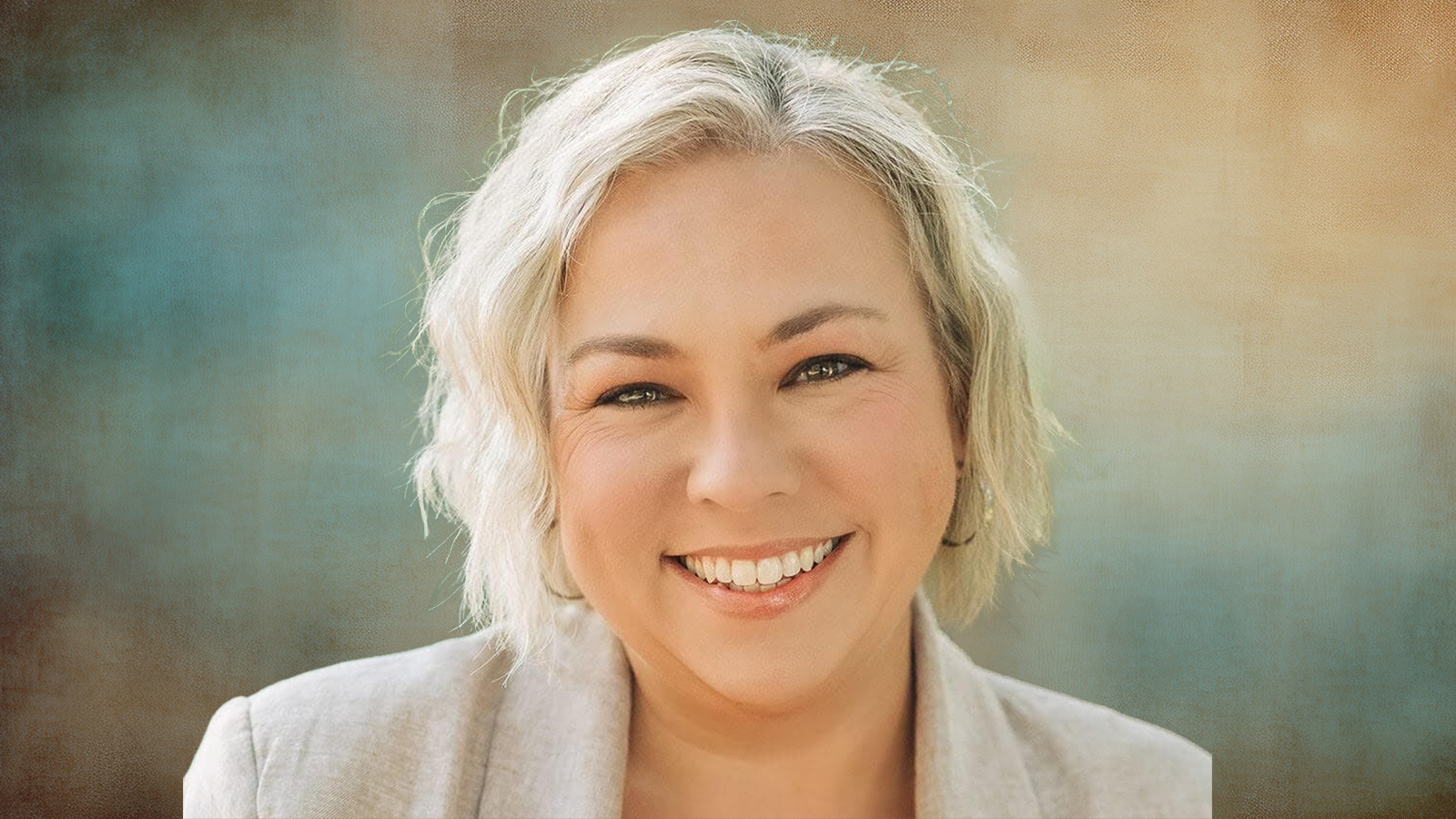
Business advocate Stephanie Ziglar files for Orange County Commission
Published

on


Stephanie Ziglar said she is running for Orange County Commission because she wants to help support businesses after seeing many of them struggle with a lack of government support.

Ziglar, the Curry Ford West Main Street District Executive Director, has filed for  Orange County’s District 3 race in November 2028.

A crowded field of candidates is already seeking the seat currently held by Commissioner Mayra Uribe.

As it stands now, Ziglar is competing against former Sen. Linda Stewart, Nelson Betancourt, information technology expert Gus Martinez, and lawyer Walker Smith IV.

In 2023, Ziglar began leading the Curry Ford West Main Street District, which represents local establishments in both Orlando city and Orange County limits.

“I have witnessed the struggle of businesses that are directly across the street from each other to get open, to stay open, to fight zoning issues … and it was one of the main reasons I decided that I should run,” said Ziglar, who lives in Dover Estates and is a lifelong Orange County resident. “My small businesses that are located in the county will tell you that they don’t feel like they get anything. They feel like they are just adrift.”

Meanwhile, Orlando offers business assistance programs and facade improvement grants, and it has dedicated staff to help new businesses open, Ziglar said.

Orange County business owners are also annoyed that they have to go in person to file some permits instead of doing so online in today’s technology-driven world, she said.

“I have been working with the county, discussing with them those programs and how beneficial they can be,” Ziglar said. “Their economic development team has been open and receptive to the feedback, but it is a slow process.”

Now, Ziglar said she wants to run for public office and push for faster change.

“I don’t think it would be challenging to even create a small sign grant program that would allow businesses to improve their exteriors and have the proper signage that meets the current code,” Ziglar said, adding the county previously offered that help but later shut it down. “Those types of things could be done with money that exists.”

Ziglar is already campaigning for the election, just under two years away. She held her first canvas and plans to paint more after the holidays in 2026.


Source link

Continue Reading

Politics

Bye-bye yellow sticker? Lawmakers propose eliminating license plate decals

Published

on


Earlier this month, Miami-Dade Tax Collector Dariel Fernandez called on state lawmakers to eliminate the physical yellow registration decal that is currently required on almost all Florida license plates.

Doral Sen. Ana Maria Rodriguez and Miami Lakes Rep. Tom Fabricio have since answered that call.

The Republican legislators just filed twin bills (SB 982, HB 841) to require all vehicle registration renewals to be recorded electronically and repeal the state law mandating the yellow validation stickers.

In a phone interview Monday, Fabricio credited Fernandez with presenting the change, which is already policy in states like Connecticut, Pennsylvania and Vermont, and is estimated to save Miami-Dade alone $2.5 million yearly.

Fernandez has argued that the physical stickers are no longer needed and, in some cases, counterproductive, since they can fade, peel and get stolen.

Fabricio said he fully agrees.

“I want to say this proposal cuts red tape, but it literally cuts yellow tape because it’s going to reduce a hurdle that people have to deal with on an annual basis, which is nonsensical,” he said, adding that the current policy is based on “an ancient technology.”

“Every police officer and police agency I’ve spoken to tells me that all license plates are called in one form or another during a traffic stop, so it doesn’t provide safety; it’s just a burden and a cost for motorists.”

Rodriguez said her legislation presents a “common-sense change” that “reduces burdens on taxpayers, prevents fraud, and streamlines government, exactly what Floridians expect from their leaders.”

“In an era of real-time digital verification, clinging to physical decals is outdated,’ she said in a statement.

Notable Florida political figures are supportive. Fabricio announced the legislation in a Sunday post on X that had been viewed more than 197,300 times by noon Monday. Gov. Ron DeSantis shared the post, writing, “Good job Tom — get it done!” Florida GOP Chair Evan Power did similarly, calling the proposal “an interesting idea.”

Fernandez, who has expanded and secured his Office’s operations since taking over in January, said he is grateful Rodriguez and Fabricio turned his proposal into legislation. He added that other states with the policy have seen accountability improve, not worsen, under the change.

“Electronic systems provide exact registration status at the moment of a traffic stop, rather than relying on a small piece of plastic that may be expired or counterfeit. Physical decals are also a known target for fraud and can create a false sense of security,” he said.

“Public safety should never depend on outdated tools. Today’s technology allows real-time, accurate verification. through systems already used every day, supporting lawful enforcement while improving efficiency and public trust.”

If approved in the coming Session, the legislation would go into effect July 1.


Source link

Continue Reading

Politics

Tom Leek will carry AI bill of rights prioritized by Gov. DeSantis

Published

on


The President’s executive order isn’t stopping the Port Orange Republican from delivering for the Governor.

Legislation sought by Gov. Ron DeSantis to curb potential overreaches in artificial intelligence has been filed in the Senate.

Republican Sen. Tom Leek’s bill (SB 482) proposes a number of changes to combat what DeSantis calls an “age of darkness and deceit,” including banning governmental agencies from contracting with AI companies controlled, owned or governed by countries of concern.

Leek’s legislation seeks to protect parental rights regarding AI. Children would not be allowed to communicate with chatbots without parental authorization if this bill becomes law. Chatbots would also have to disclose being artificial intelligence, and programmers would have to ensure that adult materials are not accessed by children.

The legislation would confer other rights, including warning people when they are communicating with AI chatbots rather than human beings, and whether identifying data or biometric data is being exposed.

Additionally, the proposal would ban using AI to appropriate name, image and likeness of nonconsenting people for commercial purposes, as well as for fraud, identity theft and cyber bullying.

It also addresses political advertising, saying that it must be declared when AI is used to craft the ads.

The legislation has emerged after President Donald Trump issued a “one rule” executive order to protect artificial intelligence from state laws.

DeSantis has said he’s not worried about the order as it “doesn’t/can’t preempt state legislative action.”

DeSantis has decried overstretched stock market valuations for “Mag 7” companies Alphabet, Amazon, Apple, Meta Platforms, Microsoft, Nvidia and Tesla, all of which are in the AI space. He has also suggested the “Founding Fathers” would hate the technology, and argued it will be used to perpetuate fraud.


Source link

Continue Reading

Politics

Florida ranks seventh in nation for money lost due to online scams

Published

on


As shoppers are finishing their online gift-buying ahead of Christmas, Floridians in particular should keep a sharp eye out for scams.

A new study published by Mailgo, an online artificial intelligence email campaign and marketing company, found that Florida ranked seventh in the nation for suffering the most due to online scams. The analysis looked at data at the FBI Internet Crime Complaint Center to rank states based on scam impact and the amount of money victims lost.

The study compiled variable factors to come up with a “scam effect score.” Florida amassed a score of 85.37. That’s the seventh-highest in America.

High complaint frequency and significant financial losses contributed most to that ranking. In Florida, scam victims lost about $45.86 on average, ranking seventh-highest in the U.S. There were about 2.23 scam complaints for every 1,000 people in the state. That was the 11th-highest in the country.

“Florida’s unique demographic profile makes it a prime target for sophisticated fraud schemes. Scammers aggressively target retirees through phishing emails impersonating Social Security offices, Medicare providers, and investment firms, exploiting both financial assets and potential digital literacy gaps,” said Lennon Han, an email communications analyst for Mailgo.

“Technical email authentication and threat-detection systems provide essential protection that awareness alone cannot deliver, helping identify and block fraudulent messages before they reach inboxes.”

Florida was the only Southern state in the U.S. to make the top 10, which was focused mainly on Western states. Nevada topped the list, followed by Arizona, California, Wyoming, Washington and Colorado. Maryland placed eighth, with Massachusetts at No. 9 and Alaska at No. 10.

IdentityTheft.org, which analyzes scams, reported that email remains the primary avenue for AI scammers to use. Extortion is the fastest-rising type of crime, followed by crimes against children, investment, government impersonation, and employment scams.


Source link

Continue Reading

Trending

Copyright © Miami Select.