
Business
A $450M investment by Oracle’s Larry Ellison is luring the rich to a town 20 minutes from Mar-a-Lago


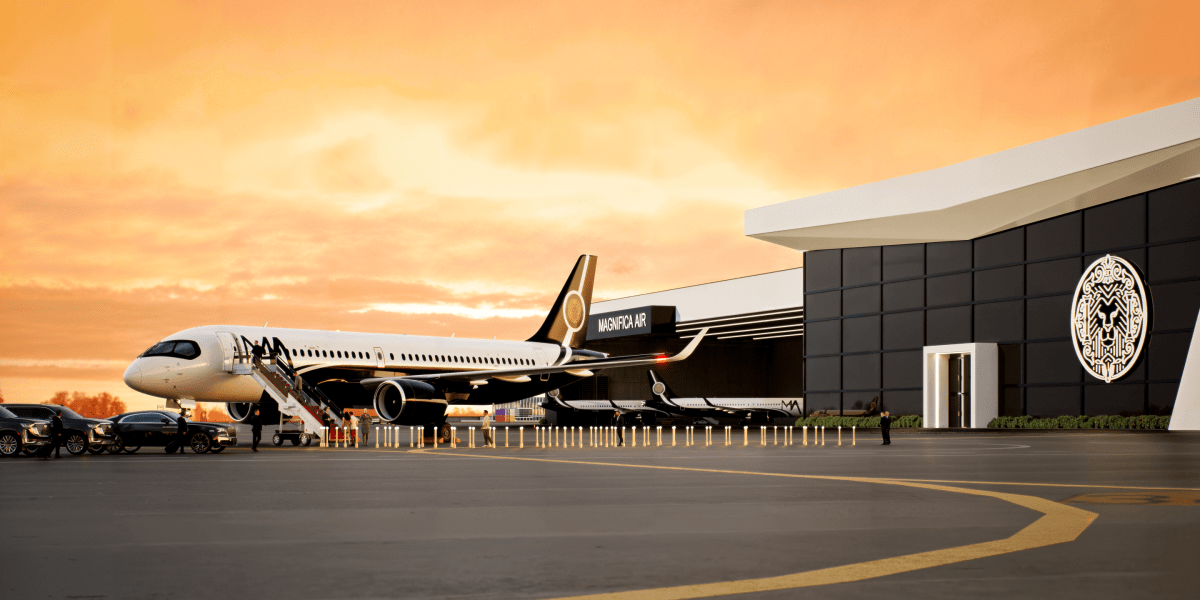
As premium travel becomes an increasingly important part of the airline industry, a new carrier is launching that looks to offer an experience beyond first class but without the enormous cost of chartering a private jet.
Florida-based Magnifica Air expects to begin service in 2027, with plans for six to seven daily departures, connecting to Miami, New York, Los Angeles, the San Francisco Bay Area, Dallas, and Houston. The airline will also offer seasonal service to Napa Valley and the Caribbean.
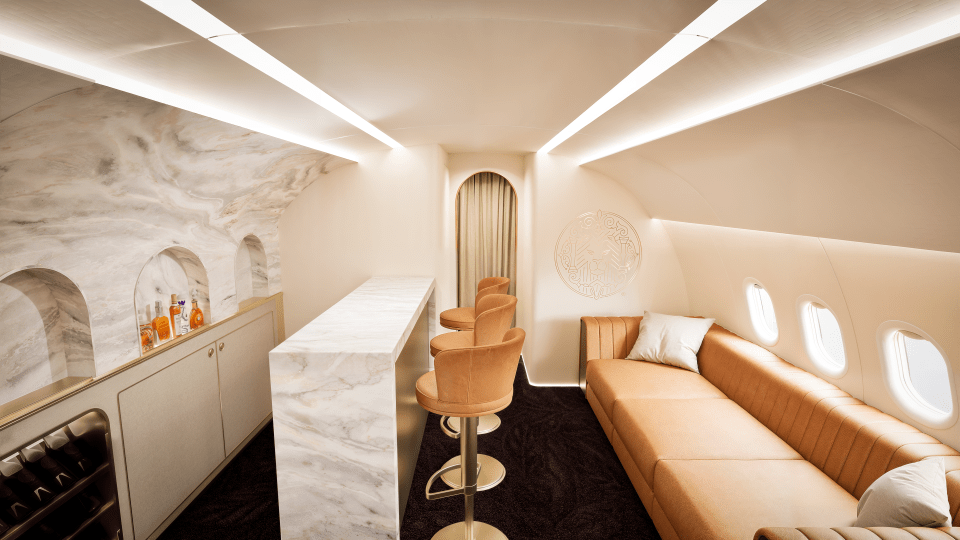
Magnifica has long-term lease agreements with Air Lease for six new Airbus aircraft, including four A220-300s and two A321-200neos. The A321neo will fly on longer-haul routes and include four private suites, while the A220-300 will serve mid-haul routes and have two suites.
Each plane will carry only 45–54 passengers—less than half what they carry for typical airlines—and there will be no overhead bins, increasing cabin space even more.
Magnifica Air
Service begins with a driver who picks up passengers and takes them to a private terminal, where they will not have to wait in a TSA line, while a concierge handles their luggage.
Travelers can arrive just 30 minutes before departure. Prior to takeoff, they can partake in fine dining and wellness offerings. While onboard, there’s curated entertainment and tailored dining in the privacy of suites and recliners. After landing, baggage arrives in 10–15 minutes, while chauffeurs wait curbside.
“Right now, if you want a truly luxurious experience, you’ve got two options: Pay 10 times the cost of a first-class ticket for a private jet, or deal with the frustrations of commercial first-class travel, where you’re still treated like just another number. Magnifica Air is stepping into that space between,” the airline said. “We’re offering a fully private, seamless experience for a fraction of what you’d pay to charter a jet.”
Magnifica hasn’t disclosed any details on ticket prices yet, but a spokesperson said they will vary by route and dynamic demand. Meanwhile, renting a private jet can cost several thousand dollars per hour.
The airline has announced prices for its “The Seven Club” membership, which will offer priority access and tailored service, as well as invitations to major events like Art Basel and the Super Bowl. Family memberships will start from $14,950 and corporate membership from $29,950.
Magnifica Air
Magnifica comes as the main airlines have become more reliant on first-class and business-class passengers.
In October, Delta Air Lines said for the first time ever it expects sales of premium seats will overtake those of its traditional main cabin offerings by 2026, a full year earlier than previously expected.
“Premium products used to be loss leaders, and now they’re the highest-margin products,” Delta President Glen Hauenstein told analysts on an earnings call.
He added Delta is seeing “many, many more opportunities in premium in the coming years” and cited investments in Los Angeles, Boston, New York, and Seattle “where a considerable amount of premium lives. Delta historically wasn’t as big in those markets as we are now.”
At the same time, Delta has introduced an extra-high-end tier of lounges as its Delta Sky Club lounges grow more overcrowded.
It’s indicative of the K-shaped economy, in which the top 10% of households accounted for nearly 50% of all consumer spending in the second quarter of 2025, according to Moody’s Analytics.
Even low-cost carriers like Frontier Airlines are reducing capacity in economy class to add first-class seats.
“We’ve listened to customers, and they want more—more premium options, like first class seating, attainable seat upgrades, more free travel for their companions, and the ability to use miles on more than just airfare,” Frontier CEO Barry Biffle said last year.
Business
iRobot cofounder Colin Angle: Roomba-maker’s biggest reason for failure was Chinese competitors




New luxury airline seeks top first class and will only fly to a handful of cities

TMZ Streaming Live, Come Into Our Newsroom and Watch Things Happen!

LookFantastic launches same-day delivery partnership with Uber Eats
-

 Politics8 years ago
Congress rolls out ‘Better Deal,’ new economic agenda
-
Entertainment8 years ago
New Season 8 Walking Dead trailer flashes forward in time
-
Politics8 years ago
Poll: Virginia governor’s race in dead heat
-
Entertainment8 years ago
The final 6 ‘Game of Thrones’ episodes might feel like a full season
-
Politics8 years ago
Illinois’ financial crisis could bring the state to a halt
-
Entertainment8 years ago
Meet Superman’s grandfather in new trailer for Krypton
-
Business8 years ago
6 Stunning new co-working spaces around the globe
-
Tech8 years ago
Hulu hires Google marketing veteran Kelly Campbell as CMO