Connect with us

Business

Tom Freston, the beat-poet exec who made MTV cool for 20 years, sees ‘really nothing in it for the consumer’ from Netflix, Warner, or his old company

Published

on


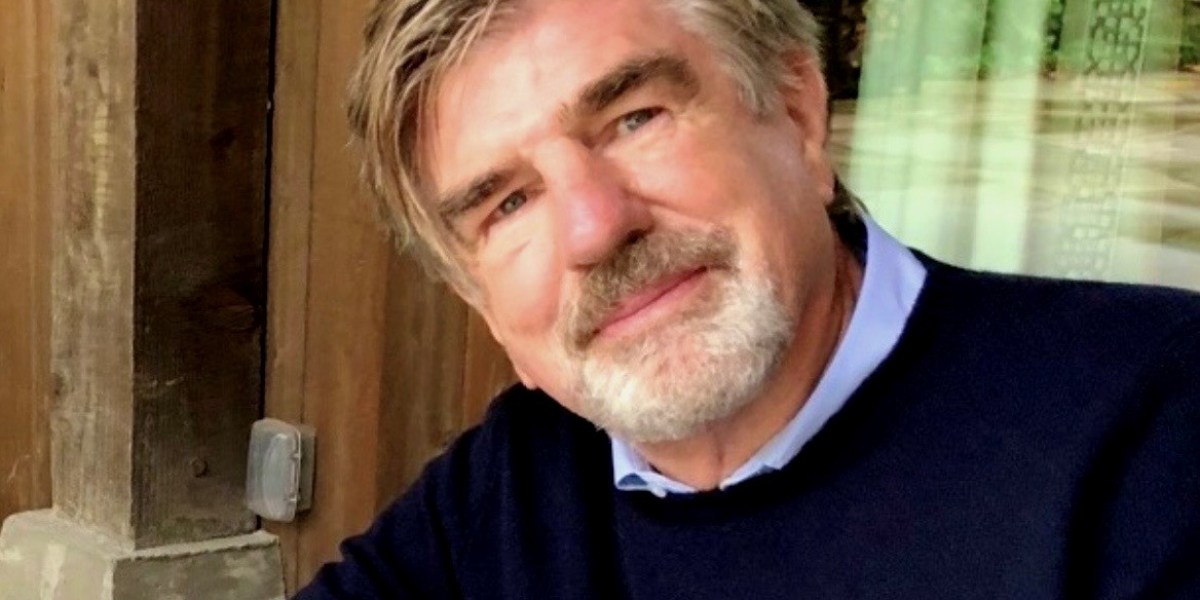
Tom Freston has never been a typical media executive. Freston began with a countercultural spirit that shaped an adventurous career spanning from co-founding MTV to leading Viacom and Paramount Pictures. After spending 26 years at Paramount—now caught up in the $100 billion bidding for Warner Bros Discovery—he remains a defining figure in the evolution of modern entertainment.

The 80-year-old executive, who sounded remarkably youthful in a phone interview with Fortune, harkened back to the days in the 1960s and ’70s when “freedom was in the air.” The vibe was very different then: “It was like, I don’t want to work for ‘the man,’” he told Fortune, referencing a formative summer when he worked as a bellboy in Lake George in the Adirondack foothills of upstate New York. “I had sort of been on the traditional conveyor belt: go to college, get out, get a job. And then I met all these sort of bohemian characters who — their idea was, you didn’t have a career. You kind of improvise your life. You know, the idea was to kind of maximize experience and do interesting things and take some risks.”

Freston added that he was a big fan of both “beat” and libertarian literature, the former made famous by Jack Kerouac and Allen Ginsberg and the latter by Ayn Rand. They both had common themes, he said: “experience and being an individual were important.” As he writes in his new memoir Unplugged, this improvisational journey took him to Afghanistan and India, a business career that was “wild and fulfilling and for a long time profitable.” But it was also “really hard work” and was “really humbling,” adding that “humility is not a thing you see a lot of in the entertainment business.” He didn’t comment directly on the major figures in the current bidding war for Warner Bros., but the example of David Zaslav moving into famed producer Robert Evans’ Hollywood mansion is a prime example of the neo-mogul mindset.

Freston has long been semi-retired, advising media brands such as Oprah Winfrey and Vice while serving as the chairman of the ONE Campaign, the anti-poverty effort in Africa led by U2’s Bono (a friend, Freston said).

As Freston rolled back the years with Fortune and looked out on a much-changed media landscape, he briefly donned his antitrust hat to analyze the bidding war between Netflix and his old company Paramount for Warner Bros. Discovery and how things got to this point. “No matter which way it goes, there’s really nothing in it for the consumer,” Freston said with a sigh.

How Netflix followed in MTV’s footsteps

Freston observed that the media industry is now dominated by “monolith companies … increasingly run by tech people, where data becomes more important than instinct.” He highlighted A24 and Neon as two companies that remind him of the old, almost artisanal MTV, where refreshing the creative instinct became core to success, because Viacom’s once-dominant basic cable lineup appealed to a transient youth culture. “Our challenge was: how do we continue to innovate for these changing demographics that would pass through us, whether it be on [Nickelodeon] or on MTV or Comedy Central or whatever.”

Just 33 years old when he started leading MTV, Freston pointed out that the original audience was Baby Boomers like himself, which was then replaced by Gen Xers with different sensibilities, and so on. Talent can’t be overlooked, Freston argued, because he wanted a creative and “cutting edge” mentality that would stay hooked up to a youth culture that turned over every five years or less. “I didn’t put a salesperson in charge, which would be a traditional way in the television business. I had a creative person in charge.”

In many cases, MTV was someone’s first job, “and they’d learn some things and leave in a few years, and they’d be replaced with another younger person.” He argued that keeping the employee population young made it easier to reinvent the network periodically. When the end came shortly after the millennial generation’s heyday, exemplified by the Total Request Live program, Freston explained that the same forces afoot in Warner-Netflix-Paramount were leaving MTV exposed to the digital wave.

“We were precluded from using our music video library online,” Freston said, explaining that the same licensing deals that had enabled MTV to dominate youth culture for decades proved its undoing when YouTube disrupted how young people liked to watch music videos. “The real players turned out to be the social networks and it was hard to invent one,” he added. “You had to buy one of the ones that were out there, and the only one that ever really got bought was MySpace, and that kind of disintegrated.” The other social-media networks were able to build “unbelievable franchises because they were able to run at losses for years without Wall Street piling on, which would have happened for any of the legacy media companies.”

Reflecting on his own “missed opportunity” to bridge this gap, Freston recounted Viacom’s attempt to buy Facebook when the platform had only $9 million in revenue. He recalled Mark Zuckerberg’s visit to discuss a potential acquisition: “I remember he had a hoodie on and flip flops. It was February in Times Square. And he was younger than anybody on our young staff.” While Viacom was the first to make a bid for Facebook, Freston believes Zuckerberg was never serious about selling, more that he was “curious about, what’s a youth media company today look like.”

The MTV-Netflix cycle

Netflix and other platforms, of course, achieved massive scale by playing the upstart MTV role. “They were able to run at a profit because they were these new growth businesses. Wall Street turned a blind eye to losses for a long time. They got forgiveness on that score.” He added that they began to “vacuum up IP” without necessarily having deals in place. While Netflix went the more traditional licensing route when Hollywood didn’t see it as a threat, Freston noted that MTV was prevented from fighting YouTube’s viral videos with its own digital music presence, almost like a revenge of the record labels that wrote those terms into the licensing deals.

Freston said he doesn’t think any legacy media company distinguished itself in meeting the digital challenge with full force. “Disney did the best job, I think, which was basically tripling down on their content capabilities in trying to make themselves more invincible and more crucial for the streaming services and for the digital onslaught to build up the biggest array of IP.” He agreed that it was ironic in some senses that Netflix seems to be following that playbook with its pursuit of Warner Bros. He said he sees the same old cycle turning: “The forces for this deal seem to be inexorable. Consolidation seems to be the strategy for the moment.”

Today, Freston said he sees his former empire, MTV, as a cautionary tale of what happens when that emphasis on creativity gets severed. He lamented that leadership has “run it into the ground over the last 15 years” by replacing music-obsessed staff with “traditional kind of Hollywood showmaker type people,” replacing hungry, music-obsessed creatives with a shorter-term mindset. His most symbolic grievance is the removal of the words “Music Television” from the logo—a decision that “drove me crazy.”

Freston said he was grateful for his exciting ride at the helm of Viacom for many years, and grateful for some of the genuine friendships that emerged from his time running MTV. He highlighted Bono specifically, with whom he has worked in a chairman role for ONE and (Red), fighting poverty and AIDS in Africa. He said he knew a bit about Africa and poverty issues from his time working and living in Asia and also traveling in Africa, but he also mentioned good relationships with certain people he clicked with: John Mellencamp, David Bowie (a “fascinating character”) and Jon Bon Jovi.

In his laid-back style, Freston added that he wasn’t sure when he sat down to write that there’d by “any kind of reasonable narrative to my life, which at one point seemed to be all these disparate parts.” He came away thinking that his career had been in pursuit of a couple common objectives: trying to “live and exist off the mainstream, more on the edge of the road,” where things are more interesting and independent.

The “beat-poet” executive said he still believes in the MTV brand, and it could come back with some creativity, maybe by positioning MTV as a human curator to counter “algorithm-type music consumption.” But he knows he isn’t the man to lead it. “It’s really a young person’s business,” Freston said, suggesting the reins should be handed to a 25-year-old who can operate with the same risk-taking humility he learned decades ago on the roads of Asia.

Editor’s note: The author worked for Netflix from June 2024 through July 2025.


Source link

Continue Reading

Business

‘Bring it on’ — Top Justice Department official responds to impeachment threat over redacted partial Epstein files

Published

on


Deputy Attorney General Todd Blanche was defiant in the face of potential legal consequences over not fully releasing the Justice Department’s files related to the late sex trafficker Jeffrey Epstein.

In an interview Sunday with NBC’s Meet the Press with Kristen Welker, he was asked about comments from members of Congress exploring possible impeachment or contempt charges and whether he takes the threats seriously.

“Not even a little bit. Bring it on,” Blanche replied. “We are doing everything we’re supposed to be doing to comply with this statute.”

The Epstein Files Transparency Act required the Trump administration to release all the Epstein files by Friday with some exceptions to protect victims’ information.

But the documents that have come out only represent a small fraction of the total, and many of them are heavily redacted.

That caused Rep. Ro Khanna, one of the leaders behind the overwhelmingly bipartisan Epstein Files Transparency Act, to warn that the Justice Department wasn’t complying with the law.

Rep. Thomas Massie, who also led the push to release the Epstein files, said in a social media post that a future DOJ could convict Attorney General Pam Bondi and others, adding “THEY ARE FLAUNTING LAW.” 

On Friday, Khanna said he and Massie have already started working on drafting articles of impeachment and inherent contempt against Bondi, though they haven’t decided yet whether to move forward.

“Impeachment is a political decision and is there the support in the House of Representatives? I mean Massie and I aren’t going to just do something for the show of it,” Khanna told CNN.

On Sunday, Blanche said that members of Congress criticizing DOJ’s efforts “have no idea what they’re talking about,” explaining that there are about a million pages of documents, and “virtually all of them contain victim information” that must be protected.

He also argued that releasing the Epstein files on a rolling basis over a matter of weeks instead of all at once on the Friday deadline was still in compliance with the law Congress passed.

“There is well settled law, as they should know, that in a case like this where we’re required to produce within a certain amount of time, but also comply with other laws like redacting information, that very much trumps … some deadline in the statute,” Blanche said.

This story was originally featured on Fortune.com


Source link

Continue Reading

Business

Will.i.am says work-life balance is for people ‘working on someone else’s dream’

Published

on


Will.i.am is busy. When he’s not writing hit songs like “OMG” for Usher, he’s looking for the next big pop star on The Voice UK, or running his new AI company, FYI. So how exactly does he balance it all? 

The Grammy Award–winning artist turned tech entrepreneur revealed to Fortune that he maxes out the 5-to-9 after the daily grind of his 9-to-5, and he advises Gen Zers to forget about work-life balance if they want to emulate his success.

“If you’re trying to build something that doesn’t exist, it’s about dream-reality balance,” he says. “Work-life balance means that you’re working for somebody else’s dream. You just have a job supporting somebody else’s dream, and you want to balance your work and your life.

“But if it’s dream-reality balance, then it’s not work. It’s a dream that you’re trying to put into reality, and you’re ignoring your current reality.”

For example, after working on his tech venture from 9 a.m. to 5 p.m., Will.i.am says that he goes back to work on his creative business until 9 p.m. But before his AI company was a reality, his day was flipped. He’d work on music first before dipping into his tech side hustle well into the evening. 

It’s why he advises young people to reframe how they think of their time off work and their current 9-to-5 reality.

“I’m not really paying attention to this reality,” he explains. “I’m trying to bring that one [a new business venture or idea] here and focusing on how do I get people who believe in this dream to help me materialize it? So for that, you have to make some type of sacrifice to bring this thing that doesn’t exist here.

“From that perspective, work-life balance is not for the architects that are pulling visions into reality. Those words don’t compute to the mindset of the materializers.”

Will.i.am doesn’t even take time out for his birthday—and goes to work in China on Boxing Day

Of course, many young people already put in hours to their side hustles and personal development after work. Millions of Gen Zers and millennials are tuning into people’s 5-to-9 evening routines on TikTok

But Will.i.am says chipping away at your dream when most people are off work extends to weekends, birthdays, and holidays.

“I didn’t party. I was always a square, meaning, ‘You work too much, man, let’s go out.’ Like what? Go out. I don’t want to go out. I just always worked,” the rapper says. “It’s your birthday what are you gonna do? Work. You ain’t gonna celebrate?”

The multimillionaire says he’s always saved the celebrating for the stage, where he can finally enjoy the fruits of his labor.

“There’s nothing that’s ever gonna feel that glorious than when you’re actually at a festival. But how do you get to headline a festival? You’ve got to work. My friends would go out and party, hanging out with chicks, doing drugs, drinking. I was just in the studio working, writing songs.”

To this day, he says that he hasn’t gone out and celebrated a birthday—including his most recent one, which was just last week on March 15.

“Like on Christmas for the past 12 years: I could celebrate Christmas with my family, and then on the 26th, I fly to China because that’s dream maker heaven. Anything you want to make is there.”

Will.i.am was speaking to Fortune in Rome for the rollout of Raidio.FYI radios in Mercedes-Benz cars.

Will.i.am’s daily work routine

7 a.m.: Will.i.am is not a part of the CEO-approved 5 a.m. club. Instead, he told Fortune he wakes up at around 7 a.m., and he sticks to this routine whether he’s living in L.A. or London. 

8 a.m.: “I walk, do my calls, and get to work,” he says, with the aim to start work at 9 a.m. 

9 a.m. to 5 p.m.: “I get a lot done from nine to 12, do my little lunch, then back to work at one, finish at five, and that’s all my tech, like entrepreneurial activities.”

5 p.m. to 9 p.m.: “The night hours are creativity,” he says, adding that specifically between 7 p.m. and 9 p.m. is when he gets the best ideas. “That’s the juicy bits, [when] I’m freaking soaking in emotion, to where I just rinse it out in the phone.” 

9 p.m. onward: When Will.i.am was in his late twenties, he says going to sleep at 4 a.m. (and waking up at noon) was the norm. But now, at 50 and balancing both his tech and music ventures, he starts unwinding for bed after 9 p.m. and is asleep by 11 p.m. 

A version of this story originally published on Fortune.com on March 23, 2025.

Join us at the Fortune Workplace Innovation Summit May 19–20, 2026, in Atlanta. The next era of workplace innovation is here—and the old playbook is being rewritten. At this exclusive, high-energy event, the world’s most innovative leaders will convene to explore how AI, humanity, and strategy converge to redefine, again, the future of work. Register now.


Source link

Continue Reading

Business

‘Mother Nature has been dealing a really hard deck’: Western ski resorts struggle with a warm, snowless start to winter

Published

on


Ski resorts are struggling to open runs, walk-through ice palaces can’t be built, and the owner of a horse stable hopes that her customers will be satisfied with riding wagons instead of sleighs under majestic Rocky Mountain peaks. It’s just been too warm in the West with not enough snow.

Meanwhile, the Midwest and Northeast have been blanketed by record snow this December, a payday for skiers who usually covet conditions out West.

In the Western mountains where snow is crucial for ski tourism — not to mention water for millions of acres (hectares) of crops and the daily needs of tens of millions of people — much less snow than usual has piled up.

“Mother Nature has been dealing a really hard deck,” said Kevin Cooper, president of the Kirkwood Ski Education Foundation, a ski racing organization at Lake Tahoe on the California-Nevada line.

Only a small percentage of lifts were open and snow depths were well below average at Lake Tahoe resorts, just one example of warm weather causing well-below-average snowpack in almost all of the West.

In Utah, warmth has indefinitely postponed this winter’s Midway Ice Castles, an attraction 45 minutes east of Salt Lake City that requires cold temperatures to freeze water into building-size, palatial features. Temperatures in the area that will host part of the 2034 Winter Olympics have averaged 7-10 degrees (3-5 degrees Celsius) above normal in recent weeks, according to the National Weather Service.

Near Vail, Colorado, Bearcat Stables owner Nicole Godley hopes wagons will be a good-enough substitute for sleighs for rides through mountain scenery.

“It’s the same experience, the same ride, the same horses,” Godley said. “It’s more about, you know, just these giant horses and the Western rustic feel.”

In the Northwest, torrential rain has washed out roads and bridges and flooded homes. Heavy mountain snow finally arrived late this week in Washington state but flood-damaged roads that might not be fixed for months now block access to some ski resorts.

In Oregon, the Upper Deschutes Basin has had the slowest start to snow accumulation in records dating to 1981. Oregon, Idaho and western Colorado had their warmest Novembers on record, with temperatures ranging from 6-8.5 degrees (2-4 degrees Celsius) warmer than average, according to the National Oceanic and Atmospheric Administration.

Continued warmth could bring yet another year of drought and wildfires to the West. Most of the region except large parts of Colorado and Oregon has seen decent precipitation but as rain instead of snow, pointed out NOAA drought information coordinator Jason Gerlich.

That not only doesn’t help skiers but farmers, ranchers and people from Denver to Los Angeles who rely on snowpack water for their daily existence. Rain runs off all at once at times when it’s not necessarily needed.

“That snowpack is one of our largest reservoirs for water supply across the West,” Gerlich said.

Climate scientists agree that limiting global warming is critical to staving off the snow-to-rain trend.

In the northeastern U.S., meanwhile, below-normal temperatures have meant snow instead of rain. Parts of Vermont have almost triple and Ohio double the snowfall they had this time last year.

Vermont’s Killington Resort and Pico Mountain, had about 100 trails open for “by far the best conditions I have ever seen for this time of year,” said Josh Reed, resort spokesman who has lived in Killington for a decade.

New Hampshire ski areas opening early include Cannon Mountain, with over 50 inches (127 centimeters) to date. In northern Vermont, Elena Veatch, 31, already has cross-country skied more this fall than she has over the past two years.

“I don’t take a good New England winter for granted with our warming climate,” Veatch said.

Out West, it’s still far too early to rule out hope for snow. A single big storm can “turn things around rather quickly,” pointed out Gerlich, the NOAA coordinator.

Lake Tahoe’s snow forecast over Thanksgiving week didn’t pan out but Cooper with the ski racing group is eyeing possibly several feet (1-2 meters) in the long-term forecast.

“That would be so cool!” Cooper said.

___

Janie Har in San Francisco, Michael Casey in Boston and Gene Johnson in Seattle contributed. Gruver reported from Fort Collins, Colorado.

___

The Associated Press receives support from the Walton Family Foundation for coverage of water and environmental policy. The AP is solely responsible for all content.


Source link

Continue Reading

Trending

Copyright © Miami Select.