Connect with us

Business

Dartmouth professor says he’s surprised just how scared his Gen Z students are of AI

Published

on


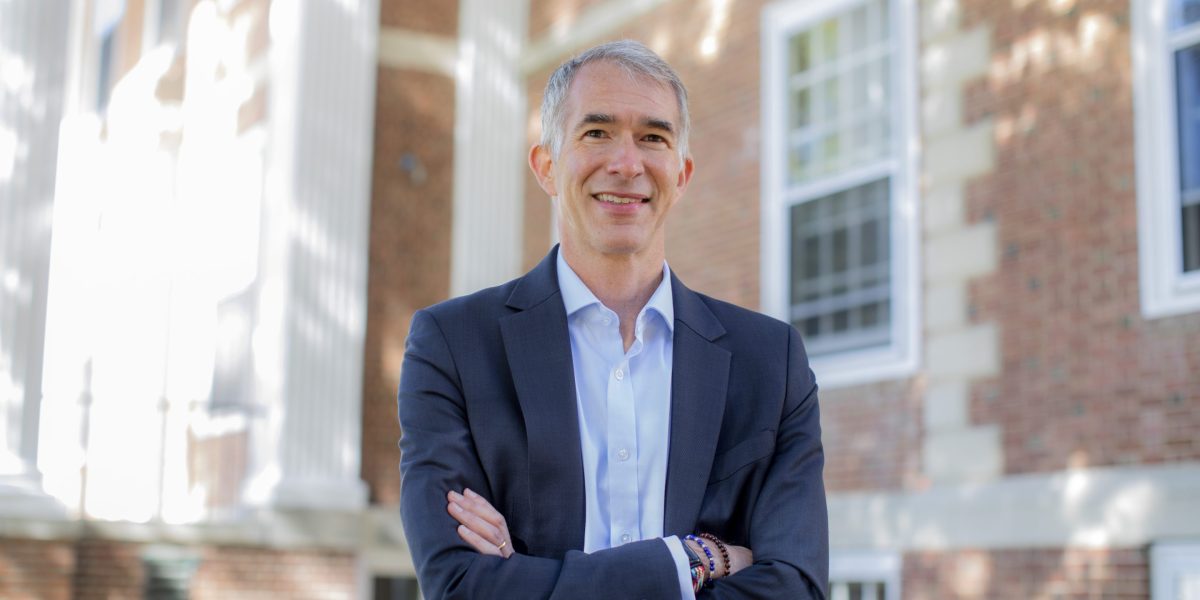
When Scott Anthony (Dartmouth College, class of 1996) left a 20-year career in high-stakes consulting to join the faculty at his alma mater in July 2022, he thought he was leaving the “intense day-to-day combat” of the corporate world for a quieter life of teaching. Instead (as Anthony previously described in a commentary for Fortune), he arrived on campus just months before the release of ChatGPT, landing him squarely in the center of the artificial intelligence (AI) revolution that has left many of his students paralyzed by anxiety.

In a recent interview, the former consultant at McKinsey and Innosight, a boutique firm cofounded by Clayton Christensen and Mark Johnson in 2000 and acquired by Huron in 2017, revealed the prevailing mood among the next generation of business leaders isn’t just excitement—it is fear.

“One of the things that really surprises me consistently is how scared our students are of using it,” Anthony said. He clarified this anxiety isn’t merely about academic integrity or cheating. Plenty of his students are excited to use AI and push into the frontier of this new tech advance, he clarified, but a meaningful portion approach it with “hesitation and fear.” They are “scared full stop.”

“There’s something about AI where people, I think, worry that they’ll lose their humanity if they lean too much into it,” Anthony explained. This is different from many of his long-tenured academic colleagues, who he said are usually eager to dig into the new tools at their disposal. The freshly minted author of Epic Disruptions: 11 Innovations That Shaped our Modern World, Anthony talked to Fortune about teaching a course on disruption while education and work itself is in the middle of being disrupted itself. “History teaches me very clearly that in the middle of a change like this, it’s very messy.”

The fear of losing yourself

Anthony said what he believes about studying disruption, and managing through it as a consultant, is that you look back later on and the pattern becomes clear, but at this particular stage, “there’s just a lot of noise.” He said he understands his students’ concerns about AI and shares it to some extent—offloading too much cognitive work to AI will atrophy the critical thinking skills required to lead.

An eye-catching MIT study published in June would seem to make Anthony’s point. Titled “your brain on ChatGPT,” with a subtitle mentioning “accumulation of cognitive debt.” Widely covered in the media as supporting Anthony’s students’ fear, that AI tools can somehow harm humanity, the study suggested that “cognitive activity scaled down in relation to external tool use.” In other words, it suggests that using AI makes you stupider.

Vitomir Kovanovic and Rebecca Marrone, from the University of South Australia, argued in The Conversation at the time that “brain-only group” repeated the task in question three times, a phenomenon known as the familiarisation effect. The AI control group only got to “use their brains” to perform the task once, they noted, and so achieved only slightly better engagement than the brain-only group’s first try. They argued AI is functioning like a calculator, and tasks haven’t become advanced enough to put students through the ringer, even using AI tools. Anthony, who didn’t comment on that specific MIT study, told Fortune he’s rolled up his sleeves on AI assessments.

“I’ve been teaching a class about how you lead disruptive change,” Anthony said, adding he wants to find someone who needs to learn a particular topic and use AI to tackle that. This doesn’t mean he wants something like, say, an AI-driven song that required one prompt to make. “I want you to actually go and expose the guts of the work that you did so I can then go and see whether you learned anything or not.” Sometimes, he said, elegant outputs are the result from students who didn’t learn anything, but he also gets “rough outputs where when you see what they’re actually doing.”

When asked about the example of someone like Jure Leskovec, the Stanford computer science professor who went fully to blue-book exams several years ago, as Fortune reported in September, Anthony said he respected that, but it wasn’t for him. “I’ve never given a blue-book exam,” he said, noting he’s just a few years removed from his consulting career and he may try it, but he’s not there yet. Some of his colleagues are very strict still: Not only does one colleague still only do blue-book exams, “he does not allow people to go to the bathroom during the exam. You just, you can’t leave the room.”

He agreed with Leskovec some changes are already irreversible: “The writing is all good now. The bad writing has been taken out.” This can be “dangerous,” he added, saying he really pushes his students to resist temptation.

“The thing I’ve just really been pushing, whether it’s students or whether it’s the executives that I’ve been working with, it’s so seductive and easy to say, ‘Let me offload,’” he said. The reason why, he explained, has to do with what he learned about Jerry Seinfeld and Julia Child while researching his book.

What Jerry Seinfeld believes about hard work

To paraphrase Seinfeld, Anthony said he tells his students “the right way is the hard way.” He recalled an interview Seinfeld gave to the Harvard Business Review in 2017 when the famous comedian, with a reputation as a bit of a micromanager, was asked if he ever wanted McKinsey to help with his process. “Who’s McKinsey?” He asked. When told that it was a consulting firm, he countered, “Are they funny?”

Seinfeld was making the point, Alexander told Fortune, that the hard way to be funny is the right way, at least for him. He said he wants students to do the “hard work” to develop the wisdom necessary to manage AI effectively.

“We just have to separate people from technology when we’re assessing learning or else we’re going to get AI regurgitation,” he warned. That can be useful for some things, “but if you’re trying to figure out whether people learn something or not, it’s useless.”

Anthony also drew on a fitness analogy: “You go to the gym, you want to lift any amount of weight, bring a forklift with you. You can lift the weight, but that’s not the point.”

Julia Child‘s long record of failure before success

Anthony said his research, teaching at the Tuck School of Business, and his writing shows people are getting bogged down by AI when they should be focused on the hard work Seinfeld was referencing. Take the example of the famous cooking author Julia Child, which Anthony said was his favorite chapter of the book because it was the most surprising. The lesson he drew from it is that you may not be able to be the next Steve Jobs, but you could be the next Julia Child. “If life bounces the right way, I could imagine that happening to me, you know?”

The professor explained Child’s example shows disruption “isn’t about being a superhero,” but it’s more about ordinary people following certain behaviors and showing curiosity.

“It’s a reminder that there is no straight line to success,” he said. She started working on her masterpiece, Mastering the Art of French Cooking, roughly 10 years—and two publisher changes—before succeeding with it. She also failed her first exam at Paris’ Cordon Bleu, persevering to become the woman who brought French cuisine to mainstream America. “It’s classic hero journey sort of stuff,” he said.

Consider the first French meal that Child cooked for her husband, Anthony said: brain, simmered in red wine. “Everybody agreed it was a disaster.” But again, he said, the hard work was the point.


Source link

Continue Reading

Business

A photo with Trump in it appears to have been removed from the partial Epstein files the Justice Department released

Published

on


A photo featuring President Donald Trump that was included in one of the Justice Department files on the late sex trafficker Jeffrey Epstein appears to have been removed online.

Late Friday, the department published a trove of documents to meet a deadline mandated by an overwhelmingly bipartisan vote in Congress, though not all the Epstein files were released, and many that were made public have been heavily redacted.

There was little mention of Trump in the text that was available, and White House officials highlighted photos of former President Bill Clinton.

But an image of a desk with several pictures on it included one showing Trump’s face. It was originally listed as EFTA00000468, but it no longer appears on the list of “data set 1” files and is not accessible online anymore.

“This photo, file 468, from the Epstein files that includes Donald Trump has apparently now been removed from the DOJ release,” Democrats on the House Oversight Committee pointed out in a post on X on Saturday. “@AGPamBondi is this true? What else is being covered up? We need transparency for the American public.”

The Justice Department didn’t immediately respond to a request for comment. It said on X that it hasn’t redacted any names of politicians, pointing to comments from Deputy Attorney General Todd Blanche.

“The only redactions being applied to the documents are those required by law — full stop,” he said. “Consistent with the statute and applicable laws, we are not redacting the names of individuals or politicians unless they are a victim.”

The administration’s failure to release all the files and the massive blackouts of many documents have already stirred outrage among congressional leaders of the effort to make them public.

Rep. Ro Khanna, D-Calif., said Friday that the document dump doesn’t comply with the spirit or the letter of the law, and singled out one file from a New York grand jury where all 119 pages were blacked out.

Later, he said he and Rep. Thomas Massie, R-Ky., have already started working on drafting articles of impeachment and inherent contempt against Attorney General Pam Bondi, though they haven’t decided yet whether to move forward.

“Impeachment is a political decision and is there the support in the House of Representatives? I mean Massie and I aren’t going to just do something for the show of it,” Khanna told CNN.

This story was originally featured on Fortune.com


Source link

Continue Reading

Business

OpenAI vs. Apple? Sam Altman is setting his sights on an even higher-stakes AI battle

Published

on


All eyes are on the Big Tech LLM race and, at least in the eyes of investors, it seems like Google (owned by Alphabet, No. 7) could run away with the win.

Google’s Gemini has been steadily stealing buzz and AI traffic share over the last few months from OpenAI. And if there was any moat to be had in LLMs, it would seem like it would belong to the company with the biggest treasure chest of personal data on users. That almost indisputably would be Google, thanks to Android, YouTube, Search history, Maps, and Gmail. On top of that, the company has one of the top AI minds, Demis Hassabis, and Google cofounder Sergey Brin leading its troops toward dominance.

Perhaps that’s why Sam Altman is setting his sights on winning what could be an even higher-stakes AI battle: creating the future mass AI consumer device. Altman feels that in the long term, his greatest foe will be Apple (No. 4), not Google, Meta (No. 22), or Amazon (No. 2). He recruited iPhone designer Jony Ive to OpenAI this May, and Ive has said the company’s secret device could be ready in the next two years.

What will that device be like? If you ask Altman, he describes limitations with the mobile phone. First of all, it can be turned off. It also can’t scan the room around you and give you real-time context and know exactly when to deliver relevant information to you. He sounds more bullish about audio than visual as the primary means of communication. And he sees no reason why a device and an operating system should be sold separately, like Google and Android—a future device should come with the trademark LLM baked in, like iOS in an iPhone.

Thanks largely to that iPhone, Apple is generating tens of billions of dollars a year in cash flow that it can plow into new devices and armies of engineers to design them—two areas where OpenAI lags far behind. Then again, Apple seems ripe to be disrupted: As Meta founder Mark Zuckerberg said on Joe Rogan’s podcast earlier this year, “They haven’t invented anything great in a while. It’s like Steve Jobs invented the iPhone, and now they’re just kind of sitting on it 20 years later.”

But for now, OpenAI and its team are all about perfecting ChatGPT. For more on how Altman is planning to position OpenAI as a long-term hardware play, and how he’s combating fast-rising competition like Anthropic and Google in the short term, check out Fortune’s reporting on what’s happening inside OpenAI as it battles its way through an eight-week code red.

Also, we’re taking a break for the holidays, so Fortune 500 Digest will be back in inboxes Jan. 10. In the meantime, you can read the latest online.


Source link

Continue Reading

Business

Down Arrow Button Icon

Published

on


More than a decade ago, a frenzied 5-day search for the Boston Marathon bombers left some lessons in its aftermath.

One was that increasingly pervasive surveillance technology could help catch the culprits. Another was that amateur online sleuths on Reddit could not.

But the intense search this week for a suspect in a Brown University shooting that killed two students and wounded nine other people turned the tables on those expectations.

Sweeping surveillance, now found in doorbells, cars and a vast network of vehicle-tracking cameras, did eventually help track down the whereabouts of Claudio Neves Valente, the 48-year-old former Brown graduate student investigators believe was responsible for the Dec. 13 shooting and another killing two days later of an MIT professor in Brookline, Massachusetts.

But the latest artificial intelligence-powered surveillance was of little use in the early search for a gunman who walked away from the Brown campus after the shooting and slipped unnoticed into the surrounding neighborhoods of Providence, Rhode Island. He evaded detection for days, using a hard-to-trace phone, avoiding facial recognition software by obscuring his face with a medical-type mask and switching the license plates on his rental cars.

It wasn’t until a local Reddit user “blew this case right open” with an old-fashioned tip first posted on the social media platform that police were able to connect a car to Neves Valente, said Rhode Island Attorney General Peter Neronha. They finally found the suspect dead Thursday in Salem, New Hampshire, days after he likely killed himself.

The Reddit tipster known only as John is “no less than a hero,” Providence Mayor Brett Smiley wrote Friday to FBI Director Kash Patel, asking for John to get the entirety of the FBI’s $50,000 reward for information leading investigators to the suspect.

Strangers have invited him to Christmas dinner and suggested he get a “key to the city and free coffee and doughnuts for life,” according to fellow contributors to Reddit’s Providence forum.

It was a stark turn from 2013 when commentators on Reddit and other online discussion boards falsely smeared a Brown University student as a potential suspect in the deadly attack at Boston’s famed marathon, just an hour north of Providence, because of a supposed resemblance to a grainy suspect image.

“Hey Reddit, enough Boston bombing vigilantism,” declared a headline in The Atlantic at the time.

“It definitely went sideways in the Boston Marathon situation,” said Liza Potts, a professor at Michigan State University and director of a digital humanities lab that studied the online response. “That’s why folks will jokingly refer to the ‘Reddit Detective Agency’ or the ‘Reddit Bureau of Investigations.’”

The mistaken connection between the 2013 bombers and a missing Brown student — who was later found dead of an apparent suicide — is still remembered by many at the Ivy League school and its surrounding community.

Brown officials this week sought to swiftly tamp down another smear campaign circulating on X and other social media platforms falsely tying a current Brown student to the campus shooting because of his ethnicity, perceived political views and supposed resemblance to a police video of a person of interest. The “unimaginable nightmare” of false accusations led to “non-stop death threats and hate speech,” the student said in a statement.

Frustrated that tip lines could be jammed with nonsense, U.S. Sen. Sheldon Whitehouse, a Rhode Island Democrat and former state attorney general, urged social media speculators to “just shut up.”

“There is simply no need from an investigative point of view for people who have no idea what they’re talking about to offer their stupid and ill-informed views about what happened all over the internet,” Whitehouse said from Congress on Wednesday.

But Potts said some social media has been working better than others, and “of all the spaces that I study, Reddit seems to be getting it right more than not.”

Harmful accusations were largely absent from Reddit’s Providence forum, in part because volunteer moderators who manage Reddit’s subject matter forums — known as subreddits — are largely responsible for keeping the peace.

Reddit’s chief moderator for the Providence subreddit said in an interview that he’s been on the platform for about 15 years and remembers the trauma that false Boston Marathon report caused.

“The Providence subreddit is very sensitive about (not) trying to go on a witch hunt or the mob mentality,” he said, speaking on condition of anonymity to avoid doxing and because of the platform’s culture of anonymity.

The Associated Press also reached out to the tipster on Tuesday, a day after he wrote on Reddit urging police to look into a Nissan sedan with Florida license plates. Fellow Redditors urged him to contact the FBI, and he said he did.

He didn’t respond to requests for comment and later posted that he doesn’t plan to talk with media. When he finally met with police on Wednesday — after approaching them on the street and identifying himself as the Reddit tipster — his information gave new life to a stalled investigation.

With a known vehicle, Providence police started looking through the footage from dozens of AI-powered cameras positioned around the city that can read license plates as well as other identifying details about a car, such as make, color, side damage or even bird droppings on the window.

The cameras, run by surveillance company Flock Safety, spotted his vehicle at least 14 times starting nearly two weeks before the shooting, according to a police affidavit. Providence police could then ask Flock-using police agencies in nearby cities and states to look for the same car, although New Hampshire — because of privacy restrictions on how long they can hold images — doesn’t have any.

It was a breakthrough Flock was happy to boast about, especially as wariness remains in Providence’s immigrant communities about more aggressive federal immigration enforcement. Flock says each of its customers decides when to share camera data, and the city doesn’t share it with federal immigration agents. Some still want more safeguards.

“Once you know what they are, you see them everywhere,” said Madalyn McGunagle, a policy associate at the ACLU of Rhode Island. “People notice because they’re distinct-looking — a solar panel on top with a little oval camera underneath.”

But unlike the residential doorbell cameras that spotted him walking around Providence, had Neves Valente walked by a Flock camera, it wouldn’t have detected him, said Flock Safety CEO Garrett Langley.

“It is a technical impossibility. The camera does not have an ability for a user to search for people,” Langley said in an interview Friday. “Our cameras are focused on vehicles because if you look at America, people drive. It is very hard to get anywhere on foot.”

“For the majority of our cities, they want to just know who is coming in and who is leaving,” he said.

Still, without John the tipster — whom local Redditors dubbed “Reddit Guy” — no one would have known how he left.

“Someone who is in the area and sees stuff all the time, they’re going to be better in a lot of ways than a random camera,” said the Providence subreddit’s moderator. “John saw this guy going back and forth, unlocking his car and all that, and he just thought it was kind of weird.”


Source link

Continue Reading

Trending

Copyright © Miami Select.