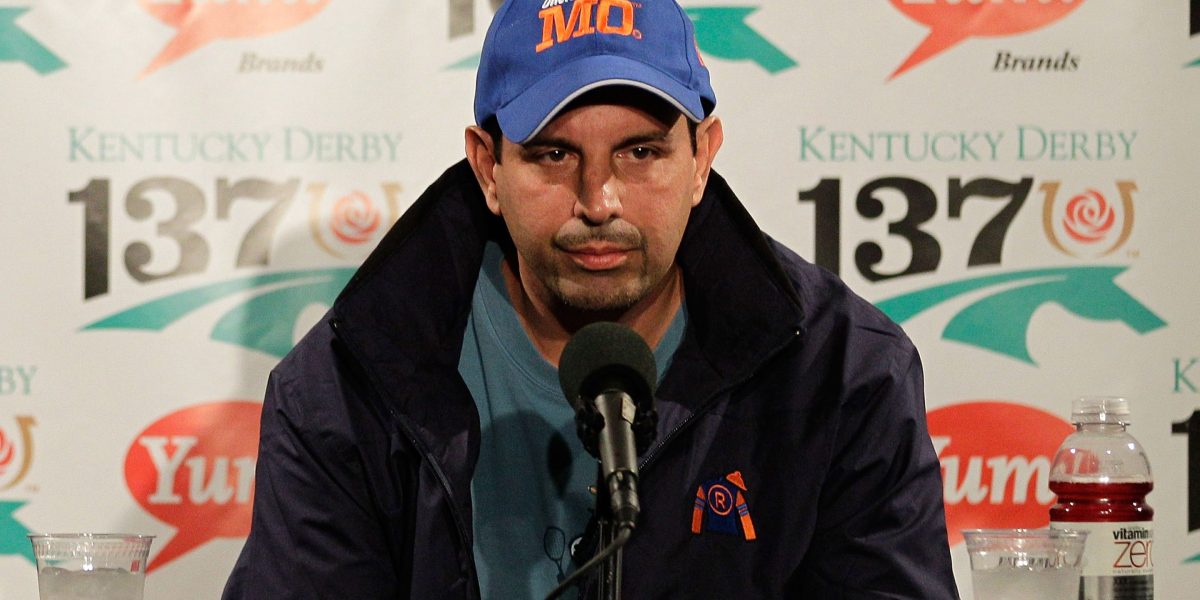
Mike Repole, the billionaire entrepreneur who cofounded and sold beverage giants Glaceau and BodyArmor to Coca-Cola for a combined $9.7 billion, has an unexpected message for aspiring business owners: Don’t do it.
In an interview with the School of Hard Knocks, a popular social-media channel known for interviewing wealthy entrepreneurs, Repole shared his contrarian view on entrepreneurship, emphasizing the brutal realities that most success stories gloss over.
“I spend more time talking people out of being an entrepreneur,” Repole said. “The first five years for an entrepreneur, I call the survival years. Every single day, you could go bankrupt.”
Repole’s cautionary advice carries significant weight given his impressive business track record. The 56-year-old Queens, N.Y., native first made his fortune when he cofounded Glaceau with J. Darius Bikoff in 1999. The company, which produced Smartwater and Vitaminwater, grew from $1 million in first-year sales to over $1 billion in revenue by 2007, when Coca-Cola acquired it for $4.1 billion.
Following that success, Repole cofounded BodyArmor, a sports drink company, in 2011. It gained significant attention a few years later in 2014, when NBA legend Kobe Bryant invested $5 million for a 10% stake, becoming the brand’s creative director. In November 2021, Coca-Cola purchased the remaining 85% of BodyArmor for $5.6 billion, making it the beverage giant’s largest-ever brand acquisition.
Forbes currently estimates Repole’s net worth is $1.6 billion, largely stemming from these two successful exits. Between the ventures, he also served as chairman of snack company Pirate’s Booty, helping grow the brand by 300% before it sold to B&G Foods for $195 million in 2013.
Betting on yourself vs. playing it safe
Despite his multibillion-dollar track record, Repole emphasized in the interview that entrepreneurial success is far from guaranteed. “There were days that I didn’t think we could make it,” he said, adding that he “failed” multiple times throughout his journey.
The billionaire’s advice reflects a growing trend among successful entrepreneurs who are increasingly candid about the challenges of building businesses. Unlike the typical success narratives that dominate social media, Repole’s message acknowledges the statistical reality that most startups—over two-thirds of them—fail, and that even successful entrepreneurs face constant uncertainty.
True to form for successful entrepreneurs, Repole embraces what others might see as character flaws. When asked if he’s “a little crazy” like other billionaires, Repole responded: “I started crazy,” adding, “Crazy people change the world.”
You can watch the interview with Repole below:
@theschoolofhardknocks He’s a multi-BILLIONAIRE 🤯 he sold his companies BODYARMOR and Vitaminwater to Coca-Cola for $12 BILLION! I interviewed Mike Repole in Florida and I asked him if he thinks everyone is built for entrepreneurship. I also asked him whether or not he failed on his way to becoming a billionaire. Since he sold two beverage giants for billions of dollars I asked him whether he thinks product or distribution is more important in business. Lastly, I asked him if he would consider himself to be crazy. #wealth #entrepreneur #financialfreedom #motivation ♬ original sound – The School of Hard Knocks
A version of this story was published at Fortune.com on Sept. 12, 2025.
More on entrepreneurialism:
Join us at the Fortune Workplace Innovation Summit May 19–20, 2026, in Atlanta. The next era of workplace innovation is here—and the old playbook is being rewritten. At this exclusive, high-energy event, the world’s most innovative leaders will convene to explore how AI, humanity, and strategy converge to redefine, again, the future of work.
Register now.