Connect with us

Business

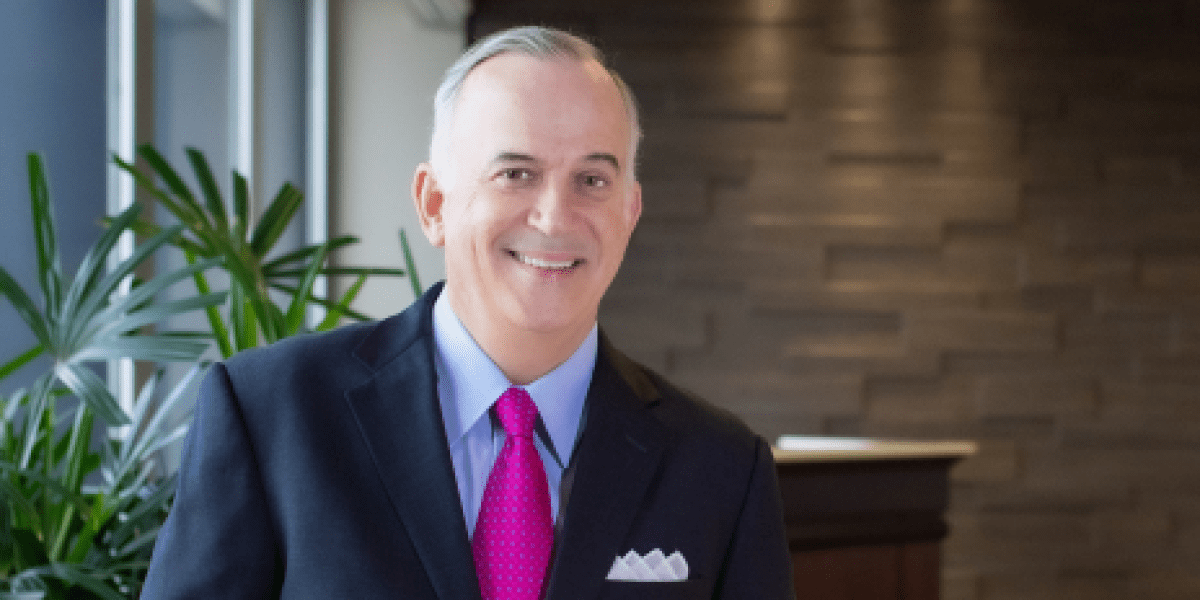
I’m a CEO who’s spent nearly 40 years talking to presidents, lawmakers and leaders about our long-term care crisis. They knew this moment was coming

Published

on


The long-term care system in our country isn’t on the verge of crisis—it’s already in one. Slowly, but undeniably, it is failing the very people it was meant to support.  

I’ve spent nearly five decades working across financial services, health care, and public  policy. I’ve served on presidential commissions, sat in closed-door briefings with lawmakers, and helped lead organizations working to meet the evolving needs of aging Americans. This crisis didn’t emerge overnight – we’ve seen it building for decades.  

For more than 30 years, commissions under Presidents George H.W. Bush, Bill Clinton,  George W. Bush, and Barack Obama all reached the same conclusion: our entitlement  programs were never built to handle a rapidly aging population. There were moments when  real reform seemed possible—when ideas were on the table and momentum was building. But again and again, the opportunities slipped by with inaction. 

Now we’re living with the consequences. By 2036, the population aged 85+ will more than  double. We’ll need nearly one million new assisted living units to meet demand, but we’re on pace to build only 40% of that.  

Most Americans still don’t understand how long-term care works, what it costs, or how to  prepare for it. And the reality is stark: home care now averages $77,792 per year, assisted living $70,800, and a private nursing home room more than $127,000—and those numbers are rising.  

Nearly 70% of Americans turning 65 will need some form of care, but more than 95% of baby boomers lack private insurance to pay for it. Most will rely on unpaid family caregivers or Medicaid, which only steps in after someone has spent down nearly everything they have.  

We are not prepared. Not families. Not the system. Not the economy. Not the country.  

Let me be blunt: the chance to enact sweeping reforms in time to help the baby boomers has passed.  

Structural reforms to Medicare or Medicaid are unlikely in today’s political climate, and  new federal rules are making it even harder to qualify for the latter. Both programs face  long-term sustainability challenges, but broad reform remains politically difficult—even as  insolvency looms. That’s not defeatism. It’s realism. 

So where does that leave us? 

Focus on the possible

We must focus on what’s still possible. And that begins with rethinking how care is delivered, how we define quality, and how we help people afford it.  

First, we need better planning tools. Today, most families make care decisions in a crisis—confused, overwhelmed, and without clear guidance. We must bring the same clarity to  aging that we do to financial planning: nurse-led evaluations, accessible education, and  unbiased support; not just product sales.  

Second, we need to raise the bar on quality. Too often, care is chosen based on  convenience or cost, not standards. Especially in home and community-based settings,  we must define what good, person-centered care looks like and build networks around  those expectations. This doesn’t require sweeping legislation—just transparency, data, and accountability. 

Third, we must confront affordability. The system punishes the middle class: too poor to  self-fund care, too rich to qualify for Medicaid. We need smarter contracting, vetted  provider networks, and eventually, portable, flexible insurance products that fill the gap.  Memory care, for instance, costs up to 30% more than traditional assisted living. Medicare fully covers just 20 days. Most people are left to cobble together care with out-of-pocket spending and fragile safety nets.  

Fourth, we must shore up the workforce delivering care. Care workers are leaving the  industry faster than we can replace them, driven by low pay, high demands, and little  support. Families are filling the gap, providing approximately $600 billion in unpaid care  each year while balancing jobs and other responsibilities. Nearly 60% of employees have  already provided care to a loved one, and most expect to in the future. Strengthening this  workforce—paid and unpaid—must be part of any serious path forward. 

We should also support bipartisan proposals like the WISH Act, which would create a national backstop for catastrophic long-term care events and their associated costs. At the state level, Washington’s WA Cares program offers a modest but meaningful  foundation. These models, paired with thoughtful private insurance solutions, point to a more realistic path forward.  

Moving beyond identifying the problem

We know what the problem is and who it’s hurting.  

What we need now is courage. Courage to act, to innovate, and to demand more from the system. Because the longer we wait, the more people fall through the cracks.  

The current system cannot stretch to catch everyone. It was never built to. And looking  away because the problem is complex, or politically inconvenient, is no longer acceptable. 

The baby boomers are aging into the final chapter of their lives. We owe it to them, and to  every generation that follows, to stop deferring action and start delivering solutions that meet the scale of the crisis. 


Source link

Continue Reading

Business

Billionaire who sold two companies to Coca-Cola says he tries to persuade people not to become entrepreneurs: ‘Every single day, you can go bankrupt’

Published

on


Mike Repole, the billionaire entrepreneur who cofounded and sold beverage giants Glaceau and BodyArmor to Coca-Cola for a combined $9.7 billion, has an unexpected message for aspiring business owners: Don’t do it.

In an interview with the School of Hard Knocks, a popular social-media channel known for interviewing wealthy entrepreneurs, Repole shared his contrarian view on entrepreneurship, emphasizing the brutal realities that most success stories gloss over.

“I spend more time talking people out of being an entrepreneur,” Repole said. “The first five years for an entrepreneur, I call the survival years. Every single day, you could go bankrupt.”

Repole’s cautionary advice carries significant weight given his impressive business track record. The 56-year-old Queens, N.Y., native first made his fortune when he cofounded Glaceau with J. Darius Bikoff in 1999. The company, which produced Smartwater and Vitaminwater, grew from $1 million in first-year sales to over $1 billion in revenue by 2007, when Coca-Cola acquired it for $4.1 billion.

Following that success, Repole cofounded BodyArmor, a sports drink company, in 2011. It gained significant attention a few years later in 2014, when NBA legend Kobe Bryant invested $5 million for a 10% stake, becoming the brand’s creative director. In November 2021, Coca-Cola purchased the remaining 85% of BodyArmor for $5.6 billion, making it the beverage giant’s largest-ever brand acquisition.

Forbes currently estimates Repole’s net worth is $1.6 billion, largely stemming from these two successful exits. Between the ventures, he also served as chairman of snack company Pirate’s Booty, helping grow the brand by 300% before it sold to B&G Foods for $195 million in 2013.

Betting on yourself vs. playing it safe

Despite his multibillion-dollar track record, Repole emphasized in the interview that entrepreneurial success is far from guaranteed. “There were days that I didn’t think we could make it,” he said, adding that he “failed” multiple times throughout his journey.

The billionaire’s advice reflects a growing trend among successful entrepreneurs who are increasingly candid about the challenges of building businesses. Unlike the typical success narratives that dominate social media, Repole’s message acknowledges the statistical reality that most startups—over two-thirds of them—fail, and that even successful entrepreneurs face constant uncertainty.

True to form for successful entrepreneurs, Repole embraces what others might see as character flaws. When asked if he’s “a little crazy” like other billionaires, Repole responded: “I started crazy,” adding, “Crazy people change the world.”

You can watch the interview with Repole below:

@theschoolofhardknocks He’s a multi-BILLIONAIRE 🤯 he sold his companies BODYARMOR and Vitaminwater to Coca-Cola for $12 BILLION! I interviewed Mike Repole in Florida and I asked him if he thinks everyone is built for entrepreneurship. I also asked him whether or not he failed on his way to becoming a billionaire. Since he sold two beverage giants for billions of dollars I asked him whether he thinks product or distribution is more important in business. Lastly, I asked him if he would consider himself to be crazy. #wealth #entrepreneur #financialfreedom #motivation ♬ original sound – The School of Hard Knocks

A version of this story was published at Fortune.com on Sept. 12, 2025.

More on entrepreneurialism:

Join us at the Fortune Workplace Innovation Summit May 19–20, 2026, in Atlanta. The next era of workplace innovation is here—and the old playbook is being rewritten. At this exclusive, high-energy event, the world’s most innovative leaders will convene to explore how AI, humanity, and strategy converge to redefine, again, the future of work. Register now.


Source link

Continue Reading

Business

Sam Altman says he’s ‘0%’ excited about running a public company as OpenAI preps IPO

Published

on


OpenAI may be building up to one of the largest initial public offerings ever, but CEO Sam Altman says he is not necessarily looking forward to helming a public company.

“Am I excited to be a public company CEO? 0%,” Altman said in an episode of the “Big Technology Podcast” published on Thursday. “Am I excited for OpenAI to be a public company? In some ways, I am, and in some ways I think it’d be really annoying.”

OpenAI is laying the groundwork for an IPO, with a Thursday report from The Wall Street Journal putting early talks of a valuation at $830 billion. In a more lofty estimate, the company could be valued at up to $1 trillion, Reuters reported in October, citing three sources. According to the Reuters report, chief financial officer Sarah Friar is eyeing a 2027 listing, with a potential IPO filing in late 2026.

Altman told “Big Technology” he didn’t know if his AI company would go public next year and was mum on details about fundraising, or the company’s valuation. OpenAI did not respond to Fortune’s request for comment.

Despite his hesitance to lead a public company—which are often under more scrutiny, greater regulatory oversight, and are associated with less influence from founders—OpenAI’s IPO wouldn’t be all bad, Altman noted. 

“I do think it’s cool that public markets get to participate in value creation,” he said. “And in some sense, we will be very late to go public if you look at any previous company. It’s wonderful to be a private company. We need lots of capital. We’re going to cross all of the shareholder limits and stuff at some point.”

An IPO would pave the way for OpenAI to raise the billions of dollars needed to compete in the AI race. Founded as a nonprofit in 2015, OpenAI just completed a complex restructuring in October that converted it into a more traditional for-profit company, giving the nonprofit controlling the company a $130 billion stake in it. The restructuring also gave Microsoft a reduced 27% stake in the company, as well as increased research access, while simultaneously freeing up OpenAI to make deals with other cloud-computing partners. 

More ‘code reds’ to come

OpenAI’s urgency to compete with rivals was apparent earlier this month when Altman declared a “code red” in an internal memo, following the surge of interest after Google rolled out its new Gemini 3 model in just one day, which the company said was the fastest deployment of a model into Google Search. Altman’s “code red” was an eight-week mandate to redouble OpenAI’s own efforts while temporarily postponing other initiatives, such as advertising and expanding e-commerce offerings.

The blitz appears to be paying off: Last week, OpenAI launched its new GPT-5.2 model, and earlier this week, it released a new image-generation model to compete with Google’s Nano Banana. Fidji Simo, OpenAI’s CEO of applications, said the update wasn’t in response to Google’s Gemini 3, but that the extra resources from the code red did help expedite its debut.

As OpenAI tries to address slowing user growth and retain and grow market share from its competitors, Altman conceded a code red will not be a one-off phenomenon. The all-out effort is a model that’s been employed by Google, and also Meta through Facebook’s more extreme “lockdown” periods. He downplayed the stakes of a code red, matching what sources told Fortune equated to a focused, but not panicked, office environment.

“I think that it’s good to be paranoid and act quickly when a potential competitive threat emerges,” Altman said. “This happened to us in the past. That happened earlier this year with DeepSeek. And there was a code red back then, too.”

Altman likened the urgency of a code red to the beginning of a pandemic, where action taken at the beginning, more so than actions taken later, have an outsized impact on an outcome. He expected code reds will be a norm as the company hopes to gain distance from the likes of Google and DeepSeek.

“My guess is we’ll be doing these once, maybe twice a year, for a long time, and that’s part of really just making sure that we win in our space,” Altman said. “A lot of other companies will do great too, and I’m happy for them.”


Source link

Continue Reading

Business

Klarna partners with Coinbase to receive stablecoin funds from institutional investors

Published

on


After staying out of crypto for years, the buy-now-pay-later giant Klarna has been making a flurry of moves in the digital asset space. The latest example came on Friday when the company said it is partnering with the crypto exchange Coinbase to accept stablecoin funds from institutional investors.

Klarna’s business model revolves around supplying consumers with zero-interest loans to buy goods, an arrangement known as buy-now-pay-later, or BNPL. The Swedish firm earns money primarily by charging merchants a small fee to offer its services, and acquires capital via a banking arm that accepts deposits and issues bonds. Its partnership with Coinbase will let institutional investors front capital denominated in stablecoins, a type of cryptocurrency pegged to underlying assets like the U.S. dollar.

“Stablecoin connects us to an entirely new class of institutional investors,” said Niclas Neglén, Klarna’s CFO, in a statement.

Friday’s announcement is the latest foray into crypto from Klarna, which went public in September. In late November, Klarna launched its own stablecoin, KlarnaUSD, on a new blockchain backed by the fintech giant Stripe and the crypto venture capitalist Paradigm. About two weeks later, the company said it was working with the crypto wallet developer Privy, which is owned by Stripe, to work on potential crypto products for its users.

Klarna’s crypto integrations come as more fintechs and banks dabble in stablecoins, which proponents say are a faster and cheaper means to send and receive money than existing financial rails.

On Thursday, the neobank SoFi announced that it was launching its own stablecoin. In early December, Sony’s banking arm said it was exploring the issuance of its own dollar-backed token. And even Block, the fintech that’s historically been a devoted Bitcoin booster, said that it will integrate stablecoins into Cash App, the digital wallet the company owns. 

The rush into stablecoins follows a series of landmark moments for the crypto assets over the past year. In February, Stripe closed a $1.1 billion deal to acquire the stablecoin startup Bridge. In June, the stablecoin issuer Circle went public in one of the year’s hottest IPOs. And, in July, President Donald Trump signed into law a new bill that creates a regulatory framework for stablecoins.

This story was originally featured on Fortune.com


Source link

Continue Reading

Trending

Copyright © Miami Select.