Connect with us

Business

TikTok agrees U.S. joint venture deal with Oracle, Silver Lake and MGX

Published

on


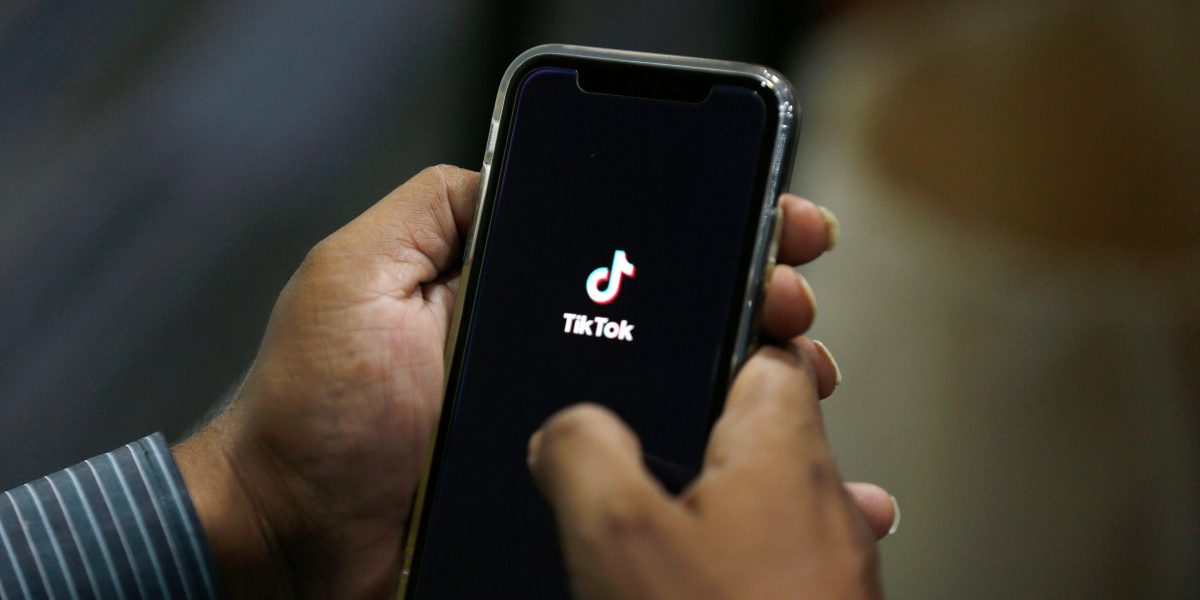
TikTok has signed agreements with three major investors — Oracle, Silver Lake and MGX — to form a new TikTok U.S. joint venture, ensuring the popular social video platform can continue operating in the United States.

The deal is expected to close on Jan. 22, according to an internal memo seen by The Associated Press. In the communication, CEO Shou Zi Chew confirmed to employees that ByteDance and TikTok signed the binding agreements with the consortium.

“I want to take this opportunity to thank you for your continued dedication and tireless work. Your efforts keep us operating at the highest level and will ensure that TikTok continues to grow and thrive in the U.S. and around the world,” Chew wrote in the memo to employees. “With these agreements in place, our focus must stay where it’s always been—firmly on delivering for our users, creators, businesses and the global TikTok community.”

Half of the new TikTok U.S. joint venture will be owned by a group of investors — among them Oracle, Silver Lake and the Emirati investment firm MGX, who will each hold a 15% share. 19.9% of the new app will be held by ByteDance itself, and another 30.1% will be held by affiliates of existing ByteDance investors, according to the memo. The memo did not say who the other investors are and both TikTok and the White House declined to comment.

The U.S. venture will have a new, seven-member majority-American board of directors, the memo said. It will also be subject to terms that “protect Americans’ data and U.S. national security.”

U.S. user data will be stored locally in a system run by Oracle. The memo said U.S. users will continue “enjoying the same experience as today” and advertisers will continue to serve global audiences with no impact from the deal.

TikTok’s algorithm — the secret sauce that powers its addictive video feed — will be retrained on U.S. user data to “ensure the content feed is free from outside manipulation,” the memo said. The U.S. venture will also oversee content moderation and policies within the country.

American officials have previously warned that ByteDance’s algorithm is vulnerable to manipulation by Chinese authorities, who can use it to shape content on the platform in a way that’s difficult to detect.

The algorithm has been a central issue in the security debate over TikTok. China previously maintained the algorithm must remain under Chinese control by law. But the U.S. regulation passed with bipartisan support said any divestment of TikTok must mean the platform cuts ties — specifically the algorithm — with ByteDance.

The deal marks the end of years of uncertainty about the fate of the popular video-sharing platform in the United States. After wide bipartisan majorities in Congress passed — and President Joe Biden signed — a law that would ban TikTok in the U.S. if it did not find a new owner in the place of China’s ByteDance, the platform was set to go dark on the law’s January 2025 deadline. For a several hours, it did. But on his first day in office, President Donald Trump signed an executive order to keep it running while his administration tries to reach an agreement for the sale of the company.

Three more executive orders followed, as Trump, without a clear legal basis, continued to extend the deadline for a TikTok deal. The second was in April, when White House officials believed they were nearing a deal to spin off TikTok into a new company with U.S. ownership that fell apart after China backed out following Trump’s tariff announcement. The third came in June, then another in September, which Trump said would allow TikTok to continue operating in the United States in a way that meets national security concerns.

TikTok has more than 170 million users in the U.S. About 43% of U.S. adults under the age of 30 say they regularly get news from TikTok, higher than any other social media app including YouTube, Facebook and Instagram, according to a Pew Research Center report published this fall.

Shares of Oracle jumped $9.07, or 5%, to $189.10 in after-hours trading.

This story was originally featured on Fortune.com


Source link

Continue Reading

Business

I’m a CEO who’s spent nearly 40 years talking to presidents, lawmakers and leaders about our long-term care crisis. They knew this moment was coming

Published

on


The long-term care system in our country isn’t on the verge of crisis—it’s already in one. Slowly, but undeniably, it is failing the very people it was meant to support.  

I’ve spent nearly five decades working across financial services, health care, and public  policy. I’ve served on presidential commissions, sat in closed-door briefings with lawmakers, and helped lead organizations working to meet the evolving needs of aging Americans. This crisis didn’t emerge overnight – we’ve seen it building for decades.  

For more than 30 years, commissions under Presidents George H.W. Bush, Bill Clinton,  George W. Bush, and Barack Obama all reached the same conclusion: our entitlement  programs were never built to handle a rapidly aging population. There were moments when  real reform seemed possible—when ideas were on the table and momentum was building. But again and again, the opportunities slipped by with inaction. 

Now we’re living with the consequences. By 2036, the population aged 85+ will more than  double. We’ll need nearly one million new assisted living units to meet demand, but we’re on pace to build only 40% of that.  

Most Americans still don’t understand how long-term care works, what it costs, or how to  prepare for it. And the reality is stark: home care now averages $77,792 per year, assisted living $70,800, and a private nursing home room more than $127,000—and those numbers are rising.  

Nearly 70% of Americans turning 65 will need some form of care, but more than 95% of baby boomers lack private insurance to pay for it. Most will rely on unpaid family caregivers or Medicaid, which only steps in after someone has spent down nearly everything they have.  

We are not prepared. Not families. Not the system. Not the economy. Not the country.  

Let me be blunt: the chance to enact sweeping reforms in time to help the baby boomers has passed.  

Structural reforms to Medicare or Medicaid are unlikely in today’s political climate, and  new federal rules are making it even harder to qualify for the latter. Both programs face  long-term sustainability challenges, but broad reform remains politically difficult—even as  insolvency looms. That’s not defeatism. It’s realism. 

So where does that leave us? 

Focus on the possible

We must focus on what’s still possible. And that begins with rethinking how care is delivered, how we define quality, and how we help people afford it.  

First, we need better planning tools. Today, most families make care decisions in a crisis—confused, overwhelmed, and without clear guidance. We must bring the same clarity to  aging that we do to financial planning: nurse-led evaluations, accessible education, and  unbiased support; not just product sales.  

Second, we need to raise the bar on quality. Too often, care is chosen based on  convenience or cost, not standards. Especially in home and community-based settings,  we must define what good, person-centered care looks like and build networks around  those expectations. This doesn’t require sweeping legislation—just transparency, data, and accountability. 

Third, we must confront affordability. The system punishes the middle class: too poor to  self-fund care, too rich to qualify for Medicaid. We need smarter contracting, vetted  provider networks, and eventually, portable, flexible insurance products that fill the gap.  Memory care, for instance, costs up to 30% more than traditional assisted living. Medicare fully covers just 20 days. Most people are left to cobble together care with out-of-pocket spending and fragile safety nets.  

Fourth, we must shore up the workforce delivering care. Care workers are leaving the  industry faster than we can replace them, driven by low pay, high demands, and little  support. Families are filling the gap, providing approximately $600 billion in unpaid care  each year while balancing jobs and other responsibilities. Nearly 60% of employees have  already provided care to a loved one, and most expect to in the future. Strengthening this  workforce—paid and unpaid—must be part of any serious path forward. 

We should also support bipartisan proposals like the WISH Act, which would create a national backstop for catastrophic long-term care events and their associated costs. At the state level, Washington’s WA Cares program offers a modest but meaningful  foundation. These models, paired with thoughtful private insurance solutions, point to a more realistic path forward.  

Moving beyond identifying the problem

We know what the problem is and who it’s hurting.  

What we need now is courage. Courage to act, to innovate, and to demand more from the system. Because the longer we wait, the more people fall through the cracks.  

The current system cannot stretch to catch everyone. It was never built to. And looking  away because the problem is complex, or politically inconvenient, is no longer acceptable. 

The baby boomers are aging into the final chapter of their lives. We owe it to them, and to  every generation that follows, to stop deferring action and start delivering solutions that meet the scale of the crisis. 


Source link

Continue Reading

Business

Exclusive: Cursor acquires code review startup Graphite as AI coding competition heats up

Published

on


Cursor is buying code review startup Graphite in a deal that brings together two popular tools in AI-powered software development.

The companies declined to disclose financial terms of the transaction, but said it involves a mixture of cash and equity. They said Graphite will to continue operating as an independent product, but with deeper integration into Cursor’s code editing platform. The deal is expected to close in the coming weeks.

Cursor CEO, Michael Truell, told Fortune the acquisition addresses what he sees as an emerging bottleneck in software development.

“The way engineering teams review code is increasingly becoming a bottleneck to them moving even faster as AI has been deployed more broadly within engineering teams,” he said. “Over the past 2.5 years, Cursor has made it much faster to write production code. However, for most engineering teams, reviewing code looks the same as it did 3 years ago. It’s becoming a larger portion of people’s time as the time to write code shrinks. Graphite has done lots of work to improve the speed and accuracy of code review.”

AI code editors like Cursor help programmers while they’re writing code—making suggestions, explaining the function of a particular piece of code, and helping teams move around large projects faster. Graphite, used by companies like Shopify, Snowflake, and Figma, helps teams review changes and decide when code is ready to ship, after its written.

“We focused on the writing side of things. Graphite has focused on the review side of things. We think the two together can make something even better,” Truell said.

Graphite CEO Merrill Lutsky said that the two companies “have an almost identical vision for what the future of software development looks like.”

“Cursor has defined the new way to write code, and we’re defining how you review and merge it. Putting those together lets you build an end-to-end platform,” he told Fortune.

In the immediate term, both products will remain separate, with Graphite maintaining its independent brand. Throughout 2026, Truell said the companies plan to make it easier for developers’ code to connect with the review process, including smarter, more context-aware code review that adapts to how teams actually write code.

Lutsky said concerns about AI-generated code quality have been a major focus for Graphite. “We’ve invested deeply in ensuring that code written with the help of AI is safe and high quality,” he said. “Together with Cursor, we’re going to double down on that and help teams build secure, efficient, high-quality products.”

An end-to-end AI coding platform

The acquisition comes just one month after Cursor, which is valued at $29.3 billion valuation, announced it had reached $1 billion in annualized revenue. The company has seen a rapid rise since it was founded by a team of four MIT graduates in 2022. The company’s AI coding tool, which first launched in 2023, has seen major deployments at companies like Salesforce, which according to Truell said had seen a 30% uplift in engineering productivity from using Cursor.

Graphite is not Cursor’s first acquisition. The company bought AI coding assistant Supermaven in November 2024 and scooped up talent from enterprise startup Koala in July.

Graphite, which Lutsky co-founded nearly five years ago with Tomas Reimers and Greg Foster, raised $52 million in a Series B round in March 2025. The company told TechCrunch revenue grew 20x in 2024 without disclosing absolute figures, and expanded to serving tens of thousands of engineers at more than 500 companies, including customers such as Shopify, Snowflake, Figma, and Perplexity.

Lutsky said the deal offers Graphite the opportunity to build a more unified development platform. “We’ve long dreamed of connecting the surfaces where we create, collaborate on, and validate code changes,” he said, adding that the deal dramatically accelerates that timeline.

The AI coding market is booming

The AI coding market has exploded over the past two years as enterprises rush to adopt AI tools in hopes of productivity gains. The U.S. market for AI code tools was valued at $1.51 billion in 2024 and is expected to reach nearly $9 billion by 2032.

Big Tech companies including Microsoft and Google are automating large parts of their coding. According to Microsoft CEO Satya Nadella, as much as 30% of the code within the company’s repositories is now written by artificial intelligence while at least 25% of new Google code is generated by AI, according to CEO Sundar Pichai.

Companies are betting that AI coding tools can supercharge software engineers productivity, but early studies have been mixed. A July study by nonprofit research organization METR found that experienced developers using AI tools were actually 19% slower when using an AI coding assistant, even though they believed they were faster. Consulting firm Bain & Company also reported in September that real-world savings from AI coding have been “unremarkable.”

Nevertheless, the deal positions Cursor more aggressively in an increasingly competitive market, with OpenAI, Anthropic, and GitHub Copilot among those vying for dominance in the space. Most of these tools, however, are built on top of the same underlying “foundation” AI models rather than developing their own. Cursor, for example, uses Anthropic’s Claude and allows users to choose models from other providers to power code generation.

While Graphite is also backed by Anthropic, Lutsky downplayed concerns about competing directly with large model providers. “The larger base-model companies are trying to compete across many different verticals,” he said. “Cursor is solely focused on how engineers build with AI, and that focus really sets them apart.”

Truell also brushed off the threat from major AI labs. “Our approach here is to use a combination of the best technology that partners have to offer and then technology that we develop ourselves,” he said. The company has focused on cherry-picking the best available models, supplementing them with proprietary ones, and wrapping everything in what it argues is a superior user interface.

As for the next year, Truell said the company currently has no additional deals planned, with Cursor focused on building out product features rather than eyeing an IPO.

“Our goals for the company are very ambitious over the course of the next decade,” he said. “We think that this is the decade in which coding will be automated, and the way in which professional teams build and deliver software will change across the entire software development life cycle.”


Source link

Continue Reading

Business

‘This year is just not a jewelry Christmas’: Meet a 64-year-old small businesswoman who’s seen her Main Street decline for the last decade

Published

on


She had worked 22 days straight in her job as a technician at an engine plant to save up, and now Daijah Bryant could finally do what she was putting off: Christmas shopping.

Bryant pushed her cart out of a Walmart in Rocky Mount, North Carolina, and loaded her sedan’s backseat with bags of gifts. While they would soon bring joy to her friends and family, it was difficult for the 26-year-old to feel good about the purchases.

“Having to pay bills, if you happen to pay rent and try to do Christmas all at the same time, it is very, very hard,” she said with exasperation.

Ahead of President Donald Trump’s Friday evening visit to Rocky Mount, some residents say they are feeling an economic squeeze that seems hard to escape. The uneasy feeling spans political affiliation in the town, which is split between two largely rural and somewhat impoverished counties, although some were more hopeful than others that there are signs of reprieve on the horizon.

This will be Trump’s second event this month aimed at championing his economic policies ahead of a consequential midterm election next year, both held in presidential battleground states. Similar to Trump’s earlier stop in Pennsylvania, Rocky Mount sits in a U.S. House district that has been historically competitive. But earlier this year, the Republican-controlled legislature redrew the boundaries for the eastern North Carolina district to favor their party as part of Trump’s push to have GOP-led states gerrymander their congressional districts to help his party retain its House majority for the last half of his term.

Rocky Mount may be in a politically advantageous location, but the hardships its residents report mirror the tightening financial strains many Americans say they are feeling, with high prices for groceries, housing and utilities among their top concerns. Polls show persistently high prices have put Americans in a grumpy mood about the state of the economy, which a large majority say is performing poorly.

Trump has insisted the economy is trending upward and the country will see some relief in the new year and beyond. In some cases, he has dismissed affordability concerns and encouraged Americans to decrease their consumption.

‘Without the businesses, it’s dead’

Crimson smokestacks tower over parts of downtown Rocky Mount, reminding the town’s roughly 54,000 residents of its roots as a once-booming tobacco market. Through the heart of downtown, graffiti-covered trains still lug along on the railroad tracks that made Rocky Mount a bustling locomotive hotspot in the last century.

Those days seem long gone for some residents who have watched the town change over decades. Rocky Mount has adapted by tapping into other industries such as manufacturing and biopharmaceuticals, but it’s also had to endure its fair share of challenges. Most recently, financial troubles in the city’s government have meant higher utility prices for residents.

The city has been investing to try to revitalize its downtown, but progress has been slow. Long stretches of empty storefronts that once contained restaurants, furniture shops and drug stores line the streets. Most stores were closed Thursday morning, and not much foot traffic roamed the area.

That’s left Lucy Slep, who co-owns The Miner’s Emporium jewelry store with her husband, waiting for Trump’s promised “Golden Age of America.”

The jewelry store has been in downtown Rocky Mount for nearly four decades, just about as long as the 64-year-old said she has lived in the area. But the deterioration of downtown Rocky Mount has spanned at least a decade, and Slep said she’s still hoping it will come back to life.

“Every downtown in every little town is beautiful,” she said. “But without the businesses, it’s dead.”

Slep’s store hasn’t escaped the challenges other Rocky Mount small businesses have endured. Instead of buying, more people have recently been selling their jewelry to the shop, Slep said.

Customers have been scarce. About a week out from Christmas, the store — with handmade molded walls and ceilings resembling cave walls — sat empty aside from the rows of glass cases containing jewelry. It’s been hard, Slep said, but she and her husband are trying to make it through.

“This year is just not a jewelry Christmas, for whatever reason,” she said.

Better times on the horizon — depending on whom you ask

Slep is already looking ahead to next year for better times. She is confident that Trump’s economic policies — including upcoming tax cuts — will make a marked difference in people’s cost of living. In her eyes, the financial strains people are feeling are residual effects from the Biden administration that eventually will fade.

Optimism about what’s to come under Trump’s economy might also depend on whether residents feel their economic conditions have changed drastically in the past year. Shiva Mrain, an engineer in Rocky Mount, said his family’s situation has not “become worse nor better.” He’s been encouraged by seeing lower gas prices.

Bryant, the engine technician, feels a bit more disillusioned.

She didn’t vote in the last election because she didn’t think either party could enact changes that would improve her life. Nearly a year into the Trump administration, Bryant is still waiting to see whether the president will deliver.

“I can’t really say … that change is coming,” she said. “I don’t think anything is going to change.”


Source link

Continue Reading

Trending

Copyright © Miami Select.