Connect with us

Business

Down Arrow Button Icon
Published

on


A 911 call about a man resembling “the CEO shooter.” Body-camera footage of police arresting Luigi Mangione and pulling items from his backpack, including a gun that prosecutors say matches the one used to kill UnitedHealthcare CEO Brian Thompson, and a notebook they have described as a “manifesto.” Notes about a “survival kit” and “intel checkin,” and testimony about his statements behind bars.

A three-week pretrial hearing on Mangione’s fight to exclude evidence from his New York murder case revealed new details about his December 2024 arrest in Altoona, Pennsylvania, steps prosecutors say he took to elude authorities for five days, and what he may have revealed about himself after he was taken into custody.

The hearing ended Thursday. Mangione watched from the defense table as prosecutors called 17 witnesses, many of them police officers and other personnel involved in his arrest. Mangione’s lawyers called none. Judge Gregory Carro said he won’t rule until May 18, “but that could change.”

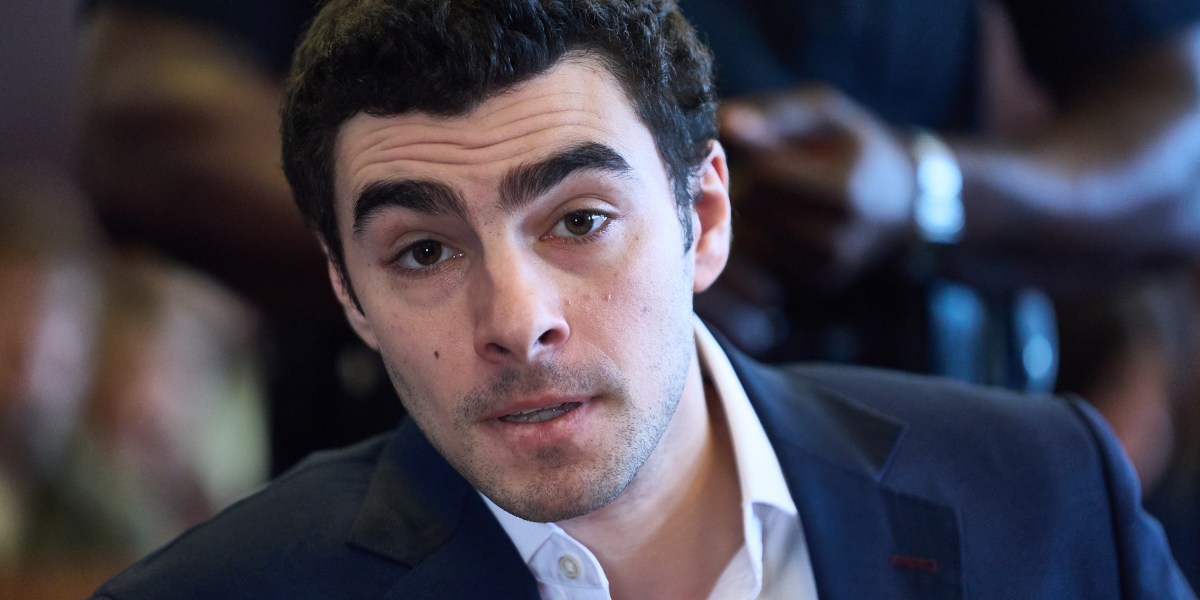
Mangione, 27, an Ivy League graduate from a wealthy Maryland family, has pleaded not guilty to state and federal murder charges. The pretrial hearing was in the state case, where he faces the possibility of life in prison, but his lawyers are trying to exclude evidence from both cases. Federal prosecutors are seeking the death penalty. He is due back in court for a hearing in that case on Jan. 9. Neither trial has been scheduled.

Here are some of the things we learned from Mangione’s pretrial hearing:

Body cameras give a close-up look at Mangione’s arrest

The public got an extensive, even exhaustive view of how police in Altoona, about 230 miles (370 kilometers) west of Manhattan, conducted Mangione’s arrest and searched his backpack after he was spotted eating breakfast at McDonald’s.

While there were quirky moments and asides — about holiday music, a hoagie and more — the point of the hearing was to help the judge assess whether Mangione voluntarily spoke to police and whether the officers were justified in searching his property before getting a warrant.

For the first time, body-worn camera video of Mangione‘s arrest was played in court and excerpts from one were made public. Previously, only still images had been released. Taken from multiple officers’ cameras, the footage put ears and eyes on the critical moments surrounding his arrest, along with an incongruously cheerful soundtrack: “Jingle Bell Rock” and other Christmas tunes on the restaurant’s sound system.

Officers on the witness stand were quizzed about what they said and did as Mangione went from noshing on a hash brown to being led away in handcuffs, as well as what they perceived, where they were standing and how they handled evidence after bringing him to a police station.

Mangione’s lawyers argue that none of the results of the search nor statements he made to police should be mentioned at his trial, which has yet to be scheduled. Prosecutors disagree. Carro didn’t hint at his conclusion. He invited both sides to submit written arguments and said he planned to study the body-camera video before issuing a written decision.

Differing views of Mangione’s statements and bag search

Mangione’s lawyers noted that one officer said “we’ll probably need a search warrant” for the backpack, but his colleagues had already rifled through it and later searched the bag again before getting a warrant.

Prosecutors emphasized an Altoona police policy, which they said is rooted in Pennsylvania law, that calls for searching the property of anyone who is being arrested. The two sides also amplified some contrasting signals, in officers’ words and actions, about their level of concern about whether the backpack contained something dangerous that could justify a warrantless search.

The officer searching the bag, Christy Wasser, testified that she was checking for a bomb. But Mangione’s lawyers pointed out that police didn’t clear the restaurant of customers — some were seen on body-camera footage walking to a bathroom a few feet away — and that she stopped her initial search almost immediately after finding a loaded gun magazine wrapped in a pair of underwear.

The find appeared to confirm officers’ suspicions that Mangione was the man wanted for Thompson’s killing.

“It’s him, dude. It’s him, 100%,” officer Stephen Fox was heard saying on body-worn camera video, punctuating the remark with expletives as Wasser held up the magazine.

Mangione gave police a fake name and a reason to arrest him

Mangione’s statements to police prior to his arrest matter mainly because, as shown on body-worn camera video, he initially gave officers a fake name — Mark Rosario — and a phony New Jersey driver’s license bearing that name. He eventually acknowledged the ruse and gave his real name after police ran the ID through a computer system and couldn’t get a match.

The fake name promptly gave Altoona police a reason to arrest him and hold him for New York City police. “If he had provided us with his actual name, he would not have committed a crime,” Fox testified. An NYPD lieutenant testified that the Rosario name matched one the suspected shooter used to purchase a bus ticket to New York and gave at a Manhattan hostel.

Mangione told police early on he didn’t want to talk, but officers engaged him for almost 20 minutes before a supervisor urged Fox to inform him of his right to remain silent. It happened after Mangione had admitted to lying about his name and said he “clearly shouldn’t have.”

An important factor in whether suspects have to be informed of their right to stay silent — known as a Miranda warning — is whether they are in police custody.

Prosecutors elicited testimony from officers suggesting Mangione could have believed he was free to leave when he gave the false name. But one of the first officers to encounter Mangione testified that he “was not free to leave until I identified who he was” — though Mangione wasn’t told that, and body camera video showed multiple officers standing between him and the restaurant door.

911 caller: Customers concerned ‘he looks like the CEO shooter’

For the first time, the public heard the 911 call that drew police to the Altoona McDonald’s, ultimately leading to Mangione’s arrest.

The restaurant’s manager told a dispatcher: “I have a customer here that some other customers were suspicious of that he looks like the CEO shooter from New York. They’re just really upset and they’re like coming to me and I was like, ‘Well, I can’t approach them, you know.’ ”

The woman, whose name was edited out of the recording played in court and omitted from the version released to the public, said she first tried calling a non-emergency number, but no one answered. Then she called 911.

“It’s not really an emergency,” she told the dispatcher at the start of the call.

The manager said Mangione was wearing a medical mask and a beanie pulled down on his forehead, leaving only his eyes and eyebrows visible. She said she searched online for a photo of the suspect for comparison.

A hoagie reward and getting ‘the ball rolling’ with the NYPD

At first, Altoona police officers were skeptical that Thompson’s killer might be in their city, a community of about 44,000 people about midway between Pittsburgh and Harrisburg.

Patrolman Joseph Detwiler, the first officer to arrive at McDonald’s, sarcastically responded “10-4” when a dispatcher asked him to check on the manager’s 911 call, a police supervisor testified.

The supervisor, Lt. Tom Hanelly Jr., testified that he texted Detwiler a reminder to take the call seriously and offered to buy the officer his favorite hoagie — a large turkey from local sandwich shop Luigetta’s — if he nabbed “the New York City shooter.”

Though, Hanelly acknowledged on the witness stand, “it seemed preposterous on its face.”

Hanelly said he read up on the shooting as he drove to McDonald’s and searched for a direct line “to get the ball rolling” with NYPD investigators. He ended up calling a New York City 911 call taker.

“We’re acting off a tip from a local business here, we might have the shooter,” Hanelly said in a recording played in court.

The call taker asked what shooter he was talking about. Hanelly then clarified, “the UHC shooter” and said he “matches the photos that your department put out.”

Hanelly said an NYPD detective called him back about 45 minutes later.

Mangione in court: Pumping his fist and scribbling notes

Mangione stayed active throughout the hearing, taking notes, reading documents, conferring with his lawyers and occasionally looking back toward his two-dozen or so supporters in the courtroom gallery.

He watched intently as prosecutors played a surveillance video of the killing and security and body-worn camera footage of his interactions with Altoona police. He pressed a finger to his lips and a thumb to his chin as he watched footage of two police officers approaching him at the McDonald’s.

He gripped a pen in his right hand, making a fist at times, as prosecutors played the 911 call.

Mangione arrived to court each morning from a federal jail in Brooklyn, where he has been held since shortly after his arrest. He was given permission to wear regular clothes — a gray or dark blue suit and various button-down shirts — instead of jail garb and had his hands uncuffed throughout the proceedings.

One day, he pumped his fist for photographers. Another day, he shooed away a photographer he felt had gotten too close to him.

A backpack full of ‘goodies,’ including to-do lists and travel plans

Along with the gun and notebook, police officers said Mangione’s backpack was stuffed with food, electronics and notes including to-do lists, a hand-drawn map and tactics for surviving on the lam — items Altoona Police Sgt. Eric Heuston described as “goodies” that might link him to the killing.

‘Keep momentum, FBI slower overnight,’ said one note. ‘Change hat, shoes, pluck eyebrows,’ said another.

One note said to check for “red eyes” from Pittsburgh to Columbus, Ohio or Cincinnati (“get off early,” it reads). The map showed lines linking those cities, and noted other possible destinations, including Detroit and St. Louis.

Other items found on Mangione or in his bag included a pocketknife, driver’s license, passport, credit cards, AirPods, protein bar, travel toothpaste and flash drives.

Mangione talked behind bars, prison officers say

Before he was moved to New York City, Mangione was held under close watch in a special housing unit at a Pennsylvania state prison, SCI Huntingdon, about 19 miles (31 kilometers) west of Altoona.

Correctional officer Matthew Henry testified that Mangione made an unprompted comment to him that he had a backpack with a 3D-printed pistol and foreign currency when he was arrested.

Correctional officer Tomas Rivers testified that Mangione asked him whether the news media was focused on him as a person or on the crime of Thompson’s killing. He said Mangione told him he wanted to make a public statement.

Rivers said Mangione was in the special housing unit in part because the facility’s superintendent had said he “did not want an Epstein-style situation,” referring to Jeffrey Epstein’s suicide at a Manhattan federal jail in 2019.


Source link

Continue Reading

Business

From search to discovery: how AI Is redrawing the competitive map for every brand

Published

on


In the past, search used to look something like this in Google: “black running shoes, women’s size 8, under $100” – and ten blue links and a few shopping ads likely appeared. A helpful first step, but requiring further research and analysis.

Now, you can ask an even more pointed question – perhaps adding in a preference for arch support, a shopping mile radius – to a large language model (LLM) and get a clear, context-rich answer: “Here are three nearby options that fit your criteria. The top-rated one is available for pickup in 40 minutes.”

It’s an improved interaction, but not at the cost of a more complex user experience. This new way of search is redefining consumer behavior and expectations, and how marketers must approach brand visibility. In fact, it represents a reconfiguration of digital marketing and a new economy of visibility.

As these interactions become more complex and context-rich, the way we measure success must evolve too.

Visibility Is the New KPI

In traditional SEO, success means ranking on page one of Google. In the AI era, success means being part of the answer — cited, mentioned, or described accurately when an AI system responds.

This is not a mere marketing nuance: it’s a structural shift in how digital presence is valued. Companies that understand this will treat AI visibility as a new form of brand capital, something to monitor and manage as carefully as reputation or market share.

Advertising economics are already following this pattern: U.S. advertisers are projected to spend over $25 billion annually on AI-powered search placements by 2029, which is nearly 14% of total search budgets.

But, understanding how visibility is measured is just the first step. To capture it effectively, brands must recognize that product discovery itself is being reconstructed, with two distinct search experiences shaping how users find and interact with information.

Two User Experiences, Two Optimization Models

We now have two search experiences — traditional search and AI-driven search — each serving different user needs.

Frankly, this is the simplest framework to offer, when in fact, it is even more complex and nuanced once you take into account AI agents that act autonomously on behalf of the customer.

Traditional search is navigational, guiding users through lists of pages. Effectively, it points them in the right direction.

Meanwhile, AI-driven search is conversational, contextual, and consultative. It’s able to perform multi-step research, interpret context, and merge data from multiple sources into one synthesized response. For marketers, that means building for two visibility models: in SEO, we optimize for keywords; in AI discovery, we optimize for prompts.

The shift in user behavior is measurable and gaining ground. According to Semrush AI Visibility Index, between August and October 2025:

To stay visible, brands must start by identifying which questions matter most to their business – prioritizing prompts that are both high-volume and high-impact. Irrelevant traffic is wasted effort; rare relevance won’t scale. The sweet spot has always been where volume meets relevance, and AI discovery only raises the stakes—rewarding context, authority, and precision the same way great SEO always has.

As AI-driven and traditional search continue to evolve, the line between them is beginning to blur. Brands that optimize for both experiences today will be best positioned to thrive as these models converge into a single, unified discovery interface.

Preparing for the AI + Traditional Search Convergence

Eventually, you’ll see conversational answers alongside maps, reviews, and transactional links — a mix of synthesis and structure. When that happens, businesses will track two main metrics:

  • Traffic, the traditional measure of visits
  • AI Visibility, a new measure of how often and how accurately a brand appears in AI-generated responses

But visibility alone won’t be enough. The next wave of competition will happen at the content layer.

Brands will need to build for both bots and humans — crafting content that reads naturally, ranks intelligently, and feeds the context these models rely on. It’s a new kind of content development, where clarity for users and machine readability carry equal weight.

When that becomes common, websites will need to work as seamlessly for bots as they do for people. Features like SMS-based authentication or manual verification could block machine-driven transactions entirely. Businesses will need to rethink checkout and navigation to accommodate non-human operators.

While optimizing for visibility and content readiness is essential, the larger shift is economic: the convergence of AI and search is redefining how value is created, measured, and captured across the digital landscape.

AI Discovery and the New Economics of Search

The economics of search are changing.

This convergence of SEO and AI visibility is not a short-term marketing trend. It’s a deeper transformation — the creation of a discovery layer that connects information accuracy, credibility, and commercial outcomes in a continuous loop.

Within five years, we’ll unlikely distinguish between “search engines” and “AI assistants.” Instead, we’ll talk about several intelligent systems from companies such as Google and OpenAI that decide what people see, trust, and buy.

While the system itself is changing, the opportunity remains open. AI Search doesn’t belong only to the biggest players — it’s a reset. Smaller brands can rise faster by being precise, credible, and contextually relevant, while larger enterprises must relearn agility and authority at scale.

In traditional SEO, the strongest often dominated; in AI discovery, the most relevant wins.

Businesses that measure and manage their visibility within this new system will define the next era of digital competition.

The opinions expressed in Fortune.com commentary pieces are solely the views of their authors and do not necessarily reflect the opinions and beliefs of Fortune.


Source link

Continue Reading

Business

TikTok agrees U.S. joint venture deal with Oracle, Silver Lake and MGX

Published

on


TikTok has signed agreements with three major investors — Oracle, Silver Lake and MGX — to form a new TikTok U.S. joint venture, ensuring the popular social video platform can continue operating in the United States.

The deal is expected to close on Jan. 22, according to an internal memo seen by The Associated Press. In the communication, CEO Shou Zi Chew confirmed to employees that ByteDance and TikTok signed the binding agreements with the consortium.

“I want to take this opportunity to thank you for your continued dedication and tireless work. Your efforts keep us operating at the highest level and will ensure that TikTok continues to grow and thrive in the U.S. and around the world,” Chew wrote in the memo to employees. “With these agreements in place, our focus must stay where it’s always been—firmly on delivering for our users, creators, businesses and the global TikTok community.”

Half of the new TikTok U.S. joint venture will be owned by a group of investors — among them Oracle, Silver Lake and the Emirati investment firm MGX, who will each hold a 15% share. 19.9% of the new app will be held by ByteDance itself, and another 30.1% will be held by affiliates of existing ByteDance investors, according to the memo. The memo did not say who the other investors are and both TikTok and the White House declined to comment.

The U.S. venture will have a new, seven-member majority-American board of directors, the memo said. It will also be subject to terms that “protect Americans’ data and U.S. national security.”

U.S. user data will be stored locally in a system run by Oracle. The memo said U.S. users will continue “enjoying the same experience as today” and advertisers will continue to serve global audiences with no impact from the deal.

TikTok’s algorithm — the secret sauce that powers its addictive video feed — will be retrained on U.S. user data to “ensure the content feed is free from outside manipulation,” the memo said. The U.S. venture will also oversee content moderation and policies within the country.

American officials have previously warned that ByteDance’s algorithm is vulnerable to manipulation by Chinese authorities, who can use it to shape content on the platform in a way that’s difficult to detect.

The algorithm has been a central issue in the security debate over TikTok. China previously maintained the algorithm must remain under Chinese control by law. But the U.S. regulation passed with bipartisan support said any divestment of TikTok must mean the platform cuts ties — specifically the algorithm — with ByteDance.

The deal marks the end of years of uncertainty about the fate of the popular video-sharing platform in the United States. After wide bipartisan majorities in Congress passed — and President Joe Biden signed — a law that would ban TikTok in the U.S. if it did not find a new owner in the place of China’s ByteDance, the platform was set to go dark on the law’s January 2025 deadline. For a several hours, it did. But on his first day in office, President Donald Trump signed an executive order to keep it running while his administration tries to reach an agreement for the sale of the company.

Three more executive orders followed, as Trump, without a clear legal basis, continued to extend the deadline for a TikTok deal. The second was in April, when White House officials believed they were nearing a deal to spin off TikTok into a new company with U.S. ownership that fell apart after China backed out following Trump’s tariff announcement. The third came in June, then another in September, which Trump said would allow TikTok to continue operating in the United States in a way that meets national security concerns.

TikTok has more than 170 million users in the U.S. About 43% of U.S. adults under the age of 30 say they regularly get news from TikTok, higher than any other social media app including YouTube, Facebook and Instagram, according to a Pew Research Center report published this fall.

Shares of Oracle jumped $9.07, or 5%, to $189.10 in after-hours trading.

This story was originally featured on Fortune.com


Source link

Continue Reading

Business

Stocks: Bank of America warns fund managers just triggered a contrarian ‘sell’ signal

Published

on


Bank of America’s “Bull & Bear Indicator” rose from 7.9 to 8.5 in the last few days, triggering its contrarian “sell” signal for risk assets, according to a note from analyst Michael Hartnett and his colleagues seen by Fortune this morning. The indicator is derived from BofA’s regular fund manager survey, which asks 200-plus investment managers about their appetite for risk. The logic of the Bull & Bear Indicator is that when everyone in the market is bullish, it’s time to leave.

S&P 500 futures were up 0.25% this morning. The last session closed up 0.79%. The index remains a little less than 2% beneath its all-time high. Markets in Asia largely closed up this morning. Europe and the UK were flat in early trading. Whether stocks are overvalued—especially tech stocks—has been a running theme in the equity markets all year long. 

BofA’s sell signal has been activated 16 times since 2002, Hartnett says. On average, the MSCI All Country World Index (an index that represents stocks globally) declined by 2.4% afterwards, the bank says, with a maximum average drawdown of 8.5% by three months later.

The indicator has a record of being right 63% of the time—so it isn’t flawless. But BofA also notes that investors are in an unusually “risk-on” mood in equities right now: Last week saw a record inflow of $145 billion into equity exchange-traded funds, and the second-highest ever weekly inflow of money into U.S. stocks ($77.9 billion), Hartnett wrote. The indicator thus implies that a smart investor might want to become fearful given that others are too greedy.

Investor sentiment roughly correlates with sentiment in the Purchasing Managers Index, a survey of supply chain managers responsible for corporate buying. Right now, investors have broken ranks with the PMI, with the former being much more positive about future than the latter. They appear to be expecting the PMI to follow their lead, Hartnett argues.

“Investors [appear to be] bull positioned for ‘run-it-hot’ PMI & [earnings per share] acceleration on rate cuts, tariff cuts, tax cuts,” he told clients.

Conversely, assuming the market does not pull back—or a revesal is temporary—he predicts EPS growth of 9% for stocks in 2026 despite increased U.S. unemployment, and the threat of “bond vigilantes slowing [the] AI capex boom.”

Here’s a snapshot of the markets ahead of the opening bell in New York this morning:

  • S&P 500 futures are up 0.33% this morning. The last session closed up 0.79%. 
  • STOXX Europe 600 was flat in early trading. The U.K.’s FTSE 100 was flat in early trading. 
  • Japan’s Nikkei 225 was up 1.03%. 
  • China’s CSI 300 was up 0.34%. 
  • The South Korea KOSPI was up 0.65%. 
  • India’s NIFTY 50 was up 0.59%. 
  • Bitcoin was at $88K.
Join us at the Fortune Workplace Innovation Summit May 19–20, 2026, in Atlanta. The next era of workplace innovation is here—and the old playbook is being rewritten. At this exclusive, high-energy event, the world’s most innovative leaders will convene to explore how AI, humanity, and strategy converge to redefine, again, the future of work. Register now.


Source link

Continue Reading

Trending

Copyright © Miami Select.