Connect with us

Business

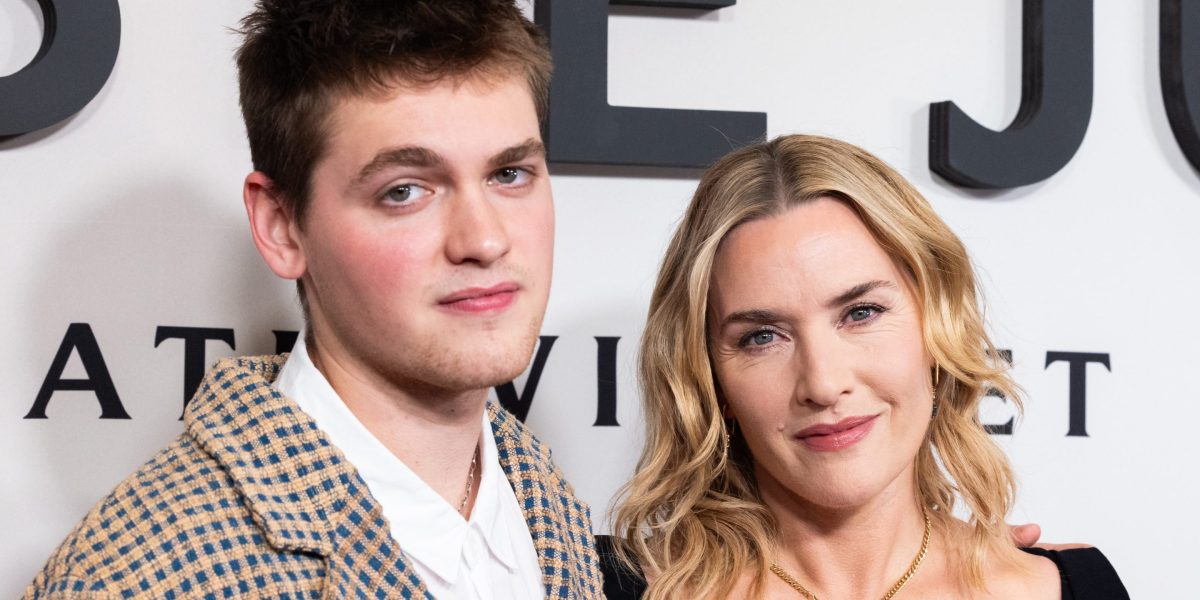
Kate Winslet blasts nepo baby label—she says her children aren’t able to ‘get jobs or gain respect’ just because of her fame and $65 million fortune

Published

on


No industry is a stranger to nepotism. Powerful business families have passed down their billion-dollar empires for generations, and the children of tech innovators have launched their own start-ups. Likewise, actress Kate Winslet’s children are now following in her footsteps, with the two Gen Zers pursuing Hollywood careers—but she’s adamant the Winslet name isn’t opening any doors.

“I don’t like the nepo baby term because these kids are not getting a leg up,” Winslet told the BBC in a recent interview while promoting her upcoming movie, Goodbye June

Perhaps ironically, the film’s screenplay which will hit Netflix on December 24, was written by her eldest son, 21-year-old Joe Anders.

And it wasn’t lost on them how their collaboration could be perceived, with Winslet’s son bracing for the nepotism allegations. 

“[Joe] would say to me, ‘I don’t want people to think that this film is just being made because you’re my mom,’” Winslet continued. “The film would have been made with or without me. The script is so, so good.”

The 50-year-old Academy Award-winning actress, estimated to be worth $65 million, slammed the nepo baby label altogether. She pointed out that children are naturally drawn towards what their parents do for work—whether that be taking over a family business, or continuing a multi-generational lineage of doctors.

“But that doesn’t necessarily translate to being able to actually get jobs and actually…gain respect from your peers and people around you,” Winslet added. 

“Both of them have separately carved their own paths and been able to do that, and part of it actually is teaching them to ignore the white noise of silly terms like nepo baby, which you can’t really do anything about.” 

Kate Winslet fans accuse actor of being in denial as her kids land coveted Hollywood jobs

Two of Winslet’s three kids have already made their Hollywood debuts. 

More recently, Anders starred alongside his mother in the 2023 film Lee; but his first major-motion picture role was in the Oscar-nominated movie 1917, directed by his father, Academy Award-winning director Sam Mendes. The Gen Zer has taken on both of his parents’ passions, with credits in both acting and screenwriting at just 21 years old. Writing scripts for Oscar-wielding actresses, and starring in films directed by the mind behind Skyfall and American Beauty, is no easy feat at such a young age. 

Meanwhile, Winslet’s daughter, 25-year-old Mia Threapleton, has made a splash in the indie film scene. Earlier this year she had a starring role in Wes Anderson’s The Pheonician Scheme. And just like Anders, she had the opportunity to act alongside her mother; she fittingly played Winslet’s daughter in the 2022 BAFTA-winning TV show I Am Ruth. Threapleton has also starred in Apple TV drama series The Buccaneers. 

Winslet’s youngest kid, 12-year-old Bear Blaze Winslet, has yet to star in any project. 

In the comments section of the BBC interview posted on social media, many people were quick to point out Winslet’s pull, citing “privilege” and industry connections as being instrumental to her kids’ success. 

“She seems to ignore reality: her children would almost certainly not have been able to become working actors if Kate weren’t their mother,” one commenter wrote. “There are hundreds of thousands of very talented young people out there, but they don’t have wealthy or famous parents who can provide connections. That doesn’t mean nepotism babies don’t have the right to pursue something creative.”

From Eric to Trump to Phoebe Gates, ‘nepo babies’ are everywhere

Family dynasties have cycled through generations of nepotism, from the Carnegies and Vanderbilts, to the Murdochs and Waltons. Even one of President Donald Trump’s sons, Eric Trump, conceded that “Nepotism is kind of a factor of life”—but stipulated that it doesn’t sustain his career running his father’s real estate business.

Phoebe Gates, the 23-year-old daughter of Microsoft cofounder Bill Gates, also recently entered the tech scene. She co-created AI-powered shopping tool Phia while studying at Stanford, drumming up the idea with roommate and cofounder Sophia Kianni. It launched in April 2025, amassing more than 500,000 users and 5,000 direct brand partners by September. The venture raised $8 million in seed funding, drawing celebrity investments from Hailey Bieber, Kris Jenner, Sheryl Sandberg, and Spanx’s Sara Blakely. Despite all her success, she understands the advantages that come with being a Gates—even if it’s an uncomfortable truth.

“I had so much insecurity and such a desire to prove myself,” Gates said during an episode of her podcast, The Burnouts. “I came in, I was like ‘I have so much privilege, I’m a nepo baby.’ I had so much insecurity around that. I feel like it’s so hard when you’re a freshman in college because you have no experience, you have nothing.”

And when it comes to passing down the family business, every successful parent has a different idea of when their kids are ready to take on their life’s work. Earlier this year, real estate tycoon Jorge M. Pérez succeeded his $40 billion business to his sons. However, Pérez didn’t simply hand over the keys to his empire; to sidestep nepotism claims and ensure that his company was in good hands, the entrepreneur made them prove their chops through 18 years of education and work. His kids had to get an MBA, work for a competitor for five years, and spend over a decade rising the ranks.

“When I felt particularly—beginning with Jon Paul—that they could come to work in the company, what I didn’t want is for people in the company to feel that they were entitled, that the reason that I gave them a position is because they were just my sons,” Jorge told Fortune earlier this year.



Source link

Continue Reading

Business

Walmart’s women truckers surge thanks to $115,000 starting pay and other perks bringing in nontraditional candidates

Published

on


While the rest of the trucking industry faces a driver shortage, Walmart has managed to boost its driver numbers with six-figure starting pay and other perks that are catching the eye of even non-traditional applicants.

The mega retailer, which has claimed the top spot on the Fortune 500 for the past 13 years, has increased its number of in-house truck drivers by 33% over the past three years in part thanks to better wages and benefits.

In 2022, it boosted drivers’ starting pay to around $115,000 from an average salary of $87,000 previously. At the high end, drivers can make $135,000 per year, according to a Walmart spokesperson. The 2024 median pay for heavy and tractor-trailer truck drivers was $57,440 per year, according to the Bureau of Labor Statistics

Apart from a pay increase, Walmart also uses technology that allows for more reliable schedules compared to other companies. While some in the trucking industry are away for weeks at a time, Walmart gives its drivers consecutive days off of work and assigns them regional delivery territories to allow them to be home every week, a Walmart spokesperson told Fortune.

These perks, along with the better-than-average pay, have increasingly helped the company expand its pool of drivers and include more women. Just 9.5% of truck drivers in the U.S. are women as of 2024, according to the Women in Trucking Index—that’s compared to an estimated 18% of drivers at Walmart, according to a study by workforce intelligence company Revelio Labs that was viewed by Fortune. Bloomberg first reported on the study.

Through a 12-week training program that helps store associates transition to the trucking industry, Walmart has also increased its number of women drivers, a spokesperson said. Around 1,000 people have gone through the program, Bloomberg reported, representing about half of the company’s new drivers.

Possibly due to its efforts, Walmart has a five percentage point oversupply of truck drivers compared to its demand, according to the study by Revelio Labs. 

Walmart’s efforts to bring in more drivers, including those with less experience, is pivotal as the broader trucking industry faces a driver shortage that is expected to bring a shortfall of 160,000 drivers by 2028, according to the American Trucking Association. The broader category of U.S. retail, currently faces a shortfall of drivers, with demand for drivers exceeding supply by seven percentage points, according to Revelio Labs.

Older truck drivers are retiring and younger people aren’t keen to jump into trucking partly due to the long hours and time away from home. A 1,000-person survey from heavy-duty truck parts company FinditParts found that a quarter of Americans would not become truck drivers no matter what pay they were offered. 

For Walmart, any disadvantage in its supply chain, including a driver shortfall, could put it at a disadvantage with Amazon, with which it has been increasingly competing with in recent years, especially with its Walmart+ membership.

Without enough drivers, supply chains are delayed and prices go up. Finding and retaining drivers is thus of the utmost importance for companies like Walmart, Paul Bingham, a director of transportation consulting at S&P Global Market Intelligence, told Bloomberg.

“Trucking companies will need more drivers,” he said. “and they’ll have to attract them from the non-traditional population cohorts.”


Source link

Continue Reading

Business

Trump was wrong about tariffs funding the ‘Warrior Dividend’ of $1,776—troops were already set to get the money

Published

on


The “Warrior Dividend” that President Donald Trump announced during his televised address to the nation Wednesday is not a Christmas bonus made possible by tariff revenues, as the president suggested.

Instead, the $1,776 payments to troops are coming from a congressionally-approved housing supplement — money they were already set to receive — that was a part of tax cut extensions and expansions bill signed into law in July. Trump’s administration identified the source of the “dividend” payments Thursday.

In his remarks, Trump alluded to his “One Big Beautiful Bill Act” playing a role, but suggested that tariffs were largely responsible for the payments already on the way to 1.45 million members of the military.

“We made a lot more money than anybody thought because of tariffs and the bill helped us along. Nobody deserves it more than our military,” he said in announcing what he described as a “dividend.”

Trump has teased the idea of using his sweeping tariffs on imports to give Americans dividends ever since he imposed them in April. But these new payments are being disbursed by the Pentagon from a $2.9 billion military housing supplement that was part of Trump’s “One Big Beautiful Bill Act” to augment existing housing allowances, according to a senior administration official who requested anonymity to describe the payments.

The amount of the payments is a nod to next year’s 250th anniversary of the signing of the Declaration of Independence in 1776. In total, the measure is expected to cost $2.6 billion.

Trump’s announcement comes as he’s faced pressure to show he’s working to address rising costs for Americans, with prices remaining stubbornly high as the president has imposed double-digit tariffs on imports from almost every country. Trump has promised to lower prices, but he has struggled to do so. Inflation hit a four-decade high in June 2022 during Joe Biden’s presidency and then began to fall. But inflation has stayed elevated under Trump in part because of his tariffs.

Separately, members of the U.S. Coast Guard will be getting a similar one-time payment, the Department of Homeland Security announced Thursday. The “Devotion to Duty” payments, authorized by Secretary Kristi Noem a day earlier, will be $2,000 because, unlike the “Warrior Dividend,” they are subject to taxes. The amount Coast Guard members take home will be closer to $1,776.

The payments, according to the Coast Guard, will be classified as “special duty pay.” They will be paid for with money in a measure Trump signed in November, after a 43-day shutdown, that funds the government through January.

It’s not the first time Trump has brandished ‘dividends’

Sending money to voters is a timeworn tool for politicians and one that Trump has repeatedly tried to use, including this year.

Trump has for months suggested every American could receive a $2,000 dividend from the import taxes — an effort that seemed designed to try to shore up support for tariffs, which the president has said protect American industries and will lure manufacturing back from overseas.

But that particular pledge appeared to exceed the revenues being generated by his tariffs, according to a November analysis by the right-leaning Tax Foundation. The analysis estimated that the $2,000 payments being promised to taxpayers could add up to between $279.8 billion and $606.8 billion, depending on how they were structured.

The analysis estimated that Trump’s import taxes would produce $158.4 billion in total revenue during 2025 and another $207.5 billion in 2026. That’s not enough money to provide the payments as well as reduce the budget deficit, which Trump has also claimed his tariffs are doing.

Earlier this year, as his Department of Government Efficiency was slashing the U.S. government and its workforce, Trump had briefly proposed sending a DOGE “dividend” back to U.S. citizens.

Neither the tariff dividend or DOGE dividend has come to fruition, and members of Trump’s own party as well as officials in his administration have expressed some skepticism about the idea. There is also the risk that the payments being promised by Trump could push up inflation, as they would likely spur greater consumer spending. Republican lawmakers argued in 2021 that the pandemic relief package from then-President Biden — which included direct payments — helped trigger the run-up in inflation.

___

Associated Press writers Rebecca Santana, Konstantin Toropin and Lisa Mascaro contributed to this report.


Source link

Continue Reading

Business

House Democrats release more Epstein photos, including Bill Gates and a dinner full of wealthy philanthropists

Published

on


House Democrats released several dozen more photos Thursday from the estate of the convicted sex offender Jeffrey Epstein, showing his associations with the rich and famous, as the Department of Justice faces a deadline to release many of its case files on the late financier by the end of the week.

The photos released Thursday were among more than 95,000 that the House Oversight Committee has received after issuing a subpoena for the photos that Epstein had in his possession before he died in a New York jail cell in 2019. Congress has also passed, and President Donald Trump has signed, a law requiring the Justice Department to release its case files on Epstein, and his longtime girlfriend and confidante Ghislaine Maxwell, by Friday. Anticipation about what those files will show is running high after they have been the subject of conspiracy theories and speculation about his friendships with Trump, former President Bill Clinton, the former Prince Andrew, and others.

House Democrats have already released dozens of photos from Epstein’s estate showing Trump, Clinton and Andrew, who lost his royal title and privileges this year amid scrutiny of his relationship with the wealthy financier. The photos released Thursday showed Epstein cooking with Sultan Ahmed bin Sulayem, an Emirati businessman. The photos also include the billionaire Bill Gates and images of a 2011 dinner of notable people and wealthy philanthropists hosted by a nonprofit group. The committee made no accusations of wrongdoing by the men in the photos.

There were also images of passports, visas and identification cards from Russia, the Czech Republic, Ukraine, South Africa and Lithuania with personally identifying information redacted, as well as photos of Epstein with women or girls whose faces were blacked out. The committee has said it is redacting information from the photos that may lead to the identity of victims being revealed.

Rep. Robert Garcia, the top Democrat on the oversight panel, said in a statement that the “new images raise more questions about what exactly the Department of Justice has in its possession. We must end this White House cover-up, and the DOJ must release the Epstein files now.”

Join us at the Fortune Workplace Innovation Summit May 19–20, 2026, in Atlanta. The next era of workplace innovation is here—and the old playbook is being rewritten. At this exclusive, high-energy event, the world’s most innovative leaders will convene to explore how AI, humanity, and strategy converge to redefine, again, the future of work. Register now.


Source link

Continue Reading

Trending

Copyright © Miami Select.