Connect with us

Fashion

Zara turns to AI to generate fashion imagery using real-life models

Published

on


By

Reuters

Published


December 18, 2025

Zara has become the latest fast-fashion retailer to use AI to help create new images of real models in different outfits, speeding up the production process as part of an industry shift that could have a major impact on fashion photography.

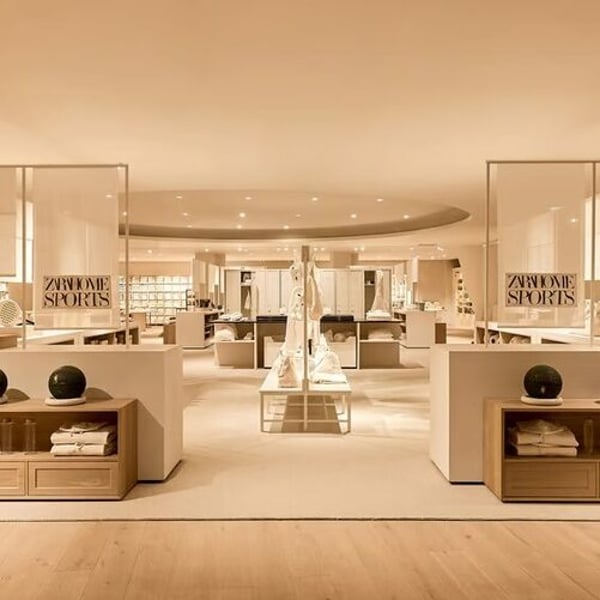
Inside a Zara store

Zara’s AI experimentation follows Swedish rival H&M, which earlier this year said it had created AI clones of models to use in marketing. European online fashion ⁠retailer Zalando is also using AI to create imagery faster.

“We are using artificial intelligence only to complement our existing processes,” a spokesperson for ⁠Zara owner Inditex said in a statement. “We work collaboratively with our valued models- agreeing any aspect on a mutual basis- and compensate in line with industry best practice.”

Zara’s move was first reported by London business-focused newspaper ‍CityAM, which ‌cited an unnamed model saying Zara asked for approval to edit images of them ⁠with AI to show different items, ‌and that they were paid the same amount as if they ‌had travelled for another photo shoot.

H&M and Zalando, like Inditex, have said AI would complement their creative teams’ processes and help them be more efficient rather than replacing them, downplaying the risk to photographers and production teams who work on fashion shoots. Inditex chair ‍Marta Ortega, daughter of the founder Amancio Ortega, has spoken in interviews about her passion for fashion photography.

Since 2021 her MOP (Marta Ortega Perez) Foundation gallery in A Coruna, the town in ‌northern Spain ⁠where ​Zara was founded, has hosted exhibitions showcasing the work of major photographers. It is ⁠currently ​showing Annie Leibovitz’s fashion photography, and previous exhibitions have spotlighted photography greats Steven Meisel– with whom Zara has worked extensively- and Helmut Newton.

Ortega has tried to move Zara upmarket, cutting ​store numbers to focus on fewer, bigger flagships with a more spacious, sophisticated feel. Isabelle Doran, CEO of the Association of Photographers in London, said ⁠the use of AI would reduce the ⁠number of times photographers, models, and production teams are commissioned, impacting a whole ecosystem of established professionals as well as early-career fashion photographers trying to get a foothold in the industry.

© Thomson Reuters 2025 All rights reserved.


Source link

Continue Reading

Fashion

Lululemon to enter six new markets in 2026

Published

on


Published


December 19, 2025

Lululemon announced on Thursday plans to expand its international footprint in 2026 with six new market entries, marking the largest number of new country launches the brand has undertaken in a single year. 

Lululemon to enter six new markets in 2026. – Lululemon

The expansion will be carried out through Lululemon’s new franchise partnership model and will include entries into Greece, Austria, Poland, Hungary and Romania, alongside a previously announced move into India.

The European launches will be executed in partnership with Arion Retail Group, while Lululemon’s entry into India will be supported by a partnership with Tata CLiQ. 

Consumers in Greece, Austria, Poland, Hungary and Romania will be able to shop Lululemon’s full assortment online, while customers in India will have digital access through Tata CLiQ Luxury and Tata CLiQ Fashion. Physical retail plans, including store locations and opening timelines, will be announced in the new year.

Community engagement will remain central to Lululemon’s expansion strategy, with the brand planning to extend its ambassador network and host local events focused on movement and wellbeing as it enters new regions.

“As we continue to see strong demand for the Lululemon brand around the world, we’re thrilled to grow our presence and communities across Europe and Asia Pacific with entry into six new markets in 2026,” said Sarah Clark, senior vice president, EMEA, Lululemon. 

“Each of these markets offer exciting potential for our brand, and we look forward to working with our franchise partners to introduce our innovative products and engaging guest experiences to more consumers in these regions.”

The upcoming launches represent the latest step in Lululemon’s international growth strategy. The company currently operates in more than 30 markets globally, spanning North America, EMEA, Asia Pacific and mainland China. The new entries follow Lululemon’s expansion into Italy earlier this year, as well as recent franchise-led openings in Denmark, Turkey and Belgium.

Copyright © 2025 FashionNetwork.com All rights reserved.


Source link

Continue Reading

Fashion

Nike edges past quarterly revenue expectations on resilient demand

Published

on


By

Reuters

Published


December 18, 2025

Nike on Thursday edged past market expectations for quarterly revenue, helped by resilient demand for its running shoes amid a big marketing push to fend off stiff competition from upstart brands in North America.

Reuters

The company reported second-quarter revenue of $12.43 billion, compared with analysts’ average estimate of $12.22 billion, according to data compiled by LSEG.

Nike is returning to wholesalers, ⁠after it had reduced exposure to the channel for some time, and refreshing its product lines to focus on ⁠categories such as running and basketball, as it tries to reclaim its sporting roots under CEO Hill’s extensive turnaround plan.

The company is also investing in introducing product lines such as ‍its ‌NikeSKIMS partnership with Kim Kardashian‘s brand as well as announcing a motorized ⁠footwear system to help casual ‌athletes and mobility-impaired people move faster.

However, tariffs on imports from ‌Vietnam, where the world’s largest footwear company manufactures around 50% of its shoes, have continued to pressure Nike’s margins.

Increasing its exposure at wholesalers has also hit margins, even though the company has been introducing fresher, ‍higher-priced products at its direct-to-consumer channels.

Executives noted in September that Nike’s recovery would not be linear, as in the current economic environment, consumers have turned ‌increasingly picky ⁠about ​spending big bucks on non-essential items with tariffs and ⁠inflation squeezing ​budgets.

The need to stay relevant through sleek marketing campaigns and innovation in its product lines has become more pressing for apparel makers, with companies ​such as yogawear maker Lululemon also losing ground to newer brands such as Vuori and Alo Yoga.

Nike’s gross margin ⁠for the quarter ended November 30 ⁠fell 300 basis points, compared with a 320 basis points fall in the preceding three-month period.

© Thomson Reuters 2025 All rights reserved.


Source link

Continue Reading

Fashion

Kering announces ‘phased’ acquisition of jewellery components manufacturer Raselli Franco Group

Published

on


Published


December 18, 2025

“This acquisition marks a strategic step for Kering and illustrates our ambition in the jewellery sector”: for his first acquisition at the helm of Kering, Luca de Meo, CEO of the French luxury group since September, has opted for an Italian player. On Thursday, the group announced the “phased” acquisition of Raselli Franco Group, an Italian company specialising in the manufacture of jewellery, with the aim of taking full ownership by 2032.

Kering to gradually increase its stake in the Raselli Franco Group – Raselli Franco

The first stage of this progressive acquisition will take place in 2026, in a transaction that values the company— a long-standing Kering partner based in Valenza, between Milan and Turin, with offices in Paris, the United States, Canada, China and Hong Kong— at around 575 million euros.

“The acquisition will be carried out in several stages, starting with an initial stake of 20% in the first quarter of 2026, for an amount of 115 million euros,” the group said in a statement, stressing that the agreement envisages full ownership by 2032.

“By securing essential production capacity for our jewellery business, this partnership will strengthen our value chain and accelerate the growth of our Houses,” said de Meo in the press release. Kering owns the Boucheron, Pomellato, DoDo and Qeelin jewellery brands.

Founded in 1969, Raselli Franco Group is internationally recognised for its expertise and capacity for innovation in jewellery prototyping and manufacturing, according to Kering.

The company spans the entire value chain, from sourcing raw materials and precious stones to research and development, design, component creation, assembly and quality control, the luxury group said.

In the first nine months of the year, Kering’s sales fell by 14% to 11 billion euros, but in the third quarter, the jewellery brands posted “very solid momentum, with double-digit revenue growth”, the group said when presenting its results. The segment recorded double-digit growth, with Boucheron cited as the growth driver, performing particularly well in the United States and Asia-Pacific. As for Pomellato and Qeelin, commentary was positive on the development of both brands.

With AFP

This article is an automatic translation.
Click here to read the original article.

Copyright © 2025 FashionNetwork.com All rights reserved.


Source link

Continue Reading

Trending

Copyright © Miami Select.