Connect with us

Business

CellVoyant debuts AI platform that could slash the cost of CAR-T and other cell-based treatments

Published

on


CellVoyant, a U.K.-based startup, has launched an AI platform that allows scientists to predict the future health and performance of human cells based on their appearance in microscope images—a breakthrough that could sharply reduce the cost of cell-based medical therapies.

A growing number of treatments for diseases ranging from cancer to Parkinson’s to diabetes depend on modified human cells as the core component of the treatment. These include CAR-T, where a patient’s own immune cells are extracted, genetically reprogrammed outside the body so that they can recognize and destroy cancer cells, and then reinjected into the patient. The category also includes various stem cell-based therapies.

Currently, these cell-based therapies are among the most expensive medications available. CAR-T treatments, for example, often cost hundreds of thousands of dollars per dose.

Part of the reason they are so costly is due to the labor-intensive, highly sensitive, and relatively wasteful process that is required to produce them. Scientists have to culture a lot more cells than they need, because some of the cells will not be healthy enough or exhibit the right properties to make a good treatment dose. Although it is possible to determine some aspects of cell health simply by “eyeballing” the living cells under a microscope, scientists usually cannot gauge which cells are best without performing tests on samples, usually killing those cells being tested in the process. Then they have to hope that the cells they tested are actually representative of the other cells in the culture, which is not always the case. And while tests assess a cell’s current condition, they can’t predict how the cell will develop in the future. Sometimes entire cell lines fail to perform and have to be discarded. Sometimes an entire treatment dose winds up being ineffective. All of this adds to the cost of the treatments.

CellVoyant’s new product, a platform called FateView, aims to significantly reduce the waste in this process by using AI models it has trained to classify cells by their current qualities and, critically, predict which cells will possess the right qualities in the future, simply by analyzing microscope-based imagery of the cells that use regular, white light. Currently the platform can do this for 10 different cell types—including stem cells, T-cells, cardiac cells, and blood cells—and the company is planning on training its models to work with more in the future.

Predicting cells’ behavior

The company’s platform can, according to CellVoyant, instantly identify which cells are currently exhibiting certain biomarkers, predict how well individual cells will express certain genes in the future, and forecast how well stem cells will differentiate into specific cell types—all from white light microscope images, without having to perform chemical tests that are time-consuming and can destroy cells in the process.

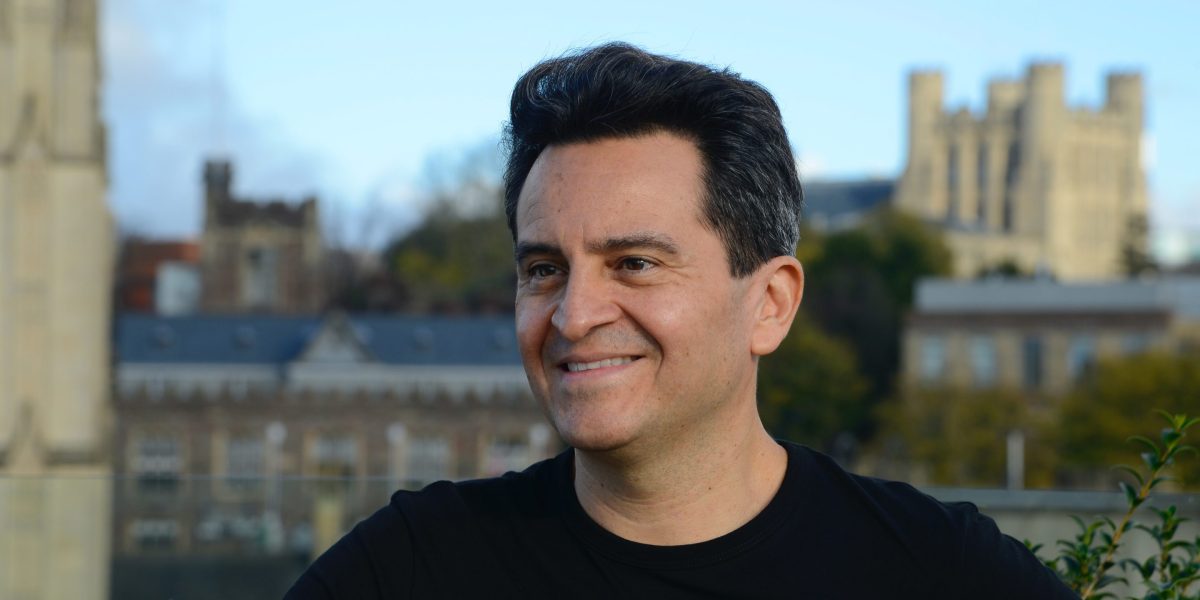
“We can see, understand and predict how cells behave without having to destroy them,” Rafael Carazo Salas, CellVoyant’s founder and CEO, said. He said FateView could predict a cell’s quality hours, days, or even weeks out from its present state. That should allow scientists and the companies producing cell lines for therapy to be much more selective in deciding which cells should progress, eliminating waste, improving the chances of success, and ultimately, lowering costs.

Carazo Salas gives the example of scientists who produce specific cell-types from stem cells—which has the potential to revolutionize the treatment of everything from Type 1 Diabetes to heart disease. This complex process can take weeks and the yields of usable cells tend to be low, he said. But he said CellVoyant had been able to reduce the costs of what’s called cell derivation—making those specific cell types from stem cells—by up to 80% simply by better predicting at each stage of the process which cells are most likely to progress well. Because some of these cell therapies currently have price tags approaching $1 million, that cost savings is game-changing, meaning that many more people (or their insurance companies) will be able to pay for these treatments, he said.

Photo courtesy of CellVoyant

And it’s not just cell-based therapies that depend on healthy cells. The challenge of predicting cell health is also relevant for many “biologic” drugs, which are usually proteins produced by bacteria or other kinds of cells that are then harvested, and even in the case of cells needed to test the effects of the small molecules that make up the majority of pharmaceuticals. “Whether using cells to discover drugs, as a measuring device, or using cells as a factory to produce biologics, or cells as a drug, as in case of cell therapy, the unit economics is defined by cells,” Carazo Salas told Fortune. “The cost is defined by cells, batch to batch. Variation is what accounts for a lot of the cost in the industry.”

CellVoyant is making its FateView system available through a simple online interface that lets scientists upload microscope images of cells to be analyzed, as well as through an API (application programming interface) for companies that need to analyze high volumes of samples, possibly as part of a robotic laboratory workflow. Academic users will be able to access the platform for a nominal fee, while biotech and pharmaceutical companies are charged  an annual subscription, which gives them the right to store their data securely, as well as a relatively low per-use charge. 

Carazo Salas, who is also a professor of cellular and molecular medicine at the University of Bristol, in England, said CellVoyant was able to train AI models to characterize cells and predict their behavior because it had access to a large database of microscope images of the same cells taken over time, as well as the results of traditional chemical assays on cells taken at different stages of development. This time-series data allows the models to learn how the shape and visual characteristics of a cell at any point relate to its current function, as well as how it relates to its future appearance and function. The company trains a specific model for each cell type it works on—for instance, a separate model for cardiac cells and one for metabolic cells—although it is possible that in the future a single foundation model might be able to learn how to make predictions about any cell type, Carazo Salas said.

CellVoyant, whose name is a portmanteau derived from the words “cell” and “clairvoyant,” was spun out of the University of Bristol in 2021. In 2023, it received £7.6 million ($10.1 million) in seed funding from Octopus Ventures, Horizon Ventures, Verve Ventures, and Air Street Capital. 

FateView marks CellVoyant’s first major commercial product release. Previously, the company has worked with specific biotech and pharma partners, only some of which it can name, Carazo Salas said.

One of its early customers is Rinri Therapeutics, a biotech company in Sheffield, England, that is working on a cell-based regenerative therapy for hearing loss. Terri Gaskell, the chief technology officer at Rinri Therapeutics, said in a statement that CellVoyant’s platform had enabled it to predict “cell behavior in ways that haven’t been possible before.” Gaskell said that with help from CellVoyant, the company “hope[s] it will be possible to scale production [of cells] more efficiently and make it significantly more cost effective, [and] ultimately bring restorative cell therapies closer to those with hearing loss that need them most.”


Source link

Continue Reading

Business

LinkedIn CEO says it’s ‘outdated’ to have a five-year career plan

Published

on


One of the most common pieces of career advice is you should always have a five-year plan mapped out. It’s a way to set targets, stay on track, and advance in your career. But LinkedIn’s CEO says that’s “outdated,” considering the state of today’s job market. 

“You’ll hear people frequently say, ‘Hey, you have to have a five-year plan, like, chart out what the next five years of your life are going to look like, and then follow that path and follow that plan,” Ryan Roslansky said during a recent No One Knows What They’re Doing podcast episode

“And in reality, when you know technology and the labor market and everything is moving beneath you, I think having a five-year plan is a little bit foolish,” the LinkedIn CEO continued. 

Being the chief executive of one of the most popular career-focused social media and job-search platforms since 2020, Roslansky has witnessed countless career paths from users—especially in a tumultuous job market challenged by the pandemic, different administrations, layoffs, tariffs, inflation, and more. 

But one of the most recent and prominent transformations to the job market is the introduction of AI. Because technology is changing the workplace at such a rapid pace, Roslansky suggested professionals make shorter-term career goals instead of focusing on years down the road. Data from the World Economic Forum supports Roslansky’s argument the workplace is changing rapidly—and therefore people need to stay more agile about mapping their careers. Workers can expect roughly 39% of their core skills to be transformed or become obsolete by 2030, according to WEF. 

“I would much recommend people focus on maybe the next few months and a couple of things that aren’t a plan, but [rather] what do you want to learn? What type of experiences do you want to get? That’s, I think, the right mental model in this environment,” he said. 

Other career experts still subscribe to the necessity of a five-year plan, arguing “career growth doesn’t just happen by accident,” and more intensive planning helps people actually reach their goals. 

“Five-year plans also give you the flexibility to change what’s no longer relevant to your long-term goals, without derailing your progress,” talent management executive Mary McNevin told Arielle Executive. “This way, you’re always working toward what you truly want to achieve.”

But Roslansky is so dedicated to this idea he hosts his own podcast called The Path, which is focused on how professionals take on a variety of career paths that aren’t necessarily linear. 

“A lot of people just believe that there’s some linear career path that you jump on,” he said. “You know, you graduate high school and then go to a certain college and then you become a consultant and then get an MBA. People believe that’s how it happens.”

Armed with insights and data from his own company, Roslansky knows a linear education and career is not the reality for most people. In fact, a recent report from vocational and education provider TAFE Gippsland shows people, on average, go through three-to-seven career changes throughout their lifetime—and 16 job changes. 

And this trend is especially evident in Gen Z, who changes jobs, on average, every 1.1 years, according to a recent report by recruiting firm Randstad. The firm calls this “growth-hunting,” and not “job-hopping,” though, because Gen Z says they change jobs because they sense a lack of progression in their current roles.

“If you focus on those shorter steps, gaining learning, gaining experience, a lot of your career path will open up for you,” he said. “And the sooner you realize that, you can take your own career into your own hands. No one is trying to figure this out for you.”


Source link

Continue Reading

Business

Down Arrow Button Icon

Published

on


IT service was built to bring structure to chaos. But for many organizations today, it’s become a source of it. The ticket queues keep growing. Processes feel rigid. And employees often feel frustrated by systems that seem stuck a decade behind.

The numbers reflect this pain, with 40% of organizations either replacing or re-implementing their IT service tools in 2025. This is a clear sign that the model is cracking and needs to be reimagined. Meanwhile, 58% of organizations say their IT team spends more than five hours each week fulfilling repetitive requests. Something has to give.

Today’s businesses are agile. Customers expect instant fixes, and artificial intelligence (AI) is redefining how work gets done. The problem? Many IT processes haven’t kept up. They’re still burdened by manual, outdated workflows that slow everyone down, with a recent report citing that 45% of organizations consider repetitive tasks as their top IT service challenge in 2025. To stay relevant, IT must evolve from a back-office function into a strategic driver of business growth.

Here are the three biggest challenges holding IT service back and how forward-thinking teams can help solve them:

1. The manual workload trap

For most IT teams, the day begins and ends with manual tasks: logging incidents, assigning tickets, documenting fixes, and updating records. These repetitive processes drain time and productivity. In fact, 90% of IT leaders say manual, repetitive work contributes to low employee morale.

The impact runs deep. Skilled analysts are pulled away from strategic work. Projects stall. Employee burnout rises. And IT ends up perceived as a cost center, not an enabler.

The fix starts with automation, but not just rule-based automation. The next generation of IT service is built on intelligence, context-aware systems that can actually understand what someone needs. For example, when an employee messages IT about a problem, the system can pick up the key details, create a ticket, and send it to the right person automatically. Instead of humans chasing data, the system does it for them.

This shift doesn’t replace people; it refocuses them. Analysts can now spend time on important work like diagnosing complex issues or improving processes, not copy-pasting tickets.

2. The employee experience gap

The modern workplace runs on collaboration platforms like Slack and Teams. Yet most IT service tools still live outside of where people actually work. Employees have to leave their workflow, open a portal, fill out forms, and wait. Often, they do this without any visibility into what happens next.

The result? Low engagement. In many companies, a large number of IT issues go unreported because the process feels too painful. In fact, 62% of employees say they avoid their service desk altogether, and 58% admit they’re living with ongoing problems that IT hasn’t been able to fix, according to a recent survey.

IT analysts feel this friction, too. The conversations that matter (troubleshooting, context gathering, updates) happen in chat threads, while the official records live in a different system. That constant switching between tabs slows everything down.

Modern IT leaders are closing this gap by bringing IT service into the collaboration layer. When employees can request help and track issues directly in the places where they collaborate and work, like Slack or Teams, context stays intact and work keeps moving. With AI agents now built into these platforms, they can simply ask for what they need in natural language, just like chatting with a colleague or a ChatGPT-style interface. The result: IT becomes an active part of daily work, not a separate system to avoid.

It’s a cultural shift as much as a technical one, aligning IT with how employees actually communicate. And it pays off: 71% IT leaders believe that AI or intelligent automation will improve employee and customer satisfaction in IT service.

3. Rigid processes in a dynamic world

If there’s one phrase that frustrates every IT leader, it’s this: “This is just how the system works.”

Traditional IT service frameworks often lock teams into fixed workflows. Need to adjust an approval process for a new compliance rule? Add a custom step for a high-priority change type? Often, it takes weeks of development or costly consultants to make even minor updates.

The irony is that IT service, meant to bring flexibility to operations, has become one of the least agile systems in the enterprise stack.

What’s changing now is the rise of low-code and adaptive workflows. Platforms like Salesforce, ServiceNow, and other modern ITSM tools let teams design and modify processes without deep coding expertise. Instead of rigid, hard-coded systems, IT can define dynamic lifecycles where each stage has its own rules, tasks, and access controls. Approvals can adapt automatically based on risk or impact. And integrated analytics help teams see what’s working and where bottlenecks form.

Rethinking IT service for what’s next

The IT service of the future won’t just manage incidents and changes. It will orchestrate intelligent workflows across the enterprise. Employees will interact with IT the same way they use any modern app — conversationally, contextually, and instantly. IT teams will focus less on maintaining systems and more on improving outcomes.

We’re already seeing the blueprint: automation reducing manual load, Slack-first collaboration improving experiences, and flexible frameworks enabling adaptation. Together, these shifts are redefining what IT service can be, turning it from a support function into a strategic partner for every department.

The challenge isn’t technology anymore. It’s the mindset. Modern IT service isn’t about keeping the lights on. It’s about lighting the way forward.

The opinions expressed in Fortune.com commentary pieces are solely the views of their authors and do not necessarily reflect the opinions and beliefs of Fortune.


Source link

Continue Reading

Business

North Korea stole a record amount of crypto—again: report estimates its hackers’ 2025 haul at $2 billion

Published

on


A massive amount of crypto was robbed this year, and most of it went to North Korea. The country accounted for roughly 59% of the more than $3.4 billion in stolen crypto, according to Chainalysis’ 2026 Crypto Crime Report released on Thursday. 

“North Korea’s sophistication and efficacy in laundering the proceeds from these incidents is continuing to improve,” said Andrew Fierman, head of national security intelligence at Chainalysis. “The industry needs to continue ensuring that they have better security controls.”

The report was released at a time when investing in crypto has become mainstream. More people own crypto, and because crypto transactions are irreversible, individuals and exchanges are increasingly becoming targets. 

Chainalysis is a private analytics firm that aims to create transparency about the blockchain. It helps government agencies seize and disrupt illicit activity, and helps private crypto companies with compliance. The company has released the report annually since 2019. 

North Korea broke its own record of yearly money stolen in crypto, and it did so in creative ways. The country had its own citizens work as IT employees at crypto companies, where they used AI to pretend they were working from another country, like the U.S. These employees then gained access to privileged information and caused large-scale breaches. North Koreans also used a method called social engineering, where they sent emails and text messages to people with crypto. If those individuals clicked on the wrong link, the hacker could access their private wallets. 

The biggest crypto hack in history occurred in February, when Bybit, one of the largest crypto exchanges, lost $1.4 billion. The Federal Bureau of Investigation quickly declared North Korea responsible for the theft. That attack accounted for roughly 40% of the total amount of crypto heists this year. Chainalysis found that large-scale attacks dominated in 2025, as more than two thirds of stolen funds came from just three hacks. 

The report also highlights the rise of personal wallet compromises. There were 158,000 such incidents in 2025, roughly tripling since 2022. This includes high-profile physical attacks on crypto owners, often known as wrench attacks. Earlier this year, kidnappers severed the finger of the cofounder of a Paris-based crypto wallet firm, demanding a ransom. 

“If you’re online, talking about your success in crypto investments, I’d recommend not doing that,” Fierman said. “It points to you potentially having a hardware wallet and creates a physical target for you as an individual.”


Source link

Continue Reading

Trending

Copyright © Miami Select.