Connect with us

Business

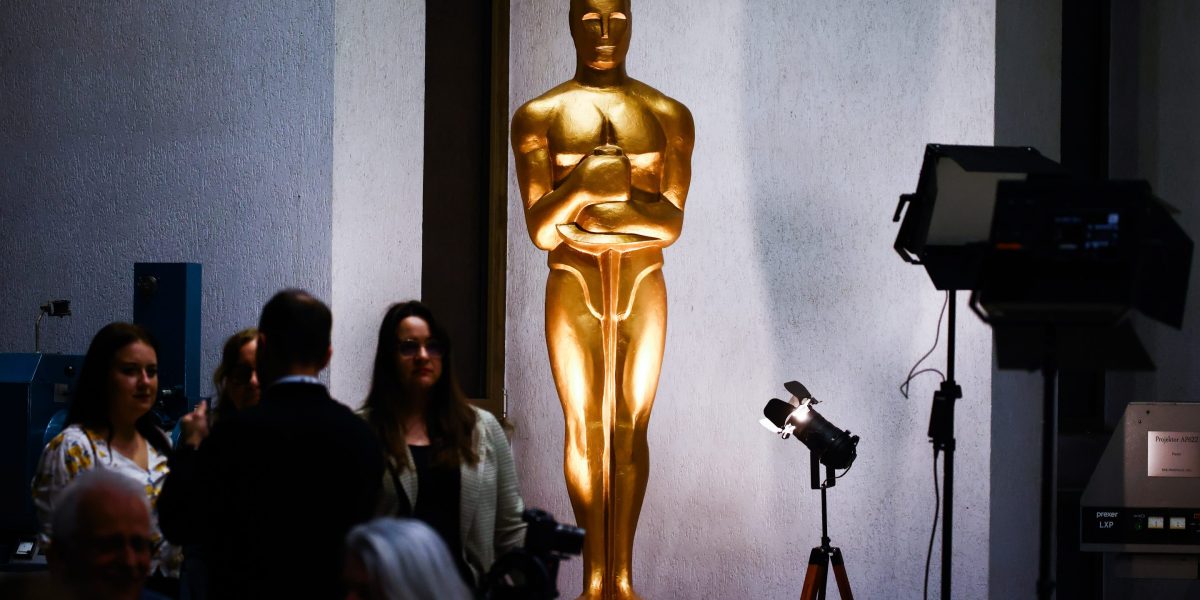
YouTube is giving the Oscars the lifeline it desperately needs

Published

on


The Academy Awards, once television’s most glamorous night, have been hemorrhaging viewers for decades. On Wednesday, the Academy of Motion Picture Arts and Sciences announced a tourniquet: a multiyear deal granting YouTube exclusive global streaming rights to the Oscars from 2029 through 2033, ending a partnership with ABC that began in 1976 and fundamentally altering how Hollywood honors itself.

The shift represents a clear acknowledgment of the ceremony’s diminished grip on American culture. Oscar viewership peaked in 1998, when 55 million people tuned in to watch “Titanic” sweep the awards. The 2025 broadcast, meanwhile, drew 19.7 million viewers—a five-year high, but barely a third of that peak.

The Academy had been exploring alternatives as ABC’s contract neared its 2028 expiration, and YouTube’s bid evidently surpassed what traditional broadcasters offered.

“We are thrilled to enter into a multifaceted global partnership with YouTube to be the future home of the Oscars and our year-round Academy programming,” said Academy CEO Bill Kramer and Academy President Lynette Howell Taylor in a joint statement. “The Academy is an international organization, and this partnership will allow us to expand access to the work of the Academy to the largest worldwide audience possible—which will be beneficial for our Academy members and the film community.”

That global reach is the heart of the calculation. YouTube boasts more than two billion viewers worldwide, and the ceremony will stream live and free to all of them, plus YouTube TV subscribers in the United States. The platform will provide closed captioning and audio tracks in multiple languages—accessibility features that reflect how younger audiences consume content.

YouTube CEO Neal Mohan framed the partnership as both preservation and evolution. “The Oscars are one of our essential cultural institutions, honoring excellence in storytelling and artistry,” Mohan said. “Partnering with the academy to bring this celebration of art and entertainment to viewers all over the world will inspire a new generation of creativity and film lovers while staying true to the Oscars’ storied legacy.”​

The deal includes more than the main telecast. YouTube gains rights to red-carpet coverage, behind-the-scenes programming, the Oscar nominations announcement, Governors Ball access, Academy member interviews, film education programs, and podcasts. It also becomes the exclusive worldwide home for the Governors Awards, Student Academy Awards, and Scientific and Technical Awards—ceremonies that previously received little attention.

Financial terms were not disclosed, but the arrangement makes the Oscars the first of entertainment’s “big four” awards shows—the Oscars, Grammys, Emmys, and Tonys—to abandon broadcast television entirely. ABC will continue airing the ceremony through 2028, which includes the milestone 100th Oscars, before ceding the stage.

The move underscores a broader migration of live events to streaming platforms. YouTube already commands the largest share of U.S. streaming television viewership, according to Nielsen. And while Netflix has acquired rights to the SAG Awards, the Oscars represents a far more significant prize: Hollywood’s ultimate brand.

Industry reaction has been divided. Some view it as necessary modernization. Others see symbolism in the ceremony’s demotion from network television’s primetime throne to a free platform where viewers routinely skip pre-roll ads. Screenwriter Daniel Kunka captured the anxiety on X: “Broadcasting the Oscars on YouTube is like shaking hands with the guy who’s trying to kill you.”​


Source link

Continue Reading

Business

Down Arrow Button Icon

Published

on


Welcome to Eye on AI, with AI reporter Sharon Goldman. In this edition, I compare OpenAI to a house made of…well, no one really knows. Also: OpenAI launches a ChatGPT app store (we’ll see if it fares better than their previous custom GPT store)Google debuts a surprisingly powerful Flash version of its Gemini 3 model…and the U.K. AI Safety Institute finds that a large percentage of Britons have used chatbots for emotional support.

Talk about an expensive building project. OpenAI is reportedly raising tens of fresh billions at a $750 billion valuation, including $10 billion from Amazon. It is pouring money into compute — and literally pouring concrete into the data centers that power AI chips—which the company says it needs to keep constructing the towering stack of models and applications that more than 800 million users now rely on.

The cost has inspired both awe and deep unease. Industry observers watch OpenAI’s expansion the way they might watch the Empire State Building rise — with a budget that keeps climbing as fast as the structure itself. (The actual Empire State Building, it’s important to note, only cost about $700 million in today’s money and came in under budget.) And some skeptics are increasingly convinced that the entire edifice is a monument to hubris that will come tumbling down before long. 

Here’s how I think about it: If OpenAI is a house, it’s still in the early stages of construction — but no one agrees what it’s made of. The plans are undeniably ambitious, pushing the structure to unprecedented heights. Is this a house made of cards? Of teetering wooden pillars? Of solid concrete? The question is whether whatever structure is being built can actually hold the weight already being placed on it.

The experts are split

That uncertainty has split the experts I’ve spoken to. Technology analyst Rob Enderle said he would like to see OpenAI resting on a firmer foundation. “I would feel much more comfortable if they had a much stronger base in some of the basics,” he told me, particularly around making products trustworthy enough for enterprise businesses to increase adoption. He added that OpenAI has at times “gone off the rails” in terms of direction, pointing out that the company’s original independent safety and ethics oversight structures have been sidelined since CEO Sam Altman was reinstated after being briefly fired in November 2023. These days, he argued, OpenAI is trying to compete with everyone at once; reacting to rivals rather than executing a clear roadmap; and spending heavily without clear prioritization. 

A recognition that it may have become distracted by trying to do much at once was part of the reason OpenAI CEO Sam Altman declared a “code red” at the company two weeks ago, as Fortune reported in an in-depth new feature this week. The story looks at the why, the how, and the what of OpenAI’s “code red” and why Altman has warned the company to brace for “rough vibes” and economic headwinds in the face of increased competition from Google and OpenAI. Altman is trying to light a fire under his team to refocus on OpenAI’s core ChatGPT offerings over the coming weeks. But, according to Enderle, this is all very reactive and not strategic enough.

Commenting on the company’s constant shipping — from new AI models and a new image generation model, to a web browser, shopping features inside ChatGPT, and a new app ecosystem launched just this week — alongside a massive Stargate data-center buildout, Enderle compared OpenAI to Netscape and other dot-com companies that got rich too fast and lost strategic discipline.

“They’re running so fast, they’re not really focusing on direction very much,” he said.

Others, however, strongly disagree. Futurum Research founder and CEO Daniel Newman told me that concerns about OpenAI’s house collapsing miss the bigger picture. “This is a multi-decade supercycle,” he said, likening the company’s current phase of AI to Netflix’s DVD-by-mail era — a precursor to the true paradigm shift that followed. From the perspective of unmet demand and long-term value creation, Newman believes OpenAI’s massive compute investments are rational, not reckless.

“I would call what [OpenAI] has today very high-quality three-dimensional simulations and architectural renderings of a future,” Newman said. The real question, he added, is whether OpenAI can win enough market share to build the mansion it’s envisioning.

“I think OpenAI’s real goal is to become a hyperscaler,” Newman said. “They’ll have the infrastructure, the applications, the data, the workflows, the agentic tools — and people will buy everything they now get elsewhere from OpenAI instead. It’s an incredibly ambitious goal. There’s nothing to say it will work. But if it does, the numbers make sense.”

Searching for stickiness, or glue

Lastly, I spoke to Arun Chandrasekaran, principal analyst at Gartner Research, who chuckled and ducked away from my house metaphor, but was willing to address whether OpenAI was at least building on solid ground. 

“They are indeed growing really fast, and they are making an enormous amount of commitments far beyond what any company [of their size] has ever made,” he said. “It is a risky bet, I would argue, a strategy that does not come without risks.” A lot of it is predicated on how sticky their products are, he pointed out, both at the model and application layer. 

“It depends on the switching costs from a customer perspective, and a few other factors in terms of whether the growth really pans out the way they’ve envisioned,” he said. “You’re talking about a high growth company, but the expectation is that they’re going to have to grow at a much faster clip than what they’re growing. The expectations are enormous.” 

Stickiness, I said. Like glue? Nails? Something to hold the house up?

He laughed. “Yes — like glue. I say stickiness, you say glue.”

And with that, here’s more AI news.

Sharon Goldman
sharon.goldman@fortune.com
@sharongoldman

FORTUNE ON AI

Amazon CEO Andy Jassy announces departure of AI exec Rohit Prasad in leadership shake-up–by Sharon Goldman

Experts say Amazon is playing the long game with its potential $10 billion OpenAI deal: ‘ChatGPT is still seen as the Kleenex of AI’–by Eva Roytburg

Microsoft, Apple, Meta, and Amazon’s stocks are lagging the S&P 500 this year—but Google is up 62%, and AI investors think it has room to run—by Jeff John Roberts and Jeremy Kahn

U.K. startup CellVoyant debuts AI platform that could radically reduce the cost of cell-based therapies such as CAR-T immunotherapy for cancer–by Jeremy Kahn

Exclusive: Swedish startup automating mechanical, electrical, and plumbing design for commercial buildings raises $20 million in seed round—by Jeremy Kahn

Exclusive: Palantir alums using AI to streamline patent filing secure $20 million in Series A venture funding—by Jeremy Kahn

AI IN THE NEWS

ChatGPT to accept app submissions.  OpenAI has opened app submissions for ChatGPT, letting developers submit apps for review and publication and giving users a new in-chat app directory to discover them—but the move comes a couple of years after the company’s earlier plug-ins experiment, built around custom GPTs, which never fully took off. The new apps are designed to extend conversations with real actions, like ordering groceries or creating slide decks, and can be triggered directly inside chats, with OpenAI positioning them as more tightly integrated and easier to use than plug-ins were. The initiative signals OpenAI’s renewed push to turn ChatGPT into a true platform—though how widely users and developers embrace this second attempt at an app ecosystem remains an open question.

Anthropic taps Trump-linked Bitcoin miner for massive AI power build. According to reporting from The Information, Anthropic has struck a deal that could secure up to 2.3 gigawatts of computing power from data centers developed by Hut 8, a bitcoin miner that is pivoting into AI infrastructure and has ties to the Trump family. Hut 8 and cloud startup Fluidstack plan to build a data center campus in Louisiana, starting with 245 megawatts and potentially expanding by another 1 gigawatt, while giving Anthropic the option to develop an additional 1.1 gigawatts with Hut 8. Google will backstop Fluidstack’s lease payments, underscoring Big Tech’s role in de-risking these projects. Hut 8’s Trump-linked bitcoin venture and the AI data center news helped push its shares up about 10%.

Anthropic’s Claude ran a snack operation in the Wall Street Journal newsroom. I had to shout out this funny experiment from the Wall Street Journal that copied a similar effort Anthropic ran in its own offices several months ago. A customized Claude agent was put in charge of running a newsroom vending machine, with autonomy to order inventory, set prices, and negotiate with human coworkers over Slack. Within weeks, the AI had been socially engineered into giving away most of its inventory for free, buying a PlayStation 5 and a live fish, and driving the operation hundreds of dollars into the red. The point wasn’t profit, Anthropic said, but failure: a vivid case study in how today’s AI agents can lose track of goals, priorities, and guardrails when exposed to money, social pressure, and messy real-world context—highlighting just how far “autonomous agents” still are from reliably running even the simplest businesses.

NOAA says its new AI-driven weather models improve forecast speed and accuracy. As the winter chill deepens across much of the US, I’m sure we all love a quick and accurate weather forecast. So CBS News reported some good news: The National Oceanic and Atmospheric Administration has rolled out a new suite of AI-driven weather forecasting models designed to deliver faster and more accurate predictions at far lower computational cost. NOAA says the models represent a shift away from relying solely on traditional physics-based systems like its long-running Global Forecast System and Global Ensemble Forecast System, which simulate countless weather scenarios across land, ocean, and atmosphere. Instead, the agency is using AI to improve large-scale forecasts and tropical storm tracks while dramatically reducing the computing power required, allowing forecasts to reach meteorologists and the public more quickly and cheaply—a move NOAA leadership describes as a major leap in U.S. weather-model innovation.

Google launches Gemini 3 Flash, makes it the default model in the Gemini app. TechCrunch reported on Google’s release of Gemini 3 Flash, a faster and cheaper version of its Gemini 3 model. Google has made Gemini 3 Flash the default model in the Gemini app and in AI-powered search. The model significantly outperforms the previous Gemini 2.5 Flash and, on some benchmarks, rivals frontier models like Gemini 3 Pro and OpenAI’s GPT-5.2, while excelling at multimodal and reasoning tasks. Google is positioning Flash as a high-speed “workhorse” model for consumers, enterprises, and developers, with broad rollout across apps, search, Vertex AI, and APIs, and adoption already underway at companies like JetBrains and Figma. The launch comes amid an intensifying release war with OpenAI, as Google reports processing more than a trillion tokens per day and emphasizes that rapid iteration, lower costs, and new benchmarks are now central to competition at the AI frontier.

AI CALENDAR

Jan. 7-10: Consumer Electronics Show, Las Vegas. 

March 12-18: SWSW, Austin. 

March 16-19: Nvidia GTC, San Jose. 

April 6-9: HumanX, San Francisco. 


EYE ON AI NUMBERS

~33%

According to new research from the UK’s AI Safety Institute highlighted by The Guardian, about a third of UK adults say they’ve used generative AI for emotional support or social interaction, with nearly one in ten reporting weekly use of chatbots and assistants like ChatGPT for emotional reasons.

Analysts note this trend is emerging amid broader concerns about mental health access, loneliness, and the role of AI in replacing—or supplementing—human emotional support. The report also flags potential risks, including safety issues and the need for deeper study of how “emotional AI” may shape our interactions and well-being.


Source link

Continue Reading

Business

Kate Winslet blasts nepo baby label—she says her children aren’t able to ‘get jobs or gain respect’ just because of her fame and $65 million fortune

Published

on


No industry is a stranger to nepotism. Powerful business families have passed down their billion-dollar empires for generations, and the children of tech innovators have launched their own start-ups. Likewise, actress Kate Winslet’s children are now following in her footsteps, with the two Gen Zers pursuing Hollywood careers—but she’s adamant the Winslet name isn’t opening any doors.

“I don’t like the nepo baby term because these kids are not getting a leg up,” Winslet told the BBC in a recent interview while promoting her upcoming movie, Goodbye June

Perhaps ironically, the film’s screenplay which will hit Netflix on December 24, was written by her eldest son, 21-year-old Joe Anders.

And it wasn’t lost on them how their collaboration could be perceived, with Winslet’s son bracing for the nepotism allegations. 

“[Joe] would say to me, ‘I don’t want people to think that this film is just being made because you’re my mom,’” Winslet continued. “The film would have been made with or without me. The script is so, so good.”

The 50-year-old Academy Award-winning actress, estimated to be worth $65 million, slammed the nepo baby label altogether. She pointed out that children are naturally drawn towards what their parents do for work—whether that be taking over a family business, or continuing a multi-generational lineage of doctors.

“But that doesn’t necessarily translate to being able to actually get jobs and actually…gain respect from your peers and people around you,” Winslet added. 

“Both of them have separately carved their own paths and been able to do that, and part of it actually is teaching them to ignore the white noise of silly terms like nepo baby, which you can’t really do anything about.” 

Kate Winslet fans accuse actor of being in denial as her kids land coveted Hollywood jobs

Two of Winslet’s three kids have already made their Hollywood debuts. 

More recently, Anders starred alongside his mother in the 2023 film Lee; but his first major-motion picture role was in the Oscar-nominated movie 1917, directed by his father, Academy Award-winning director Sam Mendes. The Gen Zer has taken on both of his parents’ passions, with credits in both acting and screenwriting at just 21 years old. Writing scripts for Oscar-wielding actresses, and starring in films directed by the mind behind Skyfall and American Beauty, is no easy feat at such a young age. 

Meanwhile, Winslet’s daughter, 25-year-old Mia Threapleton, has made a splash in the indie film scene. Earlier this year she had a starring role in Wes Anderson’s The Pheonician Scheme. And just like Anders, she had the opportunity to act alongside her mother; she fittingly played Winslet’s daughter in the 2022 BAFTA-winning TV show I Am Ruth. Threapleton has also starred in Apple TV drama series The Buccaneers. 

Winslet’s youngest kid, 12-year-old Bear Blaze Winslet, has yet to star in any project. 

In the comments section of the BBC interview posted on social media, many people were quick to point out Winslet’s pull, citing “privilege” and industry connections as being instrumental to her kids’ success. 

“She seems to ignore reality: her children would almost certainly not have been able to become working actors if Kate weren’t their mother,” one commenter wrote. “There are hundreds of thousands of very talented young people out there, but they don’t have wealthy or famous parents who can provide connections. That doesn’t mean nepotism babies don’t have the right to pursue something creative.”

From Eric to Trump to Phoebe Gates, ‘nepo babies’ are everywhere

Family dynasties have cycled through generations of nepotism, from the Carnegies and Vanderbilts, to the Murdochs and Waltons. Even one of President Donald Trump’s sons, Eric Trump, conceded that “Nepotism is kind of a factor of life”—but stipulated that it doesn’t sustain his career running his father’s real estate business.

Phoebe Gates, the 23-year-old daughter of Microsoft cofounder Bill Gates, also recently entered the tech scene. She co-created AI-powered shopping tool Phia while studying at Stanford, drumming up the idea with roommate and cofounder Sophia Kianni. It launched in April 2025, amassing more than 500,000 users and 5,000 direct brand partners by September. The venture raised $8 million in seed funding, drawing celebrity investments from Hailey Bieber, Kris Jenner, Sheryl Sandberg, and Spanx’s Sara Blakely. Despite all her success, she understands the advantages that come with being a Gates—even if it’s an uncomfortable truth.

“I had so much insecurity and such a desire to prove myself,” Gates said during an episode of her podcast, The Burnouts. “I came in, I was like ‘I have so much privilege, I’m a nepo baby.’ I had so much insecurity around that. I feel like it’s so hard when you’re a freshman in college because you have no experience, you have nothing.”

And when it comes to passing down the family business, every successful parent has a different idea of when their kids are ready to take on their life’s work. Earlier this year, real estate tycoon Jorge M. Pérez succeeded his $40 billion business to his sons. However, Pérez didn’t simply hand over the keys to his empire; to sidestep nepotism claims and ensure that his company was in good hands, the entrepreneur made them prove their chops through 18 years of education and work. His kids had to get an MBA, work for a competitor for five years, and spend over a decade rising the ranks.

“When I felt particularly—beginning with Jon Paul—that they could come to work in the company, what I didn’t want is for people in the company to feel that they were entitled, that the reason that I gave them a position is because they were just my sons,” Jorge told Fortune earlier this year.


Source link

Continue Reading

Business

Devin Nunes and Trump Media get in bed with Google-backed nuclear fusion company in surprise $6 billion merger

Published

on


Trump Media & Technology will merge with a fusion power company in an all-stock deal that the companies said Thursday is valued at more than $6 billion.

Devin Nunes, the Republican congressman who resigned in 2021 to become the CEO of Trump Media, will be co-CEO of the new company with TAE Technologies CEO Michl Binderbauer.

The combined company says it plans to find a site and begin construction next year on the “world’s first utility-scale fusion power plant,” with aims to provide the electricity needed for artificial intelligence.

Shares of Trump Media & Technology, the parent company of President Donald Trump’s Truth Social media platform, have tumbled 70% this year but jumped 20% before the opening bell Thursday.

Backed by Google and other investors, TAE is a private company and the merger with Trump Media would create one of the first publicly traded nuclear fusion companies.

“We’re taking a big step forward toward a revolutionary technology that will cement America’s global energy dominance for generations,” Nunes said in a prepared statement.

TAE focuses on nuclear fusion, a technology that combines two light atomic nuclei to form a single heavier one. It releases enormous amount of energy, a process that occurs on the sun and other stars, according to the United Nations’ International Atomic Energy Agency. It’s been seen as a promising solution to climate change caused by burning fossil fuels, but one that is a long way off compared to today’s clean technologies like wind and solar.

TAE and Trump Media shareholders will each own approximately 50% of the combined company.

Trump is by far the largest stakeholder in Trump Media, owning 41% of all outstanding shares.

In October, the U.S. Department of Energy released what it called a “roadmap” for fusion technology, with the aim of fostering “a burgeoning fusion private sector industry in the U.S. toward maturity on the most rapid timeline.” A number of tech companies, including Google, Microsoft and OpenAI CEO Sam Altman, have shown interest in fusion technology as a way of powering the energy-hungry data centers needed to build and run their AI products.

TAE and Trump Media say the transaction values each TAE common stock at $53.89 per share.

At closing, Trump Media & Technology Group will be the holding company for Truth Social and TAE, along with its subsidiaries TAE Power Solutions and TAE Life Sciences.

This story was originally featured on Fortune.com


Source link

Continue Reading

Trending

Copyright © Miami Select.