
Politics
Florida Republicans stand by Donald Trump administration’s authority to strike Venezuelan boats
Florida Republicans spoke forcefully in defense of President Donald Trump’s legal authority to strike drug boats traveling from Venezuela toward the Sunshine State.
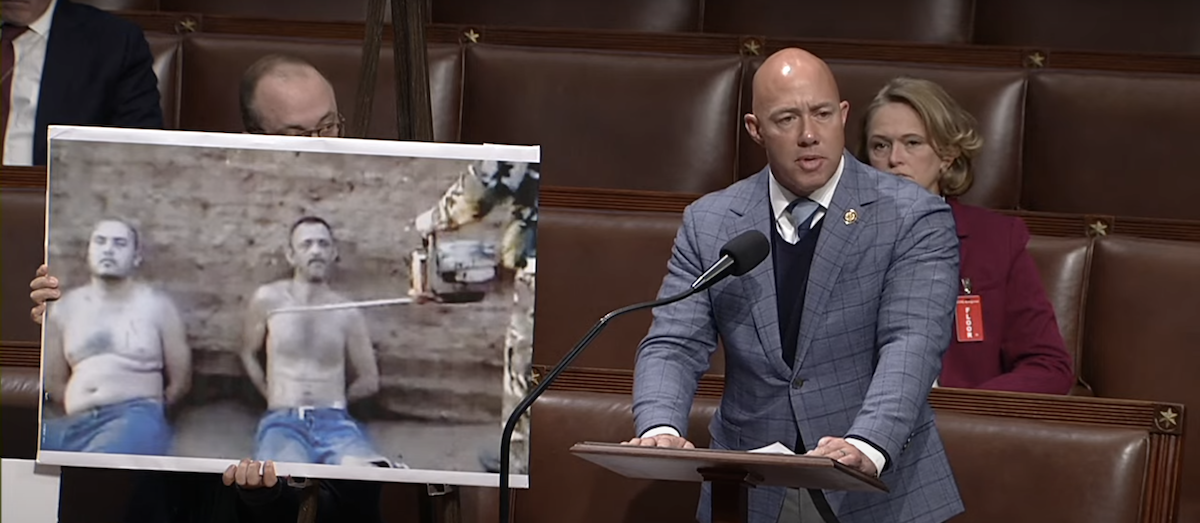
After House Democrats brought a privileged resolution on employing war powers to stop the U.S. action, U.S. Rep. Brian Mast, a Stuart Republican who chairs the House Foreign Affairs Committee, led opposition to the measure.
He classified the resolution as “poorly written” and counterproductive. He showed photos of cartel activity allegedly occurring on similar boats, including the beheading of individuals and heavily armed security in line with international gang activity.
“They are kidnapping Americans, extorting families, trafficking women and children, and flooding our towns with fentanyl to maximize death and addiction on American soil,” Mast said.
But U.S. Rep. Gregory Meek, a New York Democrat and ranking member of Mast’s Committee, said the administration has not properly kept Congress abreast of action.
“It’s clear to me that these lethal strikes are not about stopping drugs from entering the country. That stated objective simply does not square with Trump’s recent decisions to pardon the former President of Honduras, who a jury found guilty for helping to smuggle 400 tons of cocaine into the country, or Ross Ulbricht, who ran an online drug marketplace,” he said in a statement after a congressional briefing with Secretary of State Marco Rubio and Defense Secretary Pete Hegseth.
“To be clear, no fentanyl enters the United States over sea routes. The administration has made clear its real interest is in starting a regime change war with Venezuela and going after its oil.”
Several lawmakers spoke on the issue, but those from Florida, home to 49% of Venezuelans in the U.S. according to the Migration Policy Institute, said taking the actions was critical to U.S. interest. They also said the impacts of fentanyl in the U.S. have been devastating.
U.S. Rep. Mario Díaz-Balart, a Hialeah Republican, said the measure — which would treat actions against drug smugglers as military action needing authorization of Congress — would cripple legitimate efforts to combat organized crime. Moreover, he suggested criminal actions sanctioned by Venezuelan President Nicolás Maduro, who clung to power despite international observers saying he lost the last election in the country, was wrong-headed.
“I strongly oppose this resolution which limits the United States ability to fight narco-terrorist traffickers in our own hemisphere, where we are most directly impacted,” he said.

“Maduro is not a President. He’s the head of a narco-cartel that has taken over, by force and by terror, a great country, the country of Venezuela.”
U.S. Rep. María Elvira Salazar, a Hialeah Republican, chairs the House Western Hemisphere Subcommittee. She said there was a long history of presidential administrations taking unilateral action to stop international threats to U.S. security without congressional approval.
“The Founding Fathers vested in Congress the power to declare a war, but they were equally clear that the power to defend the homeland from foreign and domestic threats belongs to the President as Commander-in-Chief,” she said. “President Trump does not need congressional permission to kill terrorists at sea who are bringing cocaine and fentanyl to the streets of Miami, New York or Chicago.”