
Politics
ACA — spendthrift — badge bounties — 404 — moon mining
Health care push
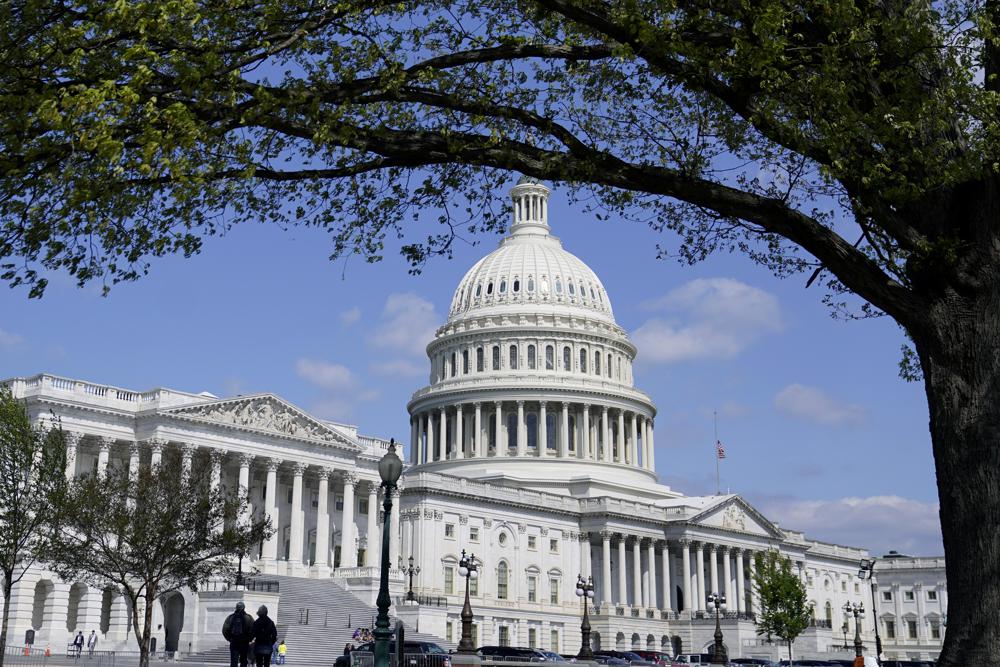
As lawmakers wrap the last week Congress should be in Session, one topic dominates conversation on the Hill: health care.
With tax credits for health care set to expire, lawmakers from across the political spectrum expressed concern about next steps. Sen. Rick Scott continues to push an alternative to the Affordable Care Act that would create savings accounts for consumers. At the same time, Democrats advocate for an extension of subsidies in place since the COVID-19 pandemic.
The topic is especially critical in Florida, the state with the highest number of citizens benefiting from the credits, according to the Kaiser Family Foundation. Rep. Mario Díaz-Balart, a Hialeah Republican, represents the district with the highest number of enrollees in the nation, followed by Rep. Darren Soto, a Kissimmee Democrat.
Rep. Frederica Wilson, a Miami-Dade Democrat, said the impacts could be worse in her home county than anywhere in the country if subsidies expire. “I’m focused on protecting health care by extending the health care tax credits,” she said. “With premiums skyrocketing, Congress cannot sit on its hands while families suffer — especially in Florida and Miami-Dade County, where the health care crisis is hitting hardest.”
Soto’s office said he remains focused on that issue above all else. “The Congressman’s priority is to save Obamacare for 275,000 constituents,” said Soto’s Press Secretary Mirka Cavaliere.
Rep. Debbie Wasserman Schultz, a Weston Democrat, lamented that the House does not appear poised to pass any proposal to preserve tax credits, even for a short period.
“In just 20 days, ACA tax credits will expire, and millions of Americans will face unaffordable health coverage bills,” she posted on Monday. “Despite several proposals on the table, Speaker (Mike) Johnson still refuses to put them to a vote.”
Importantly, Republicans have noted that not all ACA-related subsidies are expiring; only those approved in 2020 are expiring. And conservatives representing Florida and much of the country are quick to blame the system crafted under Democratic President Barack Obama, rather than to lament the expiration of some of the credits.
“The American people need to understand the reason why costs are rising in health care and in health insurance is by design by Congressional Democrats at the time and by then, President Barack Obama,” said Rep. Byron Donalds, a Naples Republican. “They did want a public option. They wanted to put a public option in the Affordable Care Act that was going to be lower costs than what their own regulatory framework would allow in the private markets. The only reason they didn’t get the public option is because they didn’t have the votes.”
Scott, a former health care executive, has advocated adopting his own More Affordable Care Act, which would direct funding to personally controlled health savings accounts rather than subsidizing insurance companies directly. He promoted the plan this weekend in an op-ed in the Washington Examiner, co-written with Rep. August Pfluger, a Texas Republican and the plan’s House sponsor.
“Our approach is straightforward: stop treating families like statistics and start treating them like the capable decision-makers they are. Instead of funneling billions of taxpayer dollars through layers of bureaucracy to large insurance companies, redirect those resources into Trump Health Freedom Accounts, where individuals have control over their health care dollars,” the opinion piece reads.
“Families can use these funds to pay premiums or other health care expenses, while also having the flexibility to shop for insurance across state lines to compare multiple plans and choose coverage that truly meets their needs.”
But Republicans in the Senate remain locked in debate over which direction to pursue an alternative after a three-year extension of credits pushed by Democrats was not heard last week.
Boondoogle busting
Ballooning costs for an electronic health care records system have alarmed Sen. Ashley Moody, who is concerned about out-of-control spending. She signed on as a co-sponsor to legislation (S 766) that was unanimously passed last week by the Senate, which would require public disclosures anytime a government contract runs more than $1 billion over
“Government projects that go over budget and past deadline waste hundreds of millions of taxpayer dollars every year,” Moody said. “I’m proud to co-sponsor the Billion Dollar Boondoggle Act and work to ensure that our government spends our hard-earned funds responsibly.”

The Plant City Republican also cited cost overruns on a rail project in San Francisco, where former Speaker Nancy Pelosi, a California Democrat, has pushed for funding even as costs rose from a projected $4.7 billion to $12.8 billion.
But it’s a contract for the Department of Veterans Affairs’ electronic health care system that has drawn bipartisan scrutiny in Congress. The contractor originally had a $10 billion contract, which Congress later increased to $16 million, but the scope has since grown to $49.8 billion, even as it has been rolled out in just a handful of states.

Counter bounties
The Homeland Security Department in October sounded alarms on Mexican gangs offering bounties for the harassment or assassination of Immigration and Customs Enforcement agents. Now Scott and other Senators want to provide their own rewards that cover anything cartels may offer.
The Naples Republican co-introduced the No Bounties on Badges Act with GOP Sens. Ted Budd of North Carolina, Lindsey Graham of South Carolina, John Kennedy of Louisiana, Mike Lee of Utah and Pete Ricketts of Nebraska.

“Our men and women in law enforcement already face enormous risks, and anyone who puts a price on harming them should be held fully accountable. My No Bounties on Badges Act makes clear that the federal government will aggressively pursue anyone who offers bounties or financial incentives to target the men and women who protect our communities,” Scott said
“By expanding reward authority, we’re giving investigators another tool to stop these violent acts before they happen. I will continue working to ensure our officers have the support, protection, and respect they deserve for putting their lives on the line protecting us all.”
Preserving 404
Florida’s ability to issue its own water and environment permits could soon be enshrined in Florida law.
An amendment introduced by Rep. Aaron Bean was included in a broader permitting bill (HR 3898) that won House approval before passage. The language introduced by the Fernandina Beach Republican officially codifies Florida’s 404 Program, which transferred permitting authority from the U.S. Army Corps of Engineers to the Department of Environmental Protection.
“For too long, anyone trying to build anything in the free state of Florida has faced nothing but Washington bureaucracy. My amendment rightfully returns permitting to the state and allows Florida the flexibility to make the decisions that are best for us,” Bean said.

“State-run permitting programs reduce project costs and save taxpayer dollars, all while improving responsiveness to applicants and the communities’ projects they serve. I’m grateful to my colleagues for standing with me to demand accountability and make clear that any federal process must respect Florida’s right to manage its own resources responsibly.”
The shift in authority was initially approved in President Donald Trump’s first administration but became the subject of court fights under Democratic President Joe Biden. In 2024, a federal judge issued an order divesting the DEP of its authority to issue State 404 Program permits in Florida and more than 1,000 permit applications have remained on hold since.
Florida’s House delegation broke along party lines on the bill. But Rep. Jimmy Patronis, a Fort Walton Republican, spoke in favor of the bill on the floor.
“After working hard to obtain federal approval in the first Trump administration, a weaponized court system pulled Florida’s 404 permitting out from under us, even though our program was thoroughly vetted and approved in 2020,” Patronis said. “Florida’s DEP has become a national model for environmental protection, and Washington should be learning from us, not tying our hands.”

Mom-and-pop defense shops
Rep. Cory Mills wants small businesses seeking military contracts to have a better chance of securing deals. The New Smyrna Republican introduced the Empowering Small-Business Ownership Participation (ESOP) Act, which would expand access for employee-owned businesses to compete for Department of War contracts.

“Employee-owned companies strengthen our economy, empower workers, and deliver proven value and innovation,” said Mills, himself a former military contractor. “But the federal government shouldn’t impose unnecessary barriers that prevent these businesses from competing. My bill ensures more employee-owned companies can participate in Department of War contracting, enhancing competition, innovation, and outcomes for the American taxpayer.”
His bill would establish a pilot program and align War Department business definitions with other existing federal guidelines, such as those of the Small Business Administration. Specifically, it would define businesses with 30% employee ownership as Employee Stock Ownership Plan companies, rather than the current War Department definitions, which reserve that classification for those with nearly 100% employee ownership.
Mining the moon
As the space industry grows, Rep. Daniel Webster wants Congress to explore the potential of a space resources institute looking at the mineral value of the moon, Mars and other celestial bodies.
The Clermont Republican filed a bipartisan bill, the Space Resources Institute Act (HR 6638), with Rep. Valerie Foushee, a North Carolina Democrat.

“As space continues to be a domain of economic and strategic competition, the ability to identify and utilize resources beyond Earth, such as the moon, will shape the next generation of American leadership,” Webster said. “This bill examines how we can best support the development of space-based resources. It ensures that the United States – not China – sets the terms in this critical domain.”
The bill would position the U.S. as a leader in the use of extraterrestrial materials, including those found on asteroids. Webster and Foushee say an institute would lay the foundation for a strong space economy in the future, with NASA working directly with the Commerce Department to coordinate research, technology and policy needed to advance in-space resource utilization as a cornerstone of America’s expanding space economy.
“America’s leadership in space has long depended on our determination to push the boundaries of science and innovation,” Foushee said.
“As we prepare for the next era of discovery — where astronauts will live and work farther from Earth for longer than ever before — understanding how to responsibly harness space resources will be vital to sustaining our presence and growing the space economy. The Space Resources Institute Act takes a smart, forward-looking approach to using resources beyond Earth. With this bill, we’re ensuring the United States remains at the forefront of space innovation and exploration for generations to come.”

Flood market
Two Florida lawmakers are working together across the aisle to reduce flood-insurance costs in the state.
Reps. Kathy Castor, a Tampa Democrat, and María Elvira Salazar, a Coral Gables Republican, filed the Continuous Coverage for Flood Insurance Act, which would require the Federal Emergency Management Agency to allow consumers to exercise a right to maintain flood insurance outside of the National Flood Insurance Program (NFIP).
“Families, homeowners and small businesses across Florida – including across the recovering Tampa Bay area – deserve real financial stability, peace of mind and clarity when it comes to flood insurance,” Castor said.

“Our bipartisan legislation empowers consumers with more options by allowing access to private flood insurance, without penalty. For coastal communities like Tampa Bay, healthy competition can lower costs, expand the insurance pool and help bring down flood-insurance rates. I’m pleased to work with my fellow Floridian, Rep. María Salazar, to ease cost burdens on hardworking Floridians and expand consumer choice in continuous flood-insurance coverage.”
Salazar said flooding threats are something South Florida property owners know too well.
“Now more than ever, Miami residents and Americans nationwide deserve real choice and affordable coverage in the flood-insurance market,” Salazar said. “By opening the door to greater private-sector involvement, the Continuous Coverage for Flood Insurance Act will lower the burden on U.S. taxpayers and provide stronger, more reliable protection.”
Seller’s market
What happens to government buildings when the programs inside them shut down? Oftentimes, they sit in government inventory unused, but Rep. Greg Steube wants to change that.
The Sarasota Republican just filed the Disposing of Inactive Structures and Properties by Offering for Sale And Lease (DISPOSAL) Act, which would require the federal government to auction off unused or underutilized buildings. Sen. Joni Ernst, an Iowa Republican, will carry an identical bill in the Senate.

“Americans deserve a government with maximum efficiency and minimal waste,” Steube said. “It makes zero sense that the federal government continues to sit on vacant and underutilized buildings. I am grateful to partner with Sen. Ernst on the DISPOSAL Act that will auction off the bloat of unused government facilities back to the private sector.”
The legislation would exempt structures used in the federal homeless assistance program and those covered by the National Historic Preservation Act. But it specifically targets six Washington buildings currently kept up by the federal government: the Frances Perkins Federal Building, James V. Forrestal Building, Theodore Roosevelt Federal Building, Robert C. Weaver Federal Building, Department of Agriculture South Building, and Hubert H. Humphrey Federal Building.
“Despite President Trump calling federal employees back to work, government buildings still remain vacant,” Ernst said. “For too long, the entrenched bureaucracy has used red tape to prevent these ghost towns from being sold off. I’m glad Congressman Stuebe is leading my DISPOSAL Act in the House to immediately put six prime pieces of D.C. real estate on the auction block and slash through pointless regulations. By fast-tracking selling off the government’s graveyard of lifeless real estate, we can generate hundreds of millions of dollars and save taxpayers billions.”

School support
South Florida’s efforts to support student mental health have just secured significant federal funding.
Rep. Frederica Wilson announced a $400,000 grant for Miami-Dade County Public Schools and $1.25 million for Broward County Public Schools to train school-based mental health service providers for employment in schools and local educational agencies. The funding will be doled out over four years. In Broward, the funding will support the Psychologist Advancement and Training Hub (PATH) Forward program; in Miami-Dade, it will help the I Am Me initiative.

“We are in a mental health crisis in this country, and our children are carrying the weight of it. Over the past decade, suicide rates among young people have been rising, depression is rising, and too many of our children are hurting in ways we don’t always see. When children spend the majority of their days in schools, we should have mental health professionals who can support them. And oftentimes, many children do not have access to mental health resources outside of school. No one asks, ‘Are you OK?’” the Miami-Dade Democrat said.
“We don’t always know what our children are walking into when they leave school or what happens when they are alone with their friends. We don’t know the stress, the trauma, the fear they may be living with every single day. This crisis also doesn’t affect every child equally. Low-income students, students of color, LGBTQ+ youth, and other marginalized communities face added stress from systemic barriers that compound mental health challenges. These inequities make access to care even more critical.”
Wilson is a former teacher and school principal herself, and said her experiences show her the need for mental health support in schools.
“I’ve seen children struggling because of chaos at home, pressure at school, or because they were misunderstood, mislabeled or punished simply for being who they are. Too many of them suffer in silence because no one gave them the space to speak or told them that they are loved,” she said.
“That’s why schools must be part of the solution, especially at a young age when emotional, social, and cognitive development is taking shape. When we prioritize the mental health of our youth, we set them up to be healthier adults. That’s why I’m proud to deliver funds to support the mental health and well-being of our students here in Miami-Dade and Broward County Schools because it’s time we address this mental health crisis head-on.”

Silver anniversary
The 25th anniversary of the Comprehensive Everglades Restoration Plan marked a bipartisan celebration within the delegation. Díaz-Balart and Wasserman Schultz, co-chairs of the Congressional Everglades Caucus, issued a joint statement on Dec. 11.

“Twenty-five years ago, the state of Florida and the U.S. Congress, through the leadership and collaboration of Congressman Díaz-Balart and the late Congressman Alcee Hastings, co-founded and launched the most significant environmental restoration project in U.S. history: an ambitious, long-term bipartisan effort to repair and revive America’s Everglades, a national treasure and true ecological wonder,” the statement reads. “Today, that commitment remains strong under the continued leadership of Reps. Díaz-Balart and Wasserman Schultz as co-chairs of the Everglades Caucus.”
Of note, both Díaz-Balart and Wasserman Schultz served in the Florida Legislature at that time but joined Congress within a few years. The two have been part of a bipartisan group that in 2007 won enough congressional support to override then-President George W. Bush’s veto of the Water Resources Development Act. In recent years, Congress approved funding for projects from the Picayune Strand Restoration Project in 2007 to the Caloosahatchee C-43 Reservoir Completion in 2025. The caucus is pushing to expedite the construction of the key Everglades Agricultural Area Reservoir.

‘Course correction’
One South Florida Republican openly cheered a shift in immigration policy by the Trump administration. Rep. Carlos Giménez, a vocal Trump supporter who has also urged protections for many losing temporary protected status, welcomes a Fox News report that Homeland Security will focus on apprehending violent criminals.

“From Day One, I have been clear that the Department of Homeland Security must focus its resources on violent criminals and serious offenders who pose a real, credible threat to public safety. This course correction in enforcement priorities is the right move,” said Giménez, a Miami-Dade Republican.
“Immigration enforcement must be intelligence-driven, crime-focused and centered on protecting American communities. I thank President Trump and his administration for making this important course correction, and I will continue working to ensure DHS remains focused on removing dangerous individuals and upholding the rule of law.”
He released the statement in English and Spanish.
Fox News noted that the shift occurred after polling showed that Home Depot raids have proven unpopular. For example, a Public Religion Research Institute poll showed support for Trump’s immigration policies dropped from 42% in March to 33% this month.

On this day
Dec. 16, 1773 — “The Boston Tea Party” via History.com — In Boston Harbor, a group of Massachusetts colonists disguised as Mohawk Indians boarded three tea ships and dumped 342 chests of tea into the harbor. The midnight raid was in protest of the British Parliament’s Tea Act, a bill designed to save the faltering East India Company by significantly lowering its tea tax and granting a virtual monopoly on the American tea trade. The low tax allowed the East India Company to undercut even tea smuggled in by Dutch traders, and many colonists viewed the act as another example of taxation tyranny. Parliament, outraged by the blatant destruction of British property, enacted the Coercive Acts, which established formal British military rule.
Dec. 16, 2000 — “Bush picks Colin Powell” via ABC News — In his first Cabinet appointment, President-elect Bush named retired Gen. Colin Powell as Secretary of State today as he begins laying the groundwork for the administration. “Gen. Powell is an American hero, an American example and a great American story,” Bush said from an elementary school in Crawford, Texas. He praised Powell for his long service in the Army, including his tenure as Chairman of the Joint Chiefs of Staff. During the announcement ceremony, Powell discussed global issues that would confront him as Secretary of State, adding that the new administration was “up to the task.”
___
Peter Schorsch publishes Delegation, compiled by Jacob Ogles, edited and assembled by Phil Ammann and Ryan Nicol.