
Politics
Ashley Moody says more Americans have died from fentanyl than have died in wars
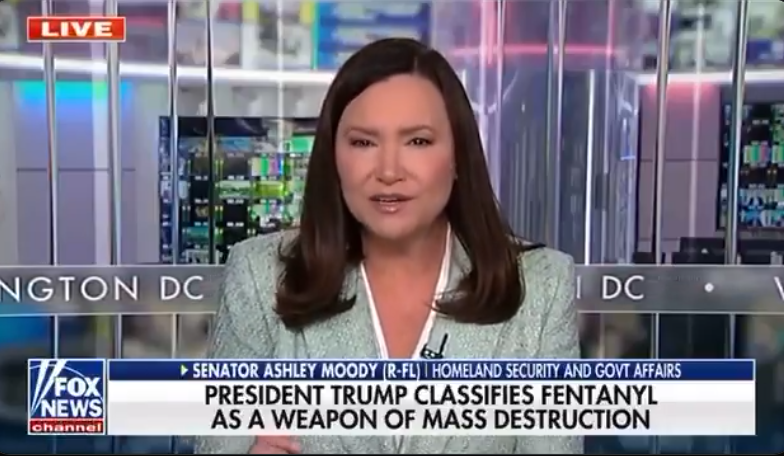
As President Donald Trump backs an executive order declaring fentanyl to be a weapon of mass destruction, U.S. Sen. Ashley Moody says the drug’s casualty rate exceeds that of military conflicts.
That underscores the seriousness of the national battle against traffickers, Moody said.
“Remember, we are losing more people to fentanyl than we’ve lost in wars. And this is a coordinated effort by these organizations that have more resources, more manpower, more coordination, than many nation-states,” the Plant City Republican said on “Fox & Friends First.”
More than 48,000 Americans died because of fentanyl overdoses last year, according to the Centers for Disease Control and Prevention. While that’s far fewer than the 698,000 Civil War casualties, it is more in one year than died in many conflicts.
Trump’s executive order links “illicit fentanyl” with national subversion.
“The two cartels that are predominantly responsible for the distribution of fentanyl in the United States engage in armed conflict over territory and to protect their operations, resulting in large-scale violence and death that go beyond the immediate threat of fentanyl itself,” the order reads.
“Further, the potential for fentanyl to be weaponized for concentrated, large-scale terror attacks by organized adversaries is a serious threat to the United States.”
Indeed, Moody depicted how the drug apparently has been used to nefarious effects in this state.
“In Florida, for example, you would have law enforcement roll up on a gas station, and you would have … 10 people splayed out on the ground at a gas station because they were exposed to fentanyl,” Moody said.
While we weren’t able to find a news story about 10 people on the ground due to exposure, in 2018, three people overdosed at a gas station in Seminole County.

Moody said she has “seen studies done where if you can get this airborne, it can be incredibly dangerous.”
“I’ve been given information about the possibility of this being stockpiled, and remember, only the amount of only two grains of sand,” Moody said. “Compare that to fentanyl. That’s lethal. That’s lethal. And so it’s incredibly lethal, incredibly dangerous, the likes of which we have not experienced before in terms of the death toll in our country.”