Connect with us

Business

Elon Musk’s wealth has soared past $600 billion—he’s now worth double the next richest person alive, Google’s cofounder Larry Page

Published

on


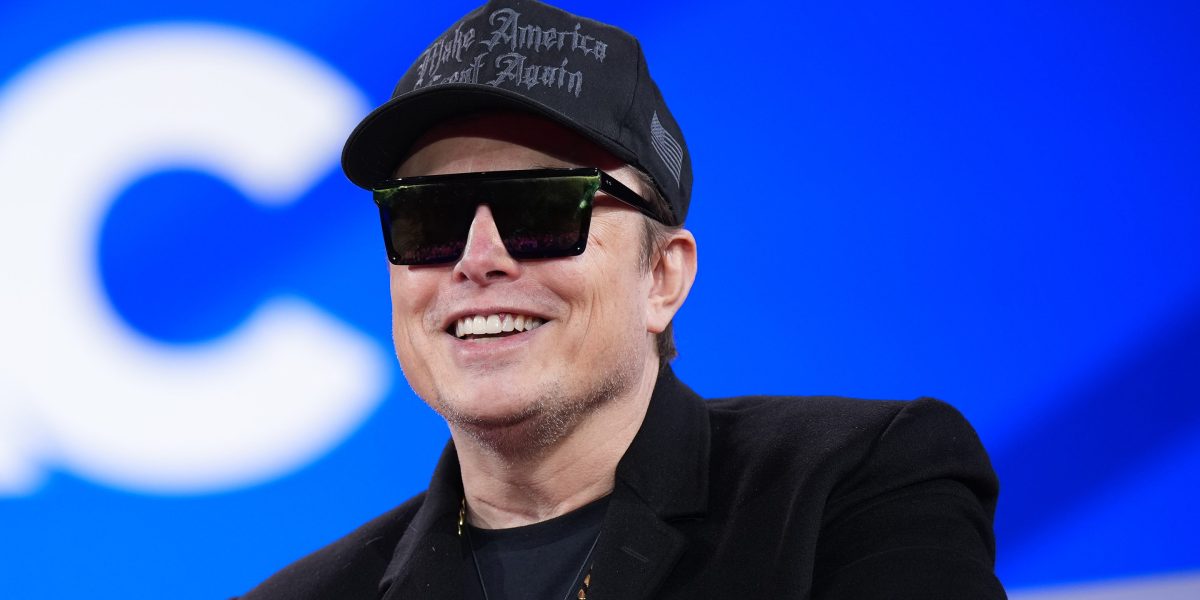
Elon Musk just woke up $168 billion richer. Even as the wealthiest man in the world, he is still setting new records and raising the bar for what ultra-wealthy looks like.

The serial CEO’s net worth shot up to $638 billion on Monday, making him the first person estimated to be worth more than $600 billion by Bloomberg’s wealth index

The 54-year-old witnessed an unprecedented wealth surge after SpaceX, an aerospace company he founded and leads, hit a $800 billion market cap in an insider share sale. SpaceX subsequently became the most valuable private company in the world—and by holding a 42% stake in the business worth $317 billion, Musk’s fortune soared. 

In fact, his fortune has multiplied so much that fellow billionaires can’t keep up; Oracle cofounder Larry Ellison very briefly knocked him from the top spot earlier this year, but swiftly lost $34 billion

Even the wealth of Google cofounder and ex-CEO Larry Page, who is the second richest person alive, pales in comparison to Musk’s bank account. Page is worth $265 billion: less than half of what the SpaceX CEO sits atop. 

And with Musk’s $1 trillion Tesla pay package (effective since it was approved in November) trickling into his bank account over the next decade, he’s solidified his spot as the richest person in the world by a longshot. 

How Musk became the richest person in the world

When Musk was first added to Bloomberg’s index in 2013, he only held $4.8 billion in wealth—still an eye-watering figure, but a far cry from his 2025 fortune. His next milestone came in 2020, when he was calculated to be worth at least $100 billion thanks to a soaring Tesla valuation. And within the last five years, he’s managed to accrue six times as much wealth—adding around $100 billion every year—as his businesses thrived. 

But Musk was never a stranger to wealth. 

The entrepreneur spent his final high school years attending an affluent South African boys school—surrounded by peers who later became politicians and award-winning novelists—while the rest of the country reeled from apartheid. Later, he headed to his mother’s country, Canada, before moving to the U.S. in pursuit of success.

Musk experienced his first wealth breakthrough while he was still in his early twenties. In 1995 he co-founded software company Zip2, which helped newspapers bring city guides to the internet. The business sold to Compaq for $307 million just four years later. But his next venture solidified his footing in the corporate world; in 1999 Musk then co-founded X.com, an online payment company which later merged with PayPal’s parent company Cofinity. By 2002, eBay acquired PayPal for a whopping $1.5 billion. 

Instead of simply riding the high of newfound wealth, Musk used the money to found and invest in a slew of other lucrative companies. In 2002, he founded SpaceX—his current ticket to $638 billion wealth. He also joined Tesla as an investor in 2004, becoming CEO four years down the road. In 2016, he launched neurotech business Neuralink, the same year he founded The Boring Company. And in one of his most daring—and contentious—aquisitions yet, Musk bought Twitter (now X) for $44 billion in 2022. 

But the vast majority of Musk’s wealth comes from his 12% stake in EV car business Tesla, and 42% share of rocket company SpaceX. He also owns around 33% of XAI Holdings, valued at roughly $105 billion by Bloomberg, following a merger with X and AI startup xAI. And aside from his investments, Musk has locked down a compensation package that’s unheard of. This November, Tesla shareholders voted in favor of a nearly $1 trillion, 10-year pay plan for the Tesla CEO. 

Criticism around Musk’s $1 trillion pay package

The first-of-its-kind $1 trillion compensation strategy encompasses 12 tranches of shares to be granted if Tesla hits certain milestones over the next decade, giving Musk increased voting power over the company. His ownership of Tesla is estimated to swell from about 12% to 25%, tacking an additional 423 million shares to Musk’s current holdings.

It’s a record-breaking pay package that has drawn scrutiny from spectators and proxy advisors alike. Even Pope Leo XIV chimed in on the situation, warning of growing income inequality at the upper echelons of business. 

“CEOs that 60 years ago might have been making four to six times more than what the workers are receiving, the last figure I saw, it’s 600 times more than what average workers are receiving,” the Pope told Catholic news siteCrux in September.

“Yesterday, the news that Elon Musk is going to be the first trillionaire in the world: What does that mean and what’s that about? If that is the only thing that has value anymore, then we’re in big trouble.”


Source link

Continue Reading

Business

Federal regulators are investigating Nevada OSHA after Boring Co. citations were suddenly withdrawn

Published

on


The U.S. federal workplace safety regulator has opened an investigation into Nevada’s state OSHA agency weeks after Fortune reported that three citations the state agency had issued against Elon Musk’s Boring Company were suddenly withdrawn, according to three people familiar with the matter.

Nevada OSHA confirmed that the U.S. Occupational Safety and Health Administration had received a complaint about the state agency and had opened a federal review into whether Nevada OSHA was at least as effective as the federal agency—a requirement for all state OSHA plans under U.S. law.

The federal inquiry comes about one month after Fortune published an investigation revealing that Nevada OSHA had issued three “willful” and serious citations to Boring Company, the tunneling venture founded by Elon Musk that is digging an underground Tesla tunnel system below Las Vegas and the broader county. The citations were handed to Boring after two firefighters were burned by chemicals in one of its tunnels during a training drill. Shortly after the citations were issued earlier this year, Boring Company’s president called a member of Nevada Governor Joe Lombardo’s Office and set up a meeting with senior state officials, and the state agency rescinded those citations within 24 hours. The removal of the citations was not documented in the case file, and a line item in Nevada OSHA’s case diary that described the meeting was later deleted from a public record, Fortune found. 

Nevada OSHA and the state agencies that sit above it have maintained that Nevada OSHA withdrew the citations after the phone call because it determined that the citations had not met legal requirements, and were therefore not valid. Nevada OSHA has also said that the governor’s office regularly receives complaints from businesses in the state and that this instance only stands out “due to the high-profile nature of the business because of its affiliation with Elon Musk.”

Lawyers and regulators in the state, however, said the handling of the citations violated OSHA’s standard procedure, and the episode sparked outrage among some politicians, including Nevada Congresswoman Dina Titus, who sent a letter to Governor Joe Lombardo urging him to hold Elon Musk’s tunneling company accountable, make the company’s meetings with Nevada OSHA public, and answer a series of questions about how the investigation was handled. A spokeswoman for Nevada Senator Catherine Cortez Masto also told Fortune that Cortez Masto’s office “supports inquiries to ensure that the Boring Company was made to follow and comply with all OSHA rules.”

It’s unclear at this time who filed the complaint that sparked the federal investigation, formally called a “Complaint About State Plan Administration” or a “CASPA,” nor precisely when it was filed. The Labor Department’s records office confirmed that a CASPA had been filed against Nevada OSHA, though it declined to provide the complaint because it is “part of an enforcement proceeding” and “could interfere with OSHA’s ability to effectively enforce the law.” Separately, a Labor Department spokeswoman said that federal OSHA doesn’t comment on state plan investigations or determinations.

These types of inquiries typically take fewer than 60 days to complete, according to OSHA’s policy manual, which details the process. During an investigation, the regional office will review Nevada OSHA’s case file, interview state plan officials and employees as well as other individuals involved. The regional office would also review the effectiveness of the state plan’s policies and procedures, according to the manual. Nevada OSHA itself will have 30 days to respond to the CASPA, and the state agency’s own determination will be considered in the investigation, the manual shows.

This is not the first time that Nevada OSHA has been under scrutiny from federal OSHA. In 2009, federal OSHA initiated a “special study” into the plan after the Las Vegas Sun reported on the agency’s handling of fatalities during the construction of the CityCenter project on the Las Vegas Strip.

Jordan Barab, who initiated that study into Nevada OSHA during his time leading the federal agency under the Obama Administration, tells Fortune that, because of the high-profile nature of this new inquiry, the top leaders of the federal agency have likely been looped in. “This would definitely have come to the attention of the Assistant Secretary, and probably beyond, given that it involves Elon Musk,” Barab says.

Barab suggested that, should federal OSHA find deficiencies with Nevada’s state plan, the regulator could direct Nevada to make corrections to this specific case or amend the agency’s procedures. 

Since the 2009 special study, Barab said that Nevada OSHA had “cleaned up their act” and “appointed some very responsible, competent people to run the program.”

In OSHA’s latest annual report on the Nevada state plan, which was published in 2024 and is publicly available on the regulator’s website, federal OSHA said that Nevada’s state plan had made notable improvements to its workplace culture and staff retention rates—with 95% of positions filled—but criticized the agency’s documentation process, saying that documents had been missing from its case files.


Source link

Continue Reading

Business

Warner Bros. plans to reject Paramount bid on funding, terms

Published

on


Warner Bros. Discovery Inc. is planning to reject Paramount Skydance Corp.’s hostile takeover bid due to concerns about financing and other terms, people familiar with the matter said.

After deliberating and reviewing Paramount’s bid, Warner Bros.’ board will urge shareholders to reject the tender offer, said the people, who asked not to be identified discussing confidential information. The board still views the company’s existing agreement with streaming leader Netflix Inc. as offering greater value, certainty and terms than what Paramount has proposed, they said.

Warner Bros.’ response to Paramount’s tender offer could be filed as early as Wednesday, the people added. No final decision has been made and the situation remains fluid, they said. Representatives for Warner Bros. and Paramount declined to comment.

One major sticking point is Warner Bros.’ concern about the financing proposed by Paramount, which is led by David Ellison.

The equity is backstopped by a trust that manages the wealth of his father, software billionaire Larry Ellison. Because it’s a revocable trust, assets can be taken out of it at any time, and Warner Bros. may have no recourse if that happens, the people said. 

One of Paramount’s backers dropped out the deal Tuesday. Affinity Partners, led by President Donald Trump’s son-in-law Jared Kushner, told Bloomberg News it was withdrawing from the proposed transaction, citing the involvement of “two strong competitors.”

Earlier Tuesday, President Trump criticized Paramount, saying on social media that he’s been treated “far worse” by the company’s CBS division since the Ellison family took control earlier this year. The Ellisons have touted their friendly ties to the president.

Warner Bros.’ board is also concerned about the company’s ability to conduct business for the year or more it could take for a sale to win regulatory approval. Paramount isn’t offering the company enough flexibility to run its business or manage its balance sheet, the people said. 

Paramount said in a filing last week that it had addressed Warner Bros. concerns about the company’s flexibility in refinancing debt as well as payment of a $5 billion break up fee that would be backstopped by the Ellison family. 

Paramount has adjusted terms of its bid in response to Warner Bros.’ requests in other ways. Some $1 billion in financing from China’s Tencent Holdings Ltd. was withdrawn over concerns the funding could cause national security concerns with US regulators. 

Warner Bros. agreed this month to sell its studios, streaming business and HBO to Netflix for $27.75 a share, or about $83 billion including debt, capping off a multiweek bidding war between Netflix, Paramount and Comcast Corp. Warner Bros. separately plans to spin off cable networks like CNN and TNT to its shareholders before the Netflix deal closes.

Paramount, which owns MTV and the Paramount+ streaming service, has offered to buy all of Warner Bros. for $30 a share, or more than $108 billion, including debt. Three days after Netflix and Warner Bros. announced their deal, Paramount took its offer directly to shareholders by launching a public tender offer for Warner Bros. shares. 

Paramount has said that its $30-a-share offer for Warner Bros. isn’t its “best and final,” implying it has room to raise its bid. Shares of Warner Bros. closed at $28.90 in New York, suggesting some investors expect the company to fetch a higher price. 

Warner Bros.’ agreement with Netflix bars it from soliciting proposals from other bidders but it’s allowed to entertain proposals that come in. In the event of a superior proposal, it’s required to give Netflix the opportunity to match the better offer to try to keep their existing deal intact, according to their agreement. 

This story was originally featured on Fortune.com


Source link

Continue Reading

Business

Trump turns on CBS, Kushner pulls out and Paramount’s hostile bid for Warner Bros. shows signs of collapse

Published

on


Paramount’s hostile bid for Warner Bros. showed signs of unraveling just moments after President Donald Trump aired fresh grievances about the flagship newsmagazine 60 Minutes. Just hours after Trump’s latest lashed out at CBS News, accusing the Paramount-owned network of treating him “far worse” since its new ownership took over earlier this year, Jared Kushner pulled his Affinity Partners private equity firm out of the Warner bid, as reports swirled that the Looney Tunes studio planned to reject the star-topped mountain. 

“For those people that think I am close with the new owners of CBS, please understand that 60 Minutes has treated me far worse since the so-called ‘takeover,’ than they have ever treated me before,” Trump said. “If they are friends, I’d hate to see my enemies!”

Paramount had entered the bidding for Warner, with its $77.9 billion offer for all of Warner Bros. Discovery coming one working day after Netflix’s $72 billion offer for the studio and HBO Max, as a seeming friend of the White House.

CEO David Ellison has repeatedly highlighted his ties to Trump, with his father Larry a longtime Trump donor (and second-richest man alive). CBS News, under Ellison, recently installed Bari Weiss, owner of independent news organization The Free Press and a prominent critic of progressive media culture, in a senior editorial role, a move widely read in Hollywood and Washington as gestures toward an anti-“woke” White House. Kushner’s participation, as son-in-law to the President, reinforced that impression. His roughly $200 million equity commitment via his firm functioned, some analysts said, as a political signal as much as a financing tool.

Trump’s outburst disrupted that calculus. By openly distancing himself from Paramount and criticizing its flagship news division, the president stripped the bid of its most implicit advantage: the perception of regulatory goodwill. Almost immediately after Trump’s post circulated, Affinity announced it was exiting the deal, citing a shift in “investment dynamics” amid competition from Netflix. Now, reports indicate that Warner Bros. plans to reject Paramount’s hostile bid over financing concerns. 

Trump’s public remarks have continuously scrambled assumptions about his supposed friendships, or loyalties. He confirmed to reporters at the Kennedy Center, the weekend after Netflix’s bid, that he had met with Co-CEO Ted Sarandos, who he called a “fantastic man.” Later, he said that neither Paramount nor Netflix were “great friends” of his. As the corporate takeover saga unfolds, who will be revealed next as friend or enemy?

Join us at the Fortune Workplace Innovation Summit May 19–20, 2026, in Atlanta. The next era of workplace innovation is here—and the old playbook is being rewritten. At this exclusive, high-energy event, the world’s most innovative leaders will convene to explore how AI, humanity, and strategy converge to redefine, again, the future of work. Register now.


Source link

Continue Reading

Trending

Copyright © Miami Select.