Across the country, a wave of new stadiums is rising for United Soccer League Tier Two and Tier Three franchises. These are not massive arenas, but smaller venues designed to seat a few thousand fans. While they may look modest, their price tags are not. Taxpayers often cover a significant portion of the construction costs. These stadiums usually anchor larger “stadium-village” developments that include retail, restaurants, offices, and housing.
Local leaders often promote these projects as economic engines. They argue that stadium-villages will create jobs, generate new tax revenue, and revitalize struggling districts. In reality, the results rarely match the promises.
The Economic Reality Behind Stadium-Villages
Most of the jobs created inside these districts are part-time, per diem, or minimum-wage positions. Concessions, retail shops, and event staffing do not produce stable, long-term employment. Meanwhile, the way cities finance these projects creates another major issue.
Municipalities often establish special stadium tax districts. Under these arrangements, sales tax revenue that would normally flow into a city’s general fund gets redirected to the stadium-village developer. Instead of supporting schools, public safety, or infrastructure citywide, that money goes toward paying off construction costs for a privately controlled project.
Sports ownership has increasingly become a real estate business. At both the major league and minor league levels, owners now seek profits not just from ticket sales, but from the surrounding development. The stadium becomes a tool to unlock public subsidies for private real estate ventures.
Omaha’s Proposed USL Stadium Plan
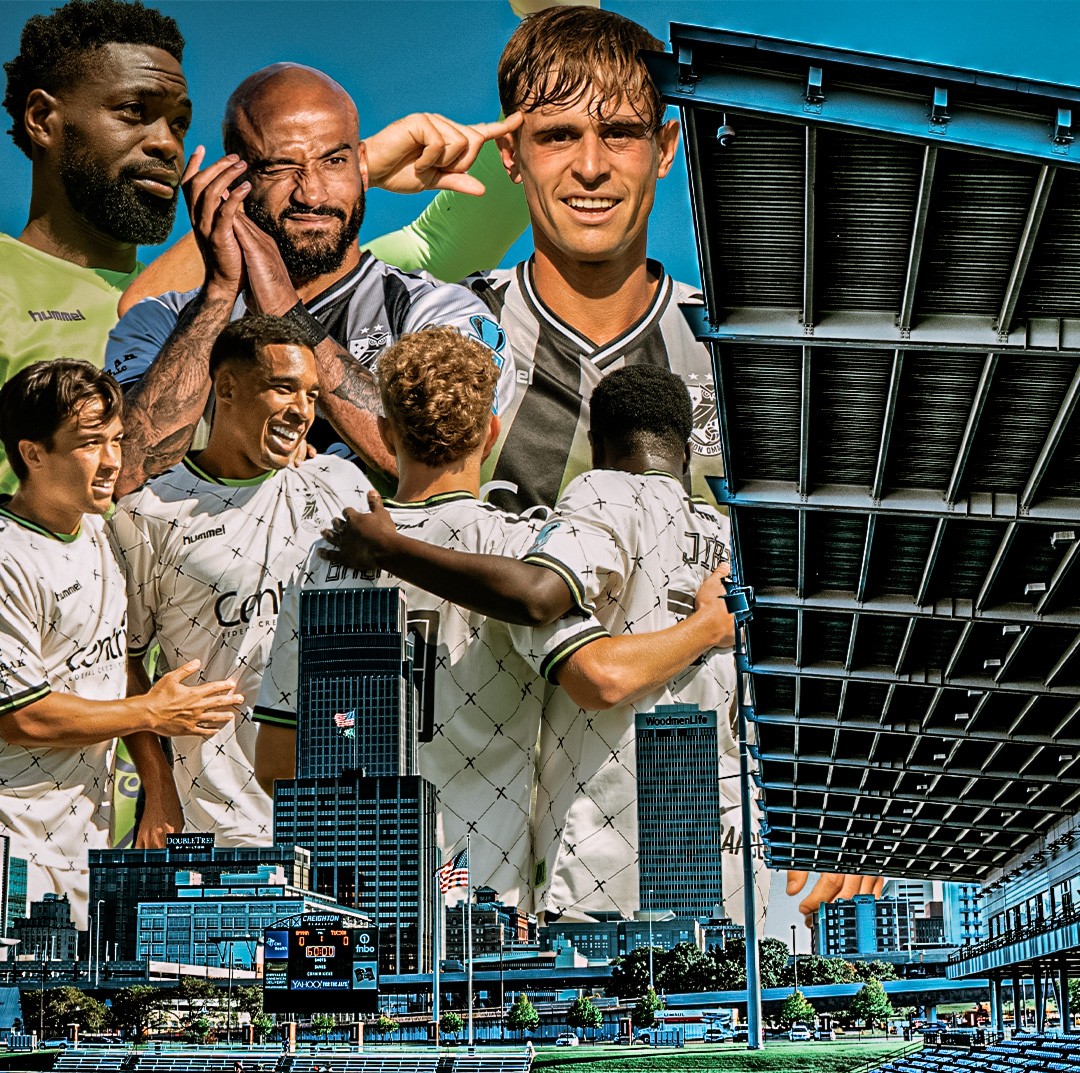
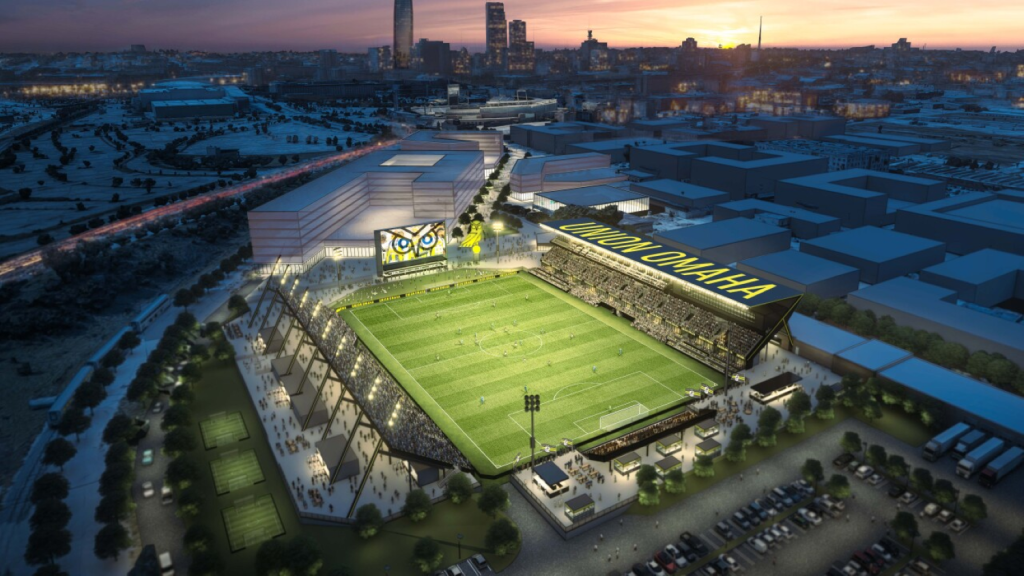
Omaha, Nebraska may soon become the next example. The owners of Union Omaha plan to partner with the city to build a 7,000-seat soccer stadium. The venue would anchor a 20-acre development that includes retail space, shopping, and housing.
Team ownership estimates the stadium alone could cost $114 million. That figure does not include infrastructure upgrades such as roads, utilities, or public transit improvements. Those additional costs would fall on taxpayers through a municipal taxing mechanism designed to support the project.
Familiar Promises, Familiar Risks
Omaha Mayor John Ewing echoed the language used by many city leaders who back stadium-villages. He said the project would give people another reason to live, work, and play downtown while strengthening the urban core. He also described the development as an engine for jobs, housing, entertainment, and urban living.
History suggests caution. Similar projects in other cities have failed to deliver broad economic benefits. Instead, they often shift public resources toward private interests, while cities assume long-term financial risk. Stadium-villages sound attractive, but the economic math rarely works out in favor of taxpayers.
FILE – In this Sept. 2, 2020, file photo, the NBA logo is displayed at center court during an NBA first-round playoff basketball game between the Houston Rockets and Oklahoma City Thunder in Lake Buena Vista, Fla. NBA training camps open around the league Tuesday, Dec. 1, 2020,though on-court sessions will be limited to individual workouts and only for those players who have gotten three negative coronavirus test results back in the last few days. (AP Photo/Mark J. Terrill, File)
The National Basketball Association (NBA) has always attracted fans with its fast pace, athleticism, and unforgettable moments. However, beyond the action on the court, the NBA has also inspired some of the largest and boldest wagers in sports history.
High-stakes betting has been part of the league’s story for decades, with gamblers, celebrities, and even ordinary fans trying their luck on games that captured the world’s attention.
Some of these bets paid off spectacularly, while others became cautionary tales of risk and reward. With that said, let’s dive straight in to reveal the biggest NBA bets of all time.
The NBA’s most famous high-stakes moments
Over the years, a handful of NBA games have drawn in massive wagers that are still talked about today. One of the most legendary examples came during Michael Jordan’s Chicago Bulls era in the 1990s.
At the height of their dominance, some bettors were so confident that they staked millions on the Bulls covering the spread. Those bets often paid off, but not without nerve-wracking finishes.
Another famous story involves Floyd Mayweather Jr., the undefeated boxing champion known almost as much for his gambling as for his skills in the ring.
He has publicly shared betting slips showing six-figure wagers on NBA games, particularly playoff matchups. His confidence in high-pressure games has made headlines and highlighted how star power and betting often intersect.
There are also examples of bettors backing underdogs in the NBA Finals or placing futures bets early in the season that later cashed out in spectacular fashion. These moments stand out not only for the money involved but also for the sheer audacity of those willing to put so much on the line.
Casino.org chronicles sports betting history
When looking back at the biggest NBA bets and the broader history of sports wagering, it helps to have reliable sources that track these stories. With the rise of US online gambling platforms, and resources like Casino.org tracking the stories, NBA fans and sports betting enthusiasts in general have more access than ever to understand this high-stakes world.
This globally renewed iGaming review and information site has become known for documenting the background of major gambling moments and analysing how betting shapes the sports world.
Casino.org provides insight into how the culture of betting has evolved over time by compiling data on historic wins and losses. It also highlights how the NBA, in particular, has attracted some of the most daring wagers.
These records serve as both entertainment and education for fans and sports bettors alike, offering a closer look at the connection between sports and gambling culture.
How US online gambling has changed the landscape
Sports betting in the United States has undergone a dramatic transformation in recent years. Once limited to Nevada and a handful of exceptions, betting is now legal in many states thanks to changes in federal law.
This expansion has reshaped how people engage with NBA games, making betting more accessible than ever.
Online platforms allow fans to place wagers from their phones, track odds in real time, and even bet on specific in-game events like the number of points scored in a quarter. The availability of US online gambling has fuelled a surge in interest, creating new record-breaking wagers and changing the demographics of who bets.
This accessibility has its pros and cons. On one hand, it allows casual fans to participate in betting with ease. On the other hand, it raises questions about responsible gambling and the risks associated with high-stakes behaviour.
Furthermore, there is no doubt that online access has made NBA betting a bigger and more mainstream part of the sports experience.
What drives bettors to take huge risks
The psychology behind massive NBA bets is fascinating, and for some, it is purely about profit. They see an opportunity in the odds and have the bankroll to back their instincts.
For others, it is about thrill-seeking. The adrenaline rush of wagering millions on a single game creates an experience that few other activities can match.
Celebrity bettors like Mayweather may also be driven by image. For example, publicising big wins reinforces their status as risk-takers who live life on the edge. Meanwhile, professional gamblers often approach high-stakes NBA bets with a calculated strategy, using data, trends, and statistics to inform their choices.
At the same time, there are countless stories of bettors who acted on emotion, backing a favourite team or star player regardless of the odds. These decisions may not always make financial sense, but they reflect the passion and loyalty that sports inspire.
Ultimately, it is a mix of logic, excitement, and ego that pushes people to place record-breaking bets.
The legacy of record-breaking wagers
The biggest NBA bets have left a lasting mark on sports culture, and they serve as reminders of both the possibilities and the risks that come with gambling.
These big wagers have resulted in life-changing wins that become part of NBA lore for some lucky punters, but for others, devastating losses have shown how dangerous unchecked betting can be.
The legacy also extends beyond individuals. The attention drawn by massive bets has helped shape public perceptions of sports gambling, influencing everything from media coverage to regulatory discussions.
As online platforms continue to grow, the stories of today’s high-stakes NBA wagers will likely be remembered in the same way as those legendary bets from decades past.
These tales also add another layer of intrigue to an already thrilling sport. The knowledge that someone has millions riding on the outcome of a single free throw or three-pointer makes the drama of the NBA even more intense.
Final thoughts
The history of NBA betting is filled with stories of daring risks, spectacular wins, and crushing defeats. From the Bulls’ dynasty years to the modern era of online platforms, the league has consistently been a magnet for record-breaking wagers.
As the NBA continues to grow globally and betting becomes more integrated into the sports experience, the biggest wagers will only get bigger. The question is not whether there will be another legendary NBA bet, but when and how much will be on the line.
Pickleball has transformed from a backyard pastime into the fastest‑growing sport in the United States, and no place embodies that surge more than Florida. Across the Sunshine State, courts are filling before sunrise, recreation centers are expanding their schedules, and private clubs are racing to build new facilities to meet overwhelming demand. National participation has skyrocketed into the millions, with growth rates that outpace nearly every other recreational activity in the country.
Fueling this momentum is the rapid expansion of professional pickleball leagues. Major League Pickleball (MLP) and the PPA Tour have attracted a wave of high‑profile investors who see the sport’s potential as both a business and cultural phenomenon. LeBron James helped ignite mainstream attention when he invested in an MLP team, and he’s far from alone. Kevin Durant, Tom Brady, Naomi Osaka, Patrick Mahomes, and Drew Brees have all joined the ownership ranks, signaling that pickleball is no longer a niche hobby — it’s a legitimate sports industry with star‑powered backing.
The Noise Factor: Cities From Florida to California Push Back
But with explosive growth comes friction. As courts multiply in parks, neighborhoods, and converted tennis facilities, the distinct pop‑pop‑pop of pickleball has sparked a wave of noise complaints across the country. In Florida, where courts are often built close to residential communities, some cities have enacted restrictions or paused new construction altogether. Homeowners argue that the repetitive sound — amplified by hard paddles and plastic balls — disrupts daily life.
This tension isn’t limited to the East Coast. From Naples to Newport Beach, from Miami to Marin County, municipalities have debated decibel limits, restricted hours of play, and in some cases shut down courts entirely. What began as a joyful recreational boom has evolved into a complex civic issue, forcing local governments to balance community enthusiasm with neighborhood tranquility.
Finding Balance: Innovation Aims to Quiet the Courts and Calm the Debate
Despite the noise controversies, the pickleball community is pushing toward solutions that allow the sport to grow without overwhelming nearby residents. Manufacturers are developing sound‑reducing paddles, quieter balls, and acoustic‑friendly court materials. Some clubs are installing specialized fencing and sound‑dampening walls, while architects are designing facilities that naturally absorb impact noise.
These innovations reflect a broader effort to strike harmony between passionate players and those who simply want peace and quiet. As technology improves and communities collaborate, pickleball’s future looks bright — not just as a booming sport, but as a model for how recreational growth and neighborhood quality of life can coexist.
The Tampa Bay Rays’ new ownership group has made one thing unmistakably clear: securing a new stadium in the Tampa Bay region is their top priority. Rays CEO Ken Babby emphasized that the organization is “working quickly” and spending “days, nights and late evenings” evaluating potential stadium sites and feasibility studies. Managing partner Patrick Zalupski has stated the goal is a fixed‑roof, mixed‑use ballpark ready by Opening Day 2029, though the team believes 2028 remains possible if partnerships fall into place quickly.
The Rays currently have a lease to play at Tropicana Field through the 2028 season, extended after repairs were required due to Hurricane Milton’s damage in 2024. Babby has expressed confidence that if the team finalizes a public‑private partnership soon, construction could begin in time to meet the 2029 target. The urgency is real, but so is the optimism.
The Two Most Talked‑About Stadium Sites: Ybor City and Dale Mabry/HCC
While the Rays have not publicly confirmed their shortlist, local reporting and regional speculation continue to center on two leading candidates: Ybor City and the Dale Mabry/Hillsborough Community College corridor. Babby acknowledged the team is evaluating “a handful” of sites that meet their criteria, though he declined to name them. Still, these two locations have dominated public discussion due to their size, accessibility, and development potential.
Ybor City has long been floated as a prime destination for a downtown‑adjacent ballpark, while the Dale Mabry/HCC area offers central access, major roadways, and proximity to Raymond James Stadium. Both sites align with the Rays’ stated desire for at least 100 acres to support a “world‑class live/work/play experience” surrounding the stadium.
Making the Case for Each Site
Why Ybor City Works
Ybor City offers a historic, urban setting with built‑in cultural appeal. Its proximity to downtown Tampa, walkability, and nightlife make it ideal for the Rays’ vision of a vibrant mixed‑use district. A stadium here could anchor redevelopment, attract tourists, and energize local businesses. The area’s character and density also align with MLB’s preference for urban ballparks that drive year‑round activity.
Why Dale Mabry/HCC Works
The Dale Mabry/HCC site provides unmatched accessibility. Located near major highways and adjacent to existing sports infrastructure, it offers ample space for parking, development, and transportation upgrades. Its central location within Hillsborough County could draw fans from across the region more easily than Ybor. For a team seeking a “forever home” with room to grow, the acreage and logistics of Dale Mabry may be the most practical option.
Strong Tampa–Rays Relations and Why Time May Be on Their Side
Despite years of stadium uncertainty, the Rays and the City of Tampa maintain a strong working relationship. Local leaders and the new ownership group have repeatedly emphasized collaboration and shared goals for keeping the team in the region long‑term. With MLB facing potential labor turbulence—including a possible 2027 lockout that some analysts fear could last an entire season—the Rays may ultimately have more time than expected to finalize plans and begin construction.
A prolonged league shutdown would be damaging for baseball, but it could inadvertently ease the Rays’ timeline pressure. With Tropicana Field secured through 2028 and both sides committed to finding a solution, Tampa and the Rays appear aligned, patient, and determined to get the next ballpark right.