Connect with us

Business

Gavin Newsom hires former CDC officials to work as public health consultants for state of California

Published

on


Two former senior officials from the Centers for Disease Control and Prevention, including one fired by the Trump administration, will join California as public health consultants, Gov. Gavin Newsom announced Monday.

California joined Washington and Oregon — two other states with Democratic governors — to launch an alliance in September to establish their own public health guidance and vaccine recommendations, as the Trump administration makes sweeping changes to vaccine and health policy.

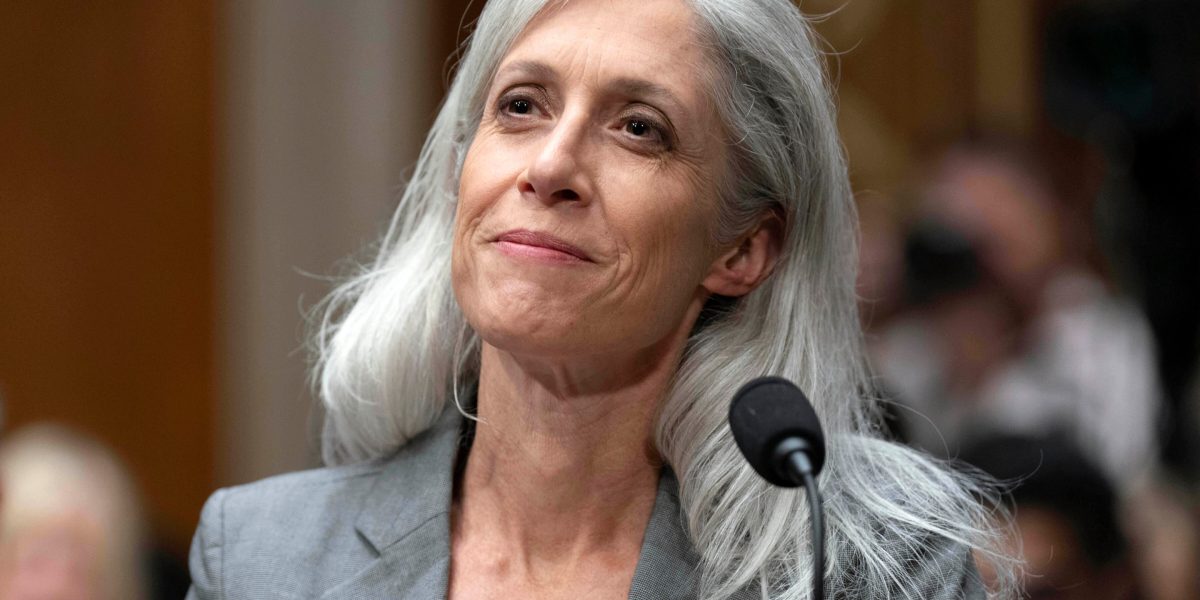
Susan Monarez was fired as the CDC’s director and Dr. Debra Houry resigned as the agency’s chief medical officer and deputy director over disputes about changes at the agency. The two will work with California’s public health department to help build trust in “science-driven decision-making,” Newsom’s office said.

“By bringing on expert scientific leaders to partner in this launch,” Newsom said in a statement, “we’re strengthening collaboration and laying the groundwork for a modern public health infrastructure that will offer trust and stability in scientific data not just across California, but nationally and globally.”

California has increasingly positioned itself as a counterweight to federal health policy, and Newsom has amped up his criticisms of President Donald Trump and challenged the Republican’s policies in court. The governor’s final term ends in just over a year and he’s gearing up for a possible presidential run in 2028.

California state Sen. Tony Strickland, a Republican, said the new initiative is an example of Newsom prioritizing his national political ambitions over the state.

“California has serious problems, and we need serious solutions from a serious leader,” Strickland said in a statement.

The White House and U.S. Department of Health and Human Services did not respond to emails seeking comment on the hirings.

Trump and Health Secretary Robert F. Kennedy Jr. have repeated falsehoods about vaccines, and the administration has given health recommendations this year that experts say were not backed by science.

Trump in September urged pregnant women not to take Tylenol, saying it could pose a risk of autism to their babies, remarks medical experts said were irresponsible. The CDC website was changed last month to contradict the longtime scientific conclusion that vaccines do not cause autism. A federal vaccine advisory panel voted earlier this month to reverse decades-old guidance recommending that all U.S. babies get immunized against the liver infection hepatitis B on the day they’re born. The vaccine is credited with preventing thousands of illnesses.

Monarez, a former director of a federal biomedical research agency, was named acting director of the CDC in January. Trump later nominated her to to serve as director. She was confirmed by the Senate in July, making her the first nonphysician to serve in the role. But she was fired by the Trump administration in August after less than a month in the post.

Kennedy has said Monarez was fired after she told him she was untrustworthy. But Monarez said that was false in congressional testimony and that she was fired after refusing to endorse new vaccine recommendations that weren’t backed by science.

Houry, who spent more than a decade at the CDC, was among a handful of top officials at the agency who resigned around the time Monarez was fired. Houry said in August she was concerned about the rise of vaccine misinformation during the Trump administration, as well as planned budget cuts, reorganization and firings at the CDC.

She said she’s excited to join California’s new initiative.

“California will advance practical, scalable solutions that strengthen public health within the state and across states —showing how states can modernize data, share capacity, and work together more efficiently, while remaining focused on protecting people and communities,” Houry said in a statement.

___

Associated Press writer Trân Nguyễn contributed.

This story was originally featured on Fortune.com


Source link

Continue Reading

Business

Casino strikes and a failed Trump ceasefire: What’s happening in Thai-Cambodia conflict

Published

on


Renewed fighting between Thailand and Cambodia along their shared border has now raged for over a week, undercutting U.S. President Donald Trump’s aspirations to be a peacemaker, while also threatening an economy that spreads across Southeast Asia.

Thai and Cambodian forces clashed earlier this year, which ended after the Trump administration helped to broker a peace deal between the two countries, both members of the Association of Southeast Asian Nations, a bloc of eleven Southeast Asian countries. Trump announced the deal with great fanfare on Oct. 26, on the sidelines of the ASEAN Summit in Kuala Lumpur, and since touted the deal as evidence of his dealmaking prowess.

With skirmishes continuing along the border this week, Trump has tried to get both sides to honor the ceasefire, to no avail. The conflict’s repercussions are expanding beyond Thailand and Cambodia: on Tuesday, Thailand cut fuel trade across the border to neighboring Laos, due to concerns that shipments were being diverted to Cambodian forces. 

ASEAN experts Fortune spoke with are skeptical that an agreement will stand the test of time.

“The ceasefire is inevitably fragile because it deals only with temporary matters—such as military withdrawal and monitoring—and does not address the fundamental territorial boundary issue,” says Pasha L. Hsieh, a law professor from the Singapore Management University.

Joanne Lin, a senior fellow at the ISEAS-Yusof Ishak Institute, agrees, adding that a key objective of the ceasefire was to secure Trump’s attendance at the ASEAN summit. As such, the truce was rushed and concluded quickly, with limited negotiation and few safeguards.

“It was too basic to manage a complex dispute involving border demarcation…and deep mistrust,” Lin says. “It helped pause the fighting, but once an incident occurred and nationalist sentiments took hold, the ceasefire had very little to anchor it.” 

The economic fallout

The Thai-Cambodia conflict has paralyzed trade across the shared border, particularly at the Klong Luek-Poipet crossing, halting commerce worth about $4.7 billion annually, according to The Nation, a Thai newspaper.

“In any conflict, economic lifelines are among the first to be affected, and this situation is no different,” says Lin of the ISEAS-Yusof Ishak Institute. “When fighting intensifies, everything along the conflict zone from businesses, trade routes, tourism facilities to services will inevitably be disrupted, regardless of whether they are deliberately targeted or not.”

Thailand has also bombed at least five Cambodian casinos, which experts think is political signaling to the Thai public.

“One of the most salient public grievances in Thailand is the perception of Cambodia as a hub for online scams, with widespread belief that some scam operations are based in casino complexes along the border,” says Pongkwan Sawasdipakdi, a lecturer in international relations at Bangkok’s Thammasat University. “By striking these sites, the military can demonstrate to the Thai public that it is taking concrete action against what many see as a major cross-border threat.”

At the same time, striking these Cambodian casinos serves the dual purpose of undermining Cambodia’s local economy, the academic adds. “There is a popular belief in Thailand that scam networks are connected to Cambodian political elites, so targeting casinos resonates not only as a security measure but also as a way of applying pressure on Phnom Penh.”

A history of conflict

The Thai-Cambodia border dispute stems from competing territorial claims that date back to colonial times, and are centered around the Preah Vihear Temple—an 11th-century Khmer temple complex within Cambodia’s Dângrêk Mountains.

After France withdrew from Indochina in 1954, Thailand stationed troops in the area to replace withdrawing colonial forces. In 1959, Cambodia took the dispute to the International Court of Justice, which ultimately ruled in its favor in 1962.

“Standard Thai textbooks recount how Thailand lost territories—now part of Cambodia—to France during the colonial period, regained them during World War II, and was then forced to return them after the war,” says Pongkwan. The dispute thus occupies a “uniquely sensitive place in Thai historical memory.”

Nationalist sentiments and poor conflict management are making things worse, says Lin of the ISEAS-Yusof Ishak Institute. Southeast Asia has largely been able to stop conflicts before they begin, thanks to organizations like ASEAN. But “the problem arises when that equilibrium breaks down and there are no strong mechanisms to contain escalation,” she says.

Social media is also fueling division, Pongkwan says. Cambodian netizens claim that some practices widely regarded as Thai in origin—such as Muay Thai and traditional Thai dress—are actually from Cambodia, angering their Thai counterparts.

Trump’s peace deals

Trump claims to have “ended eight wars” since taking office in January, including conflicts between Thailand and Cambodia, Israel and Iran, Pakistan and India, and Armenia and Azerbaijan, among others. The president used this track record to demand this year’s Nobel Peace Prize (which eventually went to Venezuelan opposition politician María Corina Machado).

Experts say these shallow motivations explains the fragility of the Thai-Cambodian ceasefire.

“The truce fell apart largely because Bangkok calculated—probably correctly—that the Trump administration was transactional and not deeply invested in the substance of the conflict,” says Pongkwan of Thammasat University. 

Thai leaders played along since there was little downside, she says, as being cooperative kept the country on Trump’s good side. This paid off as the U.S. and Thailand inked a rare earths agreement, paving the way for more trade between the two nations. (America is seeking to diversify supply chains after China’s tightened export curbs, signing trade agreements with four ASEAN nations at the recent summit.)

Yet now, Thailand appears to be pushing back against U.S. pressure to end the conflict. Thai Prime Minister Anutin Charnvirakul has fiercely pushed back against Trump’s characterization of the renewed fighting and pledged to protect Thai “sovereignty.” Anutin has also called elections for early February, which may cement nationalist and populist sentiments. 

Is an off-ramp possible?

Some experts like Lin say that an off-ramp from the conflict is possible, though it is unlikely to come from another “headline deal” like Trump’s.

“It has to involve sustained de-escalation, credible monitoring through ASEAN mechanisms and parallel political and technical talks, including reviving the Thailand-Cambodia Joint Border Commission,” Lin says, referring to the bilateral body that was established to manage and resolve disputes over the contested land.

Pongkwan too believes that an end to the conflict is possible, but adds that it’s more likely to happen after Thailand’s national elections next February.

“Given that the [Thai] government was operating as a minority coalition and elections are approaching, riding a nationalist wave was politically safer than appearing conciliatory,” she says, adding that an end to the conflict could be possible following the country’s elections—given that a government emerges with a strong electoral mandate and adopts a more conciliatory approach.

Others, like Tita Sanglee, an associate fellow at the ISEAS-Yusof Ishak Institute, say that ending the ongoing conflict may prove difficult.

“The case of Thailand as the stronger power is straightforward—it has no reason to stop without external pressure,” says Tita. She adds that Cambodia’s repeated calls for peace were made to international audiences rather than to Thailand, and that the former continues to engage in actions which the latter deems provocative. 

“I’m afraid there is no off-ramp for the conflict as things stand,” says Tita. “In the near term, the two countries would have to live with this “no war, yet no peace” situation.”


Source link

Continue Reading

Business

AI megadeals, IPO green shoots, and a middle-market squeeze: The new M&A reality for CFOs

Published

on


Good morning. M&A made a comeback this year, but growth is lagging in the middle market.

PwC’s U.S. Deals 2026 Outlook, released this morning, credits the AI boom and a revitalized private equity (PE) activity for the market achieving 10,333 deals worth $1.6 trillion through Nov. 30, 2025. Total deal value rose about 45% from last year and was the second-highest ever recorded, even amid major shifts in economic policy, such as tariffs.

Courtesy of PwC

Big bets on AI helped drive activity among tech companies—especially in megadeals. There were 74 megadeals (valued at $5 billion or more), the highest number since 2021, of which more than 20% were driven by AI.

Fortune has reported on several megadeals this year, including Alphabet agreeing to acquire cloud security and AI company Wiz for about $32 billion; Meta buying a 49% stake in Scale AI for roughly $14.8 billion; and CoreWeave acquiring Core Scientific for about $9 billion.

Another finding of PwC’s report is that PE activity rose, with financial-buyer deal volume increasing by 4% to 1,484 transactions, while M&A value increased 54% to $536 billion. Meanwhile, IPO activity rebounded in the second half of 2025 as investors eagerly embraced new offerings. Pent-up demand, easing rates, and steadier trade policy should bode well for 2026 IPOs, according to PwC.

However, when it comes to the middle market, M&A slumped to a decade low, with just 496 projected deals, hindered by macroeconomic factors. Stabilization in trade policy and interest rates could improve conditions, according to PwC. PE firms are increasingly looking to the middle market for opportunities, although valuation gaps remain a challenge for exits.

Looking ahead to 2026, a finance chief at an industrial manufacturing company told PwC that “2026 brings a rare mix of pressure and momentum.” Although cost and supply-chain challenges persist, “interest rates, AI buildout, and energy infrastructure development are creating real opportunities,” the CFO said.

Finance chiefs typically approach M&A by evaluating both risks and strategic opportunities. I recently talked with Zane Rowe, CFO of Workday, about the company’s definitive agreement to acquire Swedish AI startup Sana for around $1.1 billion. The deal, expected to close in the fourth quarter of Workday’s fiscal 2026, follows two other strategic acquisitions, Paradox and Flowise. The acquisitions reflect the company’s disciplined approach to M&A, Rowe said. “We keep a very high hurdle on talent, team, technology, and cultural fit, and it’s really a paradigm that has to fit perfectly; and that’s how we think about our M&A strategy,” he noted.

PwC projects that despite several potential challenges, the current M&A uptick rests on solid ground. If trade policy stabilizes, interest rates drop, and AI enthusiasm continues, the firm expects the market to build on the significant gains it made in 2025, especially if macroeconomic drivers and renewed confidence help push both middle-market corporates and PE firms back into the M&A arena. You can read the complete report here.

SherylEstrada
sheryl.estrada@fortune.com

Leaderboard

Christy Schwartz was promoted to CFO of Opendoor Technologies Inc. (Nasdaq: OPEN), a real estate technology company, effective Jan. 1, 2026. Schwartz, who has served as interim CFO, was selected after an extensive CFO search. On September 30, she became interim CFO, replacing Selim Freiha. Schwartz also previously served as Opendoor’s interim CFO from December 2022 to November 2024, and as chief accounting officer from March 2021 to May 2025. She also held the role of VP, corporate controller from August 2016 to March 2021.

Todd Saypoff was appointed CFO of Moore, a data-driven constituent experience management (CXM) company. Saypoff brings experience scaling financial operations across organizations ranging from startups to global enterprises. His background includes CFO roles at Lucid Holdings, Shazam, which was acquired by Apple, and NBCUniversal Owned Television Stations.

Big Deal

CFOs are the strategic partners to CEOs, and Teneo’s annual “Vision CEO and Investor Survey” provides some insight into what chief executives are expecting in 2026.

Seventy-three percent of CEOs and 82% of investors expect the global economy to improve in 2026. The U.S. remains the most attractive market in the world for investment. Meanwhile, AI spending will continue to rise in 2026, with 68% of CEOs increasing investment.

More than half (53%) of investors expect ROI from AI in six months or less, while only 16% of large-cap CEOs believe they can deliver on that timeline. Another finding is that regulatory streamlining is expected to boost business. More than 80% of both CEOs and investors cite recent policy changes related to technological advancement and regulatory streamlining as being helpful to their business.

The findings are based on insights from over 750 global CEOs and institutional investors, representing nearly $19 trillion in company and portfolio value.

Going deeper

“Meet the 25 most powerful rising executives reshaping corporate America” is a new article by Fortune‘s Ruth Umoh that highlights the Fortune Next to Lead list, now in its second year.  The list spotlights a group of 25 influential executives inside the Fortune 500. 

Overheard

“History shows that breakthrough technologies don’t just slot into existing systems, they make us rethink those systems entirely.”

Charles Lamanna, Microsoft corporate president, writes in a Fortune opinion piece titled, “I lead Microsoft’s enterprise AI agent strategy. Here’s what every company should know about how agents will rewrite work.”


Source link

Continue Reading

Business

Hollywood reels from shocking Reiner murders as police weigh charges for their son

Published

on


Los Angeles police are set to present a case to prosecutors Tuesday following Nick Reiner’s arrest in the killings of his parents, Rob Reiner and Michele Singer Reiner, which stunned their communities in Hollywood and Democratic politics, where both were widely beloved.

Prosecutors are set to decide whether and how to charge 32-year-old Nick Reiner, who is being held in jail without bail. He was arrested several hours after his parents were found dead in their home in the upscale Brentwood neighborhood of Los Angeles on Sunday, police said.

Rob Reiner was the Emmy-winning star of the sitcom “All in the Family” who went on to direct films including “When Harry Met Sally…” and ”The Princess Bride” He was an outspoken liberal activist for decades. Michele Singer Reiner was a photographer, movie producer and advocate for LGBTQ+ rights. They had been married for 36 years.

Representatives for the Reiner family did not respond to requests for comment, and it wasn’t clear if Nick Reiner had an attorney who could speak on his behalf. Police haven’t said anything about a motive for the killings.

Investigators believe Rob and Michelle Singer Reiner died from stab wounds, a law enforcement official told The Associated Press. The official, who was briefed on the investigation, could not publicly discuss the details and spoke to the AP on condition of anonymity.

The killings were especially shocking given the warm comic legacy of the family. Rob Reiner was the son of comedy legend Carl Reiner, who died in 2020 at age 98.

Kathy Bates, who won an Oscar as the star of Rob Reiner’s 1990 film “Misery,” was among those paying tribute to the couple.

“I loved Rob,” Bates said in a statement. “He was brilliant and kind, a man who made films of every genre to challenge himself as an artist. He also fought courageously for his political beliefs. He changed the course of my life. Michele was a gifted photographer.”

Bill Clinton called the couple “good, generous people who made everyone who knew them better.”

“Hillary and I are heartbroken by the tragic deaths of our friends Rob and Michele Reiner,” he said in a statement. “They inspired and uplifted millions through their work in film and television.”

Three months ago, Nick Reiner was photographed with his parents and siblings at the premiere of his father’s film “Spinal Tap 2: The End Continues.”

He had spoken publicly of his struggles with addiction, cycling in and out of treatment facilities with bouts of homelessness in between through his teen years. Rob and Nick Reiner explored — and seemed to improve — their relationship through the making of the 2016 film, “Being Charlie.”

Nick Reiner co-wrote and Rob Reiner directed the film about the struggles of an addicted son and a famous father. It was not autobiographical but included several elements of their lives.

“It forced us to understand ourselves better than we had,” Rob Reiner told the AP in 2016. “I told Nick while we were making it, I said, ‘You know it doesn’t matter, whatever happens to this thing, we won already.’”

Rob Reiner was long one of the most prolific directors in Hollywood, and his work included some of the most memorable and endlessly watchable movies of the 1980s and ’90s, including “This is Spinal Tap” and “A Few Good Men.”

He met Michele Singer Reiner on the set of “When Harry Met Sally…,” and their meeting would inspire the film’s shift to a happy ending, with stars Billy Crystal — one of Reiner’s closest friends for decades — and Meg Ryan ending up together on New Year’s Eve.

The Reiners were outspoken advocates for liberal causes and major Democratic donors.

President Donald Trump on Monday blamed Rob Reiner’s outspoken opposition to the president for the actor-director’s killing, delivering the unsubstantiated claim in a social media post that seemed intent on decrying his opponents even in the face of a tragedy.

___

Balsamo reported from Washington. Associated Press Entertainment Writer Andrew Dalton in Los Angeles contributed.


Source link

Continue Reading

Trending

Copyright © Miami Select.