Connect with us

Business

Small businesses say Trump tariffs are hurting consumers—here’s what is getting more expensive

Published

on


NEW YORK (AP) — The Ah Louis Store in San Luis Obispo, California, turns into a winter wonderland every holiday season.

Green garlands, giant nutcrackers, baubles and bows go up in early November on the historic downtown building that houses the gift shop. Inside, customers can choose from over 500 different types of ornaments and a variety of holiday gift baskets.

“We really just make it a magical spot,” co-owner Emily Butler said. “Whether you come in or not, we want to make sure that we’re spreading that holiday joy.”

But Butler says she and her twin sister-business partner had to work harder this year to turn browsers into buyers and to make a profit. Many of the decorations and stocking stuffers they sell are made overseas and either did not arrive or got more expensive when President Donald Trump imposed unusually high taxes on imported goods, she said.

In response, the sisters focused their selection on more profitable items like nutcrackers and gift baskets. They’ve also noticed customers cutting back, selecting a $100 gift basket over the $150 version, or buying one ornament instead of several, Butler said..

“We’re definitely seeing more cautious spending this year,” she said.

Along with the unpredictable tariffs, stubborn inflation and weak hiring have shaken consumer confidence in the U.S. economy. The vast majority of U.S. adults say they’ve noticed higher than usual prices for groceries, electricity and holiday gifts in recent months, according to a December poll from The Associated Press-NORC Center for Public Affairs Research.

A Gallup index that summarizes Americans’ assessments of current economic conditions fell to a 17-month low in November. Consumers also indicated less enthusiasm for spending money on holiday gifts; their estimated gift budgets decreased $229 between October and November, the largest drop Gallup has recorded at that point of the holiday shopping season. The survey was conducted in November, partially during the government shutdown, which might have tempered spending plans.

However, the worst-case impact on consumer prices that many economists foresaw from the Trump administration’s tariff policies hasn’t materialized. Some products have been affected more than others. Here’s a look at what has happened with supplies and prices in popular gifting categories.

Games and toys

Game and toys were particularly susceptible to tariff-related price increases since the majority of the ones sold in the U.S. are made in China, according to industry trade group The Toy Association. The tariff rate the Trump administration imposed on Chinese goods became a rollercoaster that started at an additional 10%, peaked at 145% and ended up at 47%.

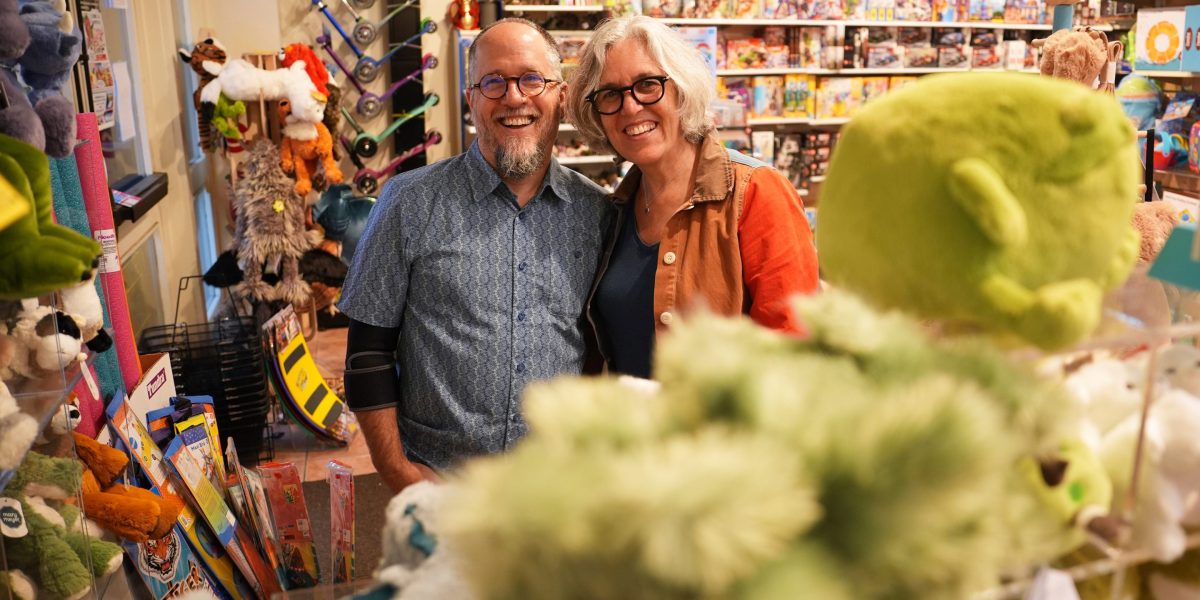
The uncertainty made it hard for toy shops to decide what to order for the holidays. Dean Smith, who co-owns independent toy stores JaZams in Princeton, New Jersey, and Lahaska, Pennsylvania, said the manufacturers in China that he buys toys from did not pass on their tariff costs all at once but he has seen their prices inch higher with every reorder.

Smith estimated that wholesale prices for 80% of his inventory went up anywhere from 5% to 20%. Some shoppers who don’t buy toys regularly might be surprised by price increases he adopted in turn, Smith said. A doll that sold for $20 to $25 last year now costs $30 to $35 at JaZams, he said.

“For folks with marginal incomes, this is going to be a very difficult holiday,” Smith said.

Electronics

Consumer electronics are mostly made in China and other Asian countries. In 2023, China accounted for 78% of U.S. smartphone imports, and 79% of laptop and tablet imports, according to the Consumer Technology Association trade group.

Best Buy said in May that it was raising prices due to tariffs. But CEO Corie Barry said late last month that the consumer electronics chain made sure to stock computers, phones and other products at different price levels, a decision she credited with helping Best Buy attract more lower-income shoppers.

“The consumer is not a monolith,” Barry told reporters.

Game consoles are always a popular holiday item, and console makers made news earlier this year when they announced price increases. Sony raised the price of the PlayStation 5 by $50 to $550 in August, following Microsoft and Nintendo raising prices for their game consoles.

Jewelry

Jewelry shoppers will likely see higher prices, but that has more to do with the soaring price of gold than tariffs so far, according to David Bonaparte, president & CEO of trade group Jewelers of America.

The varying tax rates Trump set for countries that import American goods with a total value less than their exports to the U.S. affected jewelry in various ways. Watches from Switzerland, for example, were subject to a 39% tariff from July 31 until the country struck a deal with the Trump administration last month to lower the import tax rate on its products to 15%.

India, which refines many of the diamonds sold in the U.S., rushed in shipments of the gemstones before a 50% tariff on the country’s products took effect on Aug. 27. Higher prices for jewelry made with diamonds shipped from India will likely start to be felt in 2026, Bonaparte said.

“It’s really a matter of what happens after Jan. 1,” he said. “If these tariffs are still in place, then prices will probably increase.”

Holiday decor

Holiday decorations are yet another category that mostly comes from overseas, particularly China.

Jeremy Rice co-owns House, a home-décor shop in Lexington, Kentucky, that specializes in artificial flowers, wreaths and table decorations. He said the tariffs slowed down production of much of his fall stock and seasonal merchandise like ribbon. Some larger and more expensive items he didn’t order at all because they would have been too expensive to retail.

Rice raised prices on the products he did get. The popular red berry stems that House long has carried increased from $8.95 last year to $10.95 due to higher import costs, he said.

“We sell thousands of these berry stems, and every time we sold one, I flinched from knowing what it should have been, knowing that our supplier paid more for them, which made us pay more for them, which made our customer pay more for them,” Rice said.

Shopping strategically

For those looking to avoid tariff-related price increases, John Harmon, managing director of technology research at technology consulting company Coresight Resarch, recommends checking out secondhand stores and discount retailers like T.J. Maxx, Marshall’s and HomeGoods. The off-price chains buy much of their inventory from leftover stock that would have entered the U.S. before new tariffs kicked in.

Joe Adamski, senior director at procurement services company ProcureAbility, said books, food and beverages are some of the domestically produced goods that make good gifts.


Source link

Continue Reading

Business

Valerie Health raises $30 million Series A to scale “AI front offices” for physicians

Published

on


The intersection of AI and healthcare has been getting massive attention from investors—and rightfully so, says Peter Shalek. 

“I think this is truly a once-in-a-lifetime moment,” said Shalek, cofounder and CEO of Valerie Health. “Software, at its best, takes complexity away from the end user that benefits their customers. It creates new experiences, and that hasn’t happened in the last 30 years… Over the next ten years, the experience of going to the doctor will change.” 

To meet the moment, Shalek—who co-founded digital mental health startup Joyable, which was sold to AbleTo—teamed up with Nitin Joshi, cofounder of Uber Health and Stripe engineering leader to start Valerie Health in 2023. Valerie, Shalek says, is “an AI front office” for independent doctors’ offices. 

“All the space that sits between the patient and provider, we’re taking that over and automating as much as possible,” Shalek said. “We automate referrals, we automate faxes, we automate scheduling. But over time, we’re building out a comprehensive platform that can really manage the entire workflow from front to back.”

Valerie Health—named with Shalek and Joshi’s children’s initials—has raised its $30 million Series A, led by Redpoint Ventures, Fortune has exclusively learned. General Catalyst, Primary Ventures, BoxGroup, and Karman Ventures participated in the round, along with 406 Ventures and Waybury Capital. Angels included executives from One Medical, Oscar, Main Street Health, and DoorDash. Valerie has now raised $39 million.  

“The future of healthcare is personalized and proactive,” said Meera Clark, partner at Redpoint Ventures. “Think about the ability to shift an appointment time or get that next appointment on the books—imagine a system has context to reach out to me and schedule based on my preferences, knows my healthcare needs, and knows my risk profile, what I might need to be screening for. You really need a foundation in place to be that proactive and personalized, and Valerie is laying that foundation.”

To Shalek, this isn’t just about a tech-enabled future, it’s the hope for better healthcare overall.

“We live in the U.S., with the best medical care in the world,” said Shalek. “We have incredible therapeutics, incredible diagnostics, incredible surgical capabilities—and yet, we have very mediocre average healthcare. The gap is about getting patients the right care that they need. It’s about democratizing healthcare, not just care for the healthiest and wealthiest people, which is too often what happens.”

See you tomorrow,

Allie Garfinkle
X:
@agarfinks
Email:alexandra.garfinkle@fortune.com
Submit a deal for the Term Sheet newsletter here.

Allie Garfinkle curated the deals section of today’s newsletter.Subscribe here.

Venture Deals

Link Cell Therapies, South San Francisco, Calif.-based oncology cell therapy company, launched from stealth with $60 million in Series A funding. Johnson & Johnson Innovation led the round, and was joined by Samsara BioCapital, Sheatree Capital, and Wing Venture Capital

AIR, an AI-powered credit intelligence startup, raised $6.1 million in seed funding. The round was co-led by Work-Bench Ventures and Lerer Hippeau.

Auxira Health, Columbia, Md.-based virtual cardiology company, raised $7.8 million in seed funding. Route 66 Ventures and Abundant Venture Partners led the round, and were joined by DigiTx Partners, American Heart Association Ventures, Ensemble Innovation Ventures, and City Light Capital.

– Soverli, a Zurich, Switzerland-based smartphone cybersecurity company, raised $2.6 million in pre-seed funding. Founderful led the round and was joined by the ETH Zurich Foundation and Venture Kick.

Private Equity

Godspeed Capital agreed to make a strategic investment in NextPoint Group, a Herndon, Va-based technology solutions provider for the intelligence and defense communities. Financial terms weren’t disclosed.

IPOs

Wealthfront, a Palo Alto, Calif.-based financial platform, is going public today with an offering of 34.6 million shares priced at $14 a share. 

Funds + Funds of Funds

Lightspeed Venture Partners, a Menlo Park, Calif.-based multi-stage venture capital firm, raised $9 billion in capital across six vehicles. 

Dragoneer Investment Group, a San Francisco-based investment firm, raised $4.3 billion for its seventh venture capital fund. 

Exits

Freshworks agreed to acquire FireHydrant, a New York-based AI-enabled incident management startup. Financial terms weren’t disclosed.

NVIDIA agreed to acquire SchedMD, a Lehi, Utah-based developer of open-source workload management system Slurm.

Fortune AIQ: The year in AI–and what’s ahead

Businesses took big steps forward on the AI journey in 2025, from hiring Chief AI Officers to experimenting with AI agents. The lessons learned—both good and bad–combined with the technology’s latest innovations will make 2026 another decisive year. Explore all of Fortune AIQ, and read the latest playbook below: 

The 3 trends that dominated companies’ AI rollouts in 2025.

2025 was the year of agentic AI. How did we do?

AI coding tools exploded in 2025. The first security exploits show what could go wrong.

The big AI New Year’s resolution for businesses in 2026: ROI.

Businesses face a confusing patchwork of AI policy and rules. Is clarity on the horizon?


Source link

Continue Reading

Business

America’s $38 trillion national debt will exacerbate generational imbalance, says think tank

Published

on


The United States’ current borrowing trajectory will place an “undue burden on future generations,” an economic think tank has warned, with younger generations facing a higher interest rate environment, slower economic growth, and stalling wage increases.

The latest research from the American Action Forum chimes with concerns across both the public and private sectors. Everyone from JPMorganChase CEO Jamie Dimon to Fed chairman Jerome Powell is nervously eyeing the nation’s $38 trillion debt burden. The government has paid $10 billion a week to service the debt for the first few months of the 2026 fiscal year.

Economists are concerned that, at some point, the growth of the American economy will become so disconnected from the borrowing of its government that bond buyers will demand higher premiums on their loans. The worry is that the central bank will intervene by increasing the money supply—kick-starting an inflationary cycle—but that ultimately the government may have to cut back on spending.

Bridgewater Associates founder Ray Dalio has described this scenario as an economic “heart attack,” with government investment squeezed out by the need for the country to maintain its debt obligations.

Younger people will face the sharpest end of that outcome, warned Jordan Haring, director of fiscal policy at the American Action Forum. Haring, formerly a senior policy analyst at the Committee for a Responsible Federal Budget (CRFB) wrote in a note this week: “The United States’ high debt load exacerbates generational imbalances. These imbalances will ultimately burden younger and future generations with higher interest payments, slower economic growth, slower income growth, and a greater burden to bear for future tax or spending changes.”

She continued: “Without significant policy changes to reduce debt growth, future generations will inherit a budget where significant resources are locked into servicing past borrowing.”

“As interest costs rise, the federal government will have less money available for education, infrastructure, or scientific research—areas that directly support long-term prosperity. Future taxpayers will face higher tax burdens or reduced government services simply to cover the costs created by previous budget deficits.”

Haring pointed to the discrepancies in budgets between education and health services, for example. Already the gap is large: In 2025, the Department for Education requested $82.4 billion for its budget, while in 2024 Medicaid spending totalled more than $900 billion, per the Medicaid and CHIP Payment and Access Commission.

With an ageing population, it is likely that spending on social care will increase over the coming decades. Lower birth rates will mean fewer entrants into the ranks of the economically active to maintain the revenues gathered by the government.

While the accuracy of the conservative think tank’s research has been criticised in the past, Haring’s stance has been echoed by the likes of BlackRock’s Larry Fink.

Last year, Fink urged corporate leaders and politicians to pursue “an organized, high-level effort” to rethink the retirement system. In a letter to BlackRock investors, Fink wrote: “The federal government has prioritized maintaining entitlement benefits for people my age (I’m 71) even though it might mean that Social Security will struggle to meet its full obligations when younger workers retire.”

He added: “It’s no wonder younger generations, Millennials and Gen Z, are so economically anxious. They believe my generation—the baby boomers—have focused on their own financial well-being to the detriment of who comes next. And in the case of retirement, they’re right.”

The Great Wealth Transfer option

With a shift in economic activity from one generation to the next also comes with new flows of wealth, and this is something governments around the world will be looking to leverage, according to experts.

Studies have found that over the next 20 to 30 years as much as $124 trillion will be passed down from older generations to their younger counterparts, though UBS puts the figure of the “Great Wealth Transfer” at $80 trillion. Baby boomers—people born between 1946 and 1964—are the wealthiest generation in history, and as these individuals begin passing on their assets, sums will go immediately to their Gen X, millennial, and Gen Z successors, and some cash will go to spouses.

“The change in wealth comes at a time when many governments around the world have high debt and deficits. It seems unrealistic to suppose that governments will just sit idly by as this wealth moves around. We would expect governments to attempt to mobilize that wealth to help fund their debt, but in doing so that denies private sector investment access to some of those funds.”


Source link

Continue Reading

Business

Meet 25 rising execs inside the Fortune 500

Published

on


Good morning. Major technology shifts often spur the rise of a new generation of leaders. Satya Nadella’s track record in building Microsoft’s cloud business earned him the top job in 2014. Arvind Krishna’s early bet on cloud and AI made him an obvious choice to run IBM, as did Ginni Rometty’s reputation in disruptive technologies before him. Doug McMillion’s push for e-commerce proved pivotal in becoming CEO of Walmart and transforming the retailer while there. Go back to 1989 and a digital-first Stan Bergman was champing at the bit to transform Henry Schein.

But technical savvy alone does not a leader make. For a glimpse of who’s likely to take the lead in this next era for the Fortune 500, check out theFortune Next to Lead list that’s out this morning. My colleague Ruth Umoh spent months talking to board directors, management consultants, leadership advisors, recruiters, and current and former CEOs to identify 25 rising executives inside the Fortune 500 who exhibit the skills and mindset of a new breed of CEO. 

Candidates were evaluated across several dimensions, from the scale and impact of their role with the enterprise to their vision and influence beyond the company. There’s Josh D’Amaro of Disney, who oversees a worldwide experiences division embarking on a $60 billion expansion of parks, resorts, cruise ships, and next-generation guest experiences. Within Microsoft, Scott Guthrie’s record at Azure has put him at the center of the company’s cloud and AI strategy. Donna Langley at NBCUniversal is redefining the studio’s multi-platform strategy, while General Motors’ Mark Reuss oversees a broad operational portfolio, from engineering and manufacturing to battery strategy and global markets, making him a central architect of GM’s long-term competitiveness. Keep an eye, too, on Marianne Lake of JPMorgan Chase and Kate Gutmann of UPS.

As always, I’d love to hear your thoughts on candidates you think deserve a spot, and what qualities you think will determine success in the next generation of Fortune 500 CEOs.

Contact CEO Daily via Diane Brady at diane.brady@fortune.com

Top news

New jobs data

Today is a quirky jobs day that will shed some light on the state of the U.S. economy. The Bureau of Labor Statistics is releasing jobs numbers for November and October. But the data will be patchy because of disruptions caused by the government shutdown; there will be no October unemployment report, for instance. “We’re going to have to look at [the data] carefully and with a somewhat skeptical eye” because it may be “distorted by very technical factors,” Fed Chair Jerome Powell said.

PayPal as a bank

PayPal is taking advantage of the Trump administration’s looser rules towards fintech companies and applying to become a bank. The payments company says the designation will allow it to lend more to small businesses. 

Introducing the U.S. ‘tech force’

The Trump Administration on Monday unveiled what it’s calling the U.S. “tech force” of 1,000 early career engineers and other specialists to research and develop AI and financial products for the federal government. Companies like Nvidia, Palantir, Amazon and Google will partner with the government on the initiative and second some of their own top talent to join its ranks. 

Ford’s EV bust

Ford will record a $19.5 billion impairment for the rollback of parts of its EV strategy. The Detroit carmaker is contending with lower-than-expected demand for EVs and plans to halt production of some pure electric vehicles in favor of hybrid models. 

Fed Chair finalists

President Trump could announce his pick for Fed chair before Christmas. Fortune’s Eleanor Pringle introduces us to the finalists and dissects their on-record opinions about the running of the central bank. This weekend, prediction markets were betting that the race had narrowed to a Kevin vs. Kevin contest

McKinsey gets lean

McKinsey is planning to shirk its non-client facing departments by about 10% in coming months as it contends with a slowdown in its traditional services and flatlining revenue. Governments in China and Saudi Arabia, for instance, have cut back on using consulting firms. 

Companies’ ‘93-7 split’ 

Bill Briggs, Deloitte’s chief technology officer, told Fortune’s Nick Lichtenberg that companies are pouring 93% of their AI budget into technology and only 7% into the people expected to use it. That lopsided investment is all wrong, Briggs says, since it focuses on the physical “ingredients” of AI and not the culture, workflow, and training needed to make the technology effective.

The markets

S&P 500 futures are down 0.25% this morning. The last session closed down 0.16%. STOXX Europe 600 was down 0.05% in early trading. The U.K.’s FTSE 100 was down 0.46% in early trading. Japan’s Nikkei 225 was down 1.56%. China’s CSI 300 was down 1.2%. The South Korea KOSPI was down 2.24%. India’s NIFTY 50 was down 0.64%. Bitcoin went to $87K.

Around the watercooler

Google cofounder Sergey Brin said he was ‘spiraling’ before returning to work on Gemini—and staying retired ‘would’ve been a big mistake’ by Marco Quiroz-Gutierrez

Former Meta integrity chief says new report reveals ‘disappointing’ ad fraud epidemic at the social-media giant by Lily Mae Lazarus

‘I had to take 60 meetings’: Jeff Bezos says ‘the hardest thing I’ve ever done’ was raising the first million dollars of seed capital for Amazon by Dave Smith

What happens to old AI chips? They’re still put to good use and don’t depreciate that fast, analyst says by Jason Ma

CEO Daily is compiled and edited by Claire Zillman and Lee Clifford.


Source link

Continue Reading

Trending

Copyright © Miami Select.