Connect with us

Business

Co-working provider JustCo CEO sees commonalities with hotels: ‘It’s a hospitality business’

Published

on


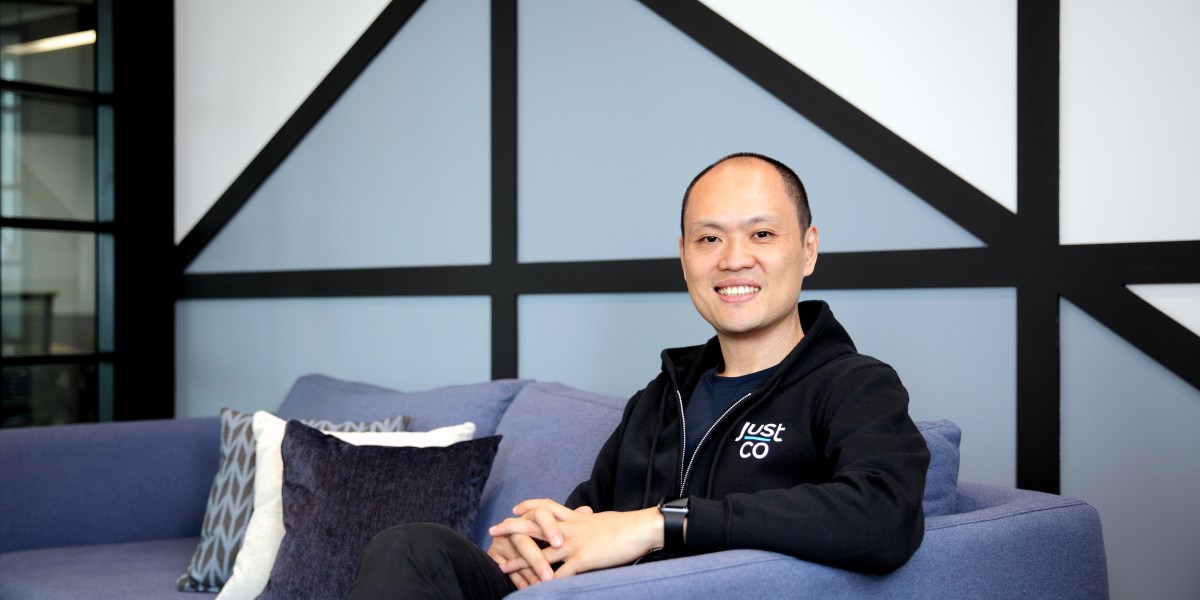
Kong Wan Sing, the founder and CEO of JustCo, one of Asia’s largest co-working space providers, doesn’t quite think of himself as leading an office company. Instead, he sees parallels with a different property business: Hotels.

“It’s a hospitality business. People come to us not just for the network, but also for the hospitality,” he told Fortune. “You need to serve them. You have to take care of their needs, like serving the customers who are coming to look for them in the office.”

Kong and JustCo are expanding their presence in Asia even as employers and employees continue to fight a battle about flexible work and returning to the office. Globally, corporate giants ranging from Amazon to JPMorgan have called workers back to the office full-time. But employees tout the benefits of working from home and hybrid work, forcing employers and office designers to get creative in how they bring people back. 

The company is also expanding into new markets regionally, including Malaysia and India. In the longer run, they’re also looking to move into countries in North Asia and the Middle East.

“After entering all these markets, we will be truly covering all the key cities in Asia-Pacific,” says Kong. He’s even considering returning to mainland China, after JustCo exited the market in 2022 due to tight social distancing regulations during the COVID pandemic.

JustCo just entered the Vietnam market with a new office along Ho Chi Minh City’s waterfront. The Vietnamese city is the tenth urban market in Asia for JustCo. It’s also a return of sorts for Kong, who was first exposed to the idea of a flexi-office in Ho Chi Minh City several decades ago. 

JustCo’s story

Kong Wan Sing founded JustCo in Singapore in 2011. Following a regional expansion drive in 2015, it now operates 48 offices across Asia-Pacific, including in major cities like Seoul, Bangkok, Taipei, Melbourne, and Sydney. Kong himself hails from a family of entrepreneurs; his parents operate garment factories in nearby Malaysia. “There’s genes inside me to build a business,” he says. 

In the early 2000s, Kong was an employee of Singaporean real estate investment company Mapletree, working out of a flexi-office in Vietnam’s Ho Chi Minh City. (A flexi-office is a modern workspace where employees don’t have assigned desks, but instead choose from various work zones including hot desks, quiet pods, and collaborative areas.)

The experience opened his eyes to the value of flexible workspaces, and he saw a business opportunity in Asia, where such spaces were still few and far between. 

Kong notes that, just three years ago, just under 4% of all offices in Asia-Pacific were flexi-offices. It’s since risen to over 5%, but that’s still half the level seen in more developed markets in Europe and the U.S. Yet JustCo’s CEO says he’s seeing a “surge” in Asia: “The growth is definitely much faster than European or American countries.”

JustCo also leases small offices for businesses to rent. Sixty percent of JustCo’s clients are multinational corporations looking for space for a regional office, Kong said. Companies like Chinese tech giant Tencent and U.S. vaccine maker Moderna use JustCo for their local offices. 

New brands

JustCo has since broadened its offerings to potential renters, launching two new brands: “THE COLLECTIVE” and “the boring office.”

The former is a luxury co-working space, equipped with premium white-glove services like daily breakfasts and aperitif hours, and twice-a-day office cleaning. The first such space was launched in Tokyo in March.

“Japan is a very mature market, and people in Japan—they appreciate luxury stuff,” said Kong, when asked why the country was chosen to debut its premium brand. Kong and his team has since launched THE COLLECTIVE in Bangkok and Taipei; the company will bring the concept to Singapore and India in 2026.

“The boring office” sits on the other end of the spectrum, catering to firms that want a stripped-down solution. “When you go to the boring office, there’s no cleaning [of rooms] every day, only once a week,” Kong says. “And the pantry is a very basic pantry that provides only water—there’s no coffee, nothing.” The first space under that brand was launched in Singapore in July.

These three brands cater to companies’ differing needs, and are priced along a sliding scale. 

The firm’s luxury offices are 20 to 30% more costly than the classic JustCo workspace, while the boring office’s spaces are cheaper by roughly the same amount, Kong explains.


Source link

Continue Reading

Business

What happens to old AI chips? They’re still put to good use and don’t depreciate that fast

Published

on


New AI chips seem to hit the market at a quicker pace as tech companies scramble to gain supremacy in the global arms race for computational power.

But that begs the question: What happens to all those older-generation chips?

The AI stock boom has lost a lot of momentum in recent weeks due, in part, to worries that so-called hyperscalers aren’t correctly accounting for the depreciation in the hoard of chips they’ve purchased to power chatbots.

Michael Burry—the investor of Big Short fame who famously predicted the 2008 housing collapse—sounded the alarm last month when he warned AI-era profits are built on “one of the most common frauds in the modern era,” namely stretching the depreciation schedule. He estimated Big Tech will understate depreciation by $176 billion between 2026 and 2028.

But according to a note last week from Alpine Macro, chip depreciation fears are overstated for three reasons.

First, analysts pointed out software advances that accompany next-generation chips can also level up older-generation processors. For example, software can improve the performance of Nvidia’s five-year-old A100 chip by two to three times compared to its initial version.

Second, Alpine said the need for older chips remains strong amid rising demand for inference, meaning when a chatbot responds to queries. In fact, inference demand will significantly outpace demand for AI training in the coming years.

“For inference, the latest hardware helps but is often not essential, so chip quantity can substitute for cutting-edge quality,” analysts wrote, adding Google is still running seven- to eight-year-old TPUs at full utilization.

Third, China continues to demonstrate “insatiable” demand for AI chips as its supply “lags the U.S. by several generations in quality and severalfold in quantity.” And even though Beijing has banned some U.S. chips, the black market will continue to serve China’s shortfalls.

Meanwhile, not all chips used in AI belong to hyperscalers. Even graphics processors contained in everyday gaming consoles could work.

A note last week from Yardeni Research pointed to “distributed AI,” which draws on unused chips in homes, crypto-mining servers, offices, universities, and data centers to act as global virtual networks.

While distributed AI can be slower than a cluster of chips housed in the same data center, its network architecture can be more resilient if a computer or a group of them fails, Yardeni added.

“Though we are unable to ascertain how many GPUs were being linked in this manner, Distributed AI is certainly an interesting area worth watching, particularly given that billions are being spent to build new, large data centers,” the note said.


Source link

Continue Reading

Business

‘I had to take 60 meetings’: Jeff Bezos says ‘the hardest thing I’ve ever done’ was raising the first million dollars of seed capital for Amazon

Published

on


Today, Amazon’s market cap is hovering around $2.38 trillion, and founder Jeff Bezos is one of the world’s richest men, worth $236.1 billion. But three decades ago, in 1995, getting the first million dollars in seed capital for Amazon was more grueling than any challenge that would follow. One year ago, at New York’s Dealbook Summit, Bezos told Andrew Ross Sorkin those early fundraising efforts were an absolute slog, with dozens of meetings with angel investors—the vast majority of which were “hard-earned no’s.”

“I had to take 60 meetings,” Bezos said, in reference to the effort required to convince angel investors to sink tens of thousands of dollars into his company. “It was the hardest thing I’ve ever done, basically.”

The structure was straightforward: Bezos said he offered 20% of Amazon for a $5 million valuation. He eventually got around 20 investors to each invest around $50,000. But out of those 60 meetings he took around that time, 40 investors said no—and those 40 “no’s” were particularly soul-crushing because before getting an answer, each back-and-forth required “multiple meetings” and substantial effort.

Bezos said he had a hard time convincing investors selling books over the internet was a good idea. “The first question was what’s the internet? Everybody wanted to know what the internet was,” Bezos recalled. Few investors had heard of the World Wide Web, let alone grasped its commercial potential.

That said, Bezos admitted brutal honesty with his potential investors may have played a role in getting so many rejections.

“I would always tell people I thought there was a 70% chance they would lose their investment,” he said. “In retrospect, I think that might have been a little naive. But I think it was true. In fact, if anything, I think I was giving myself better odds than the real odds.”

Bezos said getting those investors on board in the mid-90s was absolutely critical. “The whole enterprise could have been extinguished then,” he said.

You can watch Bezos’ full interview with Andrew Ross Sorkin below. He starts talking about this interview gauntlet for seed capital around the 33-minute mark.

This story was originally featured on Fortune.com


Source link

Continue Reading

Business

Google cofounder Sergey Brin said he was ‘spiraling’ before returning to work on Gemini

Published

on


Google cofounder Sergey Brin thought retiring from Google in 2019 would mean quietly studying physics for days on end in cafés. 

But when COVID hit soon after, he realized he may have made a mistake.

“That didn’t work because there were no more cafés,” he told students at Stanford University’s School of Engineering centennial celebration last week, Business Insider reported.

The transition from president of Google parent company Alphabet to a 40-something retiree ended up not being as smooth as he imagined, and soon after he said he was “spiraling” and “kind of not being sharp” as he stepped away from busy corporate life.

Therefore, when Google began allowing small numbers of employees back into the office, Brin tagged along and put his efforts into what would become Google’s AI model, Gemini. Despite being the world’s fourth-richest man with a net worth of $247 billion, retirement wasn’t for him, he said.

“To be able to have that technical creative outlet, I think that’s very rewarding,” Brin said. “If I’d stayed retired, I think that would’ve been a big mistake.”

By 2023, Brin was back to work in a big way, visiting the company’s office three to four times a week, the Wall Street Journalreported, working with researchers and holding weekly discussions with Google employees about new AI research. He also reportedly had a hand in some personnel decisions, like hiring. 

Skip forward to 2025 and Brin’s plans for a peaceful retirement of quiet study are out the window. In February, he made waves for an internal memo in which, despite Google’s three-day in-office policy, he recommended Google employees go into the company’s Mountain View, Calif. offices at least every weekday, and that 60 hours a week was the “sweet spot” of productivity.

Brin’s newfound efforts at work may have been necessary as OpenAI’s release of ChatGPT in 2022 caught the tech giant off guard, after it had led the field of AI research with DeepMind and Google Brain for years.

To be sure, Google for its part has been rising in the AI race. Analysts raved last month about Gemini 3, the company’s latest update to its LLM, and Google’s stock is up about 8% since its release. Meanwhile, OpenAI earlier this month declared a “code red,” its highest alert level, to improve ChatGPT. 

Brin added in the talk at Stanford that Google has an advantage in the AI arms race precisely because of the foundation it laid over years through its neural network research, its custom AI chips, and its data center infrastructure.

“Very few have that scale,” he said.


Source link

Continue Reading

Trending

Copyright © Miami Select.