
Politics
Good defense — ACA — Coast Guard — rocking out — Machado
Defense & division
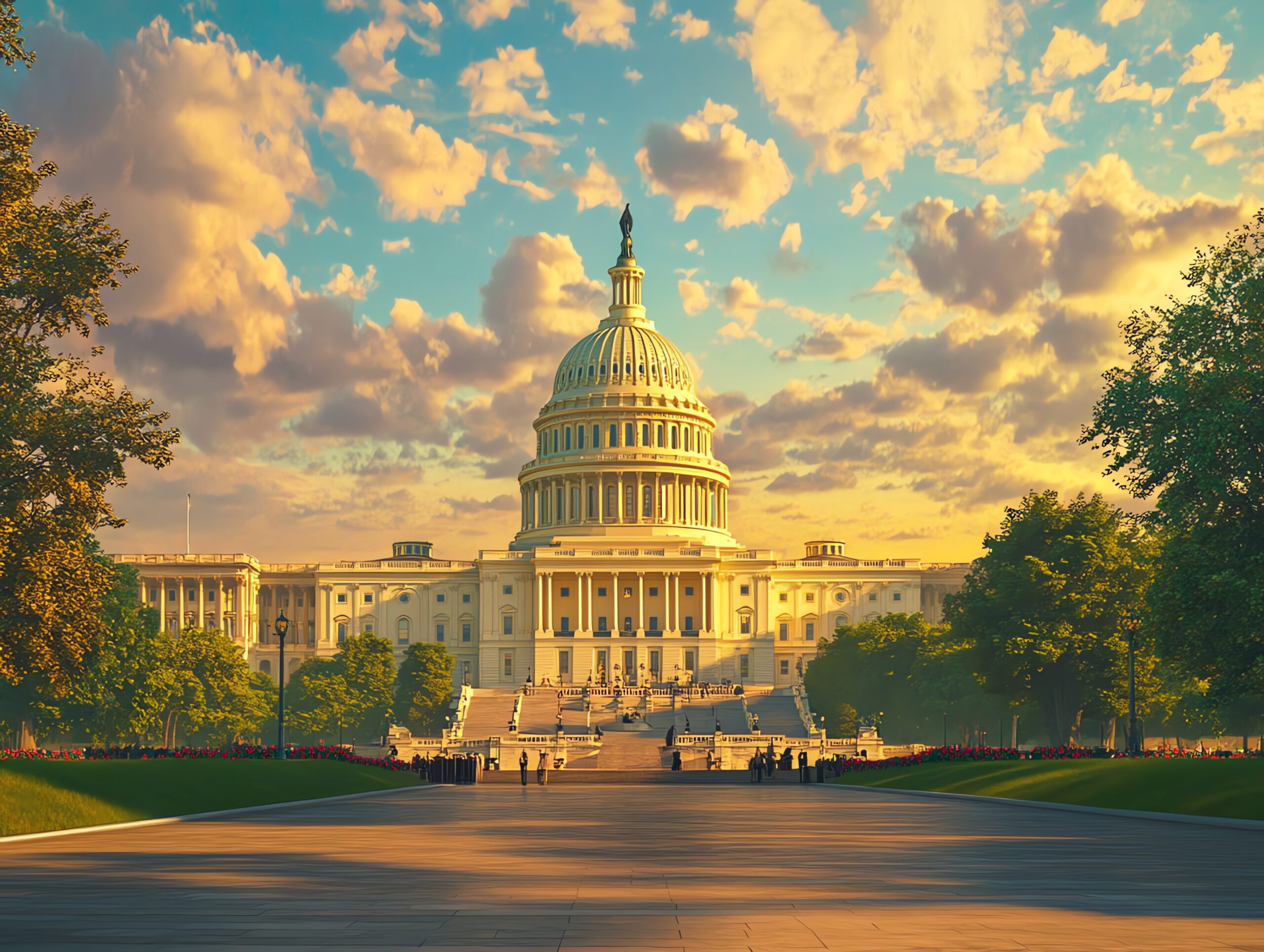
A $900 billion spending package cleared the House this week with bipartisan support. Florida’s congressional delegation said this year’s National Defense Authorization Act (NDAA) (S 1071) includes numerous policy wins and important projects benefiting the Sunshine State. However, a few members said they could not support specific provisions in the bill.
The House passed the package on a 312-112 vote. In Florida, 15 House Republicans and seven Democrats all backed the legislation.
“This bill delivers exactly what America has needed — bombs and bullets from America, for America,” said Rep. Brian Mast, a Stuart Republican who chairs the House Foreign Affairs Committee. “It also does something very important — it rebuilds American foreign policy.”
He pointed toward provisions to modernize diplomacy to deal with foreign propaganda and misinformation, while also praising investment in countries that can boost U.S. national security priorities regarding critical minerals, undersea cables and energy.
Rep. Vern Buchanan, a Longboat Key Republican who co-chairs Florida’s congressional delegation, saw four bills included in the House-passed NDAA, including protections for animals used in live-fire training, restrictions on the release of U.S. surveillance to stop it from reaching Chinese adversaries, transparency on detection of any unmanned aircraft systems, and a listing of Defense Department needs requiring foreign materials.
“I’m proud that several of my proposals, each focused on readiness, accountability and supporting our service members, were included in the final package,” Buchanan said. “Together, these measures strengthen our forces and reaffirm our commitment to the men and women in uniform.”
But it wasn’t just Republicans who scored wins in the bill. Rep. Debbie Wasserman Schultz, a Weston Democrat and the delegation’s other co-chair, saw her PROTECT Our Children Act, authorizing law enforcement support through the Internet Crimes Against Children (ICAC) Task Force, included in the NDAA.
“Our lives are increasingly intertwined with the internet, and those who would commit crimes against our children know that all too well,” Wasserman Schultz said. “With the PROTECT Our Children Act, the ICAC Task Force Program will get predators offline and help make the internet a safe space for all children.”
As for regional wins, Rep. Kathy Castor, a Tampa Democrat, said $74 million in construction funding for KC-46 aircraft hangars and maintenance facilities at MacDill Air Force Base was included in the bill.
“I am particularly proud to have championed parts of the defense bill that benefit the service members and families at MacDill Air Force Base, including pay raises and critical improvements to on-base housing and infrastructure, health care and child care,” she said.
But not everyone was happy with the final product. Republicans Reps. Byron Donalds, Anna Paulina Luna and Greg Steube all voted down on the NDAA, as did Democratic Rep. Maxwell Frost. Steube, a Sarasota Republican, said he was optimistic about a version of the NDAA passed by the House earlier this year. Still, the Senate watered it down in back-and-forth negotiations.
“As a veteran, I will not support a bill shaped to satisfy the left instead of advancing our priorities. And it is telling that 115 Democrats voted for it,” Steube posted. “Under Republican rule, in the U.S. Defense bill, we are sending billions overseas: $800 million to Ukraine’s endless war, $130 million to Syria, $1 billion to Taiwan, $15 million to Lebanon. That money should be going to our troops and the American people.”
Regardless, the House added some changes from Senate-passed language, so the bill will return to the upper chamber before it heads to President Donald Trump’s desk.
ACA alternative
The Republican majority in the Senate, meanwhile, has spent this week grappling with health care. Both of Florida’s Senators, Sens. Ashley Moody and Rick Scott, voted down on considering an extension of health care subsidies set to expire at year’s end. But an internal fight simultaneously played out as conservatives sought an alternative to, or an evolution of, the Affordable Care Act, the signature legislation signed by Democratic President Barack Obama more than a decade ago.

Scott, a longtime Obamacare critic, released one of the top GOP proposals under consideration. The Naples Republican promoted his More Affordable Care Act at the Rescuing The American Dream summit held last week in D.C., and has continued to rally support around the proposal.
“American families see clearly that Obamacare has failed to deliver on its promises – instead, it created a broken system that screwed over the American people with higher costs and fewer options,” Scott said. “Families are left paying higher premiums and higher deductibles for health care plans that don’t even fit their needs. We can fix that: we just have to let Americans be the consumer so they can get care that truly fits their needs and drive competition to lower costs.”
Scott’s plan would establish Health Savings Accounts controlled by consumers, which he said would be more beneficial than directing federal funds directly to insurance companies.
“We can make Obamacare actually work for families by giving them options, allowing them to shop across state lines, increasing transparency in health care, and giving any financial support to them directly through HSA-style Trump Health Freedom Accounts so families can choose the care that fits their needs,” Scott said. “With more competition, clearer pricing, and allowing Americans, not government, to be the consumer, we can transform Obamacare into a system that gives Americans the freedom to get the care they need.”
He picked up co-sponsors in the Senate, while Rep. Aaron Bean, a Fernandina Beach Republican, co-introduced a companion bill in the House with Rep. August Pfluger, a Texas Republican.
“We’re putting patients — not bureaucrats or insurance companies — back in charge of their health care,” Bean said. “With Trump Health Freedom Accounts, competition across state lines, expanded access to employer-sponsored health insurance, and price transparency, this legislation empowers Americans to make informed health care decisions, increases choice and competition, and lowers health care costs. This is America First health care, and under House Republican leadership, we’re fixing the broken system.”

Coast Guard boost
The Sunshine State is certainly not short of Coast Guard activity, but in a letter to the Department of Homeland Security, Moody is calling for a new Coast Guard training facility in Florida.
Moody said the new Coast Guard training base would add to the already formidable military presence in Florida and strengthen national security, as the federal government issued requests for information to states about a possible new Coast Guard training facility. Homeland Security called for requests last month.

Moody drafted a letter to Secretary of Homeland Security Kristi Noem outlining the benefits of adding a Coast Guard training facility in Florida. She noted that adding a Coast Guard training facility would be a natural next step.
“Florida already plays a substantial role in securing our country — we’re the proud home of 21 military installations and three combatant commands,” Moody said. “It just makes sense that our nation’s next U.S. Coast Guard training facility join these bases here in the Sunshine State, where we have a proven military infrastructure, available capacity, and strong interagency partnerships.”
There are already about a combined 50 Coast Guard offices, units and installations in Florida. Moody said in her letter to Noem that the state is a good fit for a training base, though she did not specify where such a facility would be located.
Spending crackdown
The House Oversight Committee passed legislation that could put a sunset date on all federal programs that Congress doesn’t specifically reauthorize.
Rep. Kat Cammack, a Gainesville Republican, said her Unauthorized Spending Accountability (USA) Act (HR 143) would restore the rightful role of Congress when it comes to reining in government.

“For too long, Washington has allowed billions of taxpayer dollars to flow to programs that haven’t been reviewed or reauthorized in years — sometimes decades. The USA Act restores accountability by forcing Congress to do its job: examine these programs every three years, determine whether they are effective, and ensure that federal funds are being used responsibly. This is a common sense, necessary step to rein in wasteful spending and return real oversight to the American people.”
As written, the bill requires a sunset after three years for any program not authorized by Congress and requires that any new programs include such a clause from the beginning.
The Congressional Budget Office, in its latest report, identified nearly 1,300 programs that expired before the end of the 2024 fiscal year but continue to operate, with another 251 programs set to expire this fiscal year. The same report spotlighted $516 billion in spending tied to 491 expired authorizations.

Rocking the vote
Rep. Maxwell Frost hosted a second MadSoul Music & Arts Festival over the weekend, a concert and political gathering that attracted nearly 5,000 people to the Central Florida Fairgrounds.
The event put nationally prominent Democratic Reps. Ayanna Pressley of Massachusetts and Delia Ramirez of Illinois onstage alongside music acts like Aly & AJ and Magdalena Bay.

“History has shown us that the arts, music, and culture is not just a form of self-expression but tools of powerful dissent,” said Frost, an Orlando Democrat.
“And in a moment of rising authoritarianism in our state and nationwide, this year, MadSoul gave our community a place to reclaim joy as a form of resistance. Nearly 5,000 people – mostly young people who aren’t often given a seat at the table in politics – showed up, enjoyed music, and felt seen in a way that inspired them to take action, whether that was registering to vote or getting plugged in with organizations doing real work. Our campaign is committed to building a movement rooted in joy as we work to build the future we all deserve.”
More than 30 grassroots political groups also had a presence at the event, making the concert into a networking event for activists involved in reproductive freedom, climate justice and global human rights.
Preventing HPV
Bipartisan legislation supporting vaccination against a sexually transmitted virus will be championed this year by a Florida lawmaker. Castor filed the Promoting Resources to Expand Vaccination, Education and New Treatments for (PREVENT) HPV Cancers Act, along with Republican Rep. Don Bacon of Nebraska and Democratic Rep. Kim Schrier of Washington.
The bill would fund awareness of the Human Papillomavirus (HPV) vaccine among health care providers and families.

“HPV immunization can prevent six types of cancer, and boosting immunization rates and raising public awareness can save tens of thousands of lives from preventable cancer deaths each year,” Castor said.
“I’m proud to reintroduce the bipartisan PREVENT HPV Cancers Act with Reps. Bacon and Schrier to ensure Americans across the country have the information and access they need to protect themselves from HPV and HPV-associated cancers through immunizations and cancer screenings. I’m grateful to my friends back home at the Moffitt Cancer Center for bringing health experts and advocates together around the shared goal of eliminating HPV-associated cancers once and for all.”
Numerous health care organizations endorsed the legislation, including the American Academy of Pediatrics and American Association for Cancer Research.
Stinky minks
The pandemic proved that raising minks for fur isn’t just cruel but a high-fashion risk to public health, according to Rep. Vern Buchanan.
The Animal Protection Caucus co-chair introduced legislation this week to discourage the transport of minks. He filed the Minks In Narrowly Kept Spaces (MINKS) are Superspreaders Act (HR 7670) with Rep. Rosa DeLauro, a Connecticut Democrat.

“Mink farms are inhumane, unsafe and unnecessary,” Buchanan said. “These operations fueled dangerous disease transmission during the COVID-19 pandemic and continue to pose a major risk to families and front-line workers. With safer and more affordable alternatives available, it’s time to end this abusive practice, protect Americans’ health and help farmers transition responsibly.”
The legislation, in an attempt to phase out mink farms entirely, would prohibit the transport, sale, breeding and possession of captive mink for pelt production. It would also offer buyouts to mink farms to exit the fur-raising industry.
Animal rights groups cheered the bill.
“There is a very good reason that mink farming has been in decline for decades: consumers are embracing fashion choices that do not involve factory farming of wild animals and killing them for their pelts,” said Wayne Pacelle, president of Animal Wellness Action and the Center for a Humane Economy.
“Add in that mink farms are incubators of dangerous diseases, and it makes very good sense for Congressman Rep. Buchanan again to lead a legislative effort to wind down an animal-killing enterprise that has outlived its usefulness.”
Tax transparency
If the IRS contacts groups to obtain information about taxpayers, Steube said those citizens deserve to know about it. The House Ways & Means Committee this week advanced legislation from the Sarasota Republican that may soon require that.
Steube’s Taxpayer Notification and Privacy Act (HR 6495) cleared the influential Committee on a 41-0 vote.

“This legislation is about building a healthier relationship between taxpayers and their government, one that respects privacy and due process while still ensuring the IRS can do its job,” Steube said in the Committee. “For law-abiding Americans, compliance is already complicated enough. The least we can do is ensure that when the IRS intends to go outside the taxpayer to gather information, the taxpayer can provide, the taxpayer gets clarity — what exactly is being sought — and a fair chance to respond.”
The bill requires that, when the IRS contacts third parties such as banks, agents must provide notice to the relevant individuals and explain the nature of the request.

SWAP efficiency
A plan backed by the Florida Fish and Wildlife Commission to protect nongame animal species in need of conservation just cleared the House.
A bill sponsored by Reps. Byron Donalds, a Naples Republican, and Jared Moskowitz, a Parkland Democrat, would fast-track approval of State Wildlife Action Plans (SWAPs). If the Make SWAPs Efficient Act becomes law, it would require the federal government to decide on proposals within 180 days, whereas the process typically takes 18 months.

“As we continue to peel back the labyrinth of federal bureaucracy that has paralyzed the basic functions of our federal government, we must turn to the Department of the Interior,” Donalds said.
“Currently, it’s taking over a year and a half to approve basic state wildlife protection plans to ensure nongame species do not become threatened or endangered. This is unacceptable, and this is why I sponsored HR 1676 to expedite this timeline to just 180 days. We are making our government efficient again, whether bureaucrats in Washington like it or not, and I look forward to the swift passage of this important legislation in the United States Senate.”
The bill was endorsed by the Florida state agency, as well as All Florida, Ducks Unlimited and the Florida Commercial Watermen’s Conservation.

Sighted in Oslo
Two members of the delegation were in Norway to represent the U.S. and greet Venezuelan opposition leader María Corina Machado as she accepted the Nobel Peace Prize.
Reps. Carlos Giménez and María Elvira Salazar, Miami-Dade Republicans who represent high concentrations of Venezuelan Americans, both cheered the international figure’s arrival in Oslo.
“Being in Norway to recognize María Corina Machado is a powerful reminder of what true courage looks like,” Giménez said. “María Corina Machado is one of the world’s bravest freedom fighters. She is standing up to the murderous Maduro regime, defeating Venezuela’s dictator Nicolás Maduro at the ballot box, and working with leaders around the world to restore freedom to her homeland. María Corina’s courage inspires us all and represents the hope of a free and democratic Venezuela. It is the honor to celebrate this historic occasion in Oslo, surrounded by her family and fellow freedom fighters.”

Salazar said it was inspiring to watch the international community unite behind Machado. She said celebrations ran into the evening as Machado traveled — in disguise and sometimes in fear of U.S. strikes on Venezuelan boats, according to the Wall Street Journal — to emerge from political exile and accept the award.
“It’s 2 in the morning in Oslo,” Salazar posted with video from the scene, “and the Venezuelan people who came all the way here finally got to see and embrace María Corina Machado, shouting ¡LIBERTAD!”
Machado’s daughter accepted the award at an official ceremony before the dissident leader arrived in Norway. But Machado later gave her own speech to an international crowd. She also suggests, as the Trump administration considers military action, that sitting President Nicolás Maduro was the true enemy of the people in the nation.
“Some people talk about invasion in Venezuela and the threat of an invasion in Venezuela, and I answered Venezuela has already been invaded,” Machado said, as reported by ABC News.

On this day
Dec. 12. 2000 — “George W. Bush prevails; By single vote, justices end recount, blocking Al Gore after 5-week struggle” via The New York Times — The Supreme Court effectively handed the presidential election to Bush, overturning the Florida Supreme Court and ruling 5-4 there could be no further counting of Florida’s disputed presidential votes. The ruling came after a long and tense day of waiting at 10 p.m., just two hours before the Dec. 12 “safe harbor” for immunizing a state’s electors from challenge in Congress was to come to an end. The unsigned majority opinion said the immediacy of this deadline made it impossible to devise a method for counting the votes.
Dec. 12, 2018 — “National Enquirer owner admits to ‘catch and kill’ payment to ex-Playmate” via The Guardian — The publisher of National Enquirer has said it coordinated with Trump’s presidential campaign to pay a Playboy model $150,000 in hush money, placing the President and his inner circle in further legal peril. American Media Inc. told prosecutors it worked “in concert” with Trump’s campaign when it bought Karen McDougal’s story of a sexual affair with Trump, which it suppressed “to prevent it from influencing the election.” The publisher revealed details of the so-called “catch and kill” deal for McDougal’s story in an agreement with federal authorities that means the company will not face charges, prosecutors in Manhattan announced.
___
Peter Schorsch publishes Delegation, compiled by Jacob Ogles, edited and assembled by Phil Ammann and Ryan Nicol, with contributions by Drew Dixon.