Connect with us

Politics

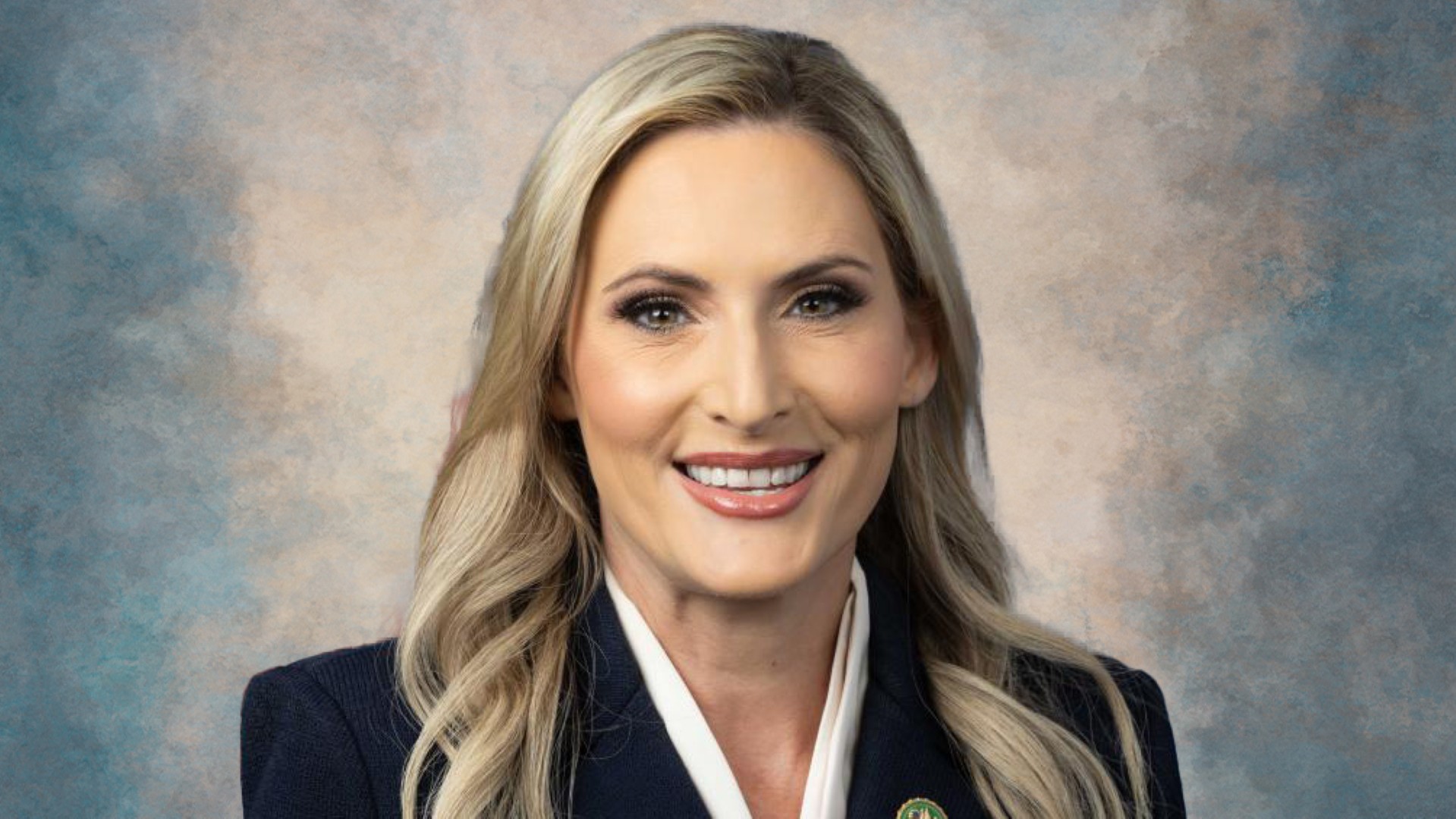
Laurel Lee wants judges granted more discretion on setting probation supervision terms
Published

on


Empowering judges with more discretion in probation terms will free up the justice system to focus on true repeat offenders. That’s the hope of federal legislation championed by U.S. Rep. Laurel Lee.

The former Florida Circuit Court Judge introduced the Safer Supervision Act (HR 5883), a bipartisan bill that seeks to refocus the federal supervised release program.

“I have seen our criminal justice system from all sides and recognize its strengths and its areas for improvement,” the Thonotosassa Republican said. “I have long been interested in issues around good, data-driven policy and also successful reentry. We are well served, and our communities are safer, when we consider how we can help individuals who are returning home from incarceration succeed, and this bill is designed to do exactly that.”

Lee filed the bipartisan bill with Democratic U.S. Reps. Deborah Ross of North Carolina and Lucy McBath of Georgia, as well as Republican U.S. Rep. Mark Harris of North Carolina, are hoping to advance the legislation through the House Judiciary Committee, on which she serves. A Senate companion bill has been filed by U.S. Sens. Mike Lee, a Utah Republican, and Chris Coons, a Delaware Democrat.

“I know I always love having an opportunity to work on something that is bicameral and bipartisan, and this is just such a bill,” Lee said. “It is something that people in our community support. It’s a good bill for Florida and a good bill for America.”

If passed, the legislation would reinstate individualized decision-making for judges, allowing them to set probation terms based on the risk of recidivism for each individual prosecuted for a crime. She stressed that the intent isn’t to lighten sentences but to deploy public safety resources more effectively and efficiently.

“We cannot just release dangerous criminals, violent recidivists. That’s not what we do here at all. It’s quite the opposite,” Lee said.

“It focuses those criminal justice resources so that those people who are a threat are getting that attention and are getting that supervision, but those who have actually put their lives back together and are ready to be supported aren’t going to be stopped by unnecessary barriers and administrative tasks.”

The bill has backing from the REFORM Alliance, which has promoted conservative messaging around the legislation. That group commissioned a poll that found broad support among nearly 79% of Americans for the bill’s policies.

That poll also showed a large number of Americans who have seen the effects of harsh sentencing guidelines firsthand or in their families. That’s no shock to Lee, who, before serving in Congress and as Florida’s Secretary of State, worked in criminal law as a public defender, prosecutor and judge.

“So many people have seen the impacts of the barriers to rebuilding a life after an involvement with the criminal justice system,” she said. “To me, I was not surprised. I have seen the families that are affected. But I do think that it would be surprising to many people to see just how common it is.”

She also sees this reform as different from other changes proposed in past years that ultimately became unpopular, such as replacing cash bail. Lee is confident that any changes to the bill will yield measurable benefits within the justice system.

“The cash bail policies that we’ve seen implemented in various parts of the country were reckless from the start. And tragic outcomes when judges are not permitted to actually assess potential danger to the community and are instead forced to release back out on bail people who are violent criminals with a long history of coming in and out of the criminal justice system, these results were predictable,” Lee said.

“What we are talking about in the Safer Supervision Act is nothing like those policies. It’s the opposite. This is something that is built on data that is carefully targeted to ensure that we’re giving those opportunities to people who do not pose a threat to their communities. Of course, if this is signed into law, we will continue to track its implementation to ensure that it’s operating the way it was intended.”


Source link

Continue Reading

Politics

Affordable Care Act enrollees say expiring subsidies will hit them hard

Published

on


For one Wisconsin couple, the loss of government-sponsored health subsidies next year means choosing a lower-quality insurance plan with a higher deductible. For a Michigan family, it means going without insurance altogether.

For a single mom in Nevada, the spiking costs mean fewer Christmas gifts this year. She is stretching her budget already while she waits to see if Congress will act.

Less than three weeks remain until the expiration of COVID-era enhanced tax credits that have helped millions of Americans pay their monthly fees for Affordable Care Act coverage for the past four years.

The Senate on Thursday rejected two proposals to address the problem and an emerging health care package from House Republicans does not include an extension, all but guaranteeing that many Americans will see much higher insurance costs in 2026.

Here are a few of their stories.

From a gold plan to a bronze plan, a couple spends more on less
Chad Bruns comes from a family of savers. That came in handy when the 58-year-old military veteran had to leave his firefighting career early because of arm and back injuries he incurred on the job.

He and his wife, Kelley, 60, both retirees, cut their own firewood to reduce their electricity costs in their home in Sawyer County, Wisconsin. They rarely eat out and hardly ever buy groceries unless they are on sale.

But to the extent that they have always been frugal, they will be forced to be even more so now, Bruns said. That is because their coverage under the health law enacted under former President Barack Obama is getting more expensive -– and for worse coverage.

This year, the Brunses were paying $2 per month for a top-tier gold-level plan with less than a $4,000 deductible. Their income was low enough to help them qualify for a lot of financial assistance.

But in 2026, that same plan is rising to an unattainable $1,600 per month, forcing them to downgrade to a bronze plan with a $15,000 deductible.

Family facing higher costs prepares to go without insurance
Dave Roof’s family of four has been on ACA insurance since the program started in 2014. Back then, the accessibility of insurance on the marketplace helped him feel comfortable taking the leap to start a small music production and performance company in his hometown of Grand Blanc, Michigan. His wife, Kristin, is also self-employed as a top seller on Etsy.

The coverage has worked for them so far, even when emergencies come up, such as an ATV accident their 21-year-old daughter had last year.

But now, with the expiration of subsidies that kept their premiums down, the 53-year-old Roof said their $500 per month insurance plan is jumping to at least $700 a month, along with spiking deductibles and out-of-pocket costs.

Single mom strains her January budget in hopes Congress acts soon
If you ask Katelin Provost, the American middle class has gone from experiencing a squeeze to a “full suffocation.”

The 37-year-old social worker in Henderson, Nevada, counts herself in that category. As a single mom, she already keeps a tight budget to cover housing, groceries and day care for her 4-year-old daughter.

Next year, that is going to be even tougher.

The monthly fee on her plan is going up from $85 to nearly $750. She decided she is going to pay that higher cost for January and reevaluate afterward, depending on whether lawmakers extends the subsidies, which as of now appears unlikely. She hopes they will.

If Congress does not act, she will drop herself off the health insurance and keep it only for her daughter because she cannot afford the higher fee for the two of them over the long term.

The strain of one month alone is enough to have an impact.

“I’m going to have to reprioritize the next couple of months to rebalance that budget,” Provost said. “Christmas will be much smaller.”

___

Republished with permission of the Associated Press.


Source link

Continue Reading

Politics

University Chancellor Ray Rodrigues is the highest-paid Florida employee

Published

on


Florida’s University Chancellor Ray Rodrigues was already the highest-paid state employee with his more than $441K salary, beating out the No. 2 employee (Education Commissioner Anastasios “Stasi” Kamoutsas) by roughly $110K.

But on Friday, that financial lead grew when the Board of Governors of the State University System approved a three-year contract extension including a $600,000 base salary with a chance at a 20% performance bonus. This makes Rodrigues the highest-paid state employee by far, according to the database of state employee salaries. The effective date is Jan. 1

He nearly doubles Kamoutsas’ $330K salary. But Kamoutsas was one of the biggest supporters of Rodrigues’ pay increase.

“When we talk about what a national model this state is in higher education and the envy of the country … I can’t emphasize enough how deserving he is,” Kamoutsas said during Friday’s Board of Governors meeting. “Not just of this pay increase, but honestly more.”

According to the contract amendment, raises in Rodrigues’ contract are paid from Board of Governors Foundation funds, which are considered private.

In July, as the state sets up its new university accrediting body, the BOG transferred $4 million in taxpayer money to the foundation — though that money is specifically appropriated for the accreditor and will not go to Rodrigues’ salary, a BOG spokesperson confirmed to the Phoenix.

The new contract expires in 2029 and provides a $75,000 annual housing stipend and $12,000 a car allowance.

Eric Silagy, former CEO of Florida Power & Light, was the lone BOG member to vote against the new contract — which he claimed was submitted to members at the 11th hour.

“I hear you loud and clear on the fact that taxpayers aren’t directly paying this increase, but it is coming through universities’ foundations,” he said, calling the increase “significant” and unprecedented for an employee staying in the same role. “And so, it is money that would otherwise be able to be spent for other things that would benefit students.”

Various university presidents make more than Rodrigues, but state law requires university president contracts to be paid by foundation funds once they exceed $200,000.

The contract defines Rodrigues’ responsibilities as ensuring “the efficient operations of the Board” and he “is authorized to enter into any contract necessary for the operation of the Board to employ all personnel and establish policies and procedure, incident to Board personnel and operations, and to submit and annual legislative budget request and any amendments thereto for the Board office to the Board for approval.”

Rodrigues “shall serve as the Board’s liaison for communications with university boards of trustees, university presidents and other university officers and employees, the Governors and the Governor’s staff, the Legislature and the Legislature’s staff, the media, other state entities, and the public.”

Rodrigues has served as university chancellor since 2022. He’s now paid a $441,252 salary, some $40,000 more than under his first contract. Rodrigues previously served 12 years in the Florida Legislature. As of Dec. 2021 — his most recently available financial disclosure form — his net worth was $313,213.

___

Reporting by Liv Caputo and Jay Waagmeester. Florida Phoenix is part of States Newsroom, a nonprofit news network supported by grants and a coalition of donors as a 501c(3) public charity. Florida Phoenix maintains editorial independence. Contact Editor Michael Moline for questions: [email protected].


Source link

Continue Reading

Politics

Ron DeSantis deems term limits a ‘hanging curveball’ as he drums up support for concept

Published

on


Gov. Ron DeSantis, who played baseball at Yale, employed a metaphor from his former sport in arguing for congressional term limits.

“You are never going to have a better hanging curveball politically in your career than term limits. I could be speaking at the Chamber of Commerce of Delray Beach. I could be speaking to the Elks Club, whatever. And I’ll talk about, you know, Florida, you know, we have a budget surplus. Yeah, we’ve cut taxes, we have this, this. And you know what? We need to term limit Congress. Yay, everyone starts going, and I’ve seen this for so many years. So like the polling’s great and I trust it, but I don’t even need that to know. I see how people respond to it. So I think you have an opportunity to really get behind an issue,” DeSantis said this week at the Term Limits Summit.

He also spoke of being a “recovering Congressman” and how he didn’t expect to be in the House of Representatives for long when he was there for nearly three terms between 2012 and 2018.

“Some of the people in this movement were like, don’t term limit yourself. And I’m like, why? They’re like, because you just, you want to, we want people that believe in term limits to be there and then do it. And so, but I knew I was going to be there long. I just, I was gonna go and and try to make a difference, but there’s no way I would have been able to do it for 30 years,” DeSantis said.

“I kind of knew the issues, but like the idea that you’re going to have any type of authority to be a committee chair, you got to be there for 20 years. You got to be there for 25,” he added, saying the structure blocks people with a “reformer” mindset rooted in “idealism” from working to “turn Washington upside down” and “exercise real power,” leading to “neutered” long-haulers in the House.

While there’s “turnover in seats that don’t matter,” DeSantis says leadership is entrenched and that term limits would allow career politicians to keep moving up.

“You have a congressman that just gets elected, you know six years later, you’re going to have an open seat and you’re going to have a chance,” he said.


Source link

Continue Reading

Trending

Copyright © Miami Select.