Connect with us

Business

Former ambassador: China is winning the biotech race. Patent reform is how we catch up

Published

on


The United States is at risk of losing one of the most important technology races of the 21st century: biotechnology. A 2025 report from a bipartisan, congressionally chartered commission warns that China is closing in on a win, and the United States has only a narrow window to respond.

The report, released by the National Security Commission on Emerging Biotechnology, offers dozens of recommendations, ranging from increasing federal investment and expanding domestic manufacturing to reducing reliance on Chinese suppliers and improving interagency coordination. But one issue receives too little attention. If the United States wants to compete, it must restore trust in the intellectual property rights that enable inventors to turn bold ideas into revolutionary products.

Patents make high-risk innovation financially viable. They allow startups to protect their discoveries, attract capital, and grow. Without reliable patent rights, promising research gets shelved — or picked up and advanced abroad.

This isn’t theoretical. The United States led past waves of innovation — like the explosion of biotech startups after the Bayh-Dole Act of 1980 and the 19th-century surge of invention that brought us the telephone and automobile — precisely because it backed inventors with clear, enforceable IP rights.

In biotech, the stakes are higher. The field is transforming how we treat disease, grow food, and manufacture everything from chemicals to advanced materials. And with artificial intelligence accelerating discovery, the pace is exponential. As the Commission notes, tools like AlphaFold from GoogleDeepMind can now model hundreds of millions of protein structures in days, a task that once took years.

China saw this future coming. For more than two decades, it has treated biotechnology as a national strategic priority, pouring money into research, building vast biomanufacturing capacity, and acquiring foreign IP through both legal and illicit means.

Today, Chinese firms produce many of the ingredients U.S. drugmakers rely on. According to the Commission, nearly 80% of American drugmakers depend on Chinese contractors for part of their supply chain.

In a crisis, that kind of reliance could leave Americans without access to critical medicine. The Commission outlines a scenario in which Chinese researchers develop a breakthrough cancer therapy and withhold it during a crisis over Taiwan.

Supply chains collapse. Doctors ration care. The White House faces an impossible choice: hold the line on foreign policy or secure access to lifesaving medicine.

The situation is fictional, but the threat is real.

It doesn’t stop there. The report warns that if China stays on its current path, it could soon control the biological data, manufacturing platforms, and AI tools driving the next generation of industrial and defense technologies.

When innovation stays on U.S. soil, so do the jobs, data, and supply chains that protect our citizens. If the technologies that define the future are instead developed under adversarial regimes, the United States risks dependence on foreign powers not only for products but for strategic capabilities. Falling behind wouldn’t just cost the United States market share. It would endanger national security and global influence.

The Commission is right to emphasize the need for a stronger domestic biotech sector. But efforts to achieve that goal will fall short unless we fix the foundation that enables innovation in the first place.

That foundation, our IP system, is under serious strain. Over the past decade, court decisions have blurred the boundaries of what qualifies for patent protection — what is “patent eligible” — especially in medical diagnostics, synthetic biology, and AI-enabled research.

And even when patents are granted, protecting them has become harder. A little-known administrative body called the Patent Trial and Appeal Board (PTAB) lets big corporations repeatedly try to invalidate competitors’ patents, forcing startups into expensive and drawn-out legal battles.

At the same time, a 2006 Supreme Court decision made it harder for courts to issue legal orders called injunctions — which stop infringers from continuing to use others’ inventions — even in cases of clear wrongdoing.

These trends have a chilling effect. Investors hesitate to fund science unless they can count on the underlying IP rights. In biotech, where it can cost billions of dollars and more than a decade to develop a single product, that hesitation can kill entire pipelines of innovation.

The good news is that Congress has tools to change course. Three bipartisan proposals in the House and Senate would help. One bill would restore clarity to patent eligibility standards. Another would reform PTAB procedures to curb duplicative challenges to patents. A third would make it easier for courts to block infringers by issuing injunctions.

Together, these reforms would reduce uncertainty, restore balance, and make the United States a more attractive place to innovate and invest.

We still have significant advantages: world-class research institutions, deep capital markets, and a free market that rewards bold ideas. But as the Commission warns, our lead is slipping — and time is short. To stay ahead in the race for biotech dominance, we need to fix the IP system that makes American innovation possible.

The opinions expressed in Fortune.com commentary pieces are solely the views of their authors and do not necessarily reflect the opinions and beliefs of Fortune.

Join us at the Fortune Workplace Innovation Summit May 19–20, 2026, in Atlanta. The next era of workplace innovation is here—and the old playbook is being rewritten. At this exclusive, high-energy event, the world’s most innovative leaders will convene to explore how AI, humanity, and strategy converge to redefine, again, the future of work. Register now.


Source link

Continue Reading

Business

‘Godmother of AI’ says degrees are less important than ‘how quickly can you superpower yourself’

Published

on


Founders and AI startups in Silicon Valley are valuing degrees less and are seeking out candidates who can work quickly, adapt and build AI models.

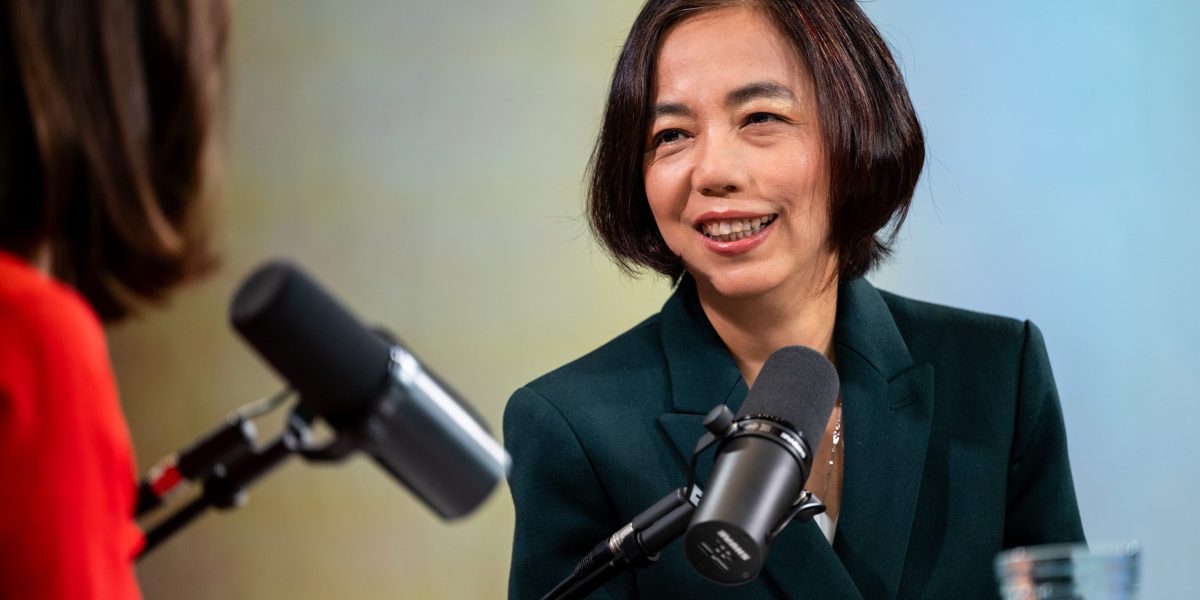
Fei-Fei Li, a Stanford professor and CEO of the AI startup World Labs, is known as the “Godmother of AI” for her work building a large-scale database of labeled images, which changed the way computers comprehend digital images and videos.

Li, also the founding co-director of Stanford’s Human-Centered AI Institute, said she values candidates’ experience and relationship with AI tools more than their educational background.

“When we interview a software engineer, I personally feel the degree they have matters less to us now,” Li said of the talent search process for her AI startup in an interview on The Tim Ferriss Show this week.

“Now, it’s more about what have you learned, what tools do you use, how quickly can you superpower yourself in using these tools — and a lot of these are AI tools,” she added. “What’s your mindset toward using these tools matter more to me.”

When discussing the broader impacts of AI on education and the labor market, Li said assessing qualified workers used to rely on which school job candidates graduated from and the degree they earned. But “that will be changing with AI being at the fingertip of so many people,” she said.

For her own talent acquisition, Li added that she wouldn’t hire software engineers who don’t “embrace AI collaborative software tools.” She explained this requirement is not because she believes AI software tools are perfect, but because she believes they show a person’s ability to grow with fast-moving technologies and them being able to use AI to their own benefit.

Li’s view of AI skills and their value proposition compared to college degrees echoes a similar sentiment from other leaders in the industry.

In October, Mark Zuckerberg, a Harvard dropout, said skills outweigh a flashy college degree when hiring for Meta—but he noted that entry-level roles at his company still require a bachelor’s.

Palantir CEO Alex Karp has even challenged the value of a college education by recently launching a four-year paid internship for young entrepreneurs not enrolled in college to instead learn by doing and to “skip the debt, skip the indoctrination.” 

As more tech leaders look for AI-fluent candidates, Li looks for candidates that can help realize her company’s mission.

World Labs aims to build AI that can process and replicate the three-dimensional world through spatial reasoning—a feat that would revolutionize the tech all over again. Li bootstrapped the startup into a more than $1 billion valuation after only four months, according to the Financial Times.

As she works towards the next AI breakthrough, Li said during the Fortune Most Powerful Women Summit in 2024 that AI could change the world, and that “everyone who cares” should have a place in the technological shift.

“It’s so important that people from all backgrounds feel they have a role,” Li said.


Source link

Continue Reading

Business

40% of Stanford undergrads receive disability accommodations—but it’s become a college-wide phenomenon as Gen Z try to succeed in the current climate

Published

on


The pandemic has shaken up college life for good: Since then, social media and AI have revolutionized classroom expectations, and the bar for landing a job after graduation has become impossibly high. Many are now questioning whether getting a degree was even worth it.

The ripple effect of those strains is already showing in campus accessibility offices,  where diagnoses of ADHD, anxiety, and depression are rising—and so are requests for extended time on coursework.

At Harvard, 21% of undergraduates received disability accommodations last year, an increase of more than 15% over the past decade, according to data published by the National Center for Education Statistics analyzed by the Harvard Crimson. Top schools like Brown, Cornell, and Yale reported similar numbers, roughly in line with national trends. But the increase is more pronounced at other institutions: 34% of students at UMass Amherst and 38% at Stanford are registered as disabled, according to The Atlantic

In the 2011-12 school year, the number of undergraduates with a disability was about 11%, based on U.S. Department of Education data—highlighting just how much of a dramatic shift this phenomenon has become.

One founder says students are trying to get a leg up in today’s tough job market

Experts note that many students have medical conditions that merit accommodations, and the increase is in part linked to broader access to mental-health care and reduced stigma around seeking support.

The rise has nonetheless drawn national attention, with some critics arguing that students are abusing the system to secure lighter workloads or an edge in hypercompetitive classrooms.

Derek Thompson, author of the recent bestseller Abundance called the numbers “mind-boggling,” arguing that colleges may be overcorrecting after years of underrecognizing disability. 

“America used to stigmatize disability too severely,” he wrote on X. “Now elite institutions reward it too liberally. It simply does not make any sense to have a policy that declares half of the students at Stanford cognitively disabled and in need of accommodations.”

Joe Lonsdale, a billionaire venture capitalist and Palantir cofounder, expressed similar concerns, suggesting some families are seeking diagnosis just to give students “a leg up.”

After all, the post-graduation job hunt has tightened into a numbers game few can win.

In 2023 and 2024, more than 1.2 million applications were submitted for just under 17,000 open graduate roles in the U.K., according to the Institute of Student Employers. And in the U.S., lawmakers warn the funnel is narrowing further. Sen. Mark Warner has warned that joblessness among recent graduates could hit 25% in the next two to three years, as AI reshapes entry-level work.

But in reality, there is no evidence of widespread misuse, and not all students registered with a disability receive accommodation in every class. Still, the scale of requests has raised questions among some faculty members about how accommodations intersect with academic expectations.

Faculty grapple with balancing support of students and avoidance of stigma

For instructors, the rise in accommodations can be challenging to navigate. Many say they want to support students with legitimate needs but worry that requesting clarification could be seen as insensitive or ableist.

One adjunct professor, posting to Reddit, said the number of students with accommodations has “increased exponentially” across the three schools where they teach.

“I had an increasingly large number of students at this particular school be given the accommodation to turn work in 48 hours late, and I got tired of constantly having to extend due dates for just them,” the professor wrote, noting that they themselves have ADHD and autism.

“The students I’ve had on this accommodation would use it pretty much every week since they were perpetually behind.”

Harry Lewis, former dean of Harvard College, expressed a related concern to the Harvard Crimson.

“The whole system of accommodations for things other than physical disabilities just seems badly mismatched with the educational purposes that students and faculty share,” he said.

However, Katy Washington, CEO of the Association of Higher Education and Disability, argued that students seeking accommodations are not “unfair burdens” on professors, and rather than questioning whether too many students qualify—which can perpetuate stereotypes—the focus should be on designing assessments that are inclusive for all learners.

“For decades, students with invisible disabilities were denied support because their struggles were dismissed as laziness or lack of effort,” Washington wrote in a letter to her organization’s members, shared with Fortune. “The rise in accommodations reflects a cultural shift toward acknowledging mental health, not a decline in academic integrity.”

A shifting skill-based job market could leave some students unprepared

For students, the increase in accommodations coincides with employers rethinking what actually matters in hiring. Fewer companies are prioritizing degrees, and more are evaluating on what they can do—through portfolio, projects, and real-world problem-solving.

Less than half of U.S. professionals at the director-level and above say a university degree is essential for getting ahead, according to LinkedIn. Moreover, nearly 1 in 5 job postings on the platform do not require a degree.

That shift could complicate the picture for students who’ve grown accustomed to extended deadlines or extra time. Whether a small number of students are abusing the system, workplace assessments typically don’t come with accommodations—and performance is often judged on speed, accuracy, and consistency.  Some Gen Zers have already faced the pink slip just months into the start of their career due to employers being unimpressed with some of their soft skills, like organization.

In other words: even as college becomes more flexible, the job market is moving in the opposite direction.


Source link

Continue Reading

Business

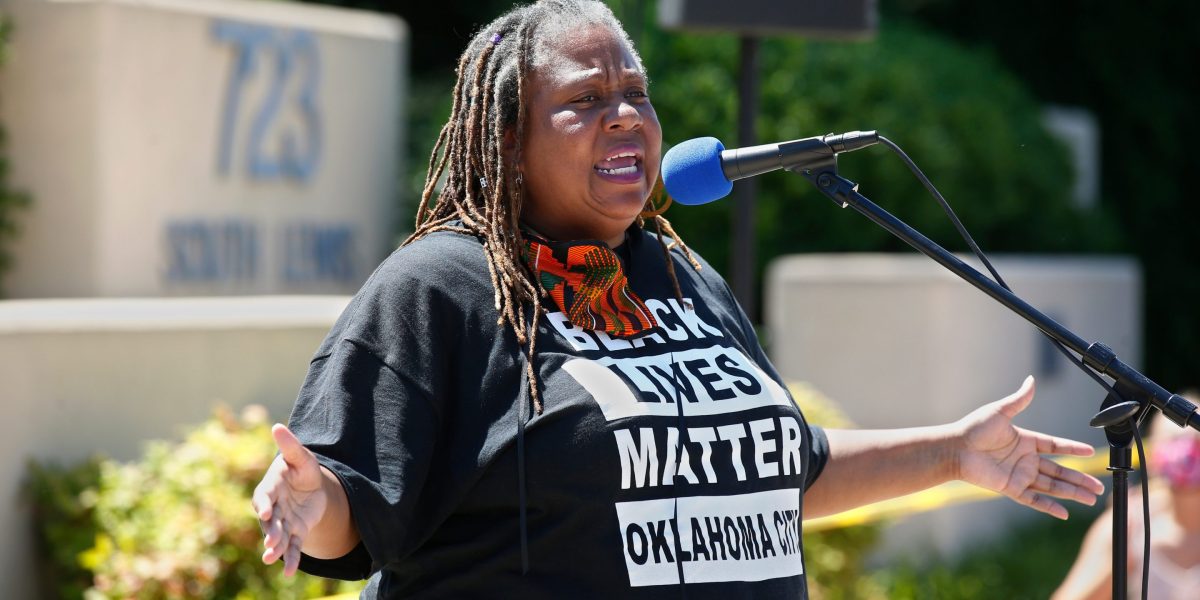
Black Lives Matter leader in Oklahoma City indicted on claims she used funds for vacations, groceries and real estate

Published

on


A federal grand jury indicted the leader of the Black Lives Matter movement in Oklahoma City over allegations that millions of dollars in grant funds were improperly spent on international trips, groceries and personal real estate, prosecutors announced Thursday.

Tashella Sheri Amore Dickerson, 52, was indicted earlier this month on 20 counts of wire fraud and five counts of money laundering, court records show.

Court records do not indicate the name of Dickerson’s attorney, and messages left Thursday at her mobile number and by email were not immediately returned.

According to the indictment, Dickerson served since at least 2016 as the executive director of Black Lives Matter OKC, which accepted charitable donations through its affiliation with the Arizona-based Alliance for Global Justice.

In total, BLM OKC raised more than $5.6 million dating back to 2020, largely from online donors and national bail funds that were supposed to be used to post bail for individuals arrested in connection with racial justice protests after the killing of George Floyd by a Minnesota police officer in 2020, the indictment alleges.

When those bail funds were returned to BLM OKC, the indictment alleges, Dickerson embezzled at least $3.15 million into her personal accounts and then used the money to pay for trips to Jamaica and the Dominican Republic, retail shopping, at least $50,000 in food and grocery deliveries for herself and her children, a personal vehicle, and six properties in Oklahoma City deeded to her or to a company she controlled.

The indictment also alleges she submitted false annual reports to the alliance stating that the funds were used only for tax-exempt purposes.

If convicted, Dickerson faces up to 20 years in federal prison and a fine of up to $250,000 for each count of wire fraud and 10 years in prison and fines for each count of money laundering.

In a live video posted on her Facebook page Thursday afternoon, Dickerson said she was not in custody and was “fine.”

“I cannot make an official comment about what transpired today,” she said. “I am home. I am safe. I have confidence in our team.”

“A lot of times when people come at you with these types of things … it’s evidence that you are doing the work,” she continued. “That is what I’m standing on.”

The Black Lives Matter movement first emerged in 2013 after the acquittal of George Zimmerman, the neighborhood watch volunteer who killed 17-year-old Trayvon Martin in Florida. But it was the 2014 death of Michael Brown at the hands of police in Ferguson, Missouri, that made the slogan “Black lives matter” a rallying cry for progressives and a favorite target of derision for conservatives.

The Associated Press reported in October that the Justice Department was investigating whether leaders in the Black Lives Matter movement defrauded donors who contributed tens of millions of dollars during racial justice protests in 2020. There was no immediate indication that Dickerson’s indictment is connected to that probe.


Source link

Continue Reading

Trending

Copyright © Miami Select.