Connect with us

Business

Sheryl Sandberg breaks down why it’s a troubling time for women in the workplace right now

Published

on


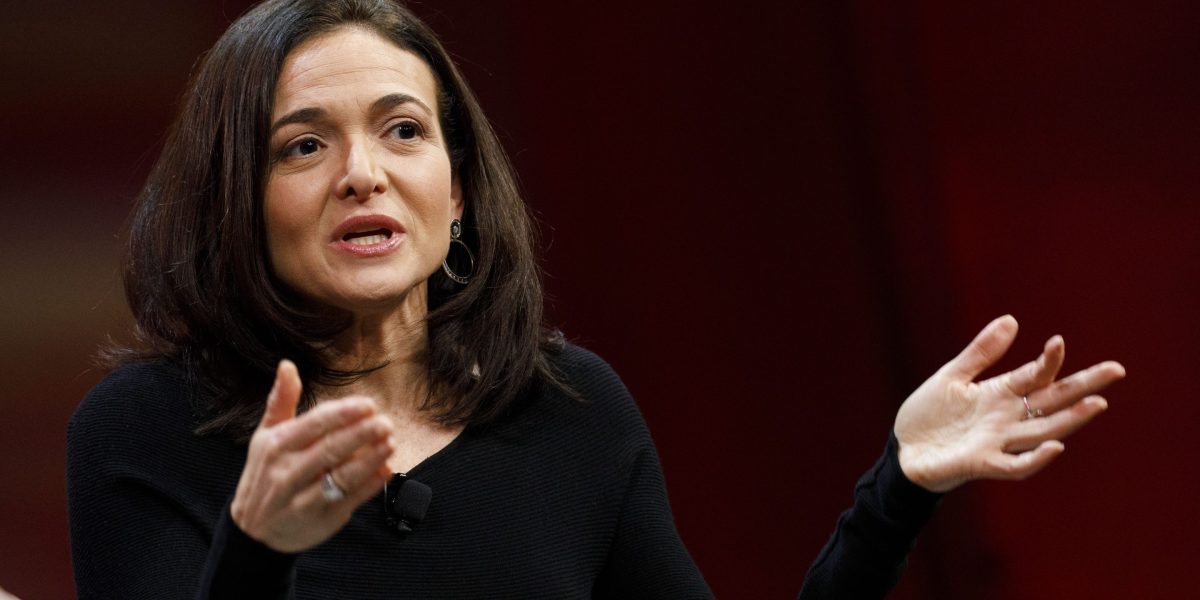
Women may unwittingly be living through a turning point in their labor history. Hundreds of thousands are packing their desks leaving their jobs—both by choice, and involuntarily—while people pontificate if they ruined the workplace, and some CEOs call for a more “masculine” company culture. Now, business leaders are calling out the backtrack of women’s careers, and former Meta COO Sheryl Sandberg warns of a damaging trend. 

“I’m 56, so this is my fourth decade in the workplace, and we are in a particularly troubling moment in terms of the rhetoric on women. You see it everywhere, in all the sectors,” Sandberg recently toldCNN. “But what I’ve seen is when we make progress, we backslide, we make progress, we backslide.” 

“And I think this is a major moment of backsliding,” she said.

The long-time Meta executive, bestselling author, and billionaire pulled out a slew of worrying facts and figures. She noted that during the first eight months of 2025, more than 455,000 women left the U.S. workforce—while 100,000 men stepped into jobs within the same period. And the plight has been even worse for women of color; Sandberg said the unemployment rate among Black women currently rests at 7.5%, significantly higher than the national average of 4.4%, and even greater than the approximate 3.5% of jobless white men and women. 

Beyond the fact this concerning phenomenon is stunting women’s careers and economic livelihoods, it’s also stifling the U.S. economy. Even American corporations that snub working women with C-suite titles are shooting themselves in the foot—Sandberg said companies with 15% or more women in senior management perform better. 

“No matter what’s going on in the overall zeitgeist, companies don’t have an excuse to write off half their population,” Sandberg continued. “If you got workforce participation for women in the U.S. just up to the levels of other wealthy countries, that would be an additional 4.2% GDP growth, and our economy grows less than 2% a year. That’s a lot of growth to leave on the table.”

Women’s workforce plights: RTO, shrinking opportunities, and stereotypes

As hundreds of thousands of women disappeared from payrolls this year, experts pointed to one primary culprit: employers forcing staffers back into the office with strict RTO policies. 

Major companies including Amazon, JPMorgan, Citigroup, and Dell have all imposed stricter in-person policies in 2025, much to the behest of their workers. And this corporate trend is leading to some serious staffing consequences. Labor force participation of mothers with kids under the age of 5 dropped from 80% to 77% between January and June 2025, according to an October KPMG study—and those with bachelor’s degrees were hit the hardest. However, the sharp fall off was no coincidence. The exodus of working moms coincided with a near doubling of full-time RTO mandates among Fortune 500 companies. 

“Since late 2023, women with young children have been leaving the labor force…Over the same period, men with young children have increased their participation in the labor force,” the KPMGreport notes. “The childcare crisis is adding additional stress to the labor supply. Employers are currently losing talent; as a result, the U.S. economy will grow more slowly.”

Working mothers aren’t the only ones up against an employment crisis. It’s estimated 600,000 Black women have been shut out of the workforce since February, according to an analysis from gender economist Katica Roy. During that time, 297,000 lost their jobs and 75,000 were edged out of the labor force, while 223,000 are still unemployed. American job growth is sputtering, and when open roles are finally up for grabs, competition is fierce—with hiring decisionmaking historically stacked against their favor. 

But there’s more at play behind the “major backsliding” of women in the workforce, beyond RTO and shrinking job opportunities. American philanthropist and ex-wife of Microsoft founder Bill Gates, Melinda French Gates, laid out four ways women are being held back in corporate America. Working women are forced to make “impossible tradeoffs” between caregiving and their careers; they’re still being harassed on the job, despite the #MeToo movement starting much-needed discourse on workplace culture; the stereotype that women are “not cut out for leadership” refuses to die; and they have a much harder time raising capital for their businesses. 

“It’s very concerning to see so many women leaving the workforce—but if you’ve been listening all along to what women say about their careers, it’s not surprising,” French Gates toldFortune in October. 

“I want to see more women leading—making decisions, directing resources, and shaping policies at the highest levels of society,” French Gates continued. “That requires us to make sure they’re not facing unique barriers along the way to positions of power.”


Source link

Continue Reading

Business

FAA head hasn’t sold his stake in an airline despite promises to do so, Democratic Senator claims

Published

on


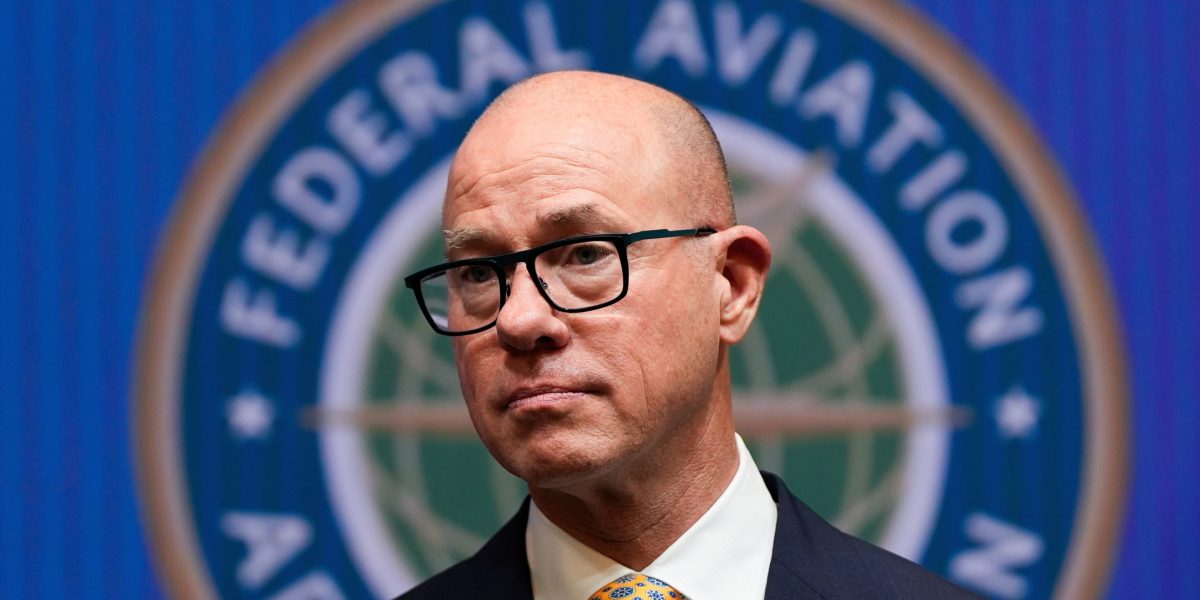
The head of the Federal Aviation Administration has not sold off his multimillion-dollar stake in the airline he led since 1999 despite a promise to do so as part of his ethics agreement, according to a Democratic senator.

In a letter to Bryan Bedford this week, Sen. Maria Cantwell said he vowed to sell all his shares in Republic Airways within 90 of his confirmation but 150 days have now passed. In Bedford’s financial disclosures, he estimated that his Republic stock was worth somewhere between $6 million and $30 million.

Republic completed a merger last month with another major regional airline, Mesa Air Group. Republic’s stock closed Thursday at $19.02, nearly double what it was before the deal was announced in April.

“It appears you continue to retain significant equity in this conflicting asset months past the deadline set to fully divest from Republic, which constitutes a clear violation of your ethics agreement. This is unacceptable and demands a full accounting,” Cantwell said in the letter.

Bedford declined a request for comment, and an FAA spokesperson said he plans to respond directly to Cantwell.

The agency has been in the spotlight since January, when an airliner collided with an Army helicopter over Washington, D.C., killing 67 people. The investigation has already highlighted shortcomings at the FAA, which failed to recognize an alarming number of close calls around Reagan National Airport in the years beforehand.

Then, in the spring, technical problems at the center that directs planes into New Jersey’s Newark Liberty International Airport highlighted a fragile and outdated system relied on by air traffic controllers.

And in the fall, a longstanding shortage of controllers led to thousands of flight cancellations and delays during the longest government shutdown ever as more controllers missed work while going without a paycheck.

Bedford has pledged to prioritize safety and upgrade the nation’s outdated air traffic control system. Congress approved $12.5 billion for that project, and last week the FAA picked the company that will oversee the work.

Join us at the Fortune Workplace Innovation Summit May 19–20, 2026, in Atlanta. The next era of workplace innovation is here—and the old playbook is being rewritten. At this exclusive, high-energy event, the world’s most innovative leaders will convene to explore how AI, humanity, and strategy converge to redefine, again, the future of work. Register now.


Source link

Continue Reading

Business

Arkansas becomes first state to cut ties with PBS, saying $2.5 million membership dues ‘not feasible’

Published

on


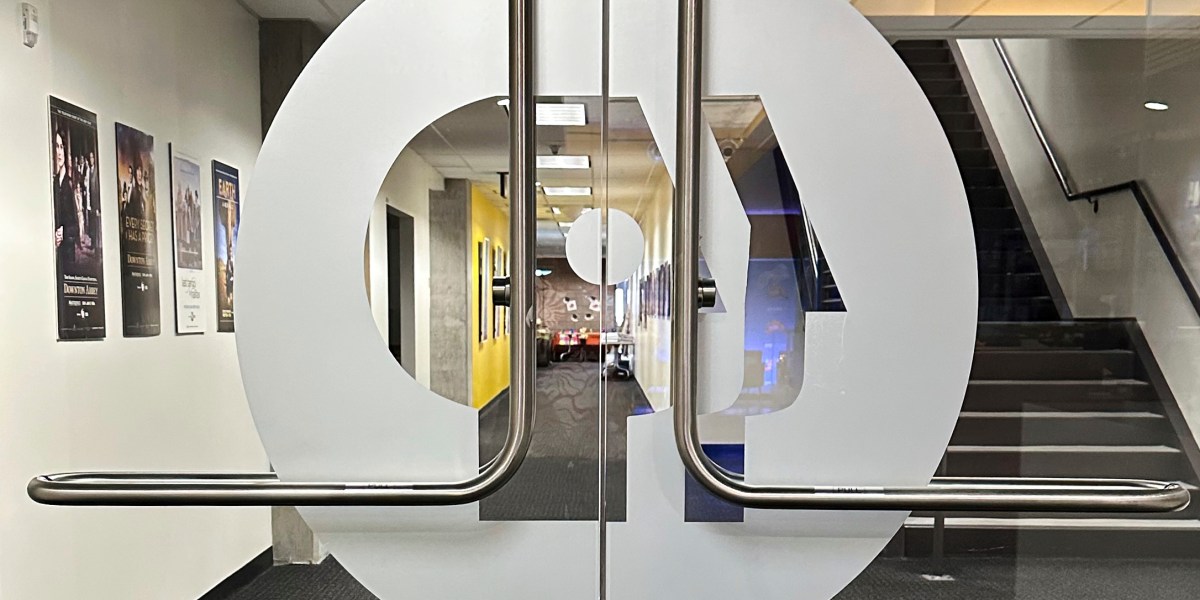
The commission that oversees public television in Arkansas voted Thursday to sever ties with PBS, making it the first state to end its contract with the broadcast giant that provides popular television programs such as “Sesame Street,” “Nova” and “Antiques Roadshow.”

The eight-member Arkansas Educational Television Commission, made up entirely of appointees of the governor, announced in a news release Thursday that it planned to disaffiliate from PBS effective July 1, citing annual membership dues of about $2.5 million it described as “not feasible.” The release also cited the unexpected loss of about that same amount of federal funding from the Corporation for Public Broadcasting, which was targeted for closure earlier this year and defunded by Congress.

PBS Arkansas is rebranding itself as Arkansas TV and will provide more local content, the agency’s Executive Director and CEO Carlton Wing said in a statement. Wing, a former Republican state representative, took the helm of the agency in September.

“Public television in Arkansas is not going away,” Wing said. “In fact, we invite you to join our vision for an increased focus on local programming, continuing to safeguard Arkansans in times of emergency and supporting our K-12 educators and students.”

PBS confirmed in an email Thursday that Arkansas is the first state to definitively sever ties with the broadcaster. Alabama considered similar action last month, but opted to continue paying its contract with PBS after public backlash from viewers and donors.

“The commission’s decision to drop PBS membership is a blow to Arkansans who will lose free, over the air access to quality PBS programming they know and love,” a PBS spokesperson wrote in an email to The Associated Press.

The demise of the Corporation for Public Broadcasting, is a direct result of President Donald Trump’s targeting of public media, which he has repeatedly said is spreading political and cultural views antithetical to those the United States should be espousing. The closure is expected to have a profound impact on the journalistic and cultural landscape — in particular, public radio and TV stations in small communities nationwide.

Arkansas House Democratic Leader Rep. Andrew Collins called the demise of PBS in Arkansas sad. “It’s certainly a loss for Arkansas families who value the programming of PBS,” he said.

CPB helps fund both PBS and NPR, but most of its funding is distributed to more than 1,500 local public radio and television stations around the country.


Source link

Continue Reading

Business

Disney plus OpenAI: What could go wrong?

Published

on


Hello, Alexei Oreskovic pitching in for Allie today. Well folks, this week had it all: A new OpenAI model, reports of an upcoming SpaceX IPO, and even a Waymo baby! And to top it all off, OpenAI and Disney announced a surprise partnership that will include a $1 billion investment in OpenAI and enable OpenAI users to create AI-generated videos with Mickey Mouse and hundreds of other Disney characters.

The 3-year deal is a huge win for OpenAI (all the more so given that Disney simultaneously sent a cease-and-desist letter to Google, accusing the internet giant and OpenAI arch-rival of infringing its IP via its AI systems on a “massive scale”). The question is: Why is the Mouse House rolling out the red carpet for the ChatGPT maker? 

You don’t need a lot of imagination to guess the sordid scenarios that await Disney’s family-friendly cast of characters now that the tortured souls of the internet will have carte blanche to feed them into the AI nightmare machine. There will be safeguards in place to prevent Mickey and friends from doing drugs, fornicating, and engaging in other unseemly or illegal behavior, a source told the Wall Street Journal. And I’m sure absolutely no one will figure out how to bypass those guardrails.

Entertainment businesses need to stay ahead of the trends and make sure they’re relevant to the next generation of consumers, of course. So hooking up with OpenAI is an obvious way for a company to stay connected with the kids. But if there’s any company that would seem in less immediate danger of losing the kids, it’s the company with The Lion King, The Little Mermaid, Donald Duck, and Iron Man. 

This will certainly be an interesting adventure to watch. And perhaps Disney’s deal with OpenAI will prove prescient and astute. I just hope Donald can hold his liquor.

See you Monday,

Alexei Oreskovic
X:@lexnfx
Email:
alexei.oreskovic@fortune.com
Submit a deal for the Term Sheet newsletter here.

Joey Abrams curated the deals section of today’s newsletter.Subscribe here.

Venture Deals

Harness, a San Francisco-based AI-powered platform designed to ship code faster, raised $240 million in Series E funding. GoldmanSachs led the round and was joined by IVP, MenloVentures, and UnusualVentures.

Port, a Middletown, Del.-based AI agent designed to handle some software developer tasks, raised $100 million in Series C funding. General Atlantic led the round and was joined by Accel, BessemerVenturePartners, and Team8.

Serval, a San Francisco-based developer of AI agents designed for IT processes, raised $75 million in Series B funding. Sequoia led the round and was joined by Redpoint, Meritech, FirstRound, and others.

Medra, a San Francisco-based AI platform designed to accelerate data generation for scientists, raised $52 million in Series A funding. HunanCapital led the round and was joined by LuxCapital, Neo, NFDG, and others.

RelationalAI, a San Francisco-based enterprise decision intelligence platform, raised $22.5 million in funding from SnowflakeVentures and AT&TVentures.

HavenEnergy, a Los Angeles, Calif.-based solar and home battery tech company, raised $15 million in Series B funding. GiantVentures led the round and was joined by CaliforniaInfrastructureBank, CarnriteVentures, ChaacVentures, ComcastVentures, and LererHippeau.

Neosapience, the San Francisco-based developer of the Typecast platform for creating voice and video content designed to have emotional intelligence, raised $11.5 million in Series C funding. Intervest led the round and was joined by HBInvestment, K2Investment, and BokwangInvestment.

Skydo, a Bangalore, India-based payments platform for global exporters, raised $10 million in Series A funding. SusquehannaAsiaVentureCapital and ElevationCapital.

Subsense, a Palo Alto, Calif.-based developer of non-surgically invasive, nanoparticle-based brain-computer interfaces, raised $10 million in funding from GoldenFalconCapital.

Kilo, a San Francisco-based open source coding agent, raised $8 million in seed funding. CotaCapital led the round and was joined by Breakers, GeneralCatalyst, QuietCapital, and TokyoBlack.

OnMe, a San Francisco-based digital gifting platform, raised $6 million in seed funding. NFX led the round and was joined by existing investors LererHippeau and Focal.

Cyphlens, a New York City-based enterprise security platform, raised $3.8 million in seed funding from SalesforceVentures, MotivateVentures, DCG, ex/ante, and CambrianVentures.

Conveyd, a London, U.K.-based AI conveyancing platform, raised $3.3 million in seed funding. Eka Ventures led the round and was joined by PortfolioVentures and existing investor FoundersFactory and angel investors.

Realm.Security, a Boston, Mass.-based security data pipeline platform, raised $2 million in funding from PresidioVentures.

Private Equity

LongRidgeEquityPartners acquired a majority stake in OnCorpsAI, a Boston, Mass.-based agentic AI platform designed for fund operations, for $55 million.

Aretum, a portfolio company of RenovusCapitalPartners, acquired VeteransEngineering, a Rockville, M.D.-based IT modernization, cybersecurity, and cloud architecture company for mission-critical government programs. Financial terms were not disclosed.

Rentsync, backed by SilversmithCapitalPartners, acquired Spacelist, a Vancouver, Canada-based real estate listing marketplace. Financial terms were not disclosed.

Exits

PerimeterSolutions agreed to acquire MedicalManufacturingTechnologies, a Charlotte, N.C.-based provider of medical manufacturing solutions, from ArclineInvestmentManagement for $685 million.

ExperiGreenLawnCare, backed by WindPointPartners, acquired TurfMastersBrand, a Roswell, Ga.-based lawn care company, from CenterOakPartners. Financial terms were not disclosed.

Funds + Funds of Funds

SwishVentures, a Tel Aviv, Israel-based venture capital firm, raised $100 million for a new fund focused on companies in cybersecurity, infrastructure, and AI.

People

CoreInnovationCapital, a Los Angeles, Calif.-based venture capital firm, hired Michael J. Hsu as venture partner. He most recently served as Comptroller of the Currency.


Source link

Continue Reading

Trending

Copyright © Miami Select.