Connect with us

Politics

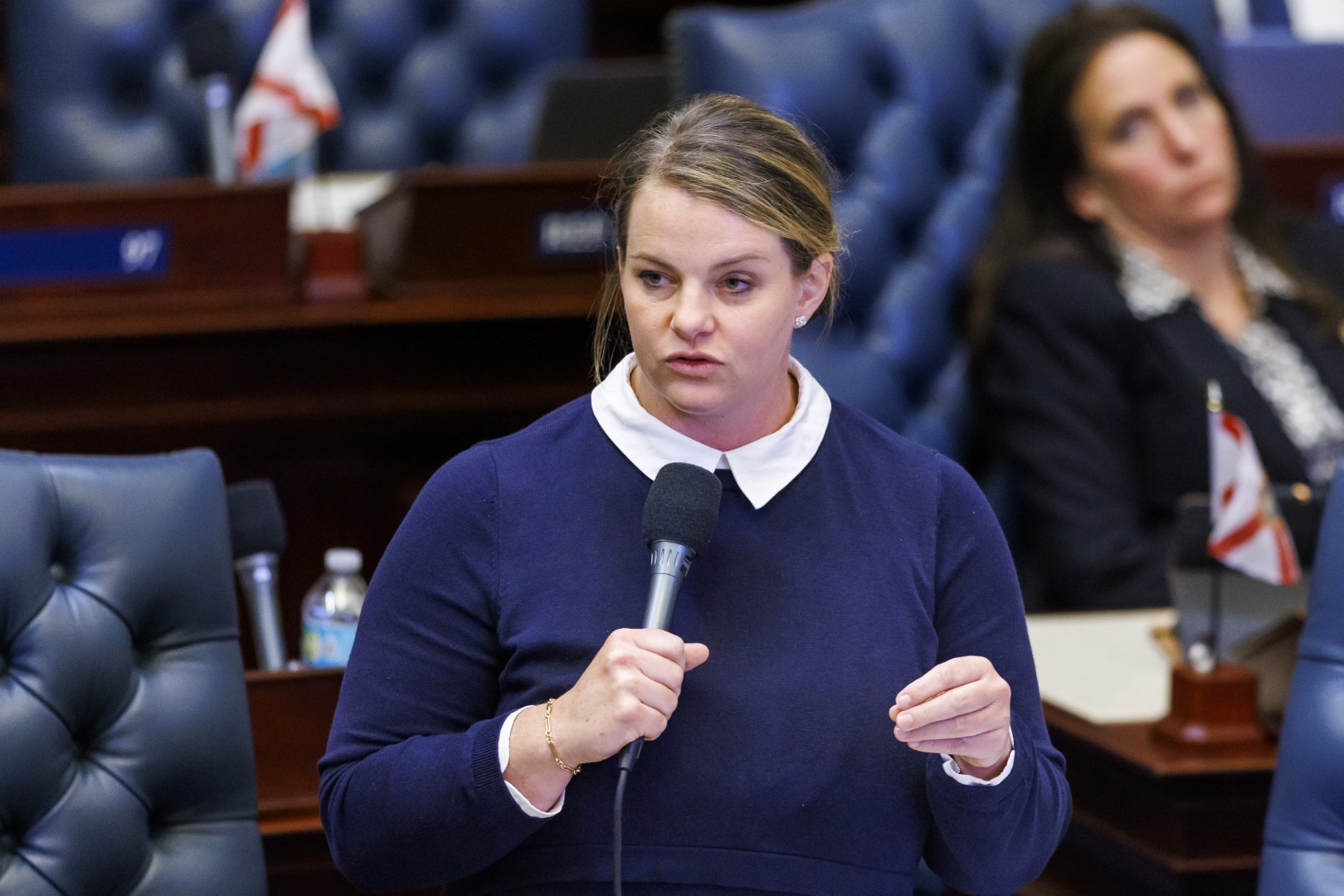
Fiona McFarland pushes to raise payout caps on lawsuits against cities and counties
Published

on


A bill pitched by Sarasota Rep. Fiona McFarland that increases the payout cap on lawsuits against state and local governments has advanced through the committee stage, but it’s still in search of a Senate sponsor despite favorable outlook in the House.

The House Judiciary Committee advanced McFarland’s legislation (HB 145) that would significantly raise Florida’s sovereign immunity caps placed on lawsuits against state and local governments, reviving an effort to update how much people can recover when they sue. 

The measure would increase the current limits of $200,000 per person and $300,000 per incident to $500,000 and $1 million beginning in 2026. The caps would rise again in 2031 to $600,000 per person and $1.2 million per incident.

The bill would also allow cities, counties and other public agencies to settle claims above those limits without needing a separate act of the Legislature. It shortens the time to file notices of claim against government entities, reduces the statute of limitations for negligence cases to two years, and bars insurers from requiring a claims bill before paying benefits.

Supporters say the updates modernize payout limits that have not changed over a decade, and streamline a process that forces victims to seek additional compensation through a claims bill.

“I’ll remind you that approximately one-fourth of claims bills that are filed every year pass, and again these caps were last updated in 2010.” McFarland said during Thursday’s committee meeting. 

However local governments and school districts have previously warned that higher caps could increase insurance costs and pressure local budgets, especially since it comes at a time when state legislators aim to cut property taxes.

The committee reported favorably on the measure with a 12 to 2 vote. HB 145 next heads to the House floor for debate, but a Senate companion has not yet been filed ahead of the Jan. 9 deadline.

The 2025 Session version of SB 145 passed in the House on a 103-11 vote in April, but it stalled out in the Senate where its upper-chamber companion, sponsored by St. Petersburg Republican Sen. Nick DiCeglie, died without a hearing. DiCeglie previously told Florida Politics he isn’t refiling the bill for the 2026 Session and doesn’t know if another Senator will.

___

Jesse Scheckner of Florida Politics contributed to this report.


Source link

Continue Reading

Politics

Jay Collins denies persistent rumors he will run for Congress, whether against Kathy Castor or Cory Mills

Published

on


Multiple sources allied with Gov. Ron DeSantis say talk continues about whether Lt. Gov. Jay Collins should run for Congress. But Collins says he’s not interested.

“No, I’m not running for Congress,” the Tampa Republican said.

That comes as sources say he’s been encouraged to, instead of running for Governor, challenge Democratic U.S. Rep. Kathy Castor in the Tampa area or troubled U.S. Rep. Cory Mills in East Central Florida.

Collins for months has teased a potential run for Governor, with speculation spiking after DeSantis appointed Collins as his Lieutenant Governor. That helped raise the statewide profile for Collins, previously a state Senator, but he still trails behind U.S. Rep. Byron Donalds, a Naples Republican, in public polls.

A source close to Collins said he already “100%” decided his next political move, and will announce it soon, but did not say if news will break before the end of the year.

Many anticipated Collins would have DeSantis’ endorsement for a statewide run. But the Governor recently declined to say if he would endorse a successor in an interview with the Floridian Press.

One longtime ally of DeSantis said there’s a growing desire for Collins to challenge Mills in a Republican Primary.

Mills, embroiled in a House Ethics investigation and accused of domestic issues by girlfriends in Washington and Florida, faces censure threats and calls from female colleagues not to seek re-election. The source said this has political allies of DeSantis looking for a credible Republican Primary challenger to Mills with strong name recognition and no scandals. Federal law only requires members of Congress to live in the same state as their congressional district, allowing anyone in Florida to run.

But party leaders expect Mills to seek re-election and acknowledge that it may be difficult to unseat an incumbent in a GOP Primary, regardless of the circumstances.

Another source with strong ties to DeSantis said there has been talk about Collins either running against Mills or in his home region of Tampa Bay. Collins notably filed to challenge Castor, a Tampa Democrat, in the 2022 election cycle, but ultimately ran with DeSantis’ endorsement to unseat Democratic state Sen. Janet Cruz. Collins won the legislative race with 55% of the vote.

Another source said it seemed more likely that Collins would run for a Tampa congressional seat than against Mills.

But Republican leaders in Florida said speculation about federal races may need to wait for the Florida Legislature to produce a new congressional map. The House has taken steps to draw a new map in the Legislative Session. DeSantis and Florida Senate President Ben Albritton said they plan to wait for guidance from a Supreme Court decision in a Louisiana case that could be settled early next year.


Source link

Continue Reading

Politics

A new path to real Florida affordability

Published

on


Talk to any family or walk into any grocery store in Florida, and you’ll hear the same thing: costs have become unaffordable.

Floridians don’t need reminders that the cost of living is out of control because people don’t learn about prices from a press release; they learn them at the checkout line and on their bills.

Democrats are listening. I want to thank our Democratic leaders in both the House and Senate for rolling out their new affordability agenda for the 2026 Session.

Democrats are advancing measures that would stabilize insurance premiums, cut upfront homebuying costs for first-time buyers, and direct state watchdogs to investigate wasteful spending that drives up household costs.

But as important as that agenda is, we need to go even further. Florida’s affordability crisis is not a single issue; it is the defining force shaping nearly every aspect of people’s lives. Too often, the political world treats affordability as something separate — a housing bill here, an insurance bill there. But for Floridians, these aren’t separate issues. They all blur together into one central question: Can I build a decent life in the state I love?

That is why we cannot afford to silo affordability into isolated legislative proposals. We must weave it into everything we do. People are jaded with the thought that politicians in Tallahassee are too focused on the wrong things, such as culture war issues, draining public school funding, and a Republican establishment displaying massive amounts of corruption (look no further than the Hope Florida scandal).

The simple reality is that people want economic relief in a state gripped by one of the worst affordability crises in its existence.

As a result, we, as Democrats, need to put forward a single landmark proposal to address the three biggest drags on affordability for Florida families: property insurance, auto insurance, and the high cost of buying a home.

Some homeowners have seen their property insurance rates jump 60% since 2019 (with some analyses backing that surge), meanwhile, the Governor and Republicans have pocketed over $10 million in campaign funds from insurers in the same time frame. We need to demonstrate that rates can go down through increased competition by inviting more insurers into the state and by providing incentives to current insurers operating in high-risk areas.

For auto insurance, Florida ranks nearly dead last in rates, thanks to a lack of legislation in Tallahassee to address the fact that roughly one in five drivers on our roads are uninsured.

We must strengthen penalties for uninsured drivers and implement programs that help people become insured, which will drive everyone’s rates down.

And as for homeownership costs, Florida has seen one of the sharpest declines in the nation among first-time homebuyers. If families cannot afford to live here, we will lose our brightest and youngest simply because of Tallahassee’s inaction. It is critical that we further enhance down payment assistance for first-time homebuyers and present a real proposal to reduce their property taxes, not one that would defund our first responders or schools, as the Governor has proposed.

Floridians aren’t asking us for perfection; they’re asking us to understand their reality and focus on actual problems, not ones manufactured by politicians.

Democrats need to show Floridians not just what we oppose, but what we would do, across the board, to make life more affordable. Even in a legislative superminority, we can still lead by presenting a cohesive, people-driven plan to lower costs and ease the pressure on families.

Because the truth is, Democrats won’t climb out of this political and electoral hole unless voters believe we can make their lives better. And voters won’t believe that unless they hear a clear, repeated, and disciplined message from us that ties every policy debate back to the thing they care most about: whether they can afford to live here. If we speak directly and honestly about that — not in typical politician talk, but in the language people actually use — we can rebuild credibility. We can reconnect with the families who feel ignored. And we can begin to offer a real alternative to the status quo that has left so many Floridians struggling.

The affordability crisis is not going away on its own. But neither is the determination of Floridians to work hard and make ends meet in the Sunshine State. Democrats owe them a strategy that matches that determination — a strategy rooted in practical solutions, plainspoken communication, and a commitment to making Florida a place where people can not only live, but thrive. Our leaders have taken an important step this week. Now it’s on all of us to carry that work forward and make affordability the centerpiece of everything we do.

Jayden D’Onofrio is Chair of Florida Future Leaders, a committee benefiting candidates at the state and local levels, and a candidate for the Florida House in District 102.


Source link

Continue Reading

Politics

Federal agriculture bailout includes $1 billion for speciality crops, sugar producers

Published

on


A $12 billion bailout for farmers includes $1 billion for specialty crop and sugar growers. That addresses a concern raised by several members of Florida’s congressional delegation.

Agriculture Secretary Brooke Rollins and Treasury Secretary Scott Bessent announced this week the “bridge payments” for American farmers hit by trade disruptions and increased production costs. Leaders in the Donald Trump administration blamed the “failed” Joe Biden administration for inflation and trade deficits.

While the U.S. Department of Agriculture set aside $1 billion for specialty crops and sugar, details on the timeline for payments in those areas are still under development, pending further study of market impacts and economic needs.

The announcement was made at an event with farmers from eight other states, including Florida. But the agency addressed a key concern raised by several Florida lawmakers.

“Florida’s specialty crop growers help feed America and support jobs across our state,” said U.S. Rep. Scott Franklin, a Lakeland Republican.

“Our delegation made it clear specialty crops must be part of this assistance and I’m pleased the Trump Administration answered that call. This $1 billion commitment will help our farmers stay competitive, recover from storm losses and keep doing what they do best. When Florida agriculture is strong, our whole state benefits. This is a big win for the growers who make that possible.”

Specialty crops in Florida include citrus, with 17% of U.S. production coming from Florida groves, according to Citrus Industry Magazine. But Florida is also the No. 2 producer of tomatoes, behind California. Other specialty crops, such as peppers and snap beans, also make up a large share of Florida agriculture. And about 90% of sugar in the U.S. is produced in either Florida or Louisiana.

U.S. Sen. Rick Scott also sent a letter to Rollins last week, urging the USDA to consider specialty farmers in any assistance package.

“For years, Florida’s specialty crop producers have battled unfair trade practices and market distortions caused by Communist China, Latin America, and other foreign markets while also facing challenges such as citrus greening and hurricanes,” the Naples Republican wrote.

“Many of their foreign competitors enjoy government subsidies and operate under far weaker labor and environmental standards – even for imports into the United States – while Florida’s growers are held to some of the highest production standards in the world, leaving them to compete on an uneven playing field.”

In October, Franklin also led a bipartisan letter to Rollins, noting that past federal relief packages have paid attention to specialty crops.

“In prior mitigation efforts, certain specialty crops were included alongside row crops. This precedent acknowledges that specialty crops are also vulnerable to trade and cost disruptions and that their exclusion would undermine the goal of stabilizing the agricultural economy. Any new aid program must explicitly include specialty crops and respond to actual economic pressures across the agriculture sector,” the letter reads.

That was signed entirely by members of the Florida U.S. House delegation, including Republican U.S. Reps. Gus Bilirakis, Kat Cammack, Byron Donalds, Neal Dunn, Carlos Giménez, Mike Haridopolos, Laurel Lee, Cory Mills, John Rutherford, Daniel Webster and Democratic U.S. Reps. Jared Moskowitz, Darren Soto and Debbie Wasserman Schultz.

USDA officials said the Marketing Assistance for Specialty Crops program has distributed $1.8 billion in assistance to 52,000 producers, and more than $2.5 billion in block grants has been delivered to states and sugar beet and cane processors to cover losses from 2023 and 2024.


Source link

Continue Reading

Trending

Copyright © Miami Select.