Connect with us

Business

What it takes to be wealthy in America: $2.3 million, Charles Schwab says

Published

on


“If I had a million dollars… I’d be rich,” the Barenaked Ladies sang in their hit 1988 song.

At the time, a million dollars felt like a lot. But as inflation and tariffs have made essentially everything more expensive, that amount of money doesn’t feel like all that much at all. In fact, Americans now think it takes an average of $2.3 million to be considered wealthy, according to a Charles Schwabreport.

The financial services firm surveyed 2,200 adults between the ages of 21 to 75 from April 24 to May 23, so a variety of generations offered their input. The average response for what it takes to be considered “financially comfortable” was $839,000. 

While the reported $2.3 million was a slight drop from last year’s Modern Wealth Survey at $2.5 million, it’s still 21% higher than the 2021 figure of $1.9 million.

Respondents also reported the bar to achieve monetary wealth feels as if it’s increasing, and 63% said it feels like it takes more money to be wealthy today compared to last year, citing the impacts of inflation, a worsening economy, and higher taxes.

Brad Clark, founder and CEO of financial advisory firm Solomon Financial, said these sentiments are relatively reflective of what he hears from his clients. There are a large number of millionaires in the U.S. when you factor in all assets, he told Fortune, but this typically includes their home, meaning their investable assets are typically less than $1 million.

“With so many middle-class Americans being considered millionaires, it stands to reason that the average individual would consider $2.3 million to be wealthy, as it may seem out of reach,” Clark said. 

But experts said being considered wealthy doesn’t necessarily equate being opulent in all life choices. 

The $2.3 million figure is “not luxury for everyone, but security. It’s wanting to have a house, retire well, have family, and have one’s time,” William “Bill” London, a lawyer and partner at Kimura London & White LLP who routinely handles high-net-worth families and individuals in divorces and estate cases, told Fortune. “Affluence is not about excess, but about reducing anxiety.”

What it means to be wealthy for different generations

The Charles Schwab survey showed when compared with other generations, Gen Z tends to set lower thresholds for what it takes to be wealthy and financially comfortable—$1.7 million and $329,000, respectively. Meanwhile, millennials and Gen Xers say it takes $2.1 million to be wealthy, and $2.8 million for baby boomers. 

That may have to do with how exactly different generations define wealth. Earlier generations like baby boomers more frequently frame wealth in terms of security, London said, with a focus on property, pension, and assets that get passed down. Younger generations, on the other hand, more frequently consider experiences, freedom from debt, and lifestyle decisions, he added.

“More of my younger clients are more concerned about breathing space and time than they are about a big house or pricey assets,” London said. “Their definition of wealth is more about lifestyle than about acquisition.”

But it could also be the fact younger generations have a harder time acquiring large assets like a home due to comparatively high mortgage rates and home prices. 

“Millennials and Gen Z are justifiably pessimistic about the prospects of home ownership, which historically was the most common way for Americans to build wealth,” Markus Schneider, associate professor and chair of the economics department at University of Denver, told Fortune. “There are lots of reasons why millennials and Gen Z may feel less secure about the world than the boomers did when they were the same age, and that may also impact how they feel about their wealth.”

Despite the differences among generations, experts agree it takes more than money to feel wealthy—and it shows in the Charles Schwab report. Some of the most popular personal definitions of wealth include happiness, physical health, mental health, quality of relationships, accomplishments, amount of free time, and material possessions.

“You don’t have to look too far to find a study that shows how depressed ultra-wealthy people often are. If you are defining wealth solely based on dollars, you likely will be disappointed when you achieve the number,” Clark said. “True wealth is being able to use your assets to free up your time to benefit those around you. The happiest people tend to be those with a greater purpose in life.”

A version of this story was published on Fortune.com on July 10, 2025.


Source link

Continue Reading

Business

Co-working provider JustCo CEO sees commonalities with hotels: ‘It’s a hospitality business’

Published

on


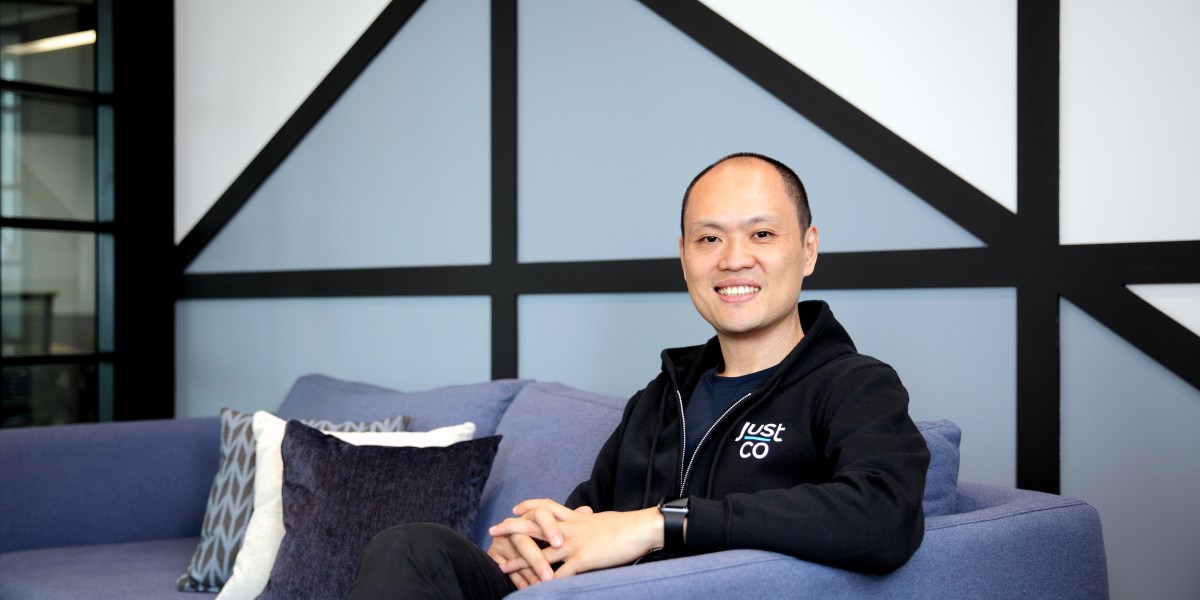
Kong Wan Sing, the founder and CEO of JustCo, one of Asia’s largest co-working space providers, doesn’t quite think of himself as leading an office company. Instead, he sees parallels with a different property business: Hotels.

“It’s a hospitality business. People come to us not just for the network, but also for the hospitality,” he told Fortune. “You need to serve them. You have to take care of their needs, like serving the customers who are coming to look for them in the office.”

Kong and JustCo are expanding their presence in Asia even as employers and employees continue to fight a battle about flexible work and returning to the office. Globally, corporate giants ranging from Amazon to JPMorgan have called workers back to the office full-time. But employees tout the benefits of working from home and hybrid work, forcing employers and office designers to get creative in how they bring people back. 

The company is also expanding into new markets regionally, including Malaysia and India. In the longer run, they’re also looking to move into countries in North Asia and the Middle East.

“After entering all these markets, we will be truly covering all the key cities in Asia-Pacific,” says Kong. He’s even considering returning to mainland China, after JustCo exited the market in 2022 due to tight social distancing regulations during the COVID pandemic.

JustCo just entered the Vietnam market with a new office along Ho Chi Minh City’s waterfront. The Vietnamese city is the tenth urban market in Asia for JustCo. It’s also a return of sorts for Kong, who was first exposed to the idea of a flexi-office in Ho Chi Minh City several decades ago. 

JustCo’s story

Kong Wan Sing founded JustCo in Singapore in 2011. Following a regional expansion drive in 2015, it now operates 48 offices across Asia-Pacific, including in major cities like Seoul, Bangkok, Taipei, Melbourne, and Sydney. Kong himself hails from a family of entrepreneurs; his parents operate garment factories in nearby Malaysia. “There’s genes inside me to build a business,” he says. 

In the early 2000s, Kong was an employee of Singaporean real estate investment company Mapletree, working out of a flexi-office in Vietnam’s Ho Chi Minh City. (A flexi-office is a modern workspace where employees don’t have assigned desks, but instead choose from various work zones including hot desks, quiet pods, and collaborative areas.)

The experience opened his eyes to the value of flexible workspaces, and he saw a business opportunity in Asia, where such spaces were still few and far between. 

Kong notes that, just three years ago, just under 4% of all offices in Asia-Pacific were flexi-offices. It’s since risen to over 5%, but that’s still half the level seen in more developed markets in Europe and the U.S. Yet JustCo’s CEO says he’s seeing a “surge” in Asia: “The growth is definitely much faster than European or American countries.”

JustCo also leases small offices for businesses to rent. Sixty percent of JustCo’s clients are multinational corporations looking for space for a regional office, Kong said. Companies like Chinese tech giant Tencent and U.S. vaccine maker Moderna use JustCo for their local offices. 

New brands

JustCo has since broadened its offerings to potential renters, launching two new brands: “THE COLLECTIVE” and “the boring office.”

The former is a luxury co-working space, equipped with premium white-glove services like daily breakfasts and aperitif hours, and twice-a-day office cleaning. The first such space was launched in Tokyo in March.

“Japan is a very mature market, and people in Japan—they appreciate luxury stuff,” said Kong, when asked why the country was chosen to debut its premium brand. Kong and his team has since launched THE COLLECTIVE in Bangkok and Taipei; the company will bring the concept to Singapore and India in 2026.

“The boring office” sits on the other end of the spectrum, catering to firms that want a stripped-down solution. “When you go to the boring office, there’s no cleaning [of rooms] every day, only once a week,” Kong says. “And the pantry is a very basic pantry that provides only water—there’s no coffee, nothing.” The first space under that brand was launched in Singapore in July.

These three brands cater to companies’ differing needs, and are priced along a sliding scale. 

The firm’s luxury offices are 20 to 30% more costly than the classic JustCo workspace, while the boring office’s spaces are cheaper by roughly the same amount, Kong explains.


Source link

Continue Reading

Business

Creative workers won’t be replaced by AI, they will become ‘directors’ managing AI agents

Published

on


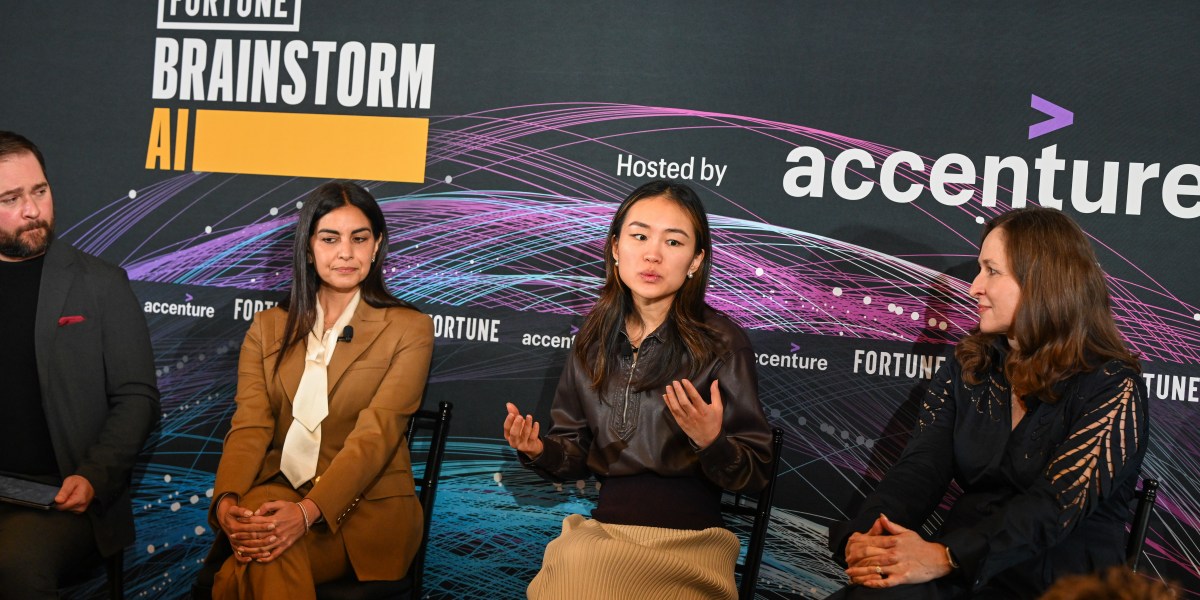
AI won’t automate creative jobs—but the way workers do them is about to change fundamentally. That’s according to executives from some of the world’s largest enterprise companies who spoke at the Fortune Brainstorm AI conference in San Francisco earlier this week.

“Most of us are producers today,” Nancy Xu, vice president of AI and Agentforce at Salesforce, told the audience. “Most of what we do is we take some objective and we say, ‘Okay, my goal is now to spend the next eight hours today to figure out how to chase after this customer, or increase my CSAT score, or to close this amount of revenue.”

With AI agents handling more tasks, Xu said that workers will shift “from producers to more directors.” Instead of asking, “How do I accomplish the goal?” they’ll instead focus on, “What are the goals that I want to accomplish, and then how do I delegate those goals to AI?” she said.

Creative and sales professionals are increasingly anxious about AI automation as tools like chatbots and AI image generators have proved to be good at doing many creative tasks in sectors like marketing, customer service, and graphic design. Companies are already deploying AI agents to take on tasks like handling customer questions, generating marketing content, and assisting with sales outreach. 

Pointing to a recent project with electric-vehicle maker Rivian, Elisabeth Zornes, chief customer officer at Autodesk, said that the company’s AI-powered tools enabled Rivian to test designs through digital wind tunnels rather than clay models. “It shaved off about two years of their development cycle,” Zornes said.

As AI takes on some of these lower-level tasks, Zornes said, workers can focus on more creative projects.

“With AI, the floor has been raised, but so has the ceiling,” she added. “We have an opportunity to create more, to be more imaginative.”

The uneven impact of AI

The shift to AI-augmented work may not benefit all workers equally, however.

Salesforce’s Xu said AI’s impact won’t be evenly distributed between high and low performers. “The near-term impact of AI will largely be that we’re going to take the bottom 50 percentile performers inside a role and bring them into the top 50 percentile,” she said. “If you’re in the top 10 percentile, the superstar salespeople, creatives, the impact of AI is actually much less.”

While leaders were keen to emphasize that AI will augment, rather than replace, creative workers, the shift could reshape some traditional career ladders and impact workforce development. If AI agents handle entry-level execution work, companies may need to hire fewer people, and some learning opportunities may disappear for younger workers. 

Ami Palan, senior managing director at Accenture Song, said that to successfully implement AI agents, companies may need to change the way they think about their corporate structure and workforce.

“We can build the most robust technology solution and consider it the Ferrari,” she said. “But if the culture and the organization of people are not enabled in terms of how to use that, that Ferrari is essentially stuck in traffic.”

Read more from Brainstorm AI:

Cursor developed an internal AI help desk that handles 80% of its employees’ support tickets, says the $29 billion startup’s CEO

OpenAI COO Brad Lightcap says ‘code red’ will force the company to focus, as the ChatGPT maker ramps up enterprise push

Amazon robotaxi service Zoox to start charging for rides in 2026, with ‘laser focus’ on transporting people, not deliveries, says cofounder


Source link

Continue Reading

Business

Trump says ‘starting’ land strikes over drugs in latest warning

Published

on


President Donald Trump said the US would be “starting” land strikes on drug operations in Latin America, though again declined to provide details on when and where the escalation of his military campaign would actually begin, or if countries could still do anything to avert the threatened action.

“We knocked out 96% of the drugs coming in by water, and now we’re starting by land, and by land is a lot easier, and that’s going to start happening,” Trump told reporters Friday in the Oval Office.

The US president for days has been pledging to broaden the effort, which comes after the Pentagon has launched a series of attacks on what it has called drug-smuggling boats in international waters off the coast of South America.

While Trump’s posturing has largely been seen as a pressure campaign against Venezuelan President Nicolás Maduro, he on Friday insisted the land targeting may not only impact Venezuela.

Read more: Trump Says US Eyes Land Strikes Next After Drug Boat Attacks

“It doesn’t necessarily have to be in Venezuela,” he said, adding that “people that are bringing in drugs to our country are targets.” 

Trump has justified the actions in part by framing the fight against drug smuggling as akin to combat operations. He told reporters that if overdose deaths were counted like combat deaths, it would be “like a war that would be unparalleled.”

Striking targets on land would represent a major escalation, and Maduro earlier this week said that if his nation came under foreign attack, the working class should mount a “general insurrectionary strike” and push for “an even more radical revolution.”

Join us at the Fortune Workplace Innovation Summit May 19–20, 2026, in Atlanta. The next era of workplace innovation is here—and the old playbook is being rewritten. At this exclusive, high-energy event, the world’s most innovative leaders will convene to explore how AI, humanity, and strategy converge to redefine, again, the future of work. Register now.


Source link

Continue Reading

Trending

Copyright © Miami Select.