Connect with us

Politics

More than 900 Starbucks locations in Florida engaged in hiring discrimination
Published

on


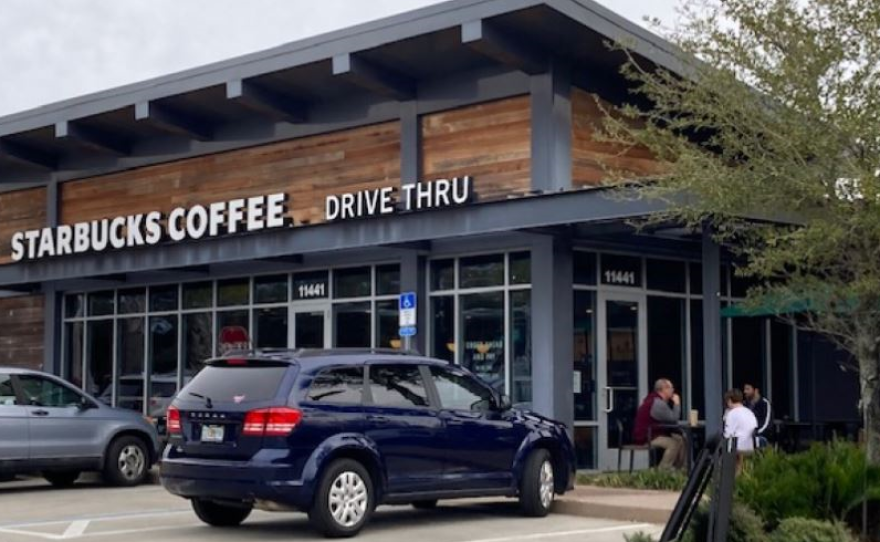
Attorney General James Uthmeier has filed a lawsuit against giant coffee shop retailer Starbucks, claiming the company is engaging in “race-based quotas” in hiring employees.

The civil legal action against Starbucks was filed in the 10th Judicial Circuit Court in Highlands County. The 21-page lawsuit doesn’t single out one particular incident or an individual. But it points to a series of practices Starbucks has engaged in the past five years while taking part “in a pattern or practice of discrimination.”

The filing said Starbucks established racial quotas for hiring, paid employees different wages because of their race, tied compensation to race-based mentorship programs “only to a person of certain favored races,” and excluded “people of disfavored races” from many of those programs.

While many of the Starbucks diversity, equity and inclusion (DEI) programs were aimed at including underrepresented minorities, the lawsuit said that still excludes others. “All racial discrimination, even for supposedly benign purposes, is invidious and unlawful,” according to the court document.

In a recorded video statement, Uthmeier said the actions by Starbucks are ironically going against what the company wanted to accomplish.

“Starbucks made DEI more than a slogan. They turned it into a mandatory hiring and promotion system based upon race. The coffee empire set numerical racial targets for their workforce and they tied executive bonuses to those targets,” Uthmeier said.

“That is brazen discrimination and it is against the law. DEI can never be an excuse to violate someone’s civil rights. Every worker in our state deserves to be hired on merit, qualifications and character, not race. Florida law protects that principle and we will enforce it.”

The lawsuit is challenging the hiring practices at 934 Starbucks stores in Florida. That’s the third-most Starbucks locations in any state.

The lawsuit asks the court to implement an injunction to stop the hiring practices and seeks civil penalties up to $10,000 per violation of several Florida statutes, particularly the Florida Civil Rights Act of 1992 that prohibits employers from hiring based on racial criteria and other stipulations. The suit claims that “reverse discrimination” against a nonminority group is still discrimination.

Uthmeier’s Office is encouraging anyone who worked at Starbucks and believes they were discriminated against to file an online complaint.



Source link

Continue Reading

Politics

Federal agriculture bailout includes $1 billion for speciality crops, sugar producers

Published

on


A $12 billion bailout for farmers includes $1 billion for specialty crop and sugar growers. That addresses a concern raised by several members of Florida’s congressional delegation.

Agriculture Secretary Brooke Rollins and Treasury Secretary Scott Bessent announced this week the “bridge payments” for American farmers hit by trade disruptions and increased production costs. Leaders in the Donald Trump administration blamed the “failed” Joe Biden administration for inflation and trade deficits.

While the U.S. Department of Agriculture set aside $1 billion for specialty crops and sugar, details on the timeline for payments in those areas are still under development, pending further study of market impacts and economic needs.

The announcement was made at an event with farmers from eight other states, including Florida. But the agency addressed a key concern raised by several Florida lawmakers.

“Florida’s specialty crop growers help feed America and support jobs across our state,” said U.S. Rep. Scott Franklin, a Lakeland Republican.

“Our delegation made it clear specialty crops must be part of this assistance and I’m pleased the Trump Administration answered that call. This $1 billion commitment will help our farmers stay competitive, recover from storm losses and keep doing what they do best. When Florida agriculture is strong, our whole state benefits. This is a big win for the growers who make that possible.”

Specialty crops in Florida include citrus, with 17% of U.S. production coming from Florida groves, according to Citrus Industry Magazine. But Florida is also the No. 2 producer of tomatoes, behind California. Other specialty crops, such as peppers and snap beans, also make up a large share of Florida agriculture. And about 90% of sugar in the U.S. is produced in either Florida or Louisiana.

U.S. Sen. Rick Scott also sent a letter to Rollins last week, urging the USDA to consider specialty farmers in any assistance package.

“For years, Florida’s specialty crop producers have battled unfair trade practices and market distortions caused by Communist China, Latin America, and other foreign markets while also facing challenges such as citrus greening and hurricanes,” the Naples Republican wrote.

“Many of their foreign competitors enjoy government subsidies and operate under far weaker labor and environmental standards – even for imports into the United States – while Florida’s growers are held to some of the highest production standards in the world, leaving them to compete on an uneven playing field.”

In October, Franklin also led a bipartisan letter to Rollins, noting that past federal relief packages have paid attention to specialty crops.

“In prior mitigation efforts, certain specialty crops were included alongside row crops. This precedent acknowledges that specialty crops are also vulnerable to trade and cost disruptions and that their exclusion would undermine the goal of stabilizing the agricultural economy. Any new aid program must explicitly include specialty crops and respond to actual economic pressures across the agriculture sector,” the letter reads.

That was signed entirely by members of the Florida U.S. House delegation, including Republican U.S. Reps. Gus Bilirakis, Kat Cammack, Byron Donalds, Neal Dunn, Carlos Giménez, Mike Haridopolos, Laurel Lee, Cory Mills, John Rutherford, Daniel Webster and Democratic U.S. Reps. Jared Moskowitz, Darren Soto and Debbie Wasserman Schultz.

USDA officials said the Marketing Assistance for Specialty Crops program has distributed $1.8 billion in assistance to 52,000 producers, and more than $2.5 billion in block grants has been delivered to states and sugar beet and cane processors to cover losses from 2023 and 2024.


Source link

Continue Reading

Politics

House committee advances bill expanding E-Verify to all Florida businesses

Published

on


Rep. Berny Jacques is seeking to revive his legislation to expand E-Verify to all businesses after his similar bill last Session died in the Senate.

Jacques’ new measure (HB 197) took a step forward as the House Commerce Committee advanced it with a 16-5 vote. That was the final committee stop in the House, but no Senate companion bill has been filed so far.

Under a 2023 law, large businesses with at least 25 employees or more are already required to use E-Verify to confirm their employees’ immigration statuses. But efforts to expand the law to cover smaller businesses haven’t gotten the political will to clear the full Legislature.

Last Session, the House passed Jacques’ bill in April before it stalled in the upper chamber.

Jacques, a Seminole Republican, argued Thursday that the extra step wouldn’t be time-consuming for small business owners to type information in the federal system administered by the U.S. Department of Homeland Security.

“There is not going to be a heavy burden,” Jacques said. “It’s a free system, and so as far as financial costs, there wouldn’t be any.”

Jacques was joined by his co-sponsor, Rep. Kiyan Michael, whose son was killed in a car crash in 2007 by someone who had illegally entered the country.

“I absolutely will always show up with anything to do with combating illegal immigration,” Michael told lawmakers as she urged them to vote in favor.

But Florida AFL-CIO lobbyist Rich Templin dismissed Jacques’ bill as nothing more than a “headline pursuing approach” for what’s a more complicated immigration problem.

“Our position is that we have got to stop taking these little Band-Aid approaches state by state,” Templin said during Thursday’s hearing. “Presidents, legislators, Legislatures, states cannot fix the immigration system in this country with these haphazard headline chasing approaches like requiring E-Verify. It has to be done at the federal level.”

Templin added the AFL-CIO supports E-Verify “as a potential tool” but only as part of more comprehensive immigration.

“Because every time a state does something like this, we get that much further away from all of our goal, which is to fix immigration in this country,” Templin said.


Source link

Continue Reading

Politics

Emily Gregory lands new endorsements, tops $80K in HD 87 Special Election as vote-by-mail begins

Published

on


As voters this week begin to receive mail-in ballots for Primary races in the House District 87 Special Election, Democratic small-business owner Emily Gregory’s campaign is touting new endorsements and a fundraising milestone.

Gregory’s campaign said she’s now crossed the $80,000 mark — about $24,000 more than she reported gaining by late November.

She also welcomed endorsements from U.S. Rep. Lois Frankel, Senate Democratic Leader Lori Berman, and Reps. Mitch Rosenwald and Kelly Skidmore, Palm Beach County Tax Collector Anne Gannon and Delray Beach Commissioner Rob Long, who won the vacant House District 90 seat Tuesday.

In a statement, Frankel called Gregory “smart, compassionate and relentlessly focused on helping Florida families.”

“As a mom, she understands that families are being crushed by rising costs,” Frankel said. “She’s committed to lowering costs for families, fixing Florida’s property insurance disaster, and investing in strong public schools. Emily is a fighter who shows up, listens, and leads with community at the center.”

The new nods join others from Ruth’s List Florida, Florida NOW, Vote Mama and Moms Fed Up.

Gregory, a first-time candidate, said in a statement that she is “honored” by the added support from “Democratic leaders who have been fighting for our communities for years.”

“This campaign is about ensuring Florida families have the freedom to build a secure future, affordable homes, great public schools, and access to quality health care,” she said. “With VBM ballots going out this week, these endorsements and the more than $80,000 we’ve raised reflect the strength of our campaign. Together, we’re going to flip this seat and deliver real solutions for the people of District 87.”

Gregory is competing in a Democratic Primary against comedian Laura Levites. The winner will face one of two Republicans running: Lake Clarke Shores Council member John Maples, who has garnered support from several Republican House members and local leaders, and real estate agent Gretchen Miller Feng.

The winner will take the seat Republican Mike Caruso vacated when Gov. Ron DeSantis appointed him to serve as Palm Beach County Clerk in August. DeSantis called a Special Election two months later, after Gregory sued to compel him to call it.

The deadline to request mail-in ballots for the HD 87 Primary is Jan. 1. Early voting runs Jan. 3-10. Election Day is Jan. 13.

The General Election is on March 24, well into the 2026 Legislative Session. Click here for information on important dates.

HD 87 covers a coastal portion of Palm Beach County. It includes portions of Palm Beach Gardens and Jupiter, as well as coastal communities from Juno Beach to Hypoluxo.


Source link

Continue Reading

Trending

Copyright © Miami Select.