Connect with us

Business

Sheryl Sandberg’s Lean In finds ‘ambition gap’ in survey first: Fewer women want promotions

Published

on


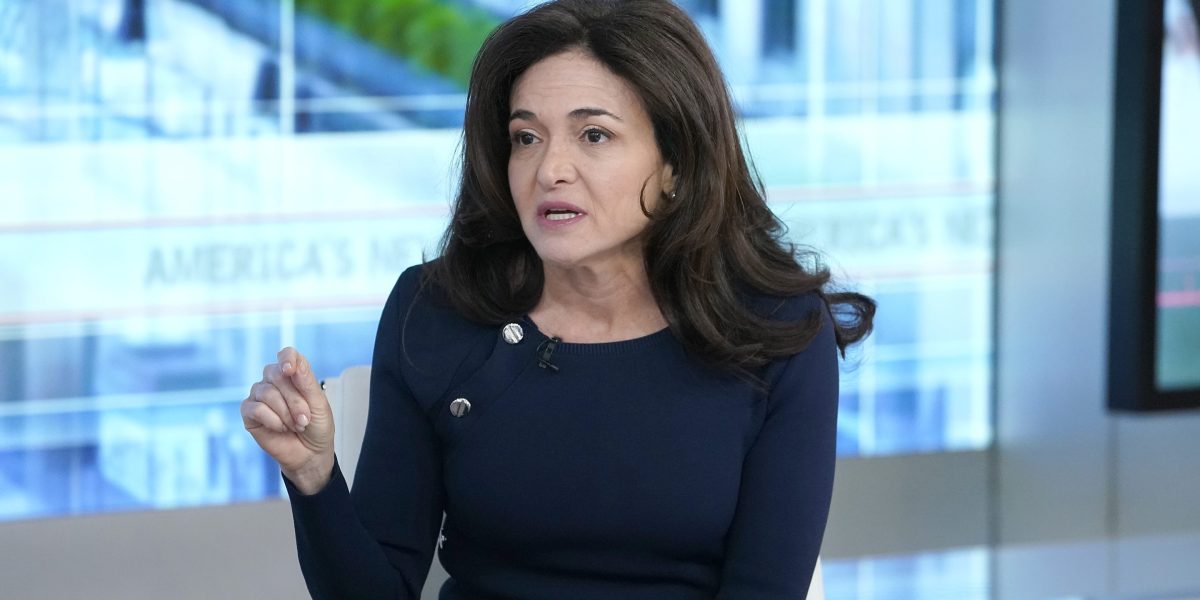
The prophet of leaning in has found that, at least in 2025, women are leaning out. 

According to nonprofit Lean In and McKinsey & Company’s latest Women in the Workplace report, for the first time since the report began a decade ago, significantly fewer women than men are interested in getting a promotion at work. Compared to 80% of men in entry-level career stages, 86% in mid-career, and 92% of senior executives, only 69% of entry-level women, 82% in their mid-career, and 84% of female senior executives reported a desire to advance in their careers. The data was taken from 124 companies with 3 million workers, as well as interviews with 62 human resources executives. 

In 2023, 81% of both men and women surveyed said they were interested in getting promoted, including 93% of women under 30, highlighting an “ambition gap” that has emerged in the last year. 

Lean In attributed the gap to a disparity in support and resources available to women in the workplace, including less advocacy from managers, making them less likely to be recommended for a promotion. According to the report, when women receive the same career support as men, the ambition gap in seeking a promotion disappears.

The gap is part of a growing pattern of women being left behind in the workplace, says former Meta Platforms Inc. executive and nonprofit Lean In founder Sheryl Sandberg. While the number of men in the workplace this year has risen by nearly 400,000, the number of working women has fallen by about 500,000, data from the U.S. Bureau of Labor Statistics shows. 

“This is my fourth decade in the workplace, and we are in a particularly troubling moment in terms of the rhetoric on women,” she told CNN on Tuesday. “You see it everywhere in all the sectors. But what I’ve seen is, you know, we make progress, we backslide. We make progress, we backslide. And I think this is a major moment of backsliding.”

Troubling workplace trends

Stricter return-to-office mandates and the rising cost of childcare have forced many women to either cut hours or quit their jobs altogether, what some researchers are calling “The Great Exit.” Labor force participation from women aged 25 to 44 with children under 5 fell by about 3% from January to June of this year alone.

The women who are still able to work from home, sometimes out of necessity because of childcare responsibilities, risk becoming invisible at their job. Many get less feedback and mentorship than their in-office counterparts. They are also less likely to be promoted than their male counterparts and see fewer raises and lower wages.

The changes in workplace patterns also come amid concerted efforts to curb diversity, equity, and inclusion efforts in the workplace, with women saying this rollback has impacted their career plans, including prioritizing job security over career growth opportunities. President Donald Trump got rid of EO 11246, an executive order mandating federal contractors provide equal employment to marginalized groups like women and people of color, on his second day in office.

Lean In’s data suggests remaining workplace DEI efforts are also falling short. Despite 88% of companies saying they prioritize inclusive cultures, only 54% say they’ve committed to programs designed for women’s career enhancement and 48% committing to efforts to advance women of color at work. One-fifth of companies surveyed reported no specific support efforts for moving women up in their careers.

“We’ve built systems that aren’t working, and women are bearing the brunt of it,” billionaire philanthropist Melinda French Gates told Fortune in October. “It’s very concerning to see so many women leaving the workforce—but if you’ve been listening all along to what women say about their careers, it’s not surprising.”

French Gates said she attributes continued challenges for women in the workplace to tradeoffs they have to make, including balancing work with childcare. Women also continue to face workplace harassment and navigate enduring stereotypes about their own leadership capabilities, French Gates added.

To Sandberg, the issue goes beyond something ideological. She argued neglecting women in the workplace is a dangerous economic choice, saying that if the U.S. were to increase women’s workforce participation on par with other wealthy countries, it would add an additional 4.2% GDP growth. Organisation for Economic Co-operation and Development data indicates the wealth of a country is correlated with the participation of women in its workforce.

“This is a critical issue, not of special treatment,” Sandberg said, “but of making sure we get the best out of our workforce and we are competitive economically.”


Source link

Continue Reading

Business

RFK Jr. and Sean Duffy had pull-up competition to announce a $1B plan for healthy airport upgrades

Published

on


As if dragging a three-wheeled carry-on across the mileage of an international airport isn’t enough, the government wants you panting before your flight. This week, Transportation Secretary Sean Duffy and Health Secretary Robert F. Kennedy Jr. had a pull-up competition in the middle of Reagan National Airport’s Terminal 2 (not a metaphor) to announce the $1 billion in grants the administration plans to allocate toward healthy airport upgrades.

  • Officials were vague about what these upgrades could include, but mentioned projects like dedicated play areas for kids, more lactation pods, and mini-gyms for travelers.
  • The funding will come from former President Biden’s 2021 Infrastructure Investment and Jobs Act and is part of the current administration’s “Make Travel Family Friendly Again” initiative.

But…over 30 major US airport hubs already have children’s play areas, and most airports have been required to provide private lactation areas since FY2021. And 68% of passengers said their top priority for air travel changes is lower prices, according to a 2025 Ipsos poll for Airlines for America.

Big picture: The administration has been pushing initiatives to make flying more pleasant. Last month, Duffy encouraged travelers to dress up for flights and act right, which some travelers responded to by…wearing pajamas to the airport to troll the secretary.—MM

This report was originally published by Morning Brew.

Join us at the Fortune Workplace Innovation Summit May 19–20, 2026, in Atlanta. The next era of workplace innovation is here—and the old playbook is being rewritten. At this exclusive, high-energy event, the world’s most innovative leaders will convene to explore how AI, humanity, and strategy converge to redefine, again, the future of work. Register now.


Source link

Continue Reading

Business

MAGA’s ‘MyPillow Guy,’ Mike Lindell, challenges Tim Walz in run for Minnesota governor

Published

on


Mike Lindell, the fervent supporter of President Donald Trump known to TV viewers as the “MyPillow Guy,” officially entered the race for Minnesota governor Thursday in hopes of winning the Republican nomination to challenge Democratic Gov. Tim Walz.

“I’ll leave no town unturned in Minnesota,” Lindell told The Associated Press in an interview ahead of a news conference set for Thursday.

He said he has a record of solving problems and personal experiences that will help businesses and fight addiction and homelessness as well as fraud in government programs. The fraud issue has particularly dogged Walz, who announced in September that he’s seeking a third term in the 2026 election.

A TV pitchman and election denier

Lindell, 64, founded his pillow company in Minnesota in 2009 and became its public face through infomercials that became ubiquitous on late-night television. But he and his company faced a string of legal and financial setbacks after he became a leading amplifier of Trump’s false claims that the 2020 election was stolen. He said he has overcome them.

“Not only have I built businesses, you look at problem solution,” Lindell said in his trademark rapid-fire style. “I was able to make it through the biggest attack on a company, and a person, probably other than Donald Trump, in the history of our media … lawfare and everything.”

While no Republican has won statewide office in Minnesota since 2006, the state’s voters have a history of making unconventional choices. They shocked the world by electing former professional wrestler Jesse Ventura as governor in 1998. And they picked a veteran TV pitchman in 1978 when they elected home improvement company owner Rudy Boschwitz as a U.S. senator.

Lindell has frequently talked about how he overcame a crack cocaine addiction with a religious conversion in 2009 as MyPillow was getting going. His life took another turn in 2016 when he met the future president during Trump’s first campaign. He served as a warm-up speaker at dozens of Trump rallies and co-chaired Trump’s campaign in Minnesota.

Trump’s endorsement could be the key to which of several candidates wins the GOP nomination to challenge Walz. But Lindell said he doesn’t know what Trump will do, even though they’re friends, and said his campaign isn’t contingent on the president’s support.

His Lindell TV streaming platform was in the news in November when it became one of several conservative news outlets that became credentialed to cover the Pentagon after agreeing to a restrictive new press policy rejected by virtually all legacy media organizations.

Lindell has weathered a series of storms

Lindell’s outspoken support for Trump’s false claims that the 2020 election was stolen triggered a backlash as major retailers discontinued MyPillow products. By his own admission, revenue slumped and lines of credit dried up, costing him millions. Several vendors sued MyPillow over billing disputes. Fox News stopped running his commercials. Lawyers quit on him.

Lindell has been sued twice for defamation over his claims that voting machines were manipulated to deprive Trump of a victory.

A federal judge in Minnesota ruled in September that Lindell defamed Smartmatic with 51 false statements. But the judge deferred the question of whether Lindell acted with the “actual malice” that Smartmatic must prove to collect. Smartmatic says it’s seeking “nine-figure damages.”

Colorado jury in June found that Lindell defamed a former Dominion Voting Systems executive by calling him a traitor, and awarded $2.3 million in damages.

But Lindell won a victory in July when a federal appeals court overturned a judge’s decision that affirmed a $5 million arbitration award to a software engineer who disputed data that Lindell claimed proved Chinese interference in the 2020 election. The engineer had accepted Lindell’s “Prove Mike Wrong Challenge,” which he launched as part of his 2021 “Cyber Symposium” in South Dakota, where he promised to expose election fraud.

The campaign ahead

Lindell said his crusade against electronic voting machines will just be part of his platform. While Minnesota uses paper ballots, it also uses electronic tabulators to count them. Lindell wants them hand-counted, even though many election officials say machine counting is more accurate.

Some Republicans in the race include Minnesota House Speaker Lisa Demuth, of Cold Spring; Dr. Scott Jensen, a former state senator from Chaska who was the party’s 2022 candidate; state Rep. Kristin Robbins, of Maple Grove; defense lawyer and former federal prosecutor Chris Madel; and former executive Kendall Qualls.

“These guys haven’t lived what I live,” Lindell said.

Lindell wouldn’t commit to abiding by the Minnesota GOP endorsement and forgoing the primary if he loses it, expressing confidence that he’ll win. He also said he’ll rely on his supporters to finance his campaign because his own finances are drained. “I don’t have the money,” he acknowledged.

But he added that ever since word got out last week that he had filed the paperwork to run, “I’ve had thousands upon thousands of people text and call, saying from all around the country … ‘Hey, I’ll donate.’”


Source link

Continue Reading

Business

Apple’s Steve Jobs told students to never ‘settle’ in their careers: ‘If you haven’t found it yet, keep looking’

Published

on


Forty-five years after Apple’s IPO, the company is now worth $4.1 trillion—but its rise was anything but smooth. Steve Jobs weathered near-bankruptcy and was even ousted from the company he had built, before returning and setting the stage for Apple’s resurgence. But what kept him going, he once told students, was a simple career lesson: Doing the work you love.

“Your work is going to fill a large part of your life, and the only way to be truly satisfied is to do what you believe is great work. And the only way to do great work is to love what you do,” Jobs said during his 2005 Stanford Commencement speech

“If you haven’t found it yet, keep looking—and don’t settle. As with all matters of the heart, you’ll know when you find it.”

Many Gen Zers are apprehensive about what career to choose. Some are taking whatever gig they can get in today’s labor market, as roles are quickly being disrupted by AI, and once-lucrative jobs have fallen out of favor. But Jobs’ story is a reminder to young professionals that chasing a long, passionate career in what they love is the recipe for sustainable success. After all, they have a nearly 50-year career ahead of them.

The many jobs that Steve Jobs had and loved

Jobs’ has a diverse lineup of successful ventures under his belt—including Pixar Animation Studios, and software company NeXT—but Apple was his ultimate brainchild. Leading the company through its many iterations, Jobs helmed the creation of generation-defining products for decades. Baby boomers waited in line to snag the Apple II computer back in 1977; by 2001, millennials were flooding their music collections onto the iPod classic; and all throughout the 2010s, Gen Zers were gifted their first iPhones.

Apple may seem like an unmovable force today, sitting at number four on the Fortune 500 and having sold more than three billion iPhones. But its come-up was anything but sunshines and rainbows; despite cofounding the titan of industry, Jobs was forced out by then-CEO John Sculley in 1985, throwing his career into flux. 

The entrepreneur recalled making the most of the bad situation, entering one of the “most creative periods” of his life by launching NeXT and revamping Pixar Studios. But even he couldn’t resist the gravitational pull back to the “best thing that ever happened to [him],” Apple. He returned to the fledgling company as CEO in 1997, and remained in the role until just two months before his passing in October 2011. 

“Sometimes life hits you in the head with a brick. Don’t lose faith,” Jobs said. “I’m convinced that the only thing that kept me going was that I loved what I did. You’ve got to find what you love.”

Jobs’ love for his work turned him into a billionaire

Despite leaving behind a fortune estimated to be worth $10.2 billion at the time of his passing, Jobs made it clear that his ambitions weren’t tied to his bank account. A part of why Apple became a trillion-dollar innovator may be thanks to his devotion for the products—a life-long love for technology he first discovered as an eager tween, hungry for opportunity. 

“I was worth about over $1 million when I was 23, and over $10 million when I was 24, and over $100 million when I was 25,” Jobs told PBS in 1996. “And it wasn’t that important, because I never did it for the money.”

The iPhones sitting in millions of back pockets and MacBooks scattered across swaths of desks may not even exist if it weren’t for Jobs’ devotion to the craft. At just 12 years old, he took a leap of faith to put his passion into action; Jobs hunted down the phone number of the founder of Hewlett Packard (HP) cofounder Bill Hewlett’s in the yellow pages, and called him up for a favor. The tween needed spare parts needed to build a frequency counter, but he got far more than some nuts and bolts. 

Hewlett offered Jobs a gig at the iconic tech company—a launchpad for his future successes dominating the same industry. Jobs set himself on the path for greatness, all because he mustered the courage to try. 

“I never found anybody that didn’t want to help me if I asked them for help. I always call them up,” Jobs said in a 1994 interview, archived by the Silicon Valley Historical Association. “I’ve never found anyone who says ‘no,’ or hung up the phone when I called. I just asked.”

“Most people never pick up the phone and call. Most people never ask…You’ve got to be willing to crash and burn with people on the phone, with starting a company, with whatever. If you’re afraid of failing, you won’t get very far.”


Source link

Continue Reading

Trending

Copyright © Miami Select.