Connect with us

Politics

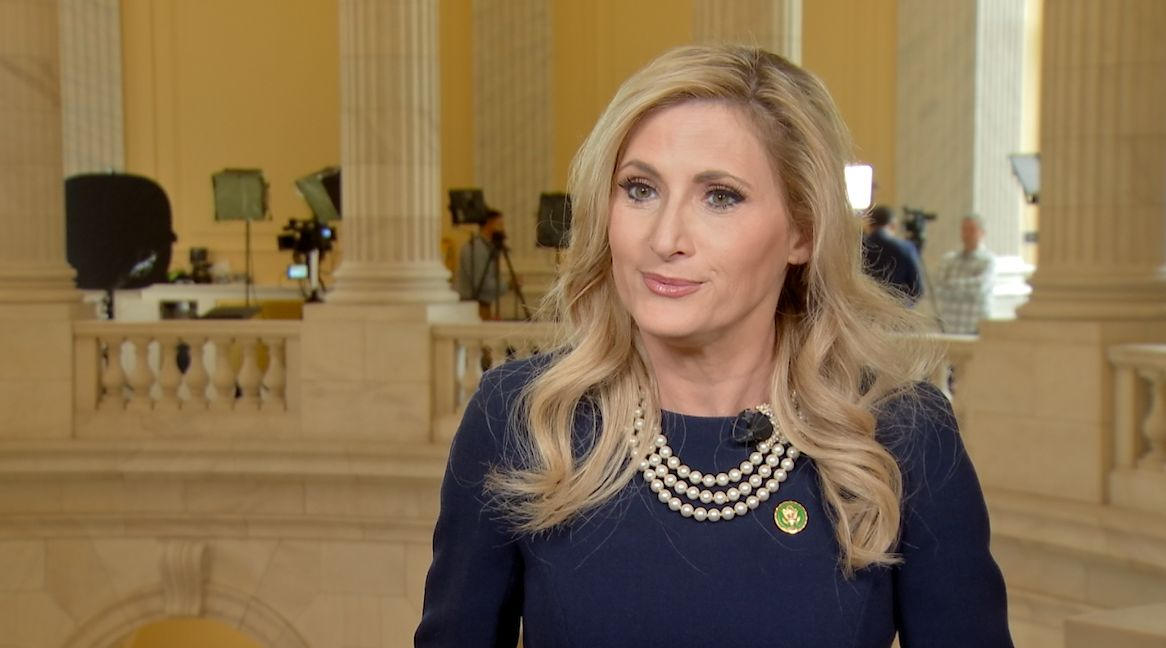
House Democrats add Laurel Lee to list of targets in 2026 Midterms
Published

on


House Democrats just added U.S. Rep. Laurel Lee’s seat to its list of “Districts in Play” in 2026.

That makes the Thonotosassa Republican one of four GOP incumbents in Florida being targeted by Democrats in the Midterms.

“Laurel Lee represents the worst of what voters hate about Congress — an out of touch politician who cares more about prioritizing the wealthy and well connected over helping Florida’s working families,” said U.S. Rep. Suzan DelBene, Chair of the Democratic Congressional Campaign Committee (DCCC).

“As Republicans continue to push their failing agenda that leaves everyday Americans behind in favor of Laurel Lee’s wealthy donors, Democrats will fight to ensure that next November, Florida’s 15th Congressional District will elect a representative that cares about them and their issues.”

The addition of Florida’s 15th Congressional District to its target list comes as Democrats feel increasingly confident about the Midterms. Following off-year victories in Virginia, New Jersey and elsewhere, the DCCC added several seats to an existing list of 35 GOP-held seats. Democrats were already targeting U.S. Reps. Anna Paulina Luna, a St. Petersburg Republican, Cory Mills, a New Smyrna Beach Republican, and María Elvira Salazar, a Coral Gables Republican.

For comparison, the DCCC in 2024 targeted only Luna and Salazar.

But Lee’s seat has earned national interest in the past. It was drawn following 2022 redistricting, and was widely considered Florida’s “new” district that year when the state picked up a House seat in the decennial reapportionment process.

At that point, the district was the most evenly divided congressional district in the state based on the 2020 Presidential Election. But Lee in 2022 won the seat after defeating Democrat Alan Cohn with 58.5% of the vote. In 2024, she won re-election over Democratic challenger Pat Kemp with 56.5% of the vote, while Republican Donald Trump won 54.7% of the vote in the district in the Presidential Election.

As of the closing of voter rolls before the 2024 election, more than 171,000 registered Republicans outnumbered 146,000 Democrats, with independents and members of other parties representing another nearly 138,000 voters there. Of course, Gov. Ron DeSantis and lawmakers in the GOP-controlled Legislature also signaled plans to redraw districts ahead of the Midterms.

But DCCC officials said overperformance in several elections since 2024, including two congressional Special Elections in Florida in April, provide “further proof” that a path to victory in CD 15 exists.

Four Democrats have already filed to challenge Lee in 2026. Most notably, Darren McAuley through September raised almost $208,000 to run in CD 15. At that point, Lee had more than $1 million in cash on hand.


Source link

Continue Reading

Politics

Stan McClain, Lauren Melo push for ‘Blue Ribbon’ projects to boost land preservation

Published

on


State lawmakers are considering a proposal aimed at encouraging Florida’s largest private landowners to serve as long-term stewards of both the natural and built environments, offering a framework supporters say better aligns growth, conservation and infrastructure planning.

Sen. Stan McClain and Rep. Lauren Melo have each filed bills (SB 354, HB 299) establishing “Blue Ribbon” projects, which would apply to landowners who control or own at least 10,000 or more contiguous acres. The measures would require participating landowners to conserve at least 60% of the property.

Under the bill, the plan must prescribe the development property over a 50-year planning period by meeting strict statutory requirements. Landowners would still have to earn approval from local governments based on compliance with the statutes, including development orders, and concurrency. 

“HB 299 creates a framework that secures large-scale private land conservation for the long term — without requiring state purchase or taxpayer subsidies,” Melo said.

“The legislation not only fosters responsible growth, it also expands the availability of attainable housing for Florida families. The Blue Ribbon Projects bill strikes a balance that will be good for our communities, while protecting natural spaces, wildlife corridors and critical water recharge areas.” 

The stated Blue Ribbon project goals are to protect wildlife and natural areas; limit urban sprawl; provide a range of housing options including missing middle and affordable housing; create quality communities designed to reduce vehicle trips and promote mobility options; and enhance local economic development objectives and job creation.

The proposal is born of a desire to implement smart growth strategies by ensuring growth occurs only where it can be supported. The proposal requires phased planning for water, wastewater, transportation, schools and utilities.

It also emphasizes sustainability beyond just conservation lands, by ensuring new development supports population density in compact communities that are mobility focused.

The measure also seeks to ensure the state is a good steward of taxpayer dollars, by allowing conservation lands to be secured without public dollars. 

Still in its early phases, the bill has some early detractors, such as the Sierra Club, worried the proposal constitutes a local government preemption. But Audubon Florida’s Beth Alvi has not taken a direct position and remains hopeful, telling POLITICO that Melo “has always been solutions-oriented and is a devoted advocate for her community.”

Supporters, meanwhile, argue the process actually gives local residents more say in development in or near their communities through a real remedy process for landowners or anyone who objects to the project proposal.

“These bills are about the Florida we leave behind. They secure meaningful land conservation at no cost to taxpayers, while giving our state a responsible way to plan for future growth. SB 354 and HB 299 also bring fairness and predictability to the review process and support sustainable development that pays its own way — providing the long-term certainty communities and local governments need to plan wisely,” McClain said.

The House version of the bill will be heard in its first committee, the Intergovernmental Affairs Subcommittee, Thursday at 9 a.m.


Source link

Continue Reading

Politics

First Coast manufacturing was generally flat in November, with signs of improvement

Published

on


First Coast manufacturers put the brakes on contraction for the first time in months in November, though the general industrial picture was flat.

The University of North Florida (UNF) Jacksonville Economic Monitoring Survey (JEMS) shows several sectors of the manufacturing elements expanded in November, the most upbeat turnaround on the First Coast in several months. Seven out of the 12 elements of the UNF survey showed the Purchase Managers Index (PMI) expanded last month. That’s a big change from October, when only two sectors showed expansion.

“Jacksonville’s headline PMI of 50 in November indicates that local manufacturing activity was essentially flat. This stands in contrast to the national PMI of 48.2, which shows that U.S. manufacturing continued to contract at a faster pace,” said Albert Loh, Interim Dean of the UNF Coggin College of Business who oversees the JEMS survey.

“Still, a flat PMI is relatively positive when compared with deeper national declines and highlights Jacksonville’s resilience heading toward 2026.”

UNF researchers from the JEMS project reach out to First Coast manufacturing companies each month to see where they stand on production and several other factors.

One of the key factors that showed expansion for North Florida manufacturers in October was output, which jumped from a 49 figure in October to 53 in November.

“A reading of 53 suggests a modest but meaningful pickup in business activity in the region. While not signaling a boom, it reflects resilience and indicates that local firms are navigating cost pressures, supply chain adjustments, and mixed demand with cautious optimism,” the JEMS report concluded.

New orders, another high-profile manufacturing element, also showed a substantial uptick increasing from a figure of 49 in October to 52 in November.

“New orders are a leading indicator, so this improvement points to potentially stronger production, hiring, and inventory activity ahead,” the JEMS report said.

Other factors that showed expansion in North Florida last month included output prices, average input prices, quantity of input purchased, inventory of input purchased and business activity outlook over the next year.

Key elements that are still sluggish with contraction included employment, backlogs of work, finished goods inventory and suppliers’ delivery times. New export orders were unchanged.


Source link

Continue Reading

Politics

Democrats question how court cases upholding Florida’s congressional map warrant redrawing it

Published

on


No congressional maps were presented at a second meeting of the Florida House’s redistricting committee. Now, Democrats are questioning why any would be drafted at all.

Andy Bardos, counsel for the House, told members that two key court cases contribute to a different legal landscape than when the Legislature last approved congressional lines in 2022. Most importantly, the Florida Supreme Court upheld that map, which was drawn by Gov. Ron DeSantis’ staff and broke up a seat previously held by a Black Democrat. The other case out of Louisiana awaits a Supreme Court ruling in the coming term.

Rep. Kevin Chambliss, a Homestead Democrat, questioned how the Florida Supreme Court upholding the existing map merited the reconsideration of new lines.

“That map was deemed constitutional,” Chambliss said. “If that was conclusive to an action, then that means that’s done. So then what is the reason why we’re doing it now? I’m confused, because it seems like there was a conclusion there based on the court case, and now we’re having a conversation where the second court case isn’t even finished yet.”

Bardos stressed that the only reason the Florida Supreme Court considered the congressional map was because civil rights groups sued, but the legal challenge focused only on the breakup of the North Florida seat previously represented by U.S. Rep. Al Lawson.

Justices upheld the map, but determined the prior configuration of Lawson’s seat, itself the product of a 2015 Supreme Court decision, improperly considered race as the predominant motivation in drawing a district spanning from Tallahassee to Jacksonville.

“In the process of deciding that, the court articulated legal principles that had never before been set forth by a court in that way,” Bardos said.

For example, he said that even if lawmakers want to hold to a nondiminishment requirement in the “Fair Districts” amendments in Florida’s Constitution, lawmakers “can’t make race predominant.”

Still, Bardos in presentations also explained that portions of Florida’s Fair Districts remain unchanged, including a ban on drawing maps to favor a political party.

That could likely fuel any legal challenge to maps produced by the Legislature ahead of the 2026 Midterms. President Donald Trump has pressured Republican-controlled Legislatures to draw House maps that better improve the situation for Republicans.

Minutes before the Wednesday redistricting meeting, Republican National Committee Chair Joe Gruters, a member of the Florida Senate, reposted a prediction on X that Florida could net as many as five seats in redistricting. Florida’s U.S. House delegation currently includes 20 Republicans and eight Democrats.

But notably, the House is moving forward with redistricting before DeSantis or the Florida Senate takes action. Both the Governor and Senate President Ben Albritton said they think new cartography should wait until the Supreme Court rules in another redistricting case, Louisiana v. Callais.

“Just no matter what else happens, that is going to have to be addressed,” DeSantis said last week.

Bardos said any ruling on that case will only directly impact Louisiana. However, he said the Legislature may take action at any point to adhere to legal principles set forth in that ruling, issues that will impact any court challenges to political cartography in the future.

Rep. Bruce Antone, an Orlando Democrat, suggested there’s no legally compelling reason for the Legislature to look at maps right now.

“Once a state goes through the redistricting process, what compelling reasons would there be outside of a court case requiring redistricting?” Antone said. “What compelling reasons would require us to do this exercise a second time, mid-census?”

Rep. Mike Redondo, a Miami Republican chairing the House redistricting committee, said he didn’t want lawmakers discussing “hypotheticals,” including whether lawmakers would even consider a new map. He also said lawmakers can undertake whatever process they choose, including still deciding whether to undertake field meetings around Florida.

“As a body, we’re going to make those decisions in terms of how input will be received.”

But at the meeting on Wednesday, the committee took no public comment, including from South Florida members of the public who bussed to the hearing.


Source link

Continue Reading

Trending

Copyright © Miami Select.