Connect with us

Business

CoreWeave CEO: Despite see-sawing stock, IPO was ‘incredibly successful’ amid challenges of tariff timing

Published

on


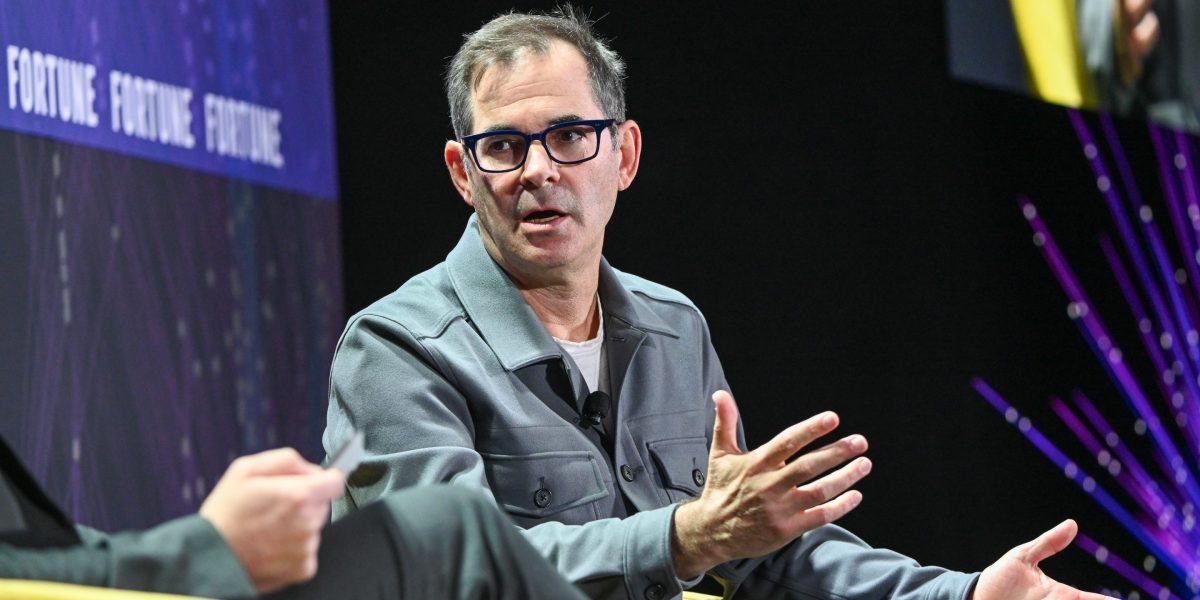
CoreWeave has been rocked by dizzying stock swings—with its stock currently trading 52% below its post-IPO high—and a frequent target of market commentators, but CEO Michael Intrator says the company’s move to the public markets has been “incredibly successful. And he takes the public’s mixed reaction in stride, given the novelty of CoreWeave’s “neocloud” business which competes with established cloud providers like Amazon AWS and Google Cloud.

“When you introduce new models, introduce a new way of doing business, disrupt what has been a static environment, it’s going to take some people some time,” Intrator said Tuesday at Fortune’s Brainstorm AI conference in San Francisco. But, he added, more people are beginning to understand the CoreWeave’s business model.

“We came out into one of the most challenging environments,” Intrator said of CoreWeave’s March IPO, which occurred very close to President Trump’s “Liberation Day” tariffs in April. “In spite of the incredible headwinds, we’re able to launch a successful IPO.”

CoreWeave, which priced its IPO at $40 per share, has experienced frequent severe up-and-down price swings in the eight months since its public market debut. At its closing price of $90.66 on Tuesday, the stock remains well above its IPO price.

As Fortune reported last month, CoreWeave’s rapid rise has been fueled by an aggressive, debt-heavy strategy to stand up data centers at unprecedented speed for AI customers. And for now, the bet is still paying off. In its third-quarter results released in November, the company said its revenue backlog nearly doubled in a single quarter—to $55.6 billion from $30 billion—reflecting long-term commitments from marquee clients including Meta, OpenAI, and French AI startup Poolside. Both earnings and revenue came in ahead of Wall Street expectations.

But the numbers were not all celebratory. CoreWeave disclosed a further increase in the debt it has taken on to finance its expansion, and it revised its full-year revenue outlook downward—suggesting that, even with historic demand in the pipeline.

With media headlines calling CoreWeave a “ticking time bomb,” with critics calling out insider stock sales, circular financing accusations and an overreliance on Nvidia, Intrator was asked whether he felt CoreWeave was misunderstood.

“Look, we built a company that is challenging one of the most stable businesses that exist—that cloud business, these three massive players,” he said, referring to AWS, Microsoft Azure and Google Cloud.  I feel like it’s incumbent on CoreWeave to introduce a new business model on how the cloud is going to be built and run. And that’s what we’re doing.” 

He repeatedly framed CoreWeave not as a GPU reseller or traditional data-center operator but as a company purpose-built from scratch to deliver high-performance, parallelized computing for AI workloads. That focus, he said, means designing proprietary software that orchestrates GPUs, building and colocating its own infrastructure, and moving “up the stack” through acquisitions such as Weights & Biases and OpenPipe.

Intrator also defended the company’s debt strategy, saying CoreWeave is effectively inventing a new financing model for AI infrastructure. He pointed to the company’s ability to repurpose power sources, rapidly deploy capacity, and finance large-scale clusters as proof it is solving problems incumbents never had to face.

“When I look back at history of the company, it took us a year with with a company investor like Fidelity, before they were like, ‘Oh, I get it,’” he said. “So look, we’ve been public for eight months. I couldn’t be prouder of what the company has accomplished.” 


Source link

Continue Reading

Business

Netflix’s takeover of Warner Brothers is a nightmare for consumers

Published

on


If the government approves Netflix’s megadeal to buy Warner Brothers Discovery—the parent company of HBO Max and the mammoth library of Warner Bros. content—it would be a disaster for consumers and a deathblow for Hollywood. Giving the world’s largest streaming platform even more control over what Americans watch and what content gets produced will mean fewer options for consumers and, inevitably, higher prices.

There is another path forward. Paramount Skydance has submitted its own hostile bid to compete with Netflix’s. Combining Paramount Skydance with Warner Bros. Discovery would create a new competitor with the scale and resources necessary to challenge Netflix’s dominant grasp on the streaming and entertainment landscape. That deal would maintain – and arguably enhance – competition in the space, bolstering cost discipline and choices for consumers. Importantly, Paramount has also said it remains committed to theatrical releases, a stark contrast to Netflix, whose leadership has written off theaters as outdated and anti-consumer.

Instead, the Netflix acquisition of Warner Brothers will create an entity that would dominate the media industry. This year, Netflix announced its largest-ever subscriber increase to over 300 million users, making it the largest Subscription Video on Demand (SVOD) service in the U.S. and the world.

On the same day it released its subscriber increase it also announced a price hike. If this is any indication of what Netflix does when it has increased market power, consumers can expect higher subscription prices in a less competitive market.

Netflix promotes itself as an innovator: as recently as October, CEO Ted Sarandos told investors that the company is “more builders than buyers.” But its skyhigh bid for Warner Brothers suggests that its trendsetter days have peaked and it’s now pivoting toward acquisition for subscriber growth rather than spending money to create new content.

The streaming giant’s recent dispute with Hollywood writers, which ended with a $42 million settlement, seems to confirm Netflix’s pivot away from investing in new content. One industry analyst opined that “a Netflix purchase of Warner would be a death knell for some of the movie business’s most important aspects, properties, and long-held traditions.”

The merger between Warner Brothers and Netflix threatens to push the industry past a dangerous tipping point: The combined company would command about 30 to 40 percent of the market, giving it enough power to dictate the terms of engagement to consumers, content creators, and distributors alike.

The effect on the market could be significant, with some market analysts fearing that it would put an end to the so-called streaming wars. That’s hardly positive news for consumers, who reap the benefits of more content, greater innovation, and lower prices when companies have to compete for viewers.

The downstream impacts of the merger are also problematic for the market: A Warner Brothers acquisition would allow Netflix to exert its newfound power over theaters (it has a notorious reputation for refusing wide-release feature films), writers and creative directors, and the entire entertainment industry ecosystem that relies on the entertainment industry. Director James Cameron, a major player in the market, warned that a merger with Netflix would be a “disaster.”

The increased power the acquisition of Warner would give Netflix is not lost on federal trust busters: Senior White House officials raised concerns last month that a merger with the streaming giant could stifle competition and suggested that the FTC would be compelled to initiate an in-depth investigation of the transaction.

Open markets and robust competition drive innovation, which helps keep prices low, but when a handful of firms dominate an industry, competition disappears. Big Tech’s power has already shown us what happens when companies become “too big to challenge,” and Big Media seems to be intent on replicating that playbook.

The purpose of antitrust law should not be to regulate innovation out of existence, but to ensure that markets remain open, competitive, and aligned with the interests of consumers and the broader economy.

Warner Brothers’ leadership may believe that it is getting the best deal from Netflix. But the merger will surely face intense regulatory scrutiny, and for good reason—it would do a disservice to American consumers.

The opinions expressed in Fortune.com commentary pieces are solely the views of their authors and do not necessarily reflect the opinions and beliefs of Fortune.


Source link

Continue Reading

Business

Trump slams Fed’s third-straight rate cut as ‘too small,’ saying he wishes it was twice as large

Published

on


The Federal Reserve reduced its key interest rate by a quarter-point for the third time in a row Wednesday but signaled that it may leave rates unchanged in the coming months.

The cut decreased the Fed’s rate to about 3.6%, the lowest it has been in nearly three years. Lower rates from the Fed can bring down borrowing costs for mortgages, auto loans, and credit cards over time, though market forces can also affect those rates.

Chair Jerome Powell suggested at a news conference that after six rate cuts in the past two years, the central bank can step back and see how hiring and inflation develop. In a set of quarterly economic projections, Fed officials signaled they expect to lower rates just once next year.

Fed officials “will carefully evaluate the incoming data,” Powell said, adding that the Fed is “well positioned to wait to see how the economy evolves.”

The chair also said that the Fed’s key rate was close to a level that neither restricts nor stimulates the economy, a significant shift from earlier this year, when he described the rate as high enough to slow the economy and quell inflation. With rates closer to a more neutral level, the bar for further rate cuts is likely higher that it was this fall.

“We believe the labor market will have to noticeably weaken to warrant another rate cut soon,” Ryan Sweet, global chief economist at Oxford Economics, said.

Three Fed officials dissented from the move, the most dissents in six years and a sign of deep divisions on a committee that traditionally works by consensus. Two officials voted to keep the Fed’s rate unchanged: Jeffrey Schmid, president of the Kansas City Fed, and Austan Goolsbee, president of the Chicago Fed. Stephen Miran, whom Trump appointed in September, voted for a half point cut.

December’s meeting could usher in a more contentious period for the Fed. Officials are split between those who support reducing rates to bolster hiring and those who’d prefer to keep rates unchanged because inflation remains above the central bank’s 2% target. Unless inflation shows clear signs of coming fully under control, or unemployment worsens, those divisions will likely remain.

“What you see is some people feel we should stop here and we’re in the right place and should wait, and some people think we should cut more next year,” Powell said.

A stark sign of the Fed’s divisions was the wide range of cuts that the 19 members of the Fed’s rate-setting committee penciled in for 2026. Seven projected no cuts next year, while eight forecast that the central bank would implement two or more reductions. Four supported just one. Only 12 out of 19 members vote on rate decisions.

President Donald Trump on Wednesday criticized the cut as too small, and said he would have preferred “at least double.” Trump could name a new Fed chair as soon as later this month to replace Powell when his term ends in May. Trump’s new chair is likely to push for sharper rate cuts than many officials will support.

Stocks jumped in response to the Fed’s move, in part because some Wall Street investors expected Powell to be more forceful in shutting down the possibility of future cuts. The broad S&P 500 stock index rose 0.7% and closed near an all-time high reached in October.

Powell was also optimistic about the economy’s growth next year, and said that consumer spending remains resilient while companies are still investing in artificial intelligence infrastructure. He also suggested growing worker efficiency could contribute to faster growth without more inflation.

Still, Powell said the committee reduced borrowing costs out of concern that the job market is even weaker than it appears. While government data shows that the economy has added just 40,000 jobs a month since April, Powell said that figure could be revised lower by as much as 60,000, which would mean employers have actually been shedding an average of 20,000 jobs a month since the spring.

“It’s a labor market that seems to have significant downside risks,” Powell told reporters. “People care about that. That’s their jobs.”

The Fed met against the backdrop of elevated inflation that has frustrated many Americans, with prices higher for groceries, rents, and utilities. Consumer prices have jumped 25% in the five years since COVID.

“We hear loud and clear how people are experiencing really high costs,” Powell said Wednesday. “A lot of that isn’t the current rate of inflation, a lot of that is e mbedded high costs due to higher inflations in 2022-2023.”

Powell said inflation could move higher early next year, as more companies pass tariff costs to consumers as they reset prices to start the year. Inflation should decline after that, he added, but it’s not guaranteed.

“We just came off an experience where inflation turned out to be much more persistent than anyone expected,” he said, referring to the spike in 2022. “Is that going to happen now? That’s the risk.”

The Fed’s policy meeting took place as the Trump administration moves toward picking a new Fed chair to replace Powell when his term finishes in May. Trump’s nominee is likely to push for sharper rate cuts than many officials may support.

Trump has hinted that he will likely pick Kevin Hassett, his top economic adviser. But on Wednesday, Trump said he would meet with Kevin Warsh, a former Fed governor who has also been on the short list to replace Powell.

Trump added that he wants someone who will lower interest rates. “Our rates should be the lowest rates in the world,” he said.

A government report last week showed that overall and core prices rose 2.8% in September from a year earlier, according to the Fed’s preferred measure. That is far below the spikes in inflation three years ago but still painful for many households after the big run-up since 2020.

Adding to the Fed’s challenges, job gains have slowed sharply this year and the unemployment rate has risen for three straight months to 4.4%. While that is still a low rate historically, it is the highest in four years. Layoffs are also muted, so far, as part of what many economists call a “low hire, low fire” job market.

The Fed typically keeps its key rate elevated to combat inflation, while it often reduces borrowing costs when unemployment worsens to spur more spending and hiring.

Powell will preside over only three more Fed meetings before he steps down. On Wednesday, he was asked about his legacy.

“I really want to turn this job over to whoever replaces me with the economy in really good shape,” he said. “I want inflation to be under control, coming back down to 2%, and I want the labor market to be strong.”

___

Associated Press Writers Collin Binkley and Alex Veiga in Los Angeles contributed to this report.


Source link

Continue Reading

Business

Coca-Cola names 30-year veteran Henrique Braun as new CEO

Published

on


Coca-Cola said Wednesday that its chief operating officer will become its next CEO in the first quarter of 2026.

The Atlanta beverage giant said its board elected Henrique Braun as CEO effective March 31. James Quincey, Coke’s current chairman and CEO, will transition to executive chairman of the company.

Braun, 57, has worked at Coca-Cola for three decades. Prior to assuming the COO role earlier this year, he led operations in Brazil, Latin America, Greater China and South Korea. He has held positions overseeing Coke’s supply chain, new business development, marketing, innovation, general management and bottling operations.

Braun was born in California and raised in Brazil. He holds a bachelor’s degree in agricultural engineering from the University Federal of Rio de Janeiro, a master of science degree from Michigan State University and an MBA from Georgia State University.

David Weinberg, Coca-Cola’s lead independent director, called Quincey, 60, a “transformative leader” who will continue to remain active in the business.

During Quincey’s nine years as CEO, Coke added more than 10 additional billion-dollar brands, including BodyArmor and Fairlife. He also brought Coke into the alcoholic drink market with Topo Chico Hard Seltzer, which went on sale in 2021.

In 2020, Quincey led a restructuring that reduced Coke’s brands by half and laid off thousands of employees. Quincey said Coke wanted to streamline its structure and focus its investments on fast-growing products like its Simply and Minute Maid juices.

But as Quincey steps down as CEO, Coke is facing numerous challenges, including tepid demand for its products in the U.S. and Europe and increasing customer scrutiny of its ingredients. This summer, after a nudge from President Donald Trump, Coke said it would release a version of its trademark Cola with cane sugar instead of high-fructose corn syrup.

Weinberg said the board is confident that Braun will build on the company’s strengths and seek out growth opportunities globally.

Coke shares were flat in after-market trading.


Source link

Continue Reading

Trending

Copyright © Miami Select.