EssilorLuxottica is betting big on smart eyewear and the gamble is about to be tested. Its Ray-Ban Meta glasses, powered by artificial intelligence, have delivered their first meaningful revenue boost this year, but analysts warn that privacy concerns and a wave of new rivals could limit their growth.
Ray-Ban Meta glasses – Ray-Ban
The frames, launched in 2021, promise to upend the smartphone era by letting wearers take photos and videos through tiny cameras in the lenses, stream content to Meta apps, and talk to an AI assistant. Yet the same features that promise to make the AI-powered frames- born from the collaboration between Mark Zuckerberg‘s Meta and French-Italian eyewear giant EssilorLuxottica- into a must-have device are sparking concerns, as bystanders have little control over being recorded or how their data is handled.
“AI smart glasses raise significant privacy concerns,” said Kleanthi Sardeli, a lawyer at European digital rights advocacy group NOYB. “The main issues are linked to the use of people’s personal data to train AI models and transparency for bystanders.”
Meta Platforms, which owns Facebook, Instagram, and WhatsApp and generates the bulk of its revenue from advertising, is leveraging user data to power artificial intelligence tools, a move that brought the company to face scrutiny over data practices.
European regulators have flagged risks since 2021, when Italy and Ireland asked Meta to clarify how it complied with local privacy laws. Ireland’s Data Protection Commission questioned whether a tiny LED indicator was enough to alert people they were being filmed, prompting Meta and EssilorLuxottica to enlarge the light and add a blinking pattern.
Privacy concerns are particularly strong in the European Union, where stricter regulations have slowed adoption of some AI features. AI-enabled wearables are regulated by the EU’s AI Act and the General Data Protection Regulation, or GDPR.
“Any recording of individuals must be clearly communicated and must have a legal basis to record individuals,” unless the data was processed for purely personal or household reasons, a European Commission spokesperson said. But enforcing those rights is difficult when the device owner is unknown, says NOYB.
A 2024 Monash University survey of more than 1,000 Australians found owners see smart glasses as boosting their self-image and social ties, while non-users fear privacy breaches and social disruption. EssilorLuxottica said it partners “with competent authorities to drive innovation, safeguard privacy and set new industry standards.” A Meta spokesperson declined to comment beyond referring to EssilorLuxottica’s statement.
Ray-Ban Meta glasses lead the AI eyewear market thanks to a partnership that bridges tech and fashion, analysts and experts say, a gap that doomed Google Glass a decade ago. According to Barclays, EssilorLuxottica currently holds a 60% share of the smart glasses market.
“Instead of trying to make something cool, Meta partnered with people who know what’s cool,” said Ross Gerber, CEO of California-based wealth management firm Gerber Kawasaki, which holds Meta shares. But its first-mover advantage may fade as rivals launch better products, said Bernstein analyst Luca Solca. Smart glasses could also cannibalise traditional eyewear, which accounts for about a quarter of EssilorLuxottica’s revenue.
Several tech giants aim to catch up. In November Alibaba released its new Quark AI-powered glasses in China, where Ray-Ban Meta are not sold. Apple is expected to unveil its own model next year and release it in 2027, Bloomberg News reported.
Google is working with Warby Parker and luxury fashion house Kering to develop its own version, announcing on Monday it expected to launch a first product in 2026, sending EssilorLuxottica shares lower. Amazon is also reportedly exploring the market and Xiaomi launched a similar product in June.
EssilorLuxottica, the world’s biggest eyewear maker, can lean on its 18,000-store network and brands such as Prada, Armani and Chanel. “One of the key differentiating elements for them is not just their ability to produce, but also their ability to distribute, and their ability to leverage a portfolio of brands,” said Bassel Choughari, Paris-based portfolio manager at Comgest, which holds EssilorLuxottica shares. “That is an element that shouldn’t be underestimated.”
EssilorLuxottica CEO Francesco Milleri, who took over as head of the company in 2020, is steering the group towards medical technology. Smart glasses, central to this strategy, contributed more than four percentage points to EssilorLuxottica’s nine-month sales growth, sparking a 14% market rally for the 140 billion euro company, even though they account for just 2% of global sales, investor CCLA estimates.
EssilorLuxottica is looking to build on this momentum. It has widened its portfolio to sports brand Oakley and held exploratory talks with Prada, heir to the luxury brand, Lorenzo Bertelli told Reuters. In September it introduced a model with an in-lens display, operated through a bracelet that converts hand gestures into commands.
Competition is welcome, the company says: “A vibrant ecosystem will help us drive market growth, fuel innovation and expand consumer choice.”
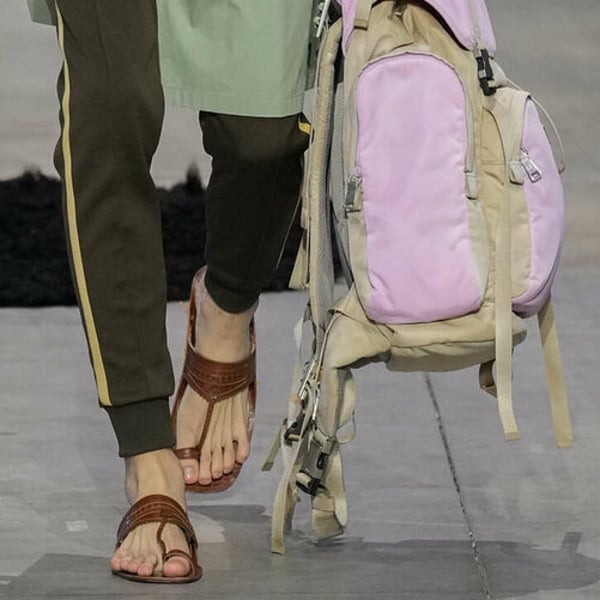
Prada will make a limited-edition collection of sandals in India inspired by the country’s traditional footwear, selling each pair at around 800 euros ($930), Prada senior executive Lorenzo Bertelli told Reuters, turning a backlash over cultural appropriation into a collaboration with Indian artisans.
The Italian luxury group plans to make 2,000 pairs of the sandals in the regions of Maharashtra and Karnataka under a deal with two state-backed bodies, blending local Indian craftsmanship with Italian technology and know-how.
“We’ll mix the original manufacturer’s standard capabilities with our manufacturing techniques,” Bertelli, who is chief marketing officer and head of corporate social responsibility, told Reuters in an interview. The collection will go on sale in February 2026 across 40 Prada stores worldwide and online, the company said. Prada faced criticism six months ago after showing sandals resembling 12th-century Indian footwear, known as Kolhapuri chappals, at a Milan show. Photos went viral, prompting outrage from Indian artisans and politicians. Prada later admitted its design drew from ancient Indian styles and began talks with artisan groups for collaboration.
It has now signed an agreement with Sant Rohidas Leather Industries and Charmakar Development Corporation (LIDCOM) and Dr Babu Jagjivan Ram Leather Industries Development Corporation (LIDKAR), which promote India’s leather heritage. “We want to be a multiplier of awareness for these chappals,” said Bertelli, who is the eldest son of Prada founders Miuccia Prada and Patrizio Bertelli.
A three-year partnership, whose details are still being finalised, will be set up to train local artisans. The initiative will include training programmes in India and opportunities to spend short periods at Prada’s Academy in Italy.
Chappals originated in Maharashtra and Karnataka and are handcrafted by people from marginalised communities. Artisans hope the collaboration will raise incomes, attract younger generations to the trade and preserve heritage threatened by cheap imitations and declining demand.
“Once Prada endorses this craft as a luxury product, definitely the domino effect will work and result in increasing demand for the craft,” said Prerna Deshbhratar, LIDCOM managing director. Bertelli said the project and training programme would cost “several million euros”, adding that artisans would be fairly remunerated.
Bertelli said Prada, which opened its first beauty store in Delhi this year, has no plans for new retail clothing shops next year or factories in India. “We have not planned yet any store openings in India, but it’s something that we are strongly taking into consideration,” he said, adding that this could come in three to five years.
The luxury goods market in India was valued at around $7 billion in 2024 and is expected to reach about $30 billion by 2030, according to Deloitte, as economic growth accelerates to 7% this year and disposable income among the middle and upper classes rises. The market, however, is dwarfed by China, which generated about 350 billion yuan ($49.56 billion) in value in 2024, according to Bain.
Most global brands have entered India through partnerships with large conglomerates like Mukesh Ambani’s Reliance group and Kumar Mangalam Birla’s Aditya Birla Group. Bertelli said that Prada would prefer to enter the country on its own, even if it took longer, describing India as “the real potential new market.”
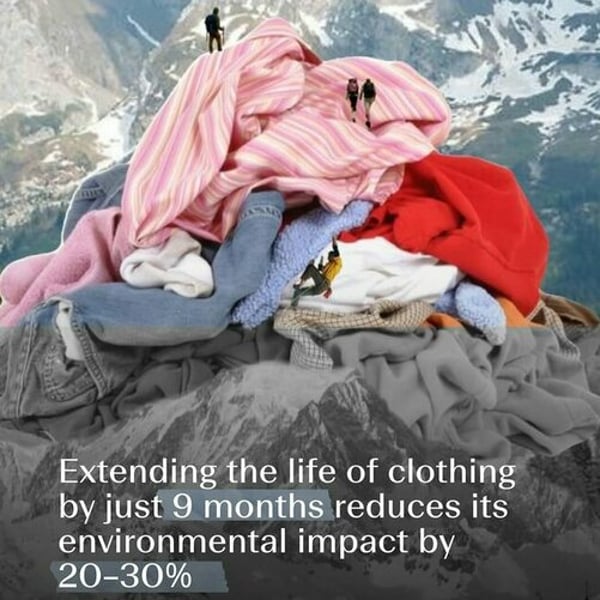
London-based Save Your Wardrobe (SYW) and France’s Fairly Made are joining forces to deliver what they say will be “Europe’s most advanced end-to-end circularity infrastructure”.
Save Your Wardrobe
SYW operates an AI-powered wardrobe management app while Fairly Made has developed a solution for measuring the environmental impact of products. Now they’ve announced a “strategic partnership designed to help brands meet Europe’s next generation of sustainability expectations”.
They said that “as new regulations reshape how products are designed, managed, and cared for- from eco-design and digital product passports to France’s Bonus Réparation and evolving EPR requirements, brands need a connected view of impact across the full lifecycle. This partnership brings together two complementary strengths that enable exactly that”.
As part of the link-up, SYW “plans to deliver the infrastructure powering aftersales excellence, including diagnostics, repairability scoring, automation, and nationwide repair operations”. Meanwhile, Fairly Made will support this with “upstream capabilities across supply-chain traceability, multi-criteria impact measurement, and digital product passport readiness”.
The plan is that they will offer enterprise brands a “360° circularity solution that supports eco-design, compliance, and measurable lifecycle extension”.
They said their goal is to help brands “move toward a future where circularity is not an ambition, but a connected, measurable, and scalable reality”.
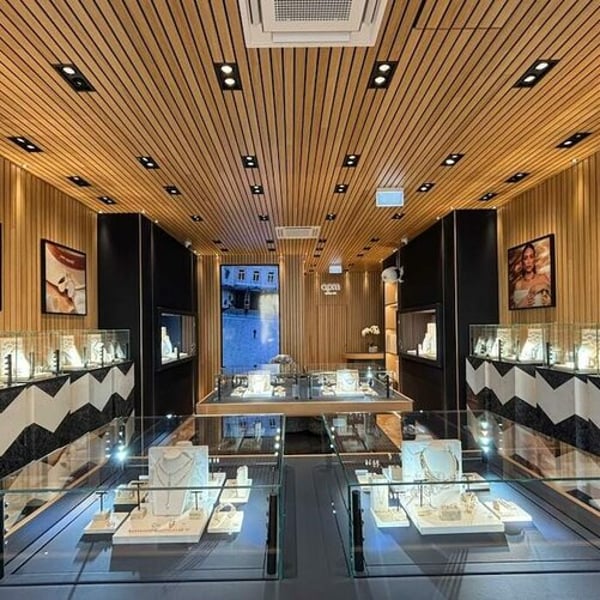
Private equity firm TPG Inc. is considering options for APM Monaco, including a possible stake sale or an initial public offering of the jeweler, according to people familiar with the matter.
APM Monaco
TPG is working with an adviser and may start a dual-track process early next year, the people said, asking not to be identified discussing private information. The US investment firm is aiming to fetch a valuation of at least $2 billion for the company in a deal, one of the people said.
Deliberations are preliminary and TPG might decide to keep the asset for longer, the people added.
A representative for TPG declined to comment.
A TPG-led consortium acquired a 30% stake in APM Monaco in 2019, and in 2021 documents were submitted for a Hong Kong IPO that never materialized. The following year, the group started sounding out potential interest in its stake, Bloomberg News reported, though TPG said at the time it didn’t plan to sell.
European private equity firm Trail and China Synergy, an investment firm backed by TPG and China international Capital Corp., were also part of the investor group that bought the stake in APM Monaco six years ago.
TPG had $286 billion in assets under management as of the end of September. The US buyout firm invested in APM Monaco through its Asia-focused private equity platform.
APM operates about 500 jewelry stores globally, according to its website.






 Politics8 years ago