Connect with us

Politics

Senate committee advances Charlie Kirk Day of Remembrance bill

Published

on


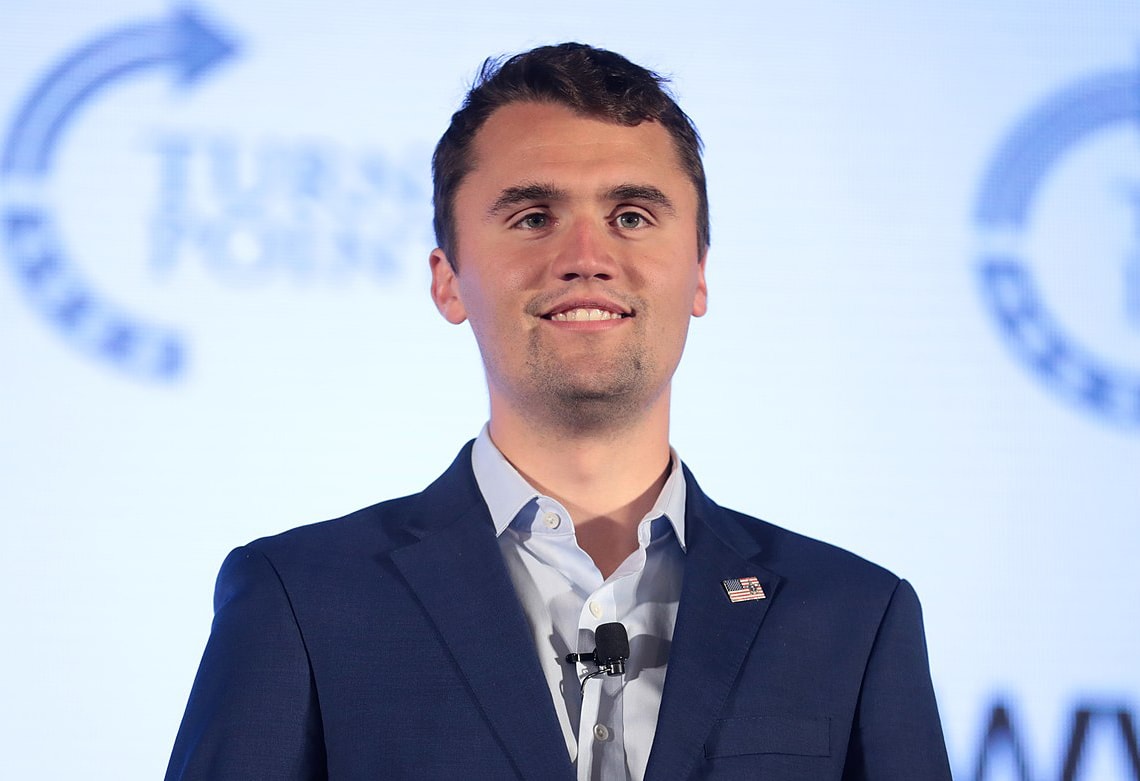
A bill to designate Oct. 14 as a day to honor Charlie Kirk has cleared its first Senate committee stop.

The Senate Government Oversight and Accountability Committee advanced SB 194 with a 5-2 vote down party lines.

Kirk, a right-wing political activist and founder of Turning Point USA, was shot and killed in September while speaking at a Utah university. A 22-year-old Utah man has been charged with killing him.

Under SB 194, the Governor would issue a proclamation every Oct. 14 — Kirk’s birthday — for the “Charlie Kirk Day of Remembrance.”

“Charlie Kirk made a national impact by encouraging young Americans to think critically, engage in civic life, and stand up for constitutional freedoms. He inspired millions to participate in public dialogue, defend their beliefs, respectfully, and understand their rights and responsibilities as citizens. His work helped build a movement of young leaders who are active in promoting limited government, free speech, and American values,” said Sen. Jonathan Martin, the bill sponsor, during Tuesday’s committee hearing.

“The day does not create a state holiday or mandate closures. It simply recognizes contributions that shape a generation.”

But Democrats against the bill questioned Kirk’s history of controversial comments about race, women and guns.

“Florida reserves days of remembrance for individuals whose legacy strengthens our democracy, advances justice and uplift humanity. Charlie Kirk is not such a figure,” Sen. LaVon Bracy Davis said.

Bracy Davis read some of his remarks to Martin during the debate.

“Are you aware of Charlie Kirk’s public statements minimizing racism and denying systemic discrimination? Do you believe those views reflect the values of Floridians?” the Ocoee Democrat asked. “How do you justify designating a state remembrance day for someone who publicly claims Black women lack basic intelligence and only succeed by stealing opportunities?”

Martin argued Kirk’s remarks were often taken out of context.

“I’m actually very thankful that you asked that question because now when people are watching here on the Florida Channel, I’m sure much of this will be retweeted,” Martin told Davis.

“I think it’s extremely important that when somebody analyzes what someone says, you look at 100% of the context and where they’re speaking, who they’re speaking to, and also that you don’t just take out a one-minute or a 30-second or a 15-second clip, especially when someone’s speaking for hours on end.”

Sen. Tina Polsky, a Boca Raton Democrat, didn’t buy it.

She pushed back and argued Kirk didn’t deserve to be in a class with Ronald Reagan to have the statewide honor.

“What this man said, how does he deserve a day of remembrance? To be in Florida’s statute forever and ever along with only one other human being, Ronald Reagan? There have been so many other people who have been assassinated or important political figures that we do not have these days for,” Polsky said as she called the bill another divisive legislation from Republicans.

“It makes me feel disgusting inside,” she added.

Martin defended his bill before the vote.

“The message we’re sending this bill — and the only message we’re sending in this bill — is that it is not OK to have political violence,” he said.


Source link

Continue Reading

Politics

House committee OKs Linda Chaney bill to create dental therapist role

Published

on


A House panel has advanced a bill that would add a mid-level dental provider in Florida, setting off a debate over whether the new role would expand access to care or allow irreversible procedures by non-dentists.

HB 363, sponsored by Republican Rep. Linda Chaney of St. Pete Beach, would create a dental therapist position to work between hygienists and dentists on the dental care team. 

Chaney told the House Health Professions and Programs Subcommittee that the therapists would provide preventive and routine restorative care such as filling cavities, placing temporary crowns and extracting “badly diseased or lose teeth” under collaborative agreements with supervising dentists.

She and other supporters argue that the expanded dental care team would grow access to dental care. Opponents warn about the need for the more experienced dentist’s hands on the wheel in case a simple extraction is not so simple.

The subcommittee approved the bill 13 to 3. It is the third time Chaney has submitted the measure for approval from the Legislature.

“Sixty-six of our 67 counties are federally designated as Health Professional Shortage Areas (HPSA’s),” Chaney said. “Fifty-nine million Floridians live in these 274 dental HPSA’s. … The need is significant.”

Chaney explained that the bill is driven by a statewide shortage of about 1,300 dentists, and that 66 of 67 counties are federally designated health professional shortage areas. She said dental therapy programs already operate in other states and that colleges in Florida are prepared to launch tailor made programs for the position.

Chaney said therapists could practice only within their training and licensure, and under a collaborative management agreement that dentists can mold. 

“The goal of the bill is to increase access, reduce costs, allow dentists to do more advanced procedures and see more patients,” she said.

Catherine Cabanzon, a licensed dental hygienist and former Chair of the Florida Board of Dentistry, said she has seen access challenges across the state.

Cabanzon pushed back on concerns about training, saying dental therapy programs are developed by the same accrediting commission that oversees dental and dental hygiene standards. She said that therapists take the same exam as dentists for the procedures they perform.

“We have been going through this cycle over and over and over again, it is time for us to look at different tools and the tool box,” Cabanzon said. “There’s not one answer to this problem. There’s multiple answers to it.”

Opponents urged lawmakers to reject the bill, arguing that irreversible procedures should remain in the hands of fully trained dentists. Retired Navy and general dentist Merlin Ohmer, who served 30 years on active duty, said that in his experience, even seemingly simple extractions can become complicated.

“I can tell you there’s no such thing as a simple extraction until the tooth is out and laying on the table,” he said. “You don’t know, and you can’t tell, until the procedure is complete.” 

Chaney said dentists would retain authority to decide what procedures therapists can perform, and that their licenses remain on the line. 

She argues the bill fixes a specific problem with access to care in Florida: that low Medicaid participation leaves many people without options.

“The dentist’s license is going to be on the line, that their therapist is performing procedures that they are comfortable with,” Chaney said. “Only 18%, or 1 in 5 dentists, take Medicaid. So there’s a whole lot of patients out there that don’t have access to dental care, they end up in the ER.”

The bill has one more committee stop in front of the House Health & Human Services Committee.


Source link

Continue Reading

Politics

Florida’s swim-lesson voucher system might get revised to allow older kids in the program

Published

on


A House committee agreed that kids 1 to 7 years old should be included in swim lesson vouchers.

A subcommittee gave a thumbs up to a proposal that would open up state vouchers to pay for swim lessons for kids in a broader age range

The state currently offers free vouchers for parents who want to get swim lessons for their children, but only for ages 0-4. The program was implemented after Gov. Ron DeSantis signed legislation in 2024.

But many parents say the stipulations are too limiting and most children in their first year of life are too young to adequately understand, and participate in, swim lessons.

The House Health Professions & Programs Subcommittee held a hearing to consider the measure (HB 85), which would instead make the vouchers available for children 1 to 7 years old.

Rep. Kim Kendall, a St. Augustine Republican, is sponsoring the proposed revisions in the bill. During a presentation before the subcommittee Tuesday, she said swim instructors have told her that the current voucher aims at kids that are too young.

“The younger kids have to keep repeating the swim lessons. They don’t stick with the younger kids,” Kendall said. “Babies under 1 show reflex swimming movements that can be misleading.”

She added that the majority of drownings for babies under 1 happen in the house, most likely in the bathtub, and said the current Florida voucher system just misses the target.

In Florida, she said, drownings in the state among children 4 to 12 have nearly doubled in the past decade.

“We are very excited to bring this bill. It’s to take the great swim lesson voucher program and make it a little more effective,” Kendall said.

Subcommittee members unanimously approved supporting the proposal, which still has two stops in the House. The Health Care Budget Subcommittee and Health & Human Services Committee are both scheduled to hear the bill.

The 2026 Legislative Session begins Jan. 13 and is scheduled to conclude March 13.


Source link

Continue Reading

Politics

TGH’s John Couris puts Florida on the map in Modern Healthcare’s 100 most influential

Published

on


Tampa General Hospital (TGH) CEO John Couris has made Modern Healthcare’s list of the 100 most innovative and prominent health care leaders in the nation.

The annual Modern Healthcare Power 100 is one of the industry’s most highly regarded accolades. It recognizes executives, health care leaders and policymakers for their impact in breaking down barriers, advancing innovations and elevating quality of care. 

Couris is widely known as a transformative leader in health care. He partners and collaborates with organizations across sectors and from all over the world, while leading an ever-growing, integrated academic health system in partnership with the USF Health Morsani College of Medicine that includes more than seven hospitals, powered by approximately 15,000 team members and providers.

“John’s vision and commitment to excellence have positioned Tampa General as a leader not only in Florida, but nationally,” said Drew Graham, chair of the Florida Health Sciences | Tampa General Hospital Board of Directors. “His ability to unite innovation, quality and compassion is transforming health care delivery and improving lives across the communities we serve, and more broadly by setting new standards for the industry to follow.”

Under Couris’ leadership, Tampa General has expanded its geographic footprint while at the same time enhancing its quality of care and patient experience. 

Through strategic acquisitions and innovative partnerships, Tampa General is now a comprehensive network of hospitals, which includes a specialized rehabilitation hospital and a behavioral health teaching hospital, as well as outpatient centers, urgent care clinics, virtual health services and TGH at Home, TGH’s hospital at home program. 

The integrated academic health system’s quality and safety performance rank among the top 30% of academic medical centers nationally, as measured by Vizient

“I am deeply honored to be recognized among this group of visionaries, representing a multi-disciplinary group of professionals who are relentless in advancing health care excellence, driving innovation and improving health outcomes for the people we serve across the country,” Couris said. “Together, we are proving that by advancing cutting-edge research, ensuring the best possible education for the next generation of health care professionals and delivering personalized and compassionate care, we can transform the future of health care in Florida and beyond.”

Couris is active in advocacy on the state and federal levels, having helped shape health policy, including the At HOME Services Act and the Live Healthy Act. In partnership with the state, Couris established Florida’s first behavioral health teaching hospital. He also was appointed to Florida’s Health Care Innovation Council by former Senate President Kathleen Passidomo

Couris is cementing Florida’s reputation as a global destination for world-class health care. with the creation of the Tampa Medical & Research District (TMRD). The district, anchored by Tampa General and USF Health, is an intersection of premier clinical care, exceptional academics, cutting-edge medical research and innovative life sciences and biotechnology companies. The TMRD fosters collaboration and innovation by providing access to educational opportunities and promoting new career pathways, advancing health care research and driving economic growth. 

Couris is the only health system leader in the state of Florida to receive the best-in-class honor from Modern Healthcare. 


Source link

Continue Reading

Trending

Copyright © Miami Select.