Connect with us

Fashion

Max Mara takes its next resort collection to Shanghai

Published

on


Published


December 9, 2025

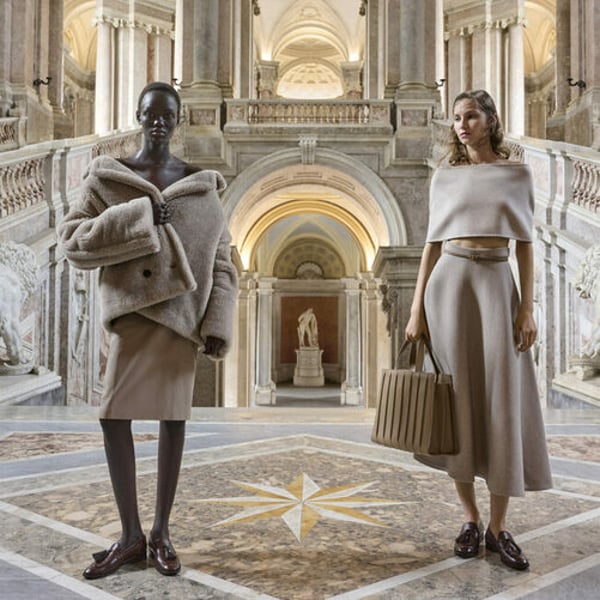
Max Mara will stage its 2027 resort show in Shanghai in June next year, the house has revealed.
 

Max Mara – Courtesy

“The Max Mara Resort 2027 show will take place in Shanghai, China on Tuesday 16th June 2026,” the Italian luxury fashion house confirmed in a statement.
 
The decision marks the latest exotic destination for the house, which last year held its resort show in Royal Palace of Caserta, the Versailles of Italy, located near Naples.

Pre-show, the 300 guests sipped prosecco, as stars like Sharon StoneGwyneth Paltrow, Joey King and Alexa Chung admired the truly magnificent one kilometer-long series of cascades, interspersed with five monumental fountains, designed by architect, Luigi Vanvitelli.
 
Max Mara’s UK-born designer Ian Griffiths creating a beautiful collection he termed “pragmatic feminism,” that riffed on Italia cinema icons like Sophia Loren and Silvana Mangano. 
 
That event followed Max Mara’s resort 2025 show at the Palazzo Ducale in Venice, another Italian masterpiece rich in history. No word yet on the exact location of the upcoming Shanghai show.
 
Previous Max Mara resort collections have also been unveiled in Stockholm, Berlin and Lisbon.
 
Max Mara resort shows traditionally climax a series of major collections by important European brands each spring. Next year, Louis Vuitton and Dior will both stage their cruise shows in America, in New York and Los Angeles respectively.


Copyright © 2025 FashionNetwork.com All rights reserved.


Source link

Continue Reading

Fashion

November retail sales fail to impress despite Black Friday, says Barclays and BRC

Published

on


Published


December 9, 2025

Two key monthly spending reports came out on Tuesday morning and showed that, as other reports have suggested, that November retail sales and general spending were pretty unimpressive.

Reuters

It’s worth noting that different reports use different criteria to reach their figures so there will be variations. 

Barclays said card spending saw its greatest fall since 2021 last month, as consumer confidence remained subdued.

Non-essential spend fell for the first time since July 2024, although Black Friday still managed to give retailers their busiest day of 2025.

So let’s look at the numbers. Consumer card spending (which takes in all types of spending, such as dining out and entertainment, as well as retail) was down 1.1% year on year. It was considerably lower than the latest CPIH inflation rate of 3.8%. The biggest drop was seen in essential spending, which was down 2.9% but non-essential spending fell only 0.3%.

Specific card spending at retail dipped 1.1% and transaction growth was negative to the tune of 2.3%, but on Black Friday transaction volumes rose 62.5% compared to the average day this year.

Of the sectors that came out on top, pharmacy, health & beauty spending grew 6.1% in November, continuing its strong streak as far as spend growth was concerned, although transaction growth was negative at 2.4%.

Clothing store spend was up 1.3% with transaction growth of 3.6%. Department stores had a tough time with spend down 8.2% and transaction growth down 6.4%.

Meanwhile, the BRC-KPMG Retail Sales Monitor, said UK total retail sales increased by 1.4% year on year in November, against a decline of 3.3% in November 2024. This was below the 12-month average growth of 2.5%.

Non-food sales increased by 0.1% year on year, against a decline of 7.9% in November 2024. In-store non-food sales decreased by 0.3%, after a fall of 6.2% in November 2024 and online non-food sales increased by 0.5% year on year, against a drop of 10.3% a year ago.

Both fashion and footwear dipped slightly during the month, according to the BRC. This goes against the Barclays view that clothing sales rose slightly. But in both cases, the fact is that fashion stores went the extra mile to drive sales and didn’t seem to be that successful.

Helen Dickinson, chief executive of the British Retail Consortium, said: “Pre-Budget jitters among shoppers meant the month of Black Friday did not deliver as strongly as retailers had hoped or the economy needed. Sales growth was the weakest in six months, despite the elevated inflation. Not unexpectedly, online dominated, with the proportion of non-food bought online reaching its highest level since 2022. Many consumers took advantage of promotions, with homeware and upholstery selling well ahead of festive hosting. Fashion lagged, especially with the mild first half of November dampening demand for winterwear.”

Copyright © 2025 FashionNetwork.com All rights reserved.


Source link

Continue Reading

Fashion

Several European countries, including France, call on Brussels to ‘step up’ efforts against Shein and similar platforms

Published

on


By

AFP

Published


December 9, 2025

Led by France, eight European countries are calling on the European Commission and the member states to “step up” their “collective mobilisation” in the face of the “systemic risks” they say are posed by e-commerce platforms such as Shein, in a letter sent to Brussels on Monday.

AFP/Archives Jade Gao

“We call on the Commission to mobilise forcefully and relentlessly on the issue of unfair competition from third-country e-commerce platforms,” said the signatory states — Austria, Belgium, Spain, France, Greece, Italy, Hungary and Poland.

The Commission has already sent requests for information to Shein, a process that can lead to the opening of a formal investigation — as urged by Serge Papin, France’s Trade Minister and the initiator of this letter.

This investigation “must be complemented by provisional measures to mitigate the systemic risks that Shein and other platforms fail to control,” he said at Monday’s Competitiveness Council meeting in Brussels, also calling for “additional sanctions” in “proceedings already launched against Temu and AliExpress”.

The French government has already tried unsuccessfully to suspend Shein via an administrative procedure in early November, following the discovery of the sale of sex dolls with a childlike appearance. It has since referred this request for suspension to the courts, which will rule on 19 December.

However, in view of the possibility of another setback, France is pressing the European Commission to act, as tackling the systemic risks posed by major platforms falls within EU competence.

To protect consumers and businesses from “risks” such as the sale of illicit products or unfair commercial practices, the countries signing the letter are calling for the enforcement of existing laws, including the Digital Services Act (DSA).

They call for “coordinated efforts (…) to strengthen the checks carried out by customs and consumer protection authorities”.

In addition, they call on the European Commission to “play an active role” and to “review existing regulations and, if necessary, strengthen the obligations of online platforms”.

Finally, the signatories call for “the introduction of a European tax on low-value parcels”, a measure already planned at national level, notably by France.

In mid-November, EU finance ministers approved the abolition of the customs duty exemption on small imported parcels, which could enter into force as early as the first quarter of 2026.
 

This article is an automatic translation.
Click here to read the original article.

Copyright © 2025 AFP. All rights reserved. All information displayed in this section (dispatches, photographs, logos) are protected by intellectual property rights owned by Agence France-Presse. As a consequence you may not copy, reproduce, modify, transmit, publish, display or in any way commercially exploit any of the contents of this section without the prior written consent of Agence France-Presses.


Source link

Continue Reading

Fashion

The personal shopper’s odyssey: From ally of the powerful, to dresser to the stars, to an accessible profession

Published

on


Published


December 9, 2025

The personal shopper is a discreet professional. Their primary role is to help clients define and express their sartorial identity. They advise, analyse and orchestrate a style tailored to each person’s needs, body shape and goals.

In the past, garments were embellished by the fashion merchant to suit her client’s tastes. – DR

In its study “From Luxury to Well-Being: The Personal Stylist’s Journey through Fashion History”, online personal shopper company Lookiero examines how the role has undergone major transformations over the centuries. Initially seen as a luxury reserved for an elite, the profession has gradually been democratised, particularly thanks to digitisation.

Marie-Antoinette and Rose Bertin, a historic fashion duo

The idea of shaping one’s appearance with the help of an expert is not new. As early as the eighteenth century, in Europe’s sumptuous courts, clothing was a powerful marker of status and influence. The emblematic figure of Marie-Antoinette illustrates this perfectly: her ostentatious wardrobe, though provocative for its time, constituted a deliberate political and symbolic strategy.

Portrait of Rose Bertin, Marie-Antoinette's milliner
Portrait of Rose Bertin, Marie-Antoinette’s milliner – Jean-François Janinet via Wikimedia Commons


Her close collaboration with Rose Bertin, her trusted milliner, foreshadowed what would later become the role of the personal stylist. Through her ideas and execution, Bertin translated the queen’s aspirations into a strong, singular visual identity. This notion of “delegated taste” extended into the nineteenth century, when the London and Paris elites were already entrusting specialised assistants with the selection of their finery and accessories.

Hollywood, the fashion image factory

The early twentieth century marked a turning point with the emergence of the fashion press. Publications such as Vogue and Harper’s Bazaar, with visionary editors like Diana Vreeland and Carmel Snow, helped forge an aspirational narrative around feminine aesthetics, positioning fashion as a lever for personal transformation and expression.

June 1920 Vogue cover by American artist Helen Dryden
June 1920 Vogue cover by American artist Helen Dryden – Condé Nast/Domaine Public

At the same time, the Hollywood film industry consolidated beauty archetypes through icons like Audrey Hepburn and Marlene Dietrich. Behind each star, on-set stylists, such as the legendary Edith Head, worked to sculpt these iconic images, professionalising the stylist’s function and gradually making it more visible behind the scenes.

A scientific approach and individual self-assertion

The 1970s saw clothing conceptualised more pragmatically, even as an instrument of persuasion. John T. Molloy’s influential “Dress for Success” (1975) revolutionised approaches to corporate dress. It set out a quasi-scientific methodology linking precise visual codes to professional success. His approach had considerable impact, laying the foundations of image consultancy as a structured discipline and demonstrating that image is a professional asset.

The personal shopper becomes part of Western department stores in the 1980s (Times Square, 1980. Image unmodified)
The personal shopper becomes part of Western department stores in the 1980s (Times Square, 1980. Image unmodified) – Gerd Eichmann/Wikimedia Commons

The 1980s were marked by aesthetic exuberance and a quest for individual self-assertion. Figures such as Ray Petri, creator of the “Buffalo” style, upended convention and fused urban and editorial aesthetics. It was also during this period that exclusive personal shopping services began to emerge in metropolises such as New York, London and Milan, catering to celebrities and executives. Luxury department stores then integrated these services as essential components of the VIP experience.

The media heyday of the personal shopper

The 1990s and 2000s were pivotal for the recognition of the personal shopper as a profession in its own right, thanks to popular programmes such as What Not to Wear, hosted by Stacy London and Clinton Kelly, which argued that style is a skill that can be learnt and mastered. Renowned stylists themselves rose to media prominence via their own reality shows (Rachel Zoe and “The Rachel Zoe Project“, for example), revealing the behind-the-scenes of their craft and popularising a new fashion lexicon.

Stacy London contributed to the rise of the personal shopper (Stacy London, 2008. Image unmodified)
Stacy London contributed to the rise of the personal shopper (Stacy London, 2008. Image unmodified) – Steve from New York City, Baby!, USA/Wikimedia Commons

At the same time, experts such as Nina García, then fashion director at Elle, published reference books that democratised stylistic knowledge, blending fashion culture, the psychology of image and practical advice.

A partly digitised profession

With the advent of the new millennium, the role of the personal stylist has adapted to a more diverse and, above all, more technological environment. Online personal shopper platforms incorporate algorithms and personalised questionnaires, enabling clothing selections to be made remotely, without the client having to leave home. Social networks have given stylists and consultants the opportunity to build their own brands and develop a community, freeing them from traditional media, once dominant in the field.

Today, personal shoppers can work on social networks such as Instagram
Today, personal shoppers can work on social networks such as Instagram – DR

The figure of the influencer often mingles with that of the personal shopper, with these professionals using their profiles to educate, inspire and guide stylistic transformations. Recent concepts such as the “capsule wardrobe” and ethical fashion have thus transformed the personal shopper into a veritable aesthetic coach, far beyond their initial function as a shopping adviser.

“The expansion of digital personal styling companies has democratised this service, making it accessible to a public previously far removed from what was perceived as a luxury reserved for the few,” said the company behind the study.

Today, the personal shopper market is being driven by digital players such as Lookiero, Outfittery and Clic and Fit, in addition to department store services at Le Bon Marché, Printemps, and Galeries Lafayette, as well as professionals active on social networks.

This article is an automatic translation.

Copyright © 2025 FashionNetwork.com All rights reserved.


Source link

Continue Reading

Trending

Copyright © Miami Select.