Connect with us

Fashion

The personal shopper’s odyssey: From ally of the powerful, to dresser to the stars, to an accessible profession
Published

on


Published


December 9, 2025

The personal shopper is a discreet professional. Their primary role is to help clients define and express their sartorial identity. They advise, analyse and orchestrate a style tailored to each person’s needs, body shape and goals.

In the past, garments were embellished by the fashion merchant to suit her client’s tastes. – DR

In its study “From Luxury to Well-Being: The Personal Stylist’s Journey through Fashion History”, online personal shopper company Lookiero examines how the role has undergone major transformations over the centuries. Initially seen as a luxury reserved for an elite, the profession has gradually been democratised, particularly thanks to digitisation.

Marie-Antoinette and Rose Bertin, a historic fashion duo

The idea of shaping one’s appearance with the help of an expert is not new. As early as the eighteenth century, in Europe’s sumptuous courts, clothing was a powerful marker of status and influence. The emblematic figure of Marie-Antoinette illustrates this perfectly: her ostentatious wardrobe, though provocative for its time, constituted a deliberate political and symbolic strategy.

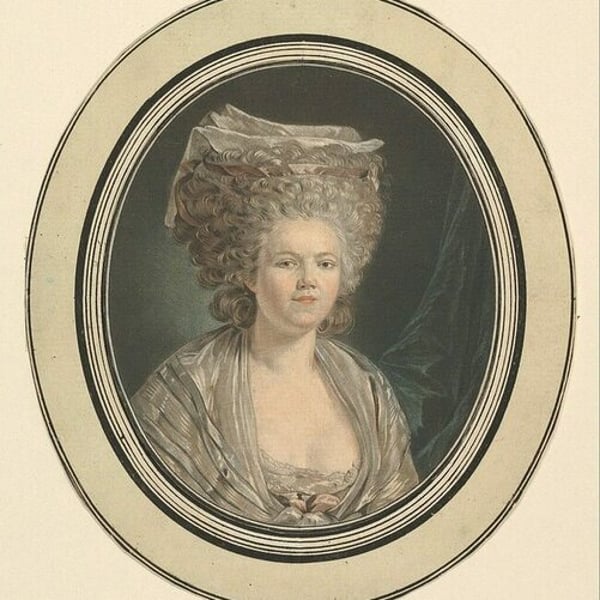
Portrait of Rose Bertin, Marie-Antoinette's milliner
Portrait of Rose Bertin, Marie-Antoinette’s milliner – Jean-François Janinet via Wikimedia Commons


Her close collaboration with Rose Bertin, her trusted milliner, foreshadowed what would later become the role of the personal stylist. Through her ideas and execution, Bertin translated the queen’s aspirations into a strong, singular visual identity. This notion of “delegated taste” extended into the nineteenth century, when the London and Paris elites were already entrusting specialised assistants with the selection of their finery and accessories.

Hollywood, the fashion image factory

The early twentieth century marked a turning point with the emergence of the fashion press. Publications such as Vogue and Harper’s Bazaar, with visionary editors like Diana Vreeland and Carmel Snow, helped forge an aspirational narrative around feminine aesthetics, positioning fashion as a lever for personal transformation and expression.

June 1920 Vogue cover by American artist Helen Dryden
June 1920 Vogue cover by American artist Helen Dryden – Condé Nast/Domaine Public

At the same time, the Hollywood film industry consolidated beauty archetypes through icons like Audrey Hepburn and Marlene Dietrich. Behind each star, on-set stylists, such as the legendary Edith Head, worked to sculpt these iconic images, professionalising the stylist’s function and gradually making it more visible behind the scenes.

A scientific approach and individual self-assertion

The 1970s saw clothing conceptualised more pragmatically, even as an instrument of persuasion. John T. Molloy’s influential “Dress for Success” (1975) revolutionised approaches to corporate dress. It set out a quasi-scientific methodology linking precise visual codes to professional success. His approach had considerable impact, laying the foundations of image consultancy as a structured discipline and demonstrating that image is a professional asset.

The personal shopper becomes part of Western department stores in the 1980s (Times Square, 1980. Image unmodified)
The personal shopper becomes part of Western department stores in the 1980s (Times Square, 1980. Image unmodified) – Gerd Eichmann/Wikimedia Commons

The 1980s were marked by aesthetic exuberance and a quest for individual self-assertion. Figures such as Ray Petri, creator of the “Buffalo” style, upended convention and fused urban and editorial aesthetics. It was also during this period that exclusive personal shopping services began to emerge in metropolises such as New York, London and Milan, catering to celebrities and executives. Luxury department stores then integrated these services as essential components of the VIP experience.

The media heyday of the personal shopper

The 1990s and 2000s were pivotal for the recognition of the personal shopper as a profession in its own right, thanks to popular programmes such as What Not to Wear, hosted by Stacy London and Clinton Kelly, which argued that style is a skill that can be learnt and mastered. Renowned stylists themselves rose to media prominence via their own reality shows (Rachel Zoe and “The Rachel Zoe Project“, for example), revealing the behind-the-scenes of their craft and popularising a new fashion lexicon.

Stacy London contributed to the rise of the personal shopper (Stacy London, 2008. Image unmodified)
Stacy London contributed to the rise of the personal shopper (Stacy London, 2008. Image unmodified) – Steve from New York City, Baby!, USA/Wikimedia Commons

At the same time, experts such as Nina García, then fashion director at Elle, published reference books that democratised stylistic knowledge, blending fashion culture, the psychology of image and practical advice.

A partly digitised profession

With the advent of the new millennium, the role of the personal stylist has adapted to a more diverse and, above all, more technological environment. Online personal shopper platforms incorporate algorithms and personalised questionnaires, enabling clothing selections to be made remotely, without the client having to leave home. Social networks have given stylists and consultants the opportunity to build their own brands and develop a community, freeing them from traditional media, once dominant in the field.

Today, personal shoppers can work on social networks such as Instagram
Today, personal shoppers can work on social networks such as Instagram – DR

The figure of the influencer often mingles with that of the personal shopper, with these professionals using their profiles to educate, inspire and guide stylistic transformations. Recent concepts such as the “capsule wardrobe” and ethical fashion have thus transformed the personal shopper into a veritable aesthetic coach, far beyond their initial function as a shopping adviser.

“The expansion of digital personal styling companies has democratised this service, making it accessible to a public previously far removed from what was perceived as a luxury reserved for the few,” said the company behind the study.

Today, the personal shopper market is being driven by digital players such as Lookiero, Outfittery and Clic and Fit, in addition to department store services at Le Bon Marché, Printemps, and Galeries Lafayette, as well as professionals active on social networks.

This article is an automatic translation.

Copyright © 2025 FashionNetwork.com All rights reserved.


Source link

Continue Reading

Fashion

Meta said to hold stake of at least 3% in EssilorLuxottica

Published

on


By

Reuters

Translated by

Nicola Mira

Published


December 10, 2025

On Tuesday, a board member for French-Italian eyewear/optics giant EssilorLuxottica said that Meta holds a stake of at least 3% in the group, owner among others of the Ray-Ban brand, with which Meta is collaborating.

The Ray-Ban and Meta logos featured at the EssilorLuxottica stand at the VivaTech trade show in Paris – (Reuters – Benoit Tessier)

The fact that Meta has a stake in EssilorLuxottica had been reported by several sources in the past, but it hadn’t until now been confirmed by either group. Meta and EssilorLuxottica are collaborating closely on the Ray-Ban Meta connected glasses.

José Gonzalo, executive director of French public investment bank Bpifrance and a member of the EssilorLuxottica board, said that the Meta stake could grow. “[Meta] holds at least 3% [of EssilorLuxottica],” said Gonzalo, adding that the figure could possibly rise up to 5%, though it is more likely it will be closer to the bottom end of the 3-5% range. “Nothing is stopping [Meta] from growing [its stake],” said Gonzalo.

Contacted by Reuters, Meta declined to comment for the time being, while EssilorLuxottica was not available for comments.

Gonzalo also said that Meta isn’t currently seeking to sit on EssilorLuxottica’s board. “They aren’t on the board, and haven’t asked to be represented on it,” he stated.

(Reporting by Mathieu Rosemain, with Elisa Anzolin and Tassilo Hummel; French version by Coralie Lamarque, edited by Kate Entringer)

© Thomson Reuters 2025 All rights reserved.


Source link

Continue Reading

Fashion

CEO Mario Filippi Coccetta grows stake in luxury knitwear label Fabiana Filippi to 100%

Published

on


Translated by

Nicola Mira

Published


December 10, 2025

Italian luxury ready-to-wear and knitwear label Fabiana Filippi, founded in 1985, has made a major change to its shareholding structure. The family of Giacomo Filippi Coccetta, Fabiana Filippi’s co-founder and president, has sold its entire stake in the label to Ventisettetredici S.r.l., a company owned by the family of Giacomo’s brother Mario, the label’s CEO and co-founder.

Mario Filippi Coccetta – Fabiana Filippi

“The operation is part of the company’s evolution process. The company’s strategic and operational activities will continue to develop in line with the current business plan,” said Fabiana Filippi in a press release, adding that “the decision is the result of a shared evaluation and a desire to ensure greater stability to the ownership structure in the medium to long term.”

In the press release, Mario Filippi Coccetta thanked Giacomo’s family for their contribution to the company’s growth and for helping strengthen its competitive position. Fabiana Filippi is determined to continue to invest in its DNA and to consolidate its distinctive identity, with an emphasis on product quality and manufacturing excellence, the company added.

Fabiana Filippi, founded in Giano dell’Umbria, near Perugia, is distributed via some 700 stores in over 60 countries, and operates monobrand stores in fashion capitals like Milan, London and Paris. In 1990, Fabiana Filippi started to manufacture its branded knitwear. Ready-to-wear was added in 2000, and later accessories. According to financial press sources, Fabiana Filippi S.p.A.’s revenue in 2024, the latest available figure, was approximately €53.6 million, down 26.75% from the approximately €73.2 million recorded in 2023. In 2024, the company recorded a loss of approximately €5 million.
 
The label is named after Fabiana, the daughter of Giacomo and Donatella Filippi Coccetta (the latter was until now in charge of product development). In September, Fabiana, 40, left the family business to enter the beauty sector, founding luxury skincare brand F2O.

Copyright © 2025 FashionNetwork.com All rights reserved.


Source link

Continue Reading

Fashion

Pinault family’s holding company brings Kering and Ponant together to create cruises that explore Italian luxury

Published

on


Published


December 10, 2025

All aboard for Italian luxury! From September 8 to 18, 2027, a Ponant Explorations cruise celebrating Italian luxury will bring together travellers, artisans, and several Italian houses from Livorno to Venice. The voyage will take place aboard Le Boréal, calling at Florence, the island of Elba, Taormina, Sorrento, and the Venetian lagoon.

The cruise will take in all of Italy (except Sicily), from Livorno to Venice. – Ponant Explorations

Built around artisanal craftsmanship, the cruise will be based on a collaboration between Ponant Explorations (part of Artémis, owned by the Pinault family) and five Kering group houses: Gucci, Bottega Veneta, Brioni, Pomellato, and Ginori 1735. Participants will discover their heritage treasures through workshop visits, demonstrations and conversations with professionals, with prices starting at €11,930 per person.

Stopovers in Florence and Venice

In Florence, Kering’s flagship label Gucci will open its archives, as well as Palazzo Gucci, to travellers. There, they will discover pieces tracing the house’s history and its relationship with travel. On board, an exhibition will extend this immersion in the brand’s world, presenting various objects and documents.

Five Italian luxury houses are taking part in the cruise
Five Italian luxury houses are taking part in the cruise – Gucci

Along Venice’s canals, Bottega Veneta will offer guests the chance to observe the crafting of leather goods and its Intrecciato weave. Visitors will follow an itinerary linking several locations tied to the house’s history, and take part in a discussion in a Venetian palazzo, where the essential steps in designing an accessory will be explained.

Garment construction and gemstone selection

Brioni will showcase the work of the master tailor by demonstrating the construction of a garment, from fabric selection through to assembling the pieces. The aim of this session is to reveal the rationale behind each movement and the various decisions involved in creating a garment.

Pomellato will give participants a lesson on stone selection
Pomellato will give participants a lesson on stone selection – Pomellato

Pomellato will focus on gemstone selection. The jeweller will guide participants through the evaluation criteria and the interplay between colours, volumes and settings. Travellers will be able to follow how a piece is defined before it is made.

Discover Italy as few know it

Ginori 1735 will open the doors of its Florentine manufactory, where visitors can watch porcelain being crafted, from shaping to decoration. A demonstration will show the painting techniques used by the house’s artisans, followed by an introductory workshop. A pop-up café devoted to the house’s universe will round out the experience.

Brioni will demonstrate the work of a master tailor
Brioni will demonstrate the work of a master tailor – Brioni

Stopovers in northern and southern Italy will offer visits to cities, historic sites, and wine estates. Travellers can explore the island of Elba, Otranto, or Taormina, discover museums, or stroll through historic centres. The aim is to link these places to the themes of the voyage: craftsmanship, place, traditions, and creativity.

As with any cruise, food matters: the cuisine on board will be inspired by the regions on the itinerary and will accompany the stages of the journey without any pursuit of spectacle. Optional pre- or post-cruise programmes will also offer discoveries around Florence, Chianti or Verona, to suit individual interests.

And the Pinault family’s aim is clearly to generate a potential new dynamic among its various assets.

This article is an automatic translation.
Click here to read the original article.

Copyright © 2025 FashionNetwork.com All rights reserved.


Source link

Continue Reading

Trending

Copyright © Miami Select.