
Politics
Tal Siddique takes the gavel in Manatee County
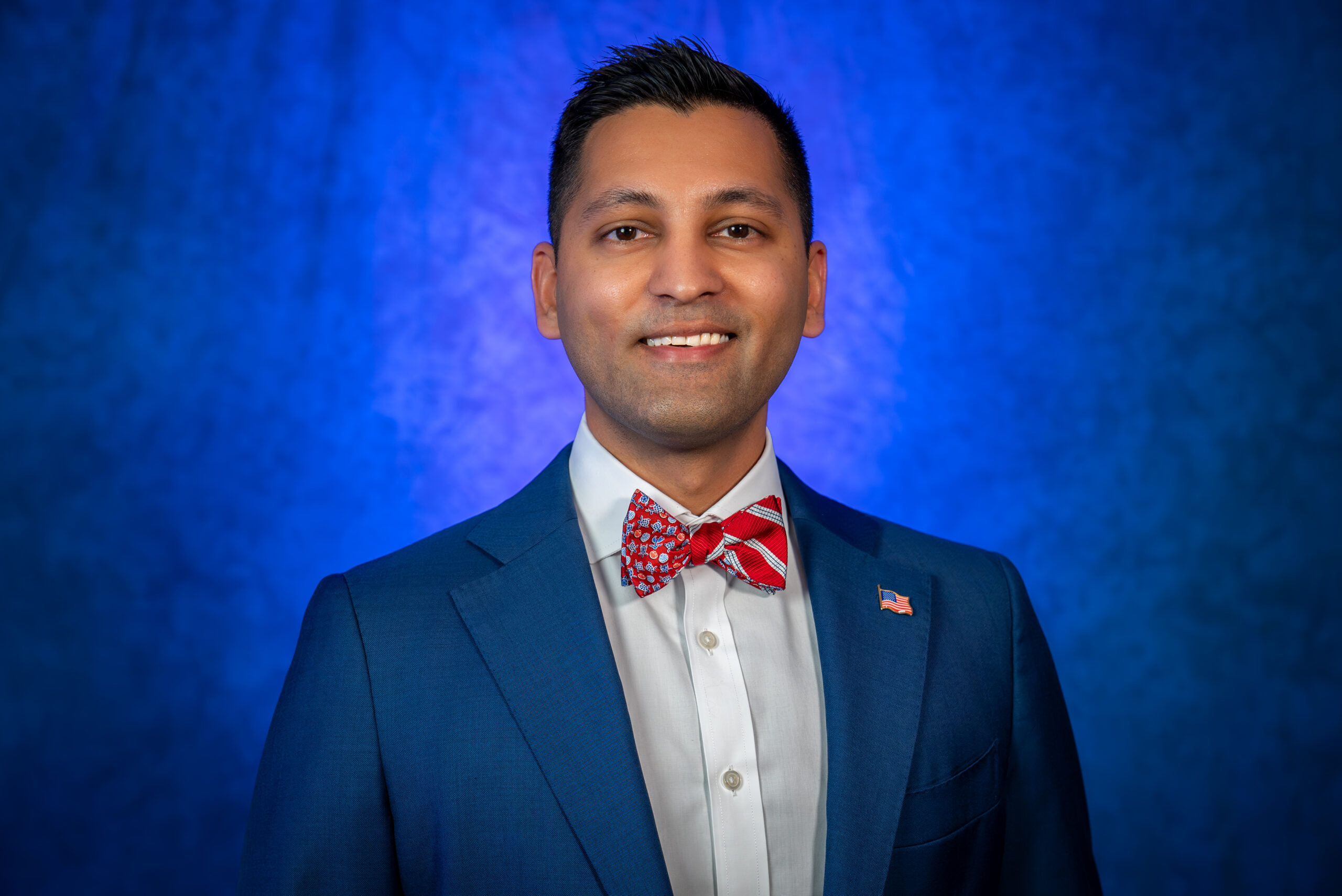
First-term Manatee County Commissioner Tal Siddique has swiftly ascended the local political ranks, and earned the coveted Chair role after one year in elected office.
Siddique, who represents Manatee County’s coastal District 3, takes the gavel from current Chair George Kruse at a time of intense debate over growth, storm recovery, property taxes and the balance of power between local governments and Tallahassee.
Siddique’s district includes Anna Maria Island, the northern end of Longboat Key, and western portions of the City of Bradenton including the downtown area.
There, Siddique said long-standing infrastructure and storm resilience challenges have collided with new development pressures and the aftermath of recent hurricanes. He points to work on decaying water lines, park improvements and storm-related permitting, as well as thousands of recovery permits processed, as examples of how local government can deliver tangible results that residents see every day.
As Chair, he said his priorities include pursuing meaningful property tax relief, continuing the county’s push for “sustainable and sensible” development, and defending home rule in the face of state laws that he argues limit local authority on land use and growth management.
He also says he wants to build on recent changes that expanded public input and made the board more transparent, while using technology to make county government easier to understand and more accessible.
“I am very excited for next year,” Siddique said. “I am going to give it my all to do the best job that I possibly can for Manatee County.”
We spoke to Siddique about his time in office and his priorities going forward.
Florida Politics: Describe your background before politics.
Siddique: My background is in the technology industry, specifically, the defense industry. I spent my career working as a software engineer and a project manager for both the private sector and then later for the Air Force as a civilian. I ran for office when I was 29 during a wave of change in ‘24, and here I am now I’m Chair of that board.

FP: Why did you decide to run for elected office?
Siddique: First, I wanted to see more young people involved, in particular at the local level in government because I felt that’s an area in politics that people don’t really focus on. Yet, it has such a massive impact on your day-to-day life. You know what’s going on in Congress or in Tallahassee is, I’m sure they’re doing good things up there, but the decisions I make have a much shorter runway for impact for our residents.
Second, I just love my community and I wanted to make a difference. I started by volunteering for the Salvation Army to help feed the homeless and the community, and with all the free time ahead working remote I felt like just finding other ways to give back. I eventually made my way into local politics, got involved on development issues and decided to make a run for it because I felt we needed a change.
FP: As Chair, what are your main priorities for the coming year?
Siddique: You know, for me, it’s delivering on the promise to residents to provide some form of property tax relief. We just had a very important strategic planning meeting this last week. Actually it’s the first of its kind in Manatee County history. We’re looking to develop a five-year strategic plan and one thing I heard from the board was that we want to pursue a meaningful tax cut next year. Irrespective of what DOGE is doing and what the state is doing with property tax elimination. This board has always made nominal efforts to provide relief to residents for property taxes, but the reality is it hasn’t been enough. Last year you could barely buy a soy latte for the amount of millage cut that we made. We want to do something more meaningful, and I think at the strategic planning one of our commissioners said, at least a half a mil, whereas typically we’ve done point .01 mill or something to that effect. So next year you can expect us to have a workshop on that.
FP: Manatee County has been vocal on state legislation like SB 180. What stands out to you on that front?
Siddique: Senate Bill 180 and the lawsuit is over what we feel is state overreach. We joined a lawsuit with Orange County and a number of other cities, I think about 23 other cities, to declare unconstitutional what we feel is restrictive in burdensome language in SB 180. We’re still fighting it, so I’m hopeful we’ll prevail on that.
I think the bill SB 180 does a lot of great things for emergency management, don’t get me wrong, but there’s that one section that still remains. That is if you’re a county that declared a state of emergency following the hurricane season, then you cannot pass more restrictive or burdensome amendments to your Comprehensive Plan or Land Development Code. Effectively, that’s been weaponized by developers against municipalities. You know, we’re being sued over impact fee increases, we’re being sued over important policies we want to implement.
So to make a short story of it, the lawsuit against SB 180 in the fight for home rule matters because we want to see sustainable development in our community, and today because of at least that piece of the legislation we can’t do it.
FP: Why did Manatee County join the lawsuit over SB 180?
Siddique: To understand SB 180 has to remember there is a senate SB 250. Long story short, since 2023 Manatee County has been prevented from implementing updates to its land development code and comprehensive plan. Why that matters is because we, prior boards but this board in particular, have tried to find a better balance with growth and quality of life. Unfortunately because of these bills have claimed that counties like ours are preventing people from rebuilding their homes, which is simply not true. We have been prevented since 2023 from passing meaningful reform to our code, and we’re just fed up with it.
We had a wave of Commissioners come in on a platform of promoting smart development in our county, and we just decided enough is enough. We need to protect our wetlands. We want to see growth, but not see it destroy what makes our community so special. So we decided to join a lawsuit in the hopes of seeing meaningful reform take place.
FP: State leaders are talking about cutting or even eliminating some property taxes. How is Manatee County responding?
Siddique: We just we just voted on the budget for FY ‘26 and ‘27, so if the state votes to eliminate property taxes for Homestead properties, which seems to be the prevailing concept, then Manatee County would probably hold an emergency session to see what we need to do to amend the budgets we’ve already passed.
As far as overall revenues it’s really hard to say how much we might be impacted until we see what comes on the ballot, but what we can at least say is that Manatee County was the eighth-least reliant on property taxes. About 8% of our revenue comes from Homestead property taxes, or about $415 million or so, out of just a little over $1 billion budget. That’s a significant sum, but we’ll just have to plan and see what comes of it. I think from our perspective, we’re not going to wait for Tallahassee to tell us what that outlook looks like. I promised my board that the first workshop I have next year is to discuss property tax relief and millage changes for next year. That might be sometime in February.
FP: You came into office right after major storms hit your district in 2024. How did that shape your first year?
Siddique: I came in right after Helene and Milton decimated our district, and that was not something I expected. To make a long story short, I ran my campaign focusing on development on ethics and focusing on our infrastructure, and when I’m in office now, I have to certainly get up to speed on FEMA national flood insurance program. I have to console and talk to residents that, you know, have lost their homes that they’ve had for generations. That was a challenge. And just having to help people through permitting, guide them, and just help deal with the aftermath was definitely something I didn’t expect. But I think we have made a lot of strides, we’ve made a lot of progress in the year since I’ve been a Commissioner. We’re back to normal, which is incredible.
FP: What are some of the biggest needs in your district, and what have you focused on so far?
Siddique: My district has roughly 80,000 people, it hasn’t really seen a lot of growth but it has felt the impact of growth in the rest of the county. With two barrier islands, plus west Bradenton and a little bit of south and east Bradenton, managing our infrastructure has been a big priority.
The waterline on Manatee Avenue, that’s one of two water lines that supplies water to the islands, fell. It just fell into the water, and I didn’t feel that there was much accountability for that. And so when I came into office I told staff, ‘We need to get moving on this right away.’ And now we’re actually starting construction on repairing and burying that waterline, which is going to be incredible for us just to fix the infrastructure that’s not working and deliver healthy, safe, clean drinking water to our community. That and lots of little things like making sure our parks are providing top-notch service, fixing potholes, and yes being thoughtful about the development that’s coming to our county. Those are just some sampling of things that I feel have made a difference in our community.
FP: How do you think about Manatee County’s relationship with Tallahassee, especially given vetoes, state reviews and the lawsuit?
Siddique: I think we’ll continue to have great leadership in Tallahassee with Senate President-Elect Jim Boyd, State Affairs Committee Chair Will Robinson, and some good talent in the pipeline with Michael Owen and Bill Conerly. I think we have great relationships with them, frankly. I think the challenge is more of a cultural issue, you know, with Tallahassee and municipal governments that I don’t know how you change unless you just become very vocal as counties, and I think this debate over SB 180 and and property taxes has really woken residents up to the fact that Tallahassee can accomplish great things for our state, but they can often come at a cost to autonomy at the local level.