Connect with us

Business

Paramount rips Warner’s sale ‘process’ as it reveals 2-year-long pursuit and escalating bids before going hostile

Published

on


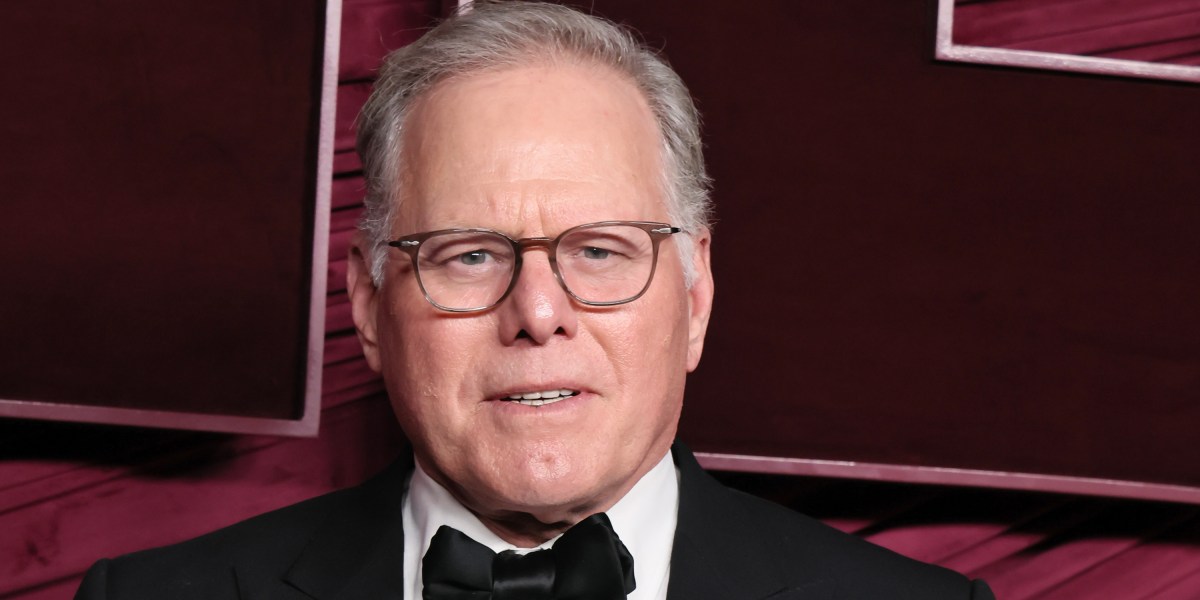
Paramount Skydance’s tender offer for Warner Bros. Discovery emerged from months of fitful courtship, a shifting media landscape, and a high‑stakes bidding war that ultimately pitted the studio behind “Top Gun: Maverick” against streaming giant Netflix for control of one of Hollywood’s crown jewels. The company’s tender offer regulatory filing with the Securities and Exchange Commission, filed hours after Paramount launched a hostile bid worth $108 billion (or $77.9 billion in equity), laid out a detailed chronology in which Paramount repeatedly tried to lure Warner Bros., to no avail. Netflix and Warner Bros. agreed a deal worth nearly $83 billion ($72 billion in equity) on Friday.

The filing revealed Paramount CEO’s last-ditch text message to WBD counterpart David Zaslav at roughly 4pm ET on December 4, the day before Netflix ultimately announced its deal, as previously reported by the Financial Times. Daivd [sic], I appreciate you’re underwater today so I wanted to send you a quick text. Please note when you next meet as a board we wanted to offer you a package that addressed all of the issues you discussed we [sic] me,” David Ellison wrote as he apparently felt his target slipping away.

“Also please know despite the noise of the last 24 hours I have nothing but respect and admiration for you and the company,” Ellison added. “It would be the honor of a lifetime to be your partner and to be the owner of these iconic assets. If we have the privilege to work together you will see that my father and I are the people you had dinner with. We are always loyal and honorable to our partners and hope we have the opportunity to prove that to you. Best, David.” Later that day, Paramount sent Zaslav a letter criticizing a “tainted” sale process.

Paramount told investors today that it continued to believe it was never taken seriously. “During the entirety of the sale ‘process’ undertaken by the Warner Bros. Board, representatives of Warner Bros. did not provide a single markup of a single transaction document, have a single meeting to go page-by-page through the documents, or engage in a ‘real time’ back-and-forth negotiation with Paramount or its advisors.”

Early outreach in 2023

In 2023 and 2024, Paramount’s predecessor, Paramount Global, and Warner Bros. held intermittent talks about a possible merger, but those conversations ended without a deal as Paramount Global moved instead to merge with Skydance, under the control of current CEO Ellison. After that transaction closed in August 2025, Paramount’s new leadership revisited the idea of combining with Warner Bros., concluding that a tie‑up could create a stronger, scaled competitor to streaming platforms and big technology companies, according to the SEC filing.​

The urgency increased in June 2025 when Warner Bros. publicly unveiled plans to split itself in two, targeting completion by mid‑2026, a strategy it continued to defend through early autumn. Paramount believed this breakup would destroy value and make any future full-company acquisition far harder, so it decided to move quickly, seeing a narrow window to buy all of Warner Bros. before the separation took effect.​

Paramount’s escalating proposals

By early September 2025, the filing noted, media reports surfaced that Paramount was preparing an offer, helping push Warner Bros.’ share price sharply higher from a pre‑rumor closing price of $12.54—it was trading at $19.46 by September 15, the day after Paramount offered $19 per share in cash and stock.​ (The New York Times reported on the secret bids from Paramount in October.)

Warner Bros. rejected that approach within days, saying the bid undervalued the company and that its own breakup plan promised better long‑term value. Paramount responded on September 30 with an improved offer worth $22 a share, primarily in cash, and went further on deal protections, including a $2 billion termination fee and a commitment to litigate to secure antitrust clearance, while also dangling roles for Zaslav as co-CEO and co-Chairman of the board of the combined company.​

Warner Bros. rebuffed this proposal as well, again calling it inadequate and insisting its planned separation remained superior, a stance that only hardened Paramount’s view that the board was underestimating the industrial logic of a combination. In October, Warner Bros. publicly announced a wider review of “strategic alternatives,” signaling that it would run a formal sale process and had received interest from multiple parties in both the whole company and specific assets such as its streaming arm.​

Paramount attempted to enter that process on more favorable terms, pushing back on an initial Warner Bros. confidentiality agreement that included a lengthy standstill, tight controls on financing contacts and waivers of potential legal claims about the sale. Its advisers negotiated for a shorter standstill, “most‑favored‑nation” treatment versus other bidders, and freedom to challenge the process if Warner Bros. ultimately retreated to its separation plan, underscoring deep mistrust over how the auction might be run.​

Due diligence and financing ramp-up

As the process unfolded, Paramount was granted limited access to a virtual data room, which it viewed as “sparsely populated” given the size and complexity of a potential deal. In mid‑November, Warner Bros. hosted an in‑person management presentation in California, while antitrust lawyers for both sides met to assess regulatory risks and lay out arguments that a Paramount–Warner Bros. merger would be pro‑competitive in a market dominated by tech‑backed streaming giants.​

Parallel to those talks, Paramount’s board set up a special committee of independent directors to vet a large equity infusion from the Ellison family and private‑equity firm RedBird. Paramount also locked in a $54 billion senior secured bridge facility led by Wall Street banks.

A bidding war with Netflix

On November 20, Paramount submitted another improved proposal, lifting its implied offer to $25.50 a share, heavily weighted to cash and backed by signed debt commitments and promised equity. That bid included a $5 billion regulatory reverse breakup fee and more aggressive litigation undertakings, signaling Paramount’s willingness to fight regulators if required to close the transaction.​ (Netflix committed to a $5.8 billion breakup fee in its winning bid, which Bloomberg reported is among the highest of all time.)

Even as Paramount sweetened its terms, public commentary suggested some influential Warner Bros. figures saw Netflix as a more attractive partner, particularly for its pure‑play streaming focus and global reach. During a particular November 13 interview on CNBC, WBD chairman emeritus John Malone questioned Paramount’s intervention and discussed the merits of a Netflix deal, adding to market speculation that Warner Bros. leadership might prefer a streaming‑first tie‑up over a legacy‑studio merger.​

Netflix deal and Paramount’s pivot to a tender

The process culminated on December 4, 2025, when Warner Bros. signed a merger agreement with Netflix that would see Netflix acquire Warner Bros.’ streaming businesses after a complicated internal reorganization and spin‑off of other assets. That deal offered cash and Netflix stock with headline value of about $27.75 per share but included adjustments tied to spin‑off net debt and a 21‑month outer closing date.​

Paramount responded the same day with what it calls its “Prior Proposal,” a merger agreement valuing Warner Bros. at $30 a share in straight cash, with what it argues are stronger regulatory commitments, a shorter outside date and no price haircut tied to balance‑sheet mechanics. When Warner Bros. nevertheless chose the Netflix deal, Paramount concluded that the board had opted for an “obviously financially inferior transaction with extraordinary regulatory risk and a longer timeline to a possible closing,” and decided its only route was to go directly to shareholders.​

Calls to Paramount, WBD, and Netflix to comment on the events as laid out in the filing were not immediately returned. We will update this post with any response.

Editor’s note: the author worked for Netflix from June 2024 through July 2025.

For this story, Fortune journalists used generative AI as a research tool. An editor verified the accuracy of the information before publishing.


Source link

Continue Reading

Business

Instacart may be jacking up grocery prices using AI, study shows—a practice called ‘smart rounding’

Published

on


Instacart tried to replace “Yesterday’s price is not today’s price” with “Today’s price might not be the same price for everyone.” The online grocery giant is experimenting with algorithmic pricing that can cost shoppers an extra $1,200 per year, a study released yesterday found.

The methodology: In September, Consumer Reports and the progressive think tank Groundwork Collaborative used ~200 volunteers to check prices on 20 items in four cities. The volunteers simultaneously chose the same product from the same store and found price differences in ~75% of items. Costco, Kroger, Safeway, and Target were among the retailers included.

The price is not right for everyone

  • Instacart uses pricing tools from Eversight, an AI company it purchased in 2022, that can create as much as a 23% increase in prices for customers and 2%–5% jump in profit for stores, according to CR.
  • Experts told CR that Instacart was testing customers’ price sensitivity. This was confirmed when an email between Instacart and Costco that called the practice “smart rounding” was accidentally sent to CR by Costco.

Shop of horrors: This type of dynamic pricing, which has proliferated in the age of AI, can contribute to steeper costs, according to an academic paper released this year. And Instacart is all in on AI: The company and OpenAI just announced a partnership that will allow customers to cook up recipes in ChatGPT and pay for groceries without leaving the chat interface.—DL

This report was originally published by Morning Brew.

Join us at the Fortune Workplace Innovation Summit May 19–20, 2026, in Atlanta. The next era of workplace innovation is here—and the old playbook is being rewritten. At this exclusive, high-energy event, the world’s most innovative leaders will convene to explore how AI, humanity, and strategy converge to redefine, again, the future of work. Register now.


Source link

Continue Reading

Business

Top economist warns more rate cuts after today would signal the economy is in danger

Published

on


Claudia Sahm thinks investors should rethink what they’re salivating for.

The Federal Reserve is likely to deliver its third interest rate cut of the year on Wednesday, a move widely understood to be insurance against the bottom completely falling out of the labor market. But to Sahm—a former Fed economist, recession-indicator architect, and one of the central bank’s most closely watched outside interpreters—the more consequential question isn’t what the Fed does on Wednesday. It’s what additional cuts would mean.

“If the Powell Fed ends up doing a lot more cuts,” she told Fortune ahead of the decision, “then we probably don’t have a good economy. Be careful what you wish for.”

That framing cuts against the dominant mood on Wall Street, where rate cuts have recently been reflexively welcomed and futures markets are already pricing in a second round of easing in 2026. But Sahm thinks investors should only want more cuts if they’re prepared to cheer for a recession.

Powell’s last stretch, and the hardest one

Sahm expects the Fed’s cut today—almost universally anticipated in futures markets—to be paired with language that raises the bar for any move in January. With the core inflation rate still sticky at 2.8%, higher than the Fed’s preferred rate of 2%, and unemployment rising, the Fed is straddling both halves of its mandate. 

“It is a tough one,” Sahm said. “Whatever they do could upset the other side.”

That tension is especially sharp because Fed Chair Jerome Powell is nearing the end of his term. He has three meetings left—January, March, and April—before the administration installs a successor, but President Donald Trump will announce his pick for the new chair (widely believed to be White House advisor Kevin Hassett) around Christmas. Once he does that, Powell effectively becomes a “lame duck” Fed Chair, although Sahm notes that “frankly, he has been one for some time” since Trump, who has grown to loudly despise his nominee, was elected. 

“Feels like in a way the last Powell Fed meeting,” Bloomberg’s Conor Sen wrote on X

What matters now for Sahm is that the data—not the politics—are driving policy. She warns that could change next year with a more political Fed. 

The labor-market signal the Fed is watching

What Sahm is focused on is not the headline rate cut but the underlying fragility in the job market that the Fed is trying to insure against.

Unemployment has risen three months in a row through September. Hiring has slowed to levels that historically place upward pressure on unemployment, “because you always have people coming into the labor market,” she said. 

Layoffs, however, haven’t surged yet. That’s precisely why Sahm thinks relying on initial jobless claims to assess labor-market risk is dangerous. 

“Initial claims don’t give you a sense of what’s coming,” she said. They’re what economists like to call a lagging indicator, meaning they tend to spike after a recession is underway, not before it. Recent weekly readings, distorted by holidays and special factors, are even less informative.

The real risk, in her view, is that the Fed waits too long.

“If the Fed waits until they see signs of deterioration,” she said, “they’ve waited too long.”

Sahm expects Powell to keep the path open for more easing but to emphasize that each additional cut requires stronger justification.

“If Powell talks about the funds rate getting close to neutral,” Sahm said, “that tells you it’s a pretty high bar to keep cutting. Every cut takes pressure off the economy, and inflation is still elevated.” 

That messaging—tightening the bar while remaining data-dependent—is what Wall Street might interpret as a “hawkish cut.”

But Sahm stresses the Fed cannot box itself in. The December employment report arrives just a week after today’s press conference. Declaring victory—or declaring the cutting cycle finished—would expose Powell to being immediately flat-footed.

“If all goes well,” she said, “this could be the last cut of the Powell Fed.”


Source link

Continue Reading

Business

Sheryl Sandberg’s Lean In finds ‘ambition gap’ in survey first: Fewer women want promotions

Published

on


The prophet of leaning in has found that, at least in 2025, women are leaning out. 

According to nonprofit Lean In and McKinsey & Company’s latest Women in the Workplace report, for the first time since the report began a decade ago, significantly fewer women than men are interested in getting a promotion at work. Compared to 80% of men in entry-level career stages, 86% in mid-career, and 92% of senior executives, only 69% of entry-level women, 82% in their mid-career, and 84% of female senior executives reported a desire to advance in their careers. The data was taken from 124 companies with 3 million workers, as well as interviews with 62 human resources executives. 

In 2023, 81% of both men and women surveyed said they were interested in getting promoted, including 93% of women under 30, highlighting an “ambition gap” that has emerged in the last year. 

Lean In attributed the gap to a disparity in support and resources available to women in the workplace, including less advocacy from managers, making them less likely to be recommended for a promotion. According to the report, when women receive the same career support as men, the ambition gap in seeking a promotion disappears.

The gap is part of a growing pattern of women being left behind in the workplace, says former Meta Platforms Inc. executive and nonprofit Lean In founder Sheryl Sandberg. While the number of men in the workplace this year has risen by nearly 400,000, the number of working women has fallen by about 500,000, data from the U.S. Bureau of Labor Statistics shows. 

“This is my fourth decade in the workplace, and we are in a particularly troubling moment in terms of the rhetoric on women,” she told CNN on Tuesday. “You see it everywhere in all the sectors. But what I’ve seen is, you know, we make progress, we backslide. We make progress, we backslide. And I think this is a major moment of backsliding.”

Troubling workplace trends

Stricter return-to-office mandates and the rising cost of childcare have forced many women to either cut hours or quit their jobs altogether, what some researchers are calling “The Great Exit.” Labor force participation from women aged 25 to 44 with children under 5 fell by about 3% from January to June of this year alone.

The women who are still able to work from home, sometimes out of necessity because of childcare responsibilities, risk becoming invisible at their job. Many get less feedback and mentorship than their in-office counterparts. They are also less likely to be promoted than their male counterparts and see fewer raises and lower wages.

The changes in workplace patterns also come amid concerted efforts to curb diversity, equity, and inclusion efforts in the workplace, with women saying this rollback has impacted their career plans, including prioritizing job security over career growth opportunities. President Donald Trump got rid of EO 11246, an executive order mandating federal contractors provide equal employment to marginalized groups like women and people of color, on his second day in office.

Lean In’s data suggests remaining workplace DEI efforts are also falling short. Despite 88% of companies saying they prioritize inclusive cultures, only 54% say they’ve committed to programs designed for women’s career enhancement and 48% committing to efforts to advance women of color at work. One-fifth of companies surveyed reported no specific support efforts for moving women up in their careers.

“We’ve built systems that aren’t working, and women are bearing the brunt of it,” billionaire philanthropist Melinda French Gates told Fortune in October. “It’s very concerning to see so many women leaving the workforce—but if you’ve been listening all along to what women say about their careers, it’s not surprising.”

French Gates said she attributes continued challenges for women in the workplace to tradeoffs they have to make, including balancing work with childcare. Women also continue to face workplace harassment and navigate enduring stereotypes about their own leadership capabilities, French Gates added.

To Sandberg, the issue goes beyond something ideological. She argued neglecting women in the workplace is a dangerous economic choice, saying that if the U.S. were to increase women’s workforce participation on par with other wealthy countries, it would add an additional 4.2% GDP growth. Organisation for Economic Co-operation and Development data indicates the wealth of a country is correlated with the participation of women in its workforce.

“This is a critical issue, not of special treatment,” Sandberg said, “but of making sure we get the best out of our workforce and we are competitive economically.”


Source link

Continue Reading

Trending

Copyright © Miami Select.